.png)

A Homeowner's Guide to the Best Replacement Windows for Homes
If you ask me what the best replacement windows are, I'll usually tell you it's a vinyl or fiberglass frame with double-pane, Low-E coated glass. That combination consistently hits the sweet spot for energy efficiency, durability, and overall value.
But the perfect window for your neighbor might not be the perfect window for you. The right choice always comes down to your specific climate, budget, and the style of your home.
Your Essential Guide to Choosing Replacement Windows
Picking out new windows is a big deal. It’s a major investment that changes how your home feels, how much you pay for energy, and what it looks like from the street. It’s easy to get lost in all the options, but the whole process gets a lot clearer once you know what really matters.
Instead of hunting for one single "best" window on the market, your real goal is to find the best window for your home.
This guide is your roadmap. We’ll walk through everything from frame materials to glass technology, so you can make a choice you feel great about. The trick is to find the right balance between three key factors:
- Your Budget: What are you willing to invest now for comfort and savings down the road?
- Your Climate: What do you need to handle Upstate South Carolina's hot, humid summers and chilly winters?
- Your Home's Style: What materials and designs will make your home look its best?
Finding Your Starting Point
To make things a little easier, think of it like a decision tree. Start with your biggest priority—usually budget—and let that guide your next choices on performance and aesthetics.
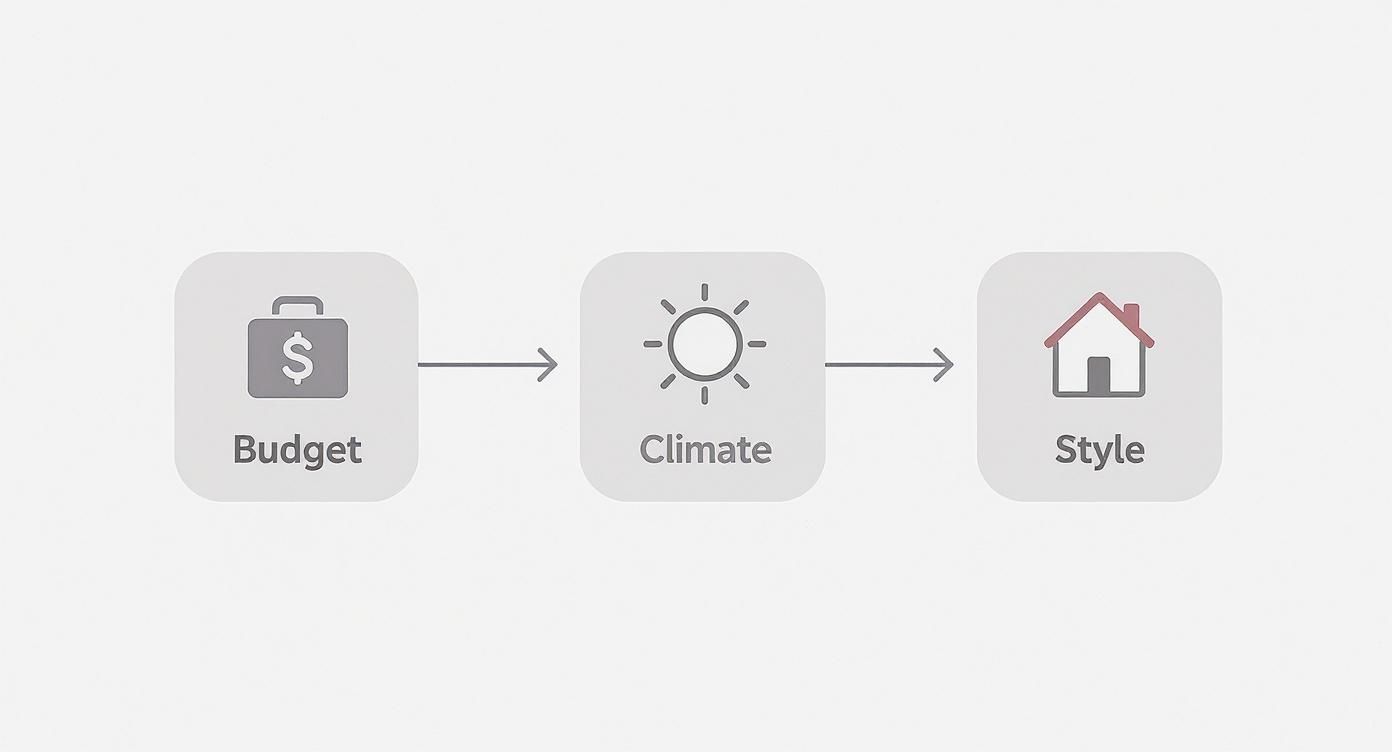
Getting your priorities straight from the beginning keeps you focused and leads to a much better outcome.
And you're not alone in making this decision. The global market for windows and doors was worth around USD 105 billion in 2024 and is expected to climb to nearly USD 149 billion by 2034. That huge number just shows how many homeowners are realizing the value of upgrading to more energy-efficient products.
Understanding the Big Picture
A great window project does more than just upgrade your view; it can completely transform your home's exterior. You can create a seriously impressive, high-performing home by pairing new windows with other upgrades.
For anyone looking to get the most out of their investment, it's smart to think about what other projects could complement your new windows. We put together a guide on home exterior renovation ideas that shows how everything can work together.
Your windows aren't just panes of glass. They are a critical part of your home's thermal boundary. Choosing wisely is a direct investment in better comfort, lower energy bills, and a higher property value.
Now, let's dive into the specifics, starting with a clear look at the different frame materials available. This is the foundational knowledge you need to pick a product that’s a perfect match for your home.
Comparing Window Materials From Vinyl to Wood
The frame is the backbone of your window. It dictates everything—strength, efficiency, how it looks, and how long it lasts. Think of picking a window material like choosing a vehicle for a specific journey. Each one has its own unique blend of benefits, and figuring out which is right for you is the first big step.
Let's break down the most popular choices out there so you can confidently match the right material to your home’s needs and your long-term goals.
Vinyl Windows: The All-Around Performer
Vinyl windows are the reliable family sedan of the window world. There’s a good reason they’re the most popular choice in the United States—they deliver a fantastic balance of affordability, performance, and almost zero upkeep. Made from a durable PVC (polyvinyl chloride) compound, vinyl frames are engineered to shrug off moisture, meaning they won't rot, warp, or peel in our humid Upstate SC climate.
Because the color is baked right into the material, you’ll never have to pick up a paintbrush or a can of stain. Their multi-chambered construction also creates natural air pockets, providing excellent thermal insulation to help keep your home comfortable all year. It all adds up to a practical, cost-effective solution for most homeowners.
- Pros: Highly affordable, excellent moisture resistance, low maintenance, and good energy efficiency.
- Cons: Limited color options (though this is improving), and can be less rigid than other materials in very large sizes.
Fiberglass Windows: The Durable Powerhouse
If vinyl is the sedan, fiberglass is the rugged, go-anywhere SUV. Fiberglass frames are built for pure strength and endurance. They’re made from glass fibers and resin, creating a material that’s incredibly stable and barely expands or contracts during temperature swings. This dimensional stability is huge—it means the seals on your windows stay tight, preventing drafts and boosting long-term performance.
Fiberglass is exceptionally strong, which allows for slimmer frames and more glass. This creates a clean, modern look and lets in more natural light. It's also paintable, giving you far more design flexibility than vinyl. Its resistance to rot, corrosion, and warping makes it a fantastic choice for any climate, especially one with dramatic temperature changes like ours.
Fiberglass is a top-tier choice for homeowners who put long-term durability and performance first. Its strength and stability mean it can handle harsh weather without breaking a sweat, making it one of the smartest investments you can make in your home's exterior.
Wood Windows: The Timeless Classic
Wood windows are the classic car—absolutely unmatched in natural beauty and traditional charm. They offer a warm, authentic look that other materials can only try to imitate. For historic homes or properties where architectural integrity is everything, wood is often the only choice that feels right.
But that classic beauty comes with a big trade-off: maintenance. Wood is vulnerable to moisture and has to be painted or stained regularly to protect it from rot, warping, and insects. While wood is a great natural insulator, its performance is completely tied to how well you maintain it. It’s a premium material that demands consistent care.
Aluminum Windows: The Modern Minimalist
Finally, aluminum windows are the sleek sports car of the bunch. They are lightweight yet strong, and they can be formed into the thin, clean profiles that are perfect for modern and contemporary home designs. Their strength allows for massive walls of glass, which is ideal for creating those stunning panoramic views.
The main drawback of aluminum, however, is its high thermal conductivity. Metal transfers heat and cold very easily, making standard aluminum frames poor insulators. Modern versions include thermal breaks—a plastic barrier inside the frame to slow this transfer—but they still tend to lag behind vinyl and fiberglass in energy performance. They’re often best suited for milder climates or commercial buildings where style is the top priority.
Choosing the right frame material really sets the stage for your entire window project. For most homeowners in our region, exploring the durability and efficiency of modern vinyl and fiberglass is an excellent place to start. To see how these materials work with different styles and budgets, you can browse a wide selection of high-performance replacement windows for homes and find the perfect fit.
Decoding Glass Options for Energy Efficiency
If the window frame is the skeleton, the glass is its heart and soul. The right glass package can completely change how your home feels—making it more comfortable, quieter, and a whole lot cheaper to heat and cool. Honestly, understanding the tech behind modern glass is simpler than you might think.
The glass unit itself, what we in the industry call an Insulated Glass Unit (IGU), is where all the efficiency magic happens. We’re way past single sheets of glass. Today’s replacement windows are complex systems engineered to manage heat, light, and even sound.
Choosing the best replacement windows means looking past the frame and picking a glass package that’s built for the realities of our Upstate South Carolina climate.
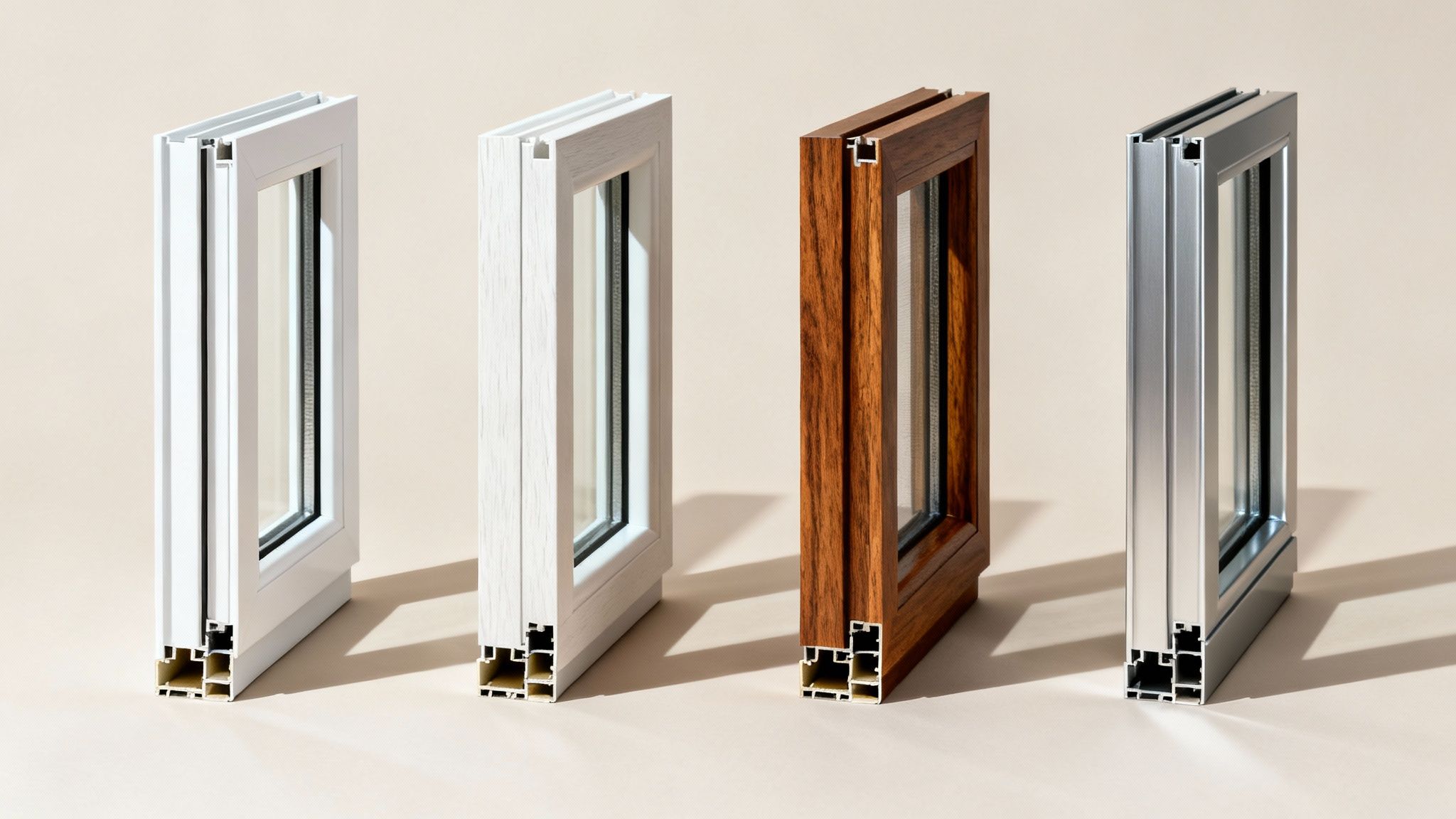
More Panes for More Performance
The most fundamental feature of any energy-efficient window is the number of glass panes. If your home has old single-pane windows, you know how terrible they are at stopping heat from moving in or out.
Think of it like dressing for a cold day. A single t-shirt won’t do much, but add a sweater and a jacket, and you create insulating air pockets that trap body heat. Windows work on the exact same principle.
- Double-Pane Windows: This is the modern standard, and for good reason. Two panes of glass are separated by a sealed space, which massively slows down heat transfer. Your home stays warmer in the winter and cooler in the summer. Simple as that.
- Triple-Pane Windows: For those who want the best of the best, adding a third pane creates two separate insulating air gaps. This delivers the ultimate in thermal performance and sound deadening, making it a fantastic choice for maximum comfort and quiet.
For most folks here in the Upstate, a high-quality double-pane window strikes the perfect balance between performance and cost. But if you have a room that faces a busy road or gets blasted by the afternoon sun, upgrading to triple-pane is a game-changer.
The Invisible Shield of Low-E Coatings
One of the single biggest advances in window technology is the Low-E (low-emissivity) coating. It's an incredibly thin, totally transparent layer of metallic particles applied directly to the glass.
You can think of it as a smart filter for sunlight. It lets all the good stuff—the visible light—pass right through, keeping your rooms bright. But it reflects the stuff you don't want: infrared light (heat) and ultraviolet (UV) light.
In the summer, the Low-E coating reflects the sun's heat away from your home, giving your AC a much-needed break. In the winter, it does the opposite, reflecting your furnace's heat back into the room to keep you cozy.
A Low-E coating is non-negotiable for true energy efficiency. It doesn't just cut your heating and cooling bills; it also protects your furniture, floors, and art from fading by blocking up to 99% of damaging UV rays.
An Insulating Blanket of Gas
That space between the panes of glass isn’t just filled with regular air. To really supercharge the insulation, manufacturers fill the gap with a dense, harmless gas—usually argon or krypton.
Because these gases are heavier and denser than air, they are terrible at conducting heat. They act like an invisible blanket, dramatically slowing the movement of heat from one pane of glass to the other. When you combine a gas fill with a Low-E coating, you get a seriously powerful thermal barrier.
This combination of features doesn't just save you money every month on your utility bills; it also boosts your home's overall value. Upgrading your windows is one of the smartest financial moves you can make, and you can learn more about how to increase property value with the right home improvements. For homeowners weighing different strategies to manage solar heat gain, an in-depth comparison of solar screens vs window tint provides additional valuable insights into controlling the sun's impact.
How to Read Window Performance Labels
When you're shopping for the best replacement windows, it's easy to get lost in sales pitches and marketing jargon. But how do you cut through the noise and find out what really matters? The answer is on a small sticker you'll find on every reputable window.
Think of it like the nutrition label on your food. It gives you the cold, hard facts about a window's energy performance, all backed by an independent, non-profit organization called the National Fenestration Rating Council (NFRC). Understanding this label is your secret weapon for making a smart choice that will affect your home's comfort and energy bills for years to come.
Homeowners are catching on, too. The global market for windows and doors hit USD 254.1 billion in 2024 and is expected to climb to USD 487.2 billion by 2037, largely driven by homeowners upgrading for better efficiency. If you're curious about the numbers, you can check out more about window and door market trends on Research Nester.
The Two Most Important Numbers
The NFRC label has a few different ratings, but for homeowners in Upstate South Carolina, there are two that stand out above all the rest. These numbers tell you exactly how a window handles heat—both keeping it in during the winter and keeping it out during the summer.
Here's a look at a sample NFRC label. You can see the key metrics front and center.
This simple layout makes it easy to compare different windows side-by-side and see which one truly performs better.
1. U-Factor: How Well a Window Insulates
First up is the U-Factor. This number tells you how well a window prevents heat from escaping your home. It’s a direct measure of its insulating power.
Here’s an easy way to remember it: think of U-Factor like a golf score—the lower the number, the better. A low U-Factor means the window is an excellent insulator, which is crucial for keeping your heated air inside on a cold winter night. In the U.S., U-Factor ratings typically range from 0.20 to 1.20.
- For Cold Climates: Homeowners in northern states want a U-Factor of 0.25 or lower.
- For Hot Climates (like ours): A U-Factor of 0.30 or lower is still vital for keeping your expensive, air-conditioned air from escaping during our long, hot summers.
2. Solar Heat Gain Coefficient (SHGC): How Well a Window Blocks Heat
Next is the Solar Heat Gain Coefficient (SHGC). This measures how much heat from the sun a window allows into your home. The rating is a number between 0 and 1.
For us here in the Upstate, a lower number is almost always better. A low SHGC means the window is great at blocking the sun’s intense heat, which is your best defense against skyrocketing A/C bills in July and August.
- For Hot Climates: You should be looking for an SHGC of 0.25 or lower.
- For Cold Climates: People in colder regions might actually prefer a higher SHGC to capture free solar heat during the winter.
Key Takeaway: For homeowners in Upstate South Carolina, the magic formula is a low U-Factor combined with a low SHGC. This gives you a window that insulates beautifully all year and blocks the worst of the summer sun, delivering maximum energy savings.
Other Important Ratings on the Label
While U-Factor and SHGC are the headliners, the NFRC label gives you a couple of other useful pieces of information.
To make it simple, here's a quick breakdown of all the key metrics you'll find on that NFRC sticker.
NFRC Performance Metrics Explained
| U-Factor | How well the window insulates and prevents heat loss. Lower is better. | 0.30 or lower | 0.25 or lower |
| Solar Heat Gain Co. (SHGC) | How much solar heat the window blocks. Lower is better for keeping cool. | 0.25 or lower | 0.40 or higher |
| Visible Transmittance (VT) | How much visible light gets through the glass. Higher means more natural light. | 0.50 or higher | 0.50 or higher |
| Air Leakage (AL) | How much air passes through the window assembly. Lower means fewer drafts. | 0.30 or less | 0.30 or less |
These four simple metrics give you everything you need to confidently compare different window brands and models. Now, you can look past the glossy brochures and focus on the certified data that proves how a window will actually perform in your home.
Why Professional Window Installation Matters
You’ve done all the homework. You’ve compared materials, figured out what all those numbers on the NFRC label mean, and picked the perfect glass package for your home. But here’s the hard truth: even the most expensive, top-of-the-line window is worthless if it isn't installed correctly.
The installation itself is, without a doubt, the most critical part of the entire project.
Think of it like buying a brand-new, high-performance engine for your car. If an amateur mechanic shoves it in without connecting every hose and tightening every bolt just right, you're not getting the power you paid for. Worse, you'll probably end up with leaks, weird noises, and a car that breaks down. Your windows are no different. Professional installation is the only way to guarantee they perform the way they’re supposed to.
A shoddy installation job opens the door to a whole host of problems that completely cancel out your investment. Drafts, water leaks, and fog between the glass panes are all classic signs of a bad fit. Over time, these small issues can lead to serious damage to your walls, insulation, and even your home's framing.
Insert vs. Full-Frame Replacement
When it comes to the actual installation, there are two main ways to do it. Knowing the difference will help you have a smart conversation with your installer about what’s truly best for your house.
- Insert Replacement: This is the faster, more common method. The installer keeps the original window frame and trim in place, then fits the new, custom-sized window right inside the old "pocket." It’s less disruptive to your home and usually costs less.
- Full-Frame Replacement: This is a much bigger job. The installer removes everything—the old window, the frame, the sill, and the trim—all the way down to the rough opening in the wall. This is a must if the existing frame is rotting or damaged. It also lets the crew inspect for hidden water damage and add new insulation around the opening.
The right choice really just depends on the condition of your current window frames. A good, honest contractor will check each window individually and tell you what you actually need.
A voided warranty is the hidden cost of a poor installation. Window manufacturers write their warranties assuming a professional will install the product to their exact specifications. One sloppy shortcut can make that warranty disappear, leaving you on the hook for any future problems.
Finding an Installer You Can Trust
The window installation industry is huge, projected to hit $6.7 billion in 2025 as more people upgrade to energy-efficient homes. With so many companies out there, it’s crucial to pick a team that will protect your investment.
Always look for a company that’s fully licensed and insured, with a solid history of positive reviews from local homeowners. The best installers are often certified directly by the window brands they sell, which means they’ve had specialized training. At Atomic Exteriors, our team has the expertise to get every detail right. You can learn more about our professional exterior remodeling services to see how we make sure every project is done to the highest standard.
And it’s not just about energy savings. A professional installation is also key to home security. A window that's properly fitted with high-quality locks is much harder to force open. You can learn more about how to secure your windows and see why a solid installation is the first step.
Ultimately, hiring a skilled installer is what ensures your new windows look great and perform perfectly for decades.
Answering Your Window Replacement Questions
Once you start seriously thinking about new windows, the practical questions quickly follow. Beyond materials and energy ratings, you want to know how the actual project will unfold. What's it going to cost? How long will my house be a mess? Is it really worth the investment?
Let's tackle the most common questions we hear from homeowners right here in the Upstate.
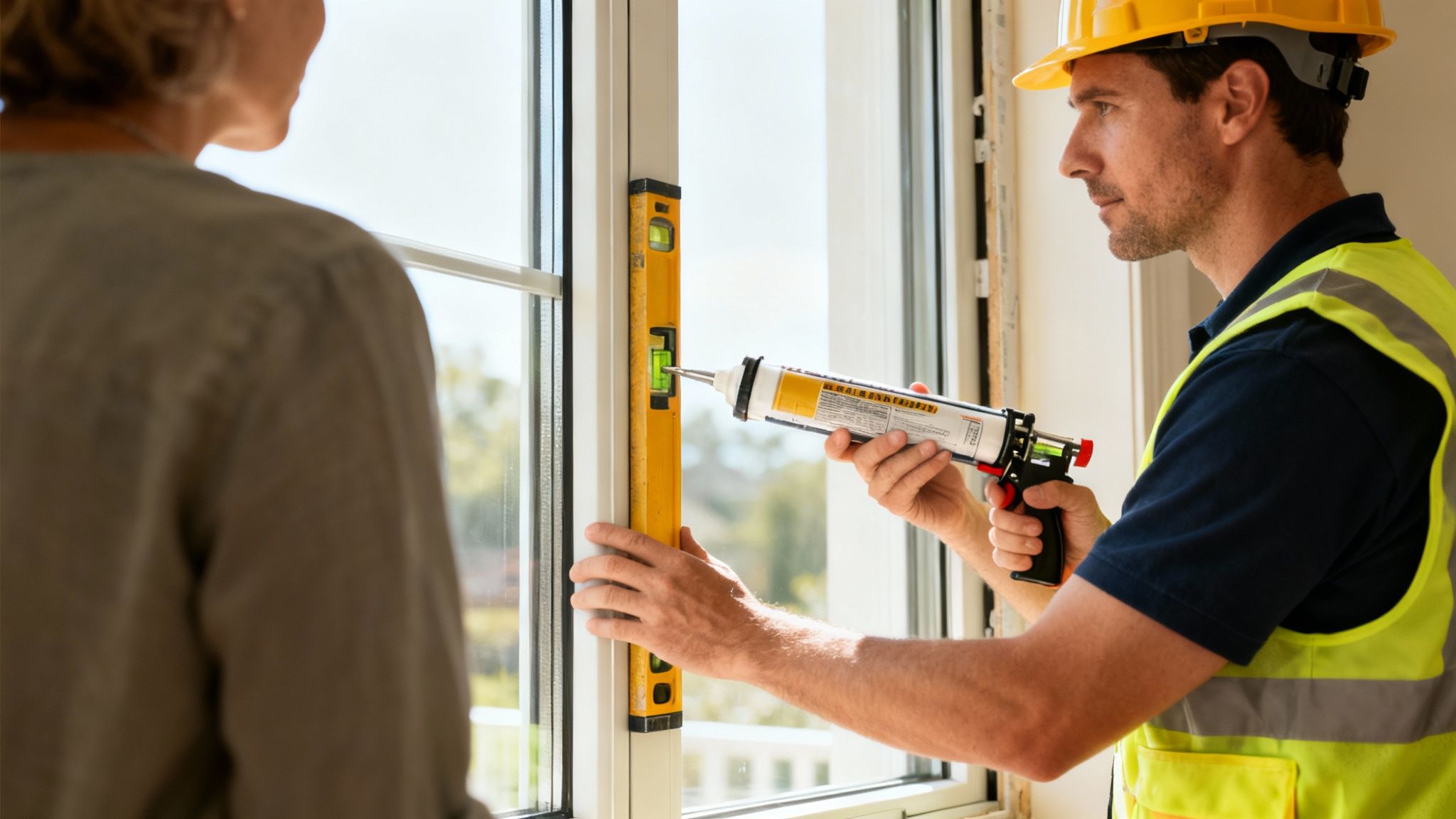
Knowing what to expect makes the whole process feel a lot less intimidating and a lot more exciting.
How Long Does Window Replacement Take?
This is usually the first thing people ask. Nobody wants their home turned into a long-term construction zone, and the good news is, it won't be.
While the entire journey—from that first phone call to the final walkthrough—can span a few weeks to allow for custom window manufacturing, the on-site installation is surprisingly fast. For most homes, a professional crew can replace every window in just one to two days. We work efficiently to minimize the disruption so you can get back to normal life, only now with a more comfortable and beautiful home.
What Is the Average Cost of New Windows?
This is a tough one because there’s no simple, one-size-fits-all price tag. The final cost of your project is really a collection of choices you make along the way.
Think of it like building a car—the final price depends entirely on the options you choose. The main drivers of your window replacement cost include:
- Window Material: Vinyl is often the most budget-friendly starting point, while premium materials like fiberglass and wood come at a higher price.
- Glass Package: Upgrading to triple-pane glass or adding advanced Low-E coatings will increase the initial cost but pays you back with bigger energy savings down the road.
- Window Style and Size: A massive, custom-arched picture window will naturally cost more than a standard-sized double-hung window.
- Installation Complexity: A straightforward insert replacement is less labor-intensive (and less costly) than a full-frame replacement that requires more extensive work.
The only way to get a real number for your home is to have a professional provide a detailed, itemized quote.
Do New Windows Really Increase Home Value?
Yes, they absolutely do. In fact, upgrading to new, energy-efficient windows is consistently one of the smartest home improvements you can make for return on investment (ROI). National remodeling reports often show that homeowners recoup 60-70% of the project cost when they sell their home.
New windows are a powerful signal to potential buyers. It tells them the home is well-cared-for, energy-efficient, and free of a major future expense. That can make your property jump to the top of their list in a crowded market.
But it goes beyond just the numbers. New windows provide a massive boost to curb appeal and make the inside of your home quieter and more comfortable—qualities that buyers feel the moment they walk in. It's an investment that pays you back in more ways than one, a feeling echoed in the feedback we get from our client testimonials.
Ready to get clear answers for your specific project? The team at Atomic Exteriors provides honest, upfront pricing and expert guidance to help you find the perfect windows for your home and budget. Contact us today for your free, no-obligation estimate!