.png)
Fiber Cement Siding Pros and Cons Explained
Choosing the right siding for your home is a big deal, and you deserve a straight-up, balanced view of your options. So, what’s the final word on fiber cement siding? In a nutshell, the pros include incredible durability, tons of design flexibility, and top-tier resistance to fire and pests. On the flip side, the cons boil down to higher upfront costs, heavier materials, and a more demanding installation process.
Let's break down exactly what that means for you and your home.
Your Guide to Fiber Cement Siding
Picking out new siding feels like a huge commitment because, well, it is. You're not just choosing a color; you’re selecting the protective shield for your home for the next several decades. Fiber cement siding has become a go-to for homeowners who know what they want, but it's often misunderstood. People hear about its legendary strength but get a little nervous when they see the price tag.
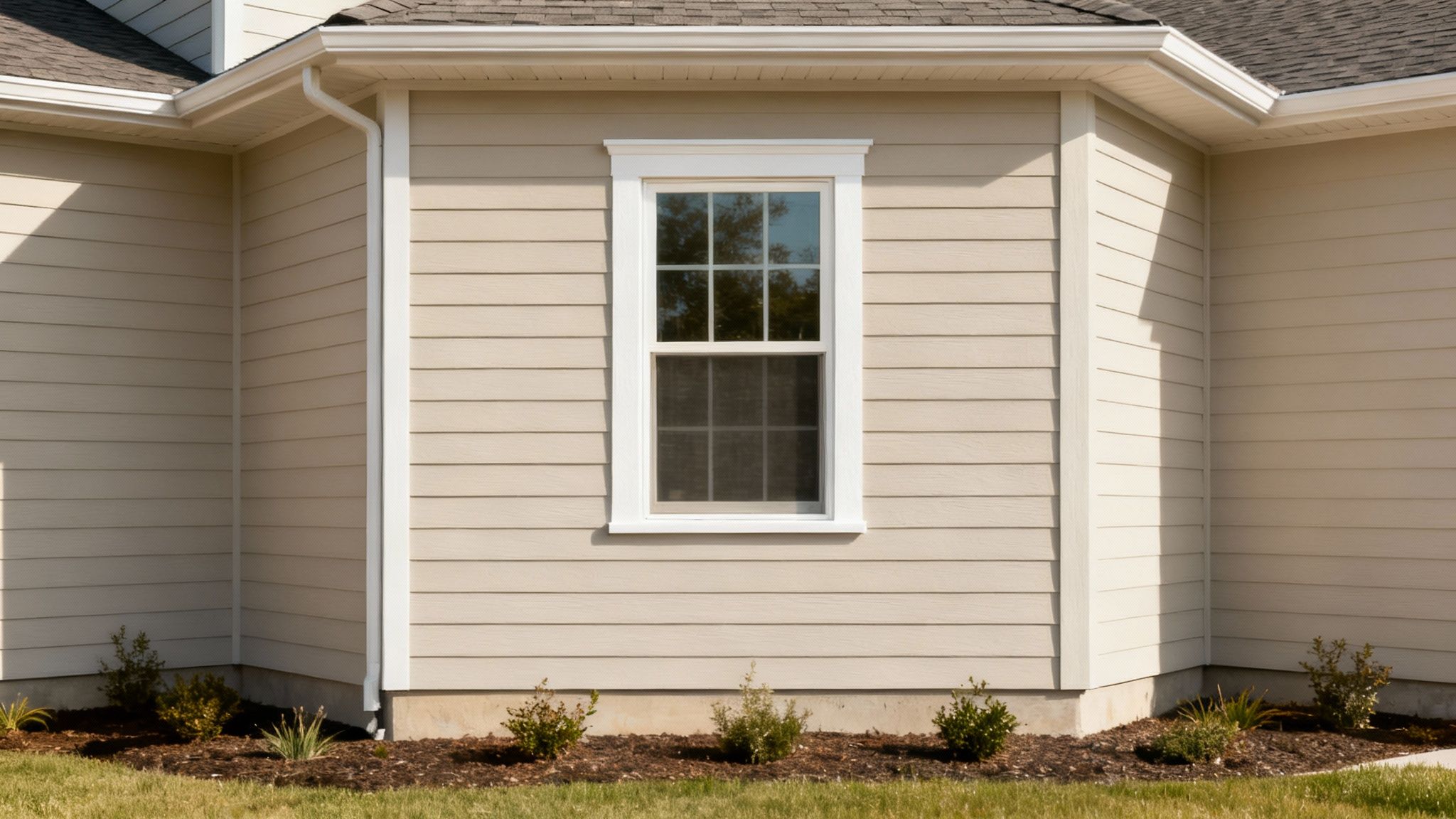
This guide is here to give you the full story—the good, the bad, and everything in between. Think of fiber cement as a custom-engineered blend of cement, sand, and cellulose fibers, all pressed into boards that really do offer the best of many worlds. Unlike wood, it won't rot or become a buffet for termites. And unlike vinyl, it’s much thicker, more fire-resistant, and won’t warp or melt in the brutal Upstate SC sun.
Fiber Cement Siding At a Glance
Before we dive deep, here’s a quick summary table to give you a bird's-eye view of what we're talking about.
| Durability | Extremely tough; resists impacts, rot, and pests. Lasts 50+ years. | Can crack if mishandled during installation. |
| Weather Resistance | Won't warp, melt, or swell from heat or moisture. Excellent for SC humidity. | The finish (paint) requires maintenance over time. |
| Fire Safety | Non-combustible, offering superior fire protection. | Higher material cost than flammable options like vinyl or wood. |
| Aesthetics | Can mimic wood, stucco, or stone with deep, authentic textures. | Limited flexibility for on-the-fly design changes during installation. |
| Cost | High long-term value due to longevity and low repairs. | Higher upfront investment for materials and labor. |
| Installation | Looks fantastic when installed correctly. | Heavy and requires specialized tools and expertise. |
This table covers the highlights, but the real value is in understanding why these pros and cons matter for your specific project.
Understanding the Big Picture
So, why has fiber cement become such a popular choice? It's all about homeowners looking for a "one-and-done" solution that combines stunning looks with rock-solid performance. Globally, demand is on the rise, with new homes and major renovations accounting for nearly 47% of all fiber cement sales. People are tired of siding that fails them.
The core appeal of fiber cement lies in its promise of longevity. It’s an investment in your home’s future, designed to reduce long-term maintenance headaches and withstand harsh weather without compromising on style.
This stuff is a blank canvas for your home’s exterior. It can be manufactured to look just like classic wood lap siding, charming cedar shingles, or even clean, modern stucco panels. That kind of versatility is a huge reason designers and builders recommend it so often. If you want to see the different styles we work with, you can learn more about our siding services.
Ultimately, this decision shouldn't just be about the initial bill but the total lifecycle value. We'll explore how fiber cement's durability translates into fewer repairs and a much longer lifespan, giving you peace of mind and protecting your investment. For a wider look at exterior finishes, you might find a comprehensive guide to exterior house painting useful. By the end of this guide, you’ll have the clarity you need to decide if it’s the right long-term choice for you.
Why Fiber Cement Is Your Home’s Personal Bodyguard
When you’re thinking about new siding, it’s easy to get caught up in colors and styles. But the most important job of any siding is to be your home's first line of defense. Fiber cement isn't just another pretty face; it’s an engineered shield, built to take a beating from everything nature throws at it—from the brutal humidity of an Upstate SC summer to a surprise hailstorm.
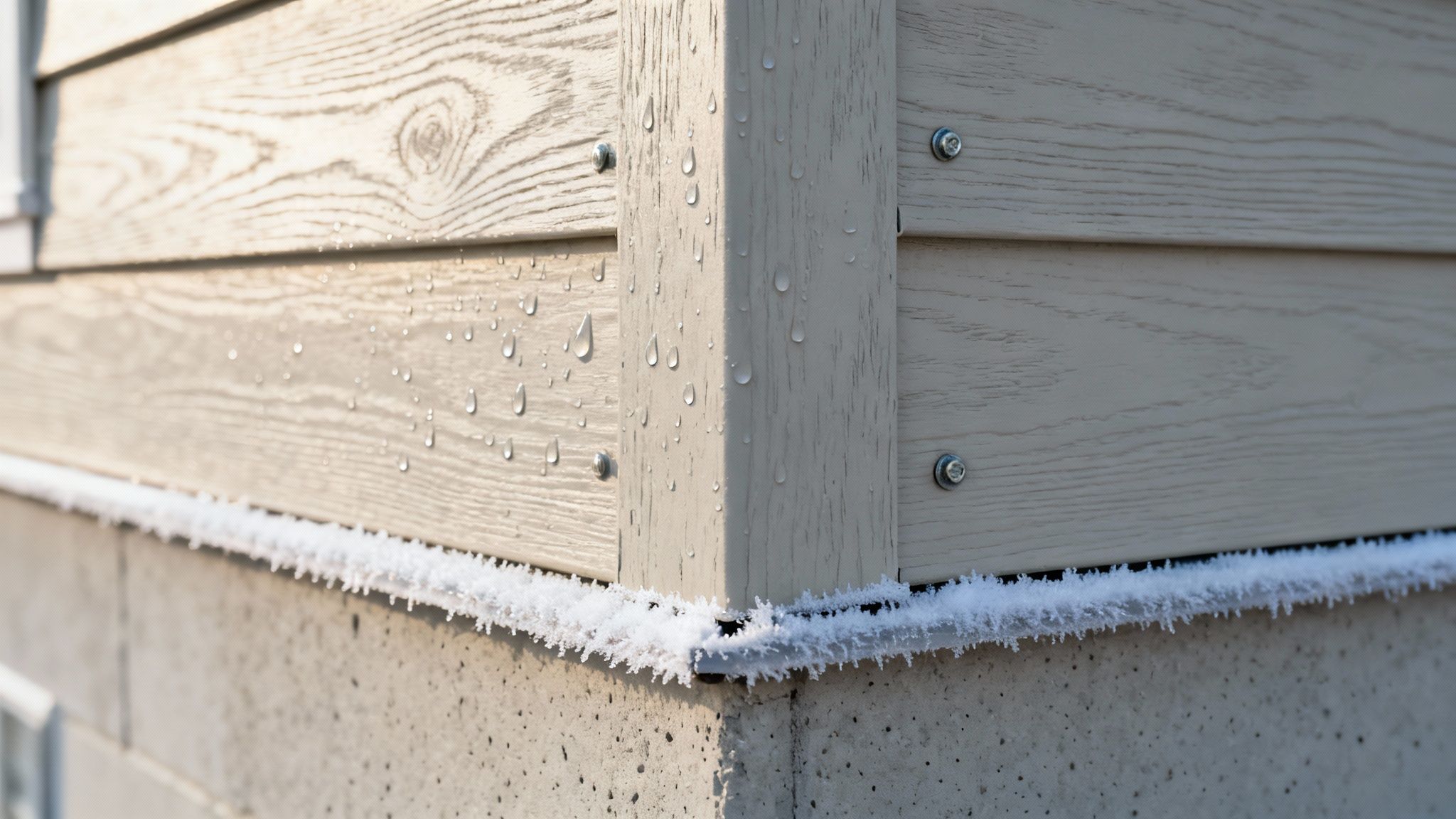
So, what gives this material its incredible strength? It’s all in the mix: Portland cement, sand, water, and cellulose fibers. Think of it like reinforced concrete, but shaped into elegant siding panels. The cement and sand deliver the brute force and impact resistance, while the cellulose fibers add just enough flexibility to keep the boards from getting brittle and cracking under pressure.
This unique recipe is the secret sauce behind its resilience. It creates a dense, rock-solid material that simply doesn't act like wood or plastic when the weather gets ugly.
Unmatched Resistance to Common Threats
One of the biggest selling points for fiber cement is how it shrugs off the most common homeowner nightmares. Unlike wood siding, which can soak up moisture and become a buffet for mold and rot, fiber cement is practically waterproof. It refuses to swell, buckle, or fall apart, even after years of relentless rain and humidity.
This toughness extends to pests, too. Termites and carpenter ants have zero interest in chewing on a board made of cement and sand. For anyone who’s dealt with a pest infestation before, that feature alone brings incredible peace of mind.
Fiber cement is what we call dimensionally stable. That’s a technical way of saying it doesn't expand and shrink like crazy when the temperature swings. This prevents the gaps and warping that let moisture and drafts sneak into homes with other types of siding.
This stability is a huge part of its defensive power, making sure your home’s protective shell stays sealed tight, season after season.
A Powerful Barrier Against Fire
Beyond weather and bugs, one of fiber cement's most compelling advantages is that it's non-combustible. If a fire breaks out, this siding won't ignite or add fuel to the flames. This is a massive difference from wood, which is obviously flammable, and vinyl siding, which can melt and warp in high heat, exposing your home's structure.
This fire resistance isn't just a hypothetical benefit; it has real-world consequences.
- Keeps Your Family Safer: It provides a critical buffer of protection for your loved ones and your property.
- Meets Strict Building Codes: It often satisfies tough fire-safety building codes, especially in high-risk areas.
- Can Lower Insurance Premiums: Some insurance companies may offer discounts for homes clad in non-combustible materials, simply because the risk is lower.
This built-in safety feature is a huge plus when you're weighing the pros and cons of fiber cement.
Engineered for Decades of Protection
The real test of any building material is how long it lasts. Fiber cement consistently outlasts both vinyl and wood, with a typical lifespan of 40 to 50 years when properly installed and maintained. Its fire-resistant properties are a major benefit, making it a smart choice for homeowners who prioritize safety.
A longer lifespan means less waste in landfills and fewer replacement costs down the road. When you look at the big picture, including broader sustainable architecture strategies, fiber cement stands out as a long-term investment. Ultimately, choosing fiber cement is about more than curb appeal—it's about wrapping your home in a reliable shield that will protect your investment for a lifetime.
Of course. Here is the rewritten section, crafted to sound like an experienced human expert and match the provided style examples.
Breaking Down the True Cost of Ownership
Let's talk numbers. For most homeowners, the financial side of fiber cement siding is the biggest hurdle to clear. I'm not going to sugarcoat it: the upfront cost is higher than materials like vinyl. But it’s crucial to understand why.
The cost isn't just in the siding panels themselves. Fiber cement is heavy—really heavy. Unlike lightweight vinyl that one person can sling around, these boards demand a skilled, professional crew just to handle them safely. This heft also requires special tools. You can’t just take a regular saw to it; installers need diamond-tipped blades to get clean, precise cuts without kicking up a ton of dust.
The Upfront Investment Explained
These factors add up quickly. The material's weight and density mean installation takes more time and expertise, which is reflected in the labor costs.
On average, fiber cement siding materials cost 10-15% more upfront than vinyl, and you can expect labor costs to be 20-30% higher because of the specialized crew and equipment needed. If you want to dive deeper, you can check out the latest fiber cement market reports.
So yes, the initial invoice for a fiber cement project will almost always be bigger than a comparable vinyl siding job. But this is where so many homeowners stop their calculations, and frankly, it’s a huge mistake. The first bill is just the start of the story, not the end.
Shifting Focus to Long-Term Value
Thinking only about the upfront price is like comparing a cheap pair of sneakers to a quality set of work boots. The boots cost more today, but they'll protect you for years, saving you from buying new sneakers over and over. Fiber cement siding works on the same principle: total lifecycle value.
This value shows up in a few key ways:
- Dramatically Lower Maintenance: Besides a quick wash now and then, fiber cement asks for very little. You won’t be dealing with surprise repair bills for warping, cracking, or pest damage.
- Fewer Replacements: With a lifespan that often pushes past 50 years, you won't be re-siding your house in 15 or 20 years—a common reality for cheaper materials.
- Enhanced Home Value: A premium, durable exterior is a massive selling point. The high-end look of fiber cement is a real asset that adds to your home's market value. For more on this, check out our guide on how to increase property value.
When you start adding up these savings over the decades, the financial picture looks completely different.
The true cost of any siding isn't what you pay on installation day. It’s the total amount you spend on maintenance, repairs, and eventual replacement over the entire time you live in your home.
A Smart Investment, Not an Expense
Ultimately, choosing fiber cement means reframing the decision. You're not looking at a short-term expense; you're making a long-term investment.
That higher upfront cost buys you decades of peace of mind, top-tier protection, and a classic look that won't fail when you need it most. It’s an investment in both your home's structural health and its curb appeal. By getting off the repair-and-replace treadmill common with less durable materials, you’re not just saving money over time—you're adding real, measurable value to one of your biggest assets. The initial sticker shock quickly fades when you realize you've bought predictability and quality for the long haul.
Designing Your Home's Perfect Look
Your home’s exterior is the first impression it makes. It’s a visual handshake, a clue to your personal style. And while durability and cost are always part of the conversation, the look of your siding is what you'll live with every single day. This is where fiber cement really shines, offering a level of design freedom that most other materials just can't touch.
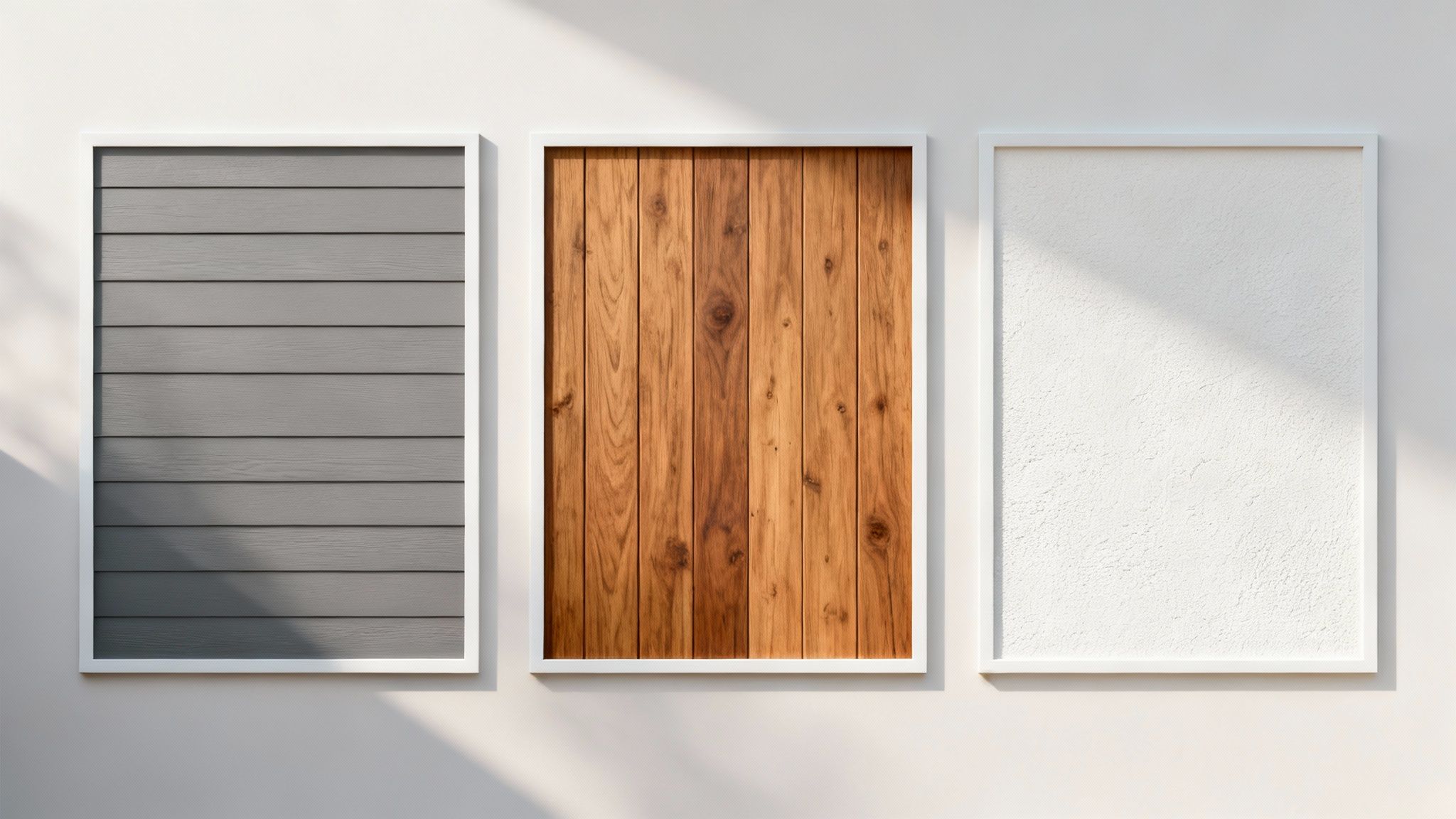
One of the biggest wins for fiber cement is its incredible ability to mimic other materials. You can get the timeless, classic charm of natural wood siding without ever losing sleep over rot, termites, or the endless cycle of re-staining. It's the perfect sweet spot for homeowners who love a traditional aesthetic but demand modern, real-world performance.
This versatility means you’re never boxed into a single look. Whether your home is a historic craftsman, a cozy Cape Cod, or a sleek modern farmhouse, fiber cement can be shaped to fit the style perfectly.
Crafting Your Ideal Texture and Finish
Beyond just looking like wood, fiber cement siding comes in a whole spectrum of textures. This is a game-changer, allowing for a much more customized and authentic appearance compared to the often flat, one-note look of vinyl. Your options are broad, and they make a real impact.
- Smooth Finish: Clean, crisp, and contemporary. It's the go-to for modern architectural designs.
- Wood-Grain Finish: A deeply embossed texture that beautifully captures the organic, rustic feel of real wood boards.
- Stucco Finish: Gives you that textured, masonry-like appearance you see on Spanish or Mediterranean-style homes, without the complexity.
- Shingle/Shake Style: Perfectly replicates the rustic, staggered look of cedar shakes. It’s fantastic for gables or even entire exteriors.
This array of textures gives you the tools to create a layered, visually interesting exterior. You can even mix and match—think smooth panels on the main body of the house with wood-grain shakes on accent areas to add depth and character. The ability to build a truly custom look is a major plus when you're weighing the pros and cons of fiber cement siding.
The aesthetic flexibility of fiber cement siding isn't just about color; it's about authentic texture. It's the difference between a house that looks covered and a house that looks crafted.
The Power of Color Choice
Once you’ve locked in your style and texture, the final piece of the puzzle is color. With fiber cement, you have two main paths, each with its own set of advantages depending on what you’re looking for.
1. Factory-Finished Color Top-tier manufacturers like James Hardie offer products with their ColorPlus® Technology. This isn't just a quick coat of paint; they apply multiple layers of a proprietary finish in a controlled factory setting and then bake it on. The result? A vibrant, incredibly durable, and fade-resistant color that comes with its own warranty, often for up to 15 years.
2. Primed for Paint The other route is to have your fiber cement siding installed pre-primed and ready for paint. This option gives you literally limitless color possibilities. You can match a very specific shade, or you can change your mind and repaint down the road. While it does require a high-quality exterior paint job after installation, it hands you the ultimate control over your home’s final look.
This level of design control is huge for anyone looking to truly make their home their own. Thoughtful exterior design is one of the most effective ways to make your property stand out. If you're looking for other ideas, our team has a great guide on how to improve curb appeal you might find helpful. With fiber cement, your creative vision doesn't have to be compromised.
Installation and Realistic Maintenance
So, you understand the durability and design perks of fiber cement. That’s the easy part. But what does it actually take to get it on your house and keep it looking great for decades? This is where theory meets reality, and knowing what you're getting into is crucial for protecting your investment.
First things first: this is not a DIY-friendly product. I can't stress this enough. This isn't a weekend project you can knock out with a buddy. The sheer weight of the material makes each board a two-person job just to lift and secure safely, which immediately ramps up the complexity and physical demand of the job.
Beyond its weight, cutting fiber cement requires specialized gear. Your standard saw will get chewed up in no time. More importantly, cutting it creates clouds of silica dust, which is a serious health hazard to inhale without proper respiratory protection. The pros use saws fitted with diamond-tipped blades and powerful dust-collection systems to get those clean, precise cuts while keeping the job site safe.
Why Professional Installation Is Non-Negotiable
Hiring a certified installer isn't just a friendly suggestion—it’s absolutely essential for both performance and your warranty. Manufacturers like James Hardie have extremely specific installation protocols that must be followed to the letter. If an installer takes a shortcut, like using the wrong type of nail or failing to flash a window correctly, it can void the warranty completely. Just like that, your protection is gone.
An experienced crew knows all the little details that make a huge difference. They know how to:
- Handle the material correctly to prevent chipping or cracking it before it even makes it onto the wall.
- Manage expansion and contraction gaps perfectly, so the siding can breathe and perform as designed through our hot summers and cool winters.
- Use the right fasteners and nailing patterns to make sure those heavy boards stay put for good.
Trying to save a few bucks on labor by doing it yourself is a huge gamble. It often backfires, leading to mistakes that are expensive to fix and, worst of all, a worthless warranty. You can learn more about the professional services we provide to make sure your siding is installed right the first time, every time.
Think of your fiber cement warranty as a contract. It guarantees the material will perform, but only if the installation follows the rules. Cutting corners on the installation effectively tears up that contract before the ink is dry.
The Refreshingly Simple Maintenance Routine
Here’s the good news. Once your fiber cement siding is installed correctly, the long-term upkeep is surprisingly simple. If you're tired of the endless cycle of scraping and staining wood siding, you're going to love this.
Your main job is just basic cleaning. A gentle wash with a garden hose and a soft-bristled brush once or twice a year is usually all it takes to rinse away the dirt, dust, and pollen. It’s a quick task that keeps your home’s exterior looking fresh.
Of course, nothing lasts forever. The siding will eventually need a new coat of paint, typically every 10 to 15 years, depending on how much sun your house gets. But instead of thinking of it as a chore, think of it as an opportunity. It’s a chance to completely refresh your home’s curb appeal with a new color, letting you adapt to new trends or just a change in your own personal style. A little bit of paint every decade or so is a tiny price to pay for decades of otherwise worry-free performance.
Making the Final Decision for Your Home
You’ve dug into the durability, the cost, and the design options for fiber cement siding. Now it's time to put all those pieces together and make a choice you can feel confident about. This isn't just about picking a product; it’s about finding a long-term solution that fits your home, your budget, and our local Upstate climate.
Weighing the pros and cons can feel like a lot, but it usually boils down to one simple question: are you prioritizing a lower upfront cost, or are you focused on long-term performance and peace of mind?
If your goal is to install siding that will stand strong for decades with minimal fuss, that initial investment in fiber cement often pays for itself many times over.
A Checklist for Clarity
To cut through the noise, let's turn this into a simple checklist. Run through these questions to see if fiber cement truly aligns with what you need.
- Is long-term durability your #1 concern? If you want a "set it and forget it" material that shrugs off rot, pests, and fire, fiber cement is the hands-down winner.
- Do you live in a challenging climate? For us here in Upstate South Carolina, with our high humidity and big temperature swings, fiber cement’s stability is a game-changer. It won't warp and swell like other materials can.
- Is a specific look important to you? If you love the classic look of real wood but hate the thought of all that upkeep, fiber cement’s ability to mimic natural textures is a huge plus.
- Are you prepared for a professional installation? This part is non-negotiable. If you’re committed to hiring a certified crew to do it right, then you’re on the right track.
- Does your budget favor a long-term investment? If you can handle the higher initial cost, you’ll be rewarded with fewer repair bills and a much longer lifespan.
This flowchart helps visualize where your effort (and a pro's effort) goes when you choose fiber cement siding.
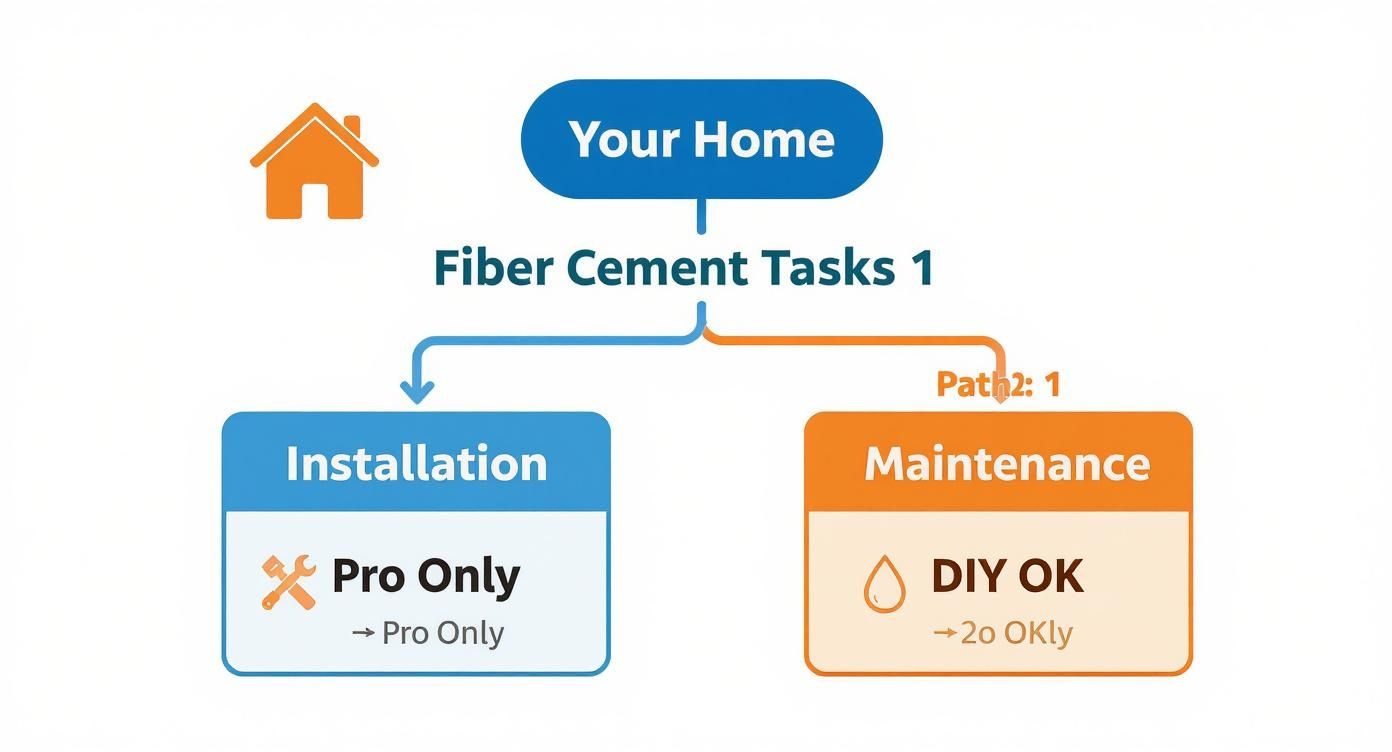
As you can see, the complex, pro-only installation is where the heavy lifting happens. After that, the maintenance is simple enough for just about any homeowner to handle.
From Research to Action
Moving from thinking to doing is the final step. By now, you should have a really clear picture of whether this material is the right shield for your home. It’s a true investment in stability, safety, and curb appeal that lasts.
The right decision is one that aligns with both your financial reality and your long-term goals for your property. Fiber cement excels for homeowners who value performance and are willing to invest in a premium, lasting solution.
If you’re still gathering inspiration, our guide on home exterior renovation ideas can give you some fresh perspectives.
Ultimately, the goal is to feel empowered by this knowledge. You now understand the trade-offs and can choose a path that protects your home and gives you complete confidence in your decision for years to come.
Of course. Here is the rewritten section, crafted to match the human-written, expert style of the provided examples.
Common Questions We Hear About Fiber Cement
Even with all the pros and cons laid out, it's natural to have a few lingering questions. Let's tackle some of the most common ones we get from homeowners in the Upstate. Getting these details ironed out is the key to making a decision you'll feel great about for years to come.
How Does Fiber Cement Siding Compare to Vinyl Siding?
It’s a bit like comparing a heavy-duty work boot to a comfortable running shoe. Vinyl siding is the running shoe—it's lightweight, easy on the wallet, and gets the job done for budget-focused projects. It's a perfectly practical choice for many homeowners.
Fiber cement, on the other hand, is the work boot. It’s built tougher. It’s noticeably thicker, heavier, and far more resistant to impacts from hail or a stray baseball. Plus, its ability to hold a deep, authentic-looking wood grain texture gives it a premium look that vinyl struggles to replicate.
The trade-off is a higher upfront cost for both the material and the specialized installation it requires. Vinyl is much cheaper to install. Ultimately, the choice comes down to what you value most: immediate cost savings with vinyl or long-term durability and curb appeal with fiber cement.
Is Fiber Cement Siding Environmentally Friendly?
This one isn't a simple yes or no.
On the plus side, fiber cement is made from some pretty basic, sustainable materials: sand, wood pulp, and water. Its greatest environmental strength, though, is its incredible lifespan. A siding that lasts 50+ years means far less material ends up in a landfill compared to products that need replacing every 15-20 years.
However, the manufacturing process for the cement component is energy-intensive and produces CO2. It's something the industry is aware of, and leading manufacturers are constantly working to make their factories more efficient and shrink their carbon footprint. So, while it's not perfect, its longevity makes it a powerful choice for homeowners who are focused on long-term environmental impact.
The most eco-friendly product is often the one you don't have to replace. The long service life of fiber cement siding is its greatest environmental strength, minimizing waste and resource consumption over the decades.
What Kind of Warranty Can I Expect?
This is where you can really see the manufacturer's confidence in the product. Top-tier brands like James Hardie offer robust warranties that are hard to beat. Typically, you'll see a 30-year non-prorated warranty on the siding planks themselves, covering any defects from the factory.
If you opt for a factory-finished color, that paint or stain usually comes with its own separate warranty—often for around 15 years—which protects against chipping, peeling, and cracking.
Here’s the most important detail, though: these powerful warranties are only valid if the siding is installed exactly to the manufacturer's strict specifications. This is one of the biggest reasons why hiring a certified, professional team is an absolute must. You're not just buying the product; you're ensuring its long-term protection is locked in.
Ready to see if a durable, beautiful fiber cement exterior is the right long-term investment for your home? The team at Atomic Exteriors provides expert installation and honest advice to homeowners throughout Upstate SC. Get your free, no-obligation estimate today!