.png)

Cleaning your gutters safely is all about preparation. It means making sure your ladder is rock-solid, you've got the right protective gear, and you never, ever overreach. Honestly, the time you spend getting set up before you climb is far more important than the actual cleaning part.
The Real Risks of DIY Gutter Cleaning
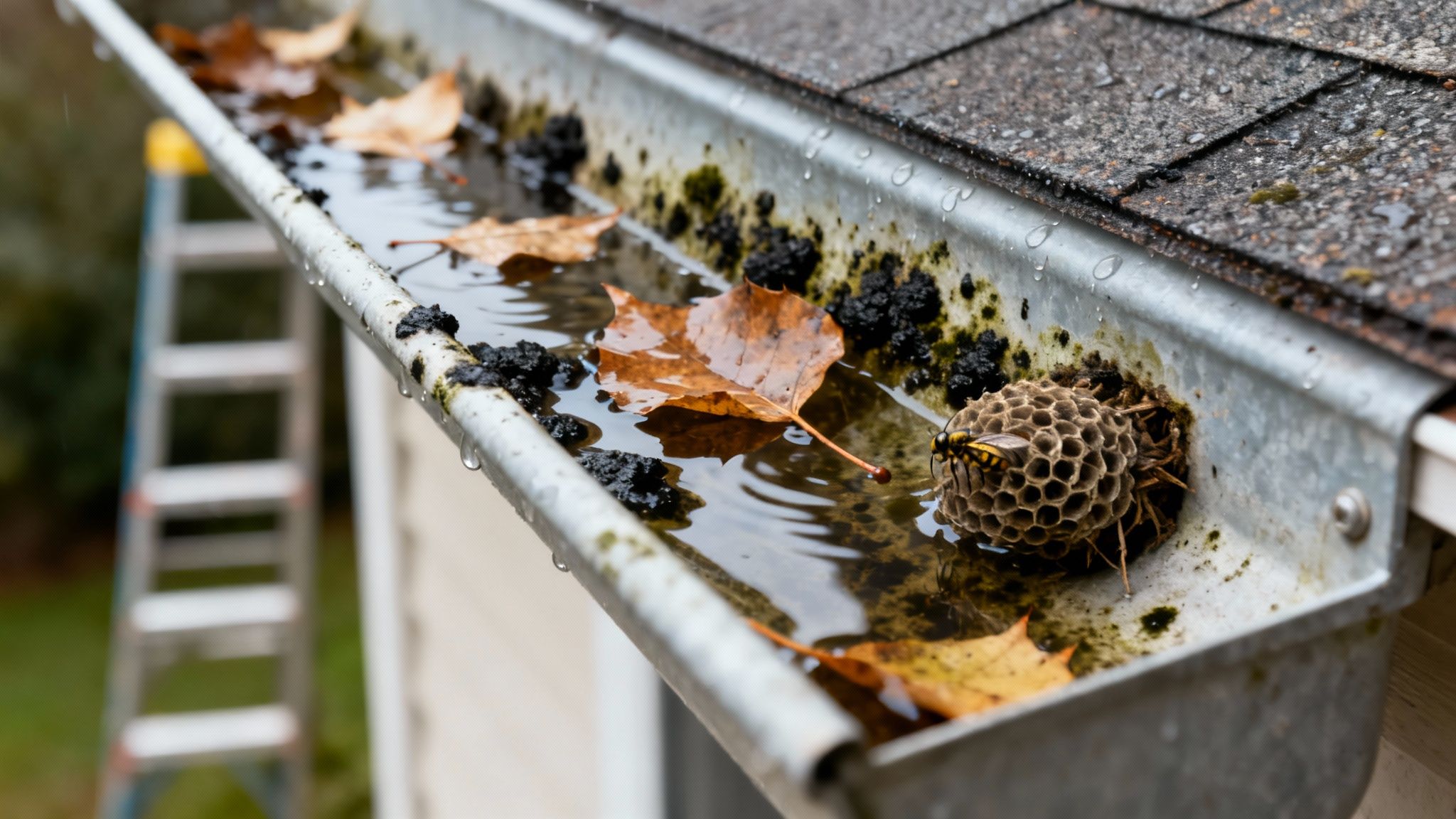
Before you even think about pulling out a ladder, it's worth taking a minute to understand why gutter cleaning is one of the most hazardous jobs you can do around the house. It's easy to write it off as a simple chore, but the dangers are real and often underestimated. The biggest risk, by far, is falling.
The numbers on ladder accidents are pretty sobering. Every year, around 500,000 people in the U.S. fall from ladders, and a whopping 90% of those accidents happen right at home. That leads to roughly 164,000 emergency room visits annually and, tragically, over 300 deaths. You can read more about the health risks involved over at southernindustries.com.
It’s Not Just About the Fall
While falling is the most obvious danger, it’s not the only thing to worry about. The gunk that's been stewing up there is more than just a pile of wet leaves—it's a miniature ecosystem packed with nasty surprises.
That damp, decomposing mess is the perfect breeding ground for:
- Bacteria and Mold: You're dealing with things like Clostridium tetani (which causes tetanus) and all sorts of molds. If you have a small cut on your hand or allergies, contact can lead to skin infections or serious respiratory problems.
- Pests and Critters: You never know what’s made a home in your gutters. Wasps and hornets love the sheltered corners for building nests. It's also not uncommon to find rodents, birds, or even snakes.
- Sharp Objects: Hidden in all that muck can be sharp bits of metal, jagged pieces of old shingles, or other debris you definitely don't want to grab with bare hands.
Acknowledging these risks isn’t meant to scare you off—it's about having a healthy respect for the job. Safe gutter cleaning starts with understanding that you’re managing height, biohazards, and the element of surprise.
Upstate SC Weather Adds Another Layer of Challenge
Here in the Upstate, our local weather brings its own set of challenges. A sudden downpour, which we all know can happen in a flash, turns ladder rungs and roof shingles into a slick hazard. And the heavy, wet leaves from our beautiful oaks and maples create dense, surprisingly heavy clogs that can easily throw you off balance when you try to scoop them out.
Being prepared for our local conditions is key. If you're looking for more tips, our guide to protecting your South Carolina home has some great advice.
Taking these dangers seriously—from falls and pests to our unpredictable weather—is the first and most important step. It shifts the job from a simple task to a calculated process where your safety always comes first.
Your Essential Gutter Cleaning Toolkit
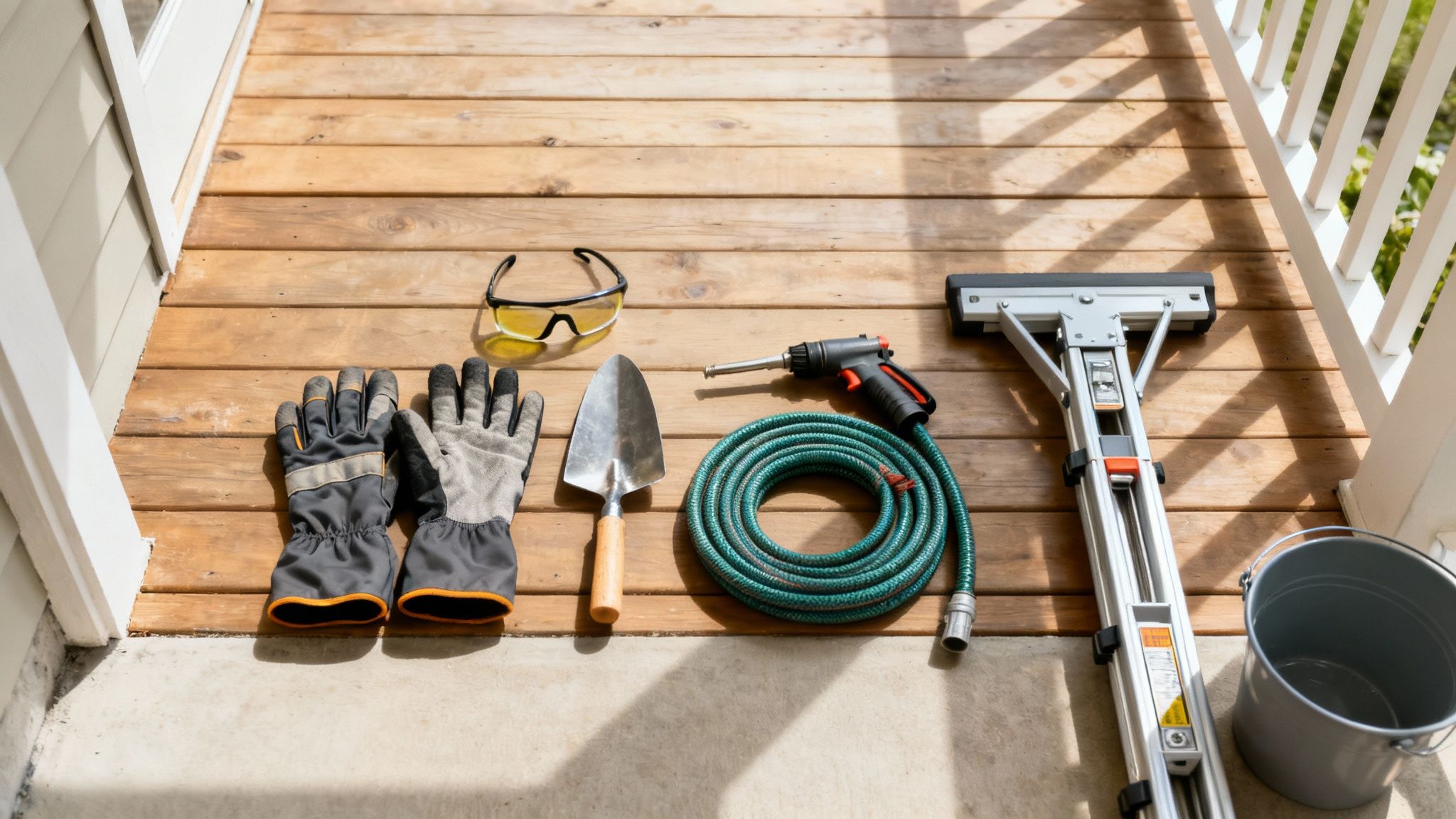
Trying to clean your gutters without the right gear is a recipe for disaster. It’s messy, inefficient, and flat-out dangerous. Having the correct tools isn't just about getting the job done faster—it's the absolute foundation of how to clean gutters safely. Think of this less as a shopping list and more as your safety blueprint.
The single most important piece of equipment you'll use is your ladder. For a single-story ranch, a good A-frame ladder might be all you need. But for anything higher, you have to use a heavy-duty extension ladder rated for your weight plus the weight of any tools you're carrying. That shaky old wooden ladder in the garage? Don't even think about it.
I also can't stress this enough: get a ladder stabilizer. This simple U-shaped attachment rests on your roof, not your gutters, which prevents damage and gives you a much wider, more stable base. It’s a small investment that dramatically reduces the risk of the ladder kicking out from under you.
Personal Protective Equipment Is Non-Negotiable
Your personal protective equipment (PPE) is what stands between you and the nasty surprises hiding in those gutters. Seriously, don't skip any of this.
- Thick, Waterproof Gloves: You'll be dealing with sharp metal edges, screws, and who knows what else is decomposing in that muck. A pair of heavy-duty, puncture-resistant gloves is a must.
- Safety Glasses or Goggles: When you start scooping, debris is going to fly. A tiny piece of shingle grit or a sharp twig in the eye can cause a serious injury in a split second.
- Non-Slip Footwear: Sturdy boots with good, rubbery tread are crucial for keeping your footing on ladder rungs, especially if things get a little wet.
Think of your PPE as armor. That damp, smelly gunk isn't just leaves and dirt—it’s a swampy breeding ground for bacteria. Protecting yourself from direct contact is a simple but powerful safety step.
Tools That Get the Job Done
Once you’re geared up for safety, you only need a few simple tools to clear the debris. Nothing fancy, just things that work.
A plastic gutter scoop is ideal because it’s flexible enough to match the curve of the gutter channel without scratching or denting it. If you don't have one, an old garden trowel works fine in a pinch.
You'll also want a few heavy-duty trash bags or, even better, a bucket with a hook that you can hang right on your ladder. This keeps you from just tossing the gunk onto your lawn, which just creates a second cleanup job for later.
Finally, a garden hose with a high-pressure nozzle is perfect for the final flush. This clears out any remaining sludge and, just as importantly, shows you exactly how well your gutters and downspouts are flowing. It's the best way to spot any leaks that need attention.
Of course, investing in modern, clog-resistant seamless gutter systems can make this whole chore a lot less frequent and a whole lot easier.
Mastering Ladder Safety on Any Terrain
Let's be blunt: your ladder is the most important—and most dangerous—piece of equipment you'll use for this job. Get it right, and it's a trusty tool. Get it wrong, and it’s the single biggest hazard you'll face. True ladder safety isn't just about ticking boxes; it's about building the confidence to work at height without a second thought.
The work starts before you even think about climbing. Give your ladder a quick once-over every single time. Look for loose rungs, cracks, or any other signs of damage. Then, turn your attention to the ground. A sloped flower bed or a patch of soft, muddy grass is asking for trouble. You absolutely need a firm, level, and dry surface for that ladder to be stable.
The Foundation of a Safe Climb
Once you've scouted a solid spot, placement is everything. The angle of an extension ladder is the make-or-break factor for its stability. Too steep, and it can tip right over backward. Too shallow, and the base can slide out from under you in a heartbeat. The fix is beautifully simple: the 4-to-1 rule.
For every four feet up the wall your ladder reaches, its base should be one foot away from the house. For example, if the top of your ladder rests against the house at a height of 16 feet, the feet of the ladder should be exactly four feet out from the foundation. This creates the perfect, stable angle for climbing.
Quick tip: Always maintain three points of contact on the ladder. That means two hands and one foot, or two feet and one hand, are touching the ladder at all times. It feels awkward at first, but this one habit is a game-changer for preventing a fall.
Avoiding Common and Dangerous Mistakes
It’s surprisingly easy to get complacent when you're focused on scooping out gunk, but it's the small, lazy mistakes that lead to big accidents. The most common one? Overreaching. We've all done it—stretching just a little bit further to grab that last clump of leaves. Don't. It’s never worth it. Climb down and move the ladder.
Here are a few other critical blunders to avoid:
- Ignoring the weather: A light drizzle is all it takes to make metal rungs slick and dangerous. Always check the forecast before you head outside.
- Working alone: Having a spotter isn't just for first-timers. They can stabilize the base, hand you tools, and be there to call for help if something goes wrong.
- Using makeshift levelers: Never, ever prop your ladder on bricks, boards, or stacks of whatever you can find. If the ground isn't level, invest in a proper ladder leveling tool.
Getting these fundamentals right is non-negotiable for any DIY project that takes you off the ground. For more practical home maintenance advice, feel free to check out other guides on our official company blog.
Ultimately, cleaning your gutters safely is a methodical process, not a race. Taking a few extra minutes to make sure your ladder is secure, positioned correctly, and used with respect is the most important step of the entire job. It lets you focus on the task at hand without putting yourself at risk. Remember, the gunk in your gutters can wait—your safety can't.
A Practical Guide to Cleaning Your Gutters
Alright, you're geared up and the ladder feels solid. It’s time to get your hands dirty. The key here is to work smart, not hard. That means cleaning in small, manageable sections and moving the ladder often. Whatever you do, resist the urge to overreach—it’s the single most common mistake people make, and it's the most dangerous.
Start by setting up your ladder near a downspout. Once you’re safely up, begin scooping the leaves and gunk away from the downspout opening. This little trick prevents you from creating a massive clog right off the bat, saving you a major headache later.
Use a simple plastic gutter scoop or even a garden trowel to get the heavy stuff out. You can drop the debris onto a tarp laid out below or, even better, hook a bucket to your ladder to keep things tidy. Tossing it straight onto the lawn just means you have another mess to clean up, and it can smother your grass.
The Right Way to Flush Your Gutters
After you've scooped out all the solid debris in a section, it's time for the flush test. Grab your garden hose—a high-pressure nozzle makes a world of difference here—and spray a strong stream of water down the gutter channel, always aiming toward the downspout.
This isn't just about rinsing. This step is critical for a few reasons:
- It clears out the fine silt and grit that your scoop always misses.
- It instantly reveals any hidden clogs you couldn't see.
- It acts as a quick diagnostic tool, showing you exactly where you might have leaks or drips.
If the water runs clear and pours out the bottom of the downspout, you're golden. If it starts to pool or back up, you’ve found a blockage that needs to be dealt with before you move on to the next section.
Always remember that working at height requires a steady, methodical pace. The following infographic breaks down the essential steps for maintaining ladder stability and safe climbing.

This visual guide is a great reminder that safety starts with a level ground assessment, moves on to setting the correct angle, and is maintained by using proper climbing techniques every single time.
Gutter Cleaning Methods Comparison
There's more than one way to clean a gutter. Depending on your comfort level with heights, the tools you have, and the type of debris you're dealing with, one method might work better for you than another. Here’s a quick comparison of the most common approaches.
| Scoop & Bucket | Most thorough method; allows for close inspection of gutters. | Slowest method; requires working directly on a ladder. | Homeowners comfortable with heights who want a deep, detailed clean. |
| Hose with Spray Nozzle | Great for flushing fine debris and testing for clogs; quick. | Can be messy; doesn't remove heavy, caked-on gunk effectively. | Routine maintenance on gutters that aren't heavily clogged. |
| Leaf Blower Extension | Fast and effective for dry leaves; can be done from the roof or ground. | Incredibly messy; blows debris everywhere; ineffective on wet, heavy sludge. | Fall cleanup when gutters are filled with dry, lightweight leaves. |
| Wet/Dry Vacuum | Sucks up both wet sludge and dry leaves; relatively clean process. | Requires a specialized gutter attachment; can be cumbersome to manage the hose. | Tackling heavy, wet gunk or "gutter muck" without making a huge mess. |
| Telescoping Gutter Wand | Allows you to clean from the ground; avoids ladder use. | Less precise; you can't see what you're doing, making it easy to miss spots. | Quick, light cleanings for single-story homes where ladder safety is a concern. |
Each method has its place, but for a truly effective clean that also lets you inspect for damage, the hands-on "scoop and bucket" followed by a hose flush is tough to beat.
Tackling a Blocked Downspout
A blocked downspout is probably the most common roadblock you’ll hit. If you flush a gutter section and the water just backs up, you've got an obstruction. The worst thing you can do is try to blast it out from the top with the hose—that much pressure can split the seams of your downspout.
Instead, work from the ground up. First, try tapping firmly on the sides of the downspout; sometimes, that's all it takes to dislodge the clog. If that doesn't work, take your hose and feed it up into the opening at the bottom. Turn the water on full blast. The upward pressure is often enough to break the clog apart and send it spilling out.
For those really stubborn blockages, a plumber's snake (or auger) is your best friend. Carefully feed the snake up from the bottom until you hit the clog, then gently turn the crank to chew through the debris. Once you feel it give way, flush the downspout thoroughly from the top to make sure everything is completely clear.
If you find yourself battling the same clogs season after season, it might be time to think about an upgrade. Investing in new seamless gutters in Arden can make a huge difference in water flow and drastically cut down on buildup. By working methodically and tackling problems as they pop up, you can get your gutter system back in prime condition to protect your home.
When It's Time to Call in the Pros
Look, there’s a lot to be said for the satisfaction of a DIY job well done. But when it comes to gutter cleaning, knowing when to put the ladder away is the smartest and safest decision you can make. It’s not about giving up; it’s about being a responsible homeowner and recognizing when the risks just aren't worth the reward.
The biggest factor, without a doubt, is height. If your home is more than two stories high or has a roof pitch that makes you second-guess yourself, the danger level skyrockets. A standard extension ladder might not cut it, and a fall from that height is no small thing.
When Cleaning Just Isn't Enough
Sometimes you get up there expecting a simple clean-out and find a much bigger headache waiting for you. That’s when you need to switch from "cleaner" to "diagnostician" and call for backup.
Keep an eye out for these red flags:
- Visible Damage: Are your gutters sagging, pulling away from the house, or showing obvious cracks? That’s a structural problem, not a cleaning one. A pro can diagnose why it's happening and fix the root cause.
- Stubborn Clogs: If you’ve cleaned the gutters but the downspouts are still backing up, you likely have a deep clog in the underground portion of your drainage system. That’s a job for specialized tools, not just a garden hose.
- Unwelcome Guests: Finding a wasp nest the size of a football or evidence of rodents is a clear sign to stop. Gutter and pest control professionals have the right gear to handle these hazards without anyone getting hurt.
Calling a professional isn’t just about getting the leaves out. It's an investment in your safety and your home's long-term health, ensuring the job is done right with proper equipment and insurance.
It's a surprising fact, but surveys show 27% of homeowners only clean their gutters after a problem pops up, often leading to more dangerous and expensive situations. While professional service has a cost, it’s a drop in the bucket compared to major water damage repairs or a trip to the emergency room. You can learn more about what influences gutter cleaning costs to get a better idea.
At the end of the day, trust your gut. If you have a fear of heights, a physical limitation, or just a nagging feeling that this is a bad idea, listen to it. Finding a reliable local company is easier than you think. A quick look at customer testimonials and reviews will tell you who your neighbors trust. Just be sure to ask for their proof of insurance before they start—it’s your home, and you have every right to protect it.
Answering Your Top Gutter Cleaning Questions
Even after you've got your tools and a game plan, a few lingering questions can pop up. It happens to everyone. Let's tackle some of the most common ones I hear from homeowners right before they get started.
How Often Should I Really Clean My Gutters?
The old rule of thumb is twice a year—once in the late spring after the pollen and blooms have fallen, and again in the late fall once the trees are bare. But let's be honest, that’s just a starting point.
Here in the Upstate, your specific yard is the real boss. If your home is tucked under a canopy of pine trees that shed needles all year long, you're probably looking at three or four cleanings a year. A single thunderstorm can also drop an entire season's worth of leaves and twigs in just a few hours, forcing an unplanned clean-out.
The "twice a year" advice is the bare minimum. A much better approach is to just look up at your gutters after big storms or as the seasons change. A quick visual check will tell you everything you need to know and help you get ahead of a serious clog.
Are Gutter Guards a Set-It-and-Forget-It Solution?
Gutter guards are a fantastic upgrade that can drastically cut down on your time on a ladder, but they aren’t a magic wand that makes maintenance disappear forever. They do a great job of blocking the big stuff—leaves, sticks, and pinecones.
But over time, smaller debris like shingle grit, dirt, and pollen can still wash through the mesh or screen. This fine material settles at the bottom of the gutter and can eventually form a thick, heavy sludge. So, while you won’t be scooping out handfuls of leaves every fall, you'll still want to give the gutters a good flush with a hose every few years to keep that sludge from building up and causing problems.
They make the job way easier, but they don't completely eliminate it.
Can I Just Use My Leaf Blower from the Ladder?
I know it sounds like a brilliant shortcut, but using a leaf blower while you're standing on a ladder is extremely dangerous. The kickback and vibration from a powerful blower can easily knock you off balance, and that's a fall you don't want to take.
Safety aside, it's also a spectacularly messy way to do the job. You'll end up blasting wet, decomposed gunk all over your siding, windows, and the landscaping below. You’ll just be trading one cleanup job for a much bigger, nastier one.
For a clean, safe, and controlled process, it’s best to stick with a gutter scoop and finish with a simple rinse from your garden hose.
At Atomic Exteriors, we know that keeping your home safe starts with a well-maintained exterior. If getting on a ladder just isn't for you, or if you're ready to look into a long-term fix with modern seamless gutters, our team is here to help. Contact us for a free, no-obligation estimate.