.png)
A Homeowner's Guide to Vinyl Siding Colors
Picking the right color for your vinyl siding is a huge decision. It sets the tone for your entire home and is something you’ll live with for decades. The best choice isn't just about your personal taste; it's a careful blend of your home's unique architecture, the way light hits your property, and even practical things like our Upstate climate.
This guide will walk you through the process, helping you land on a color that’s not just beautiful but also smart.
How to Choose the Perfect Vinyl Siding Color
Choosing a color for your home's exterior can feel like a massive undertaking, but it doesn't have to be. Instead of thinking about it as one big, scary choice, reframe it: you're building a complete, cohesive look for your home, piece by piece.
The key is to break it down. We'll look at everything from your home's permanent features (like that brick foundation or stone chimney) to the general vibe of your neighborhood. Following a few simple steps makes the whole process feel much more manageable.
It also helps to appreciate just how far vinyl siding has come. When it first appeared back in the 1950s, the color choices were extremely limited, and fading was a real problem. Thankfully, major advancements by the 1970s boosted its durability and blew the color options wide open, giving us the amazing variety we have today.
Start with a Strong Foundation
The secret to getting your color choice right is starting with a solid plan. Don't just grab a few small color chips and hope for the best. You have to zoom out and look at the bigger picture first.
- Assess Your Home's Architecture: Is your house a classic Colonial? It’ll look incredible in timeless whites, stately grays, or deep blues. If it’s a more modern design, you can get away with bolder, darker colors. Let your home's architectural style be your first filter.
- Consider Fixed Elements: Take a good look at the parts of your house that aren't changing. Your roof color, any brick or stone accents, and even the color of your driveway are permanent. Your new siding needs to harmonize with these elements, not fight against them.
- Think About Your Landscape: A home nestled among lots of trees and lush greenery often looks best in earthy tones like greens, browns, or warm beiges. On the other hand, a house on a sunnier, more open lot can really shine with a brighter, lighter shade.
Your home's exterior is a complete system. The best vinyl siding colors are those that create harmony between the siding, trim, roof, and landscape, resulting in a cohesive and intentional look.
We've put together this quick-reference table to summarize the key decision points.
Key Factors for Choosing Your Siding Color
| Home Architecture | The color should enhance, not clash with, your home's inherent style (e.g., Colonial, Modern, Craftsman). | Look at historical color palettes for traditional homes; consider bold, high-contrast schemes for modern designs. |
| Fixed Elements | Your roof, stone, and brick colors are permanent, so the siding must complement their undertones. | Bring siding samples right up next to your brick or roof to see how the colors interact in real life. |
| Lighting & Climate | Sunlight dramatically changes color appearance. A color can look warm in the morning and cool in the afternoon. | Test large samples on different sides of your house and observe them throughout the day. |
| Neighborhood Vibe | You want your home to stand out for the right reasons, not stick out like a sore thumb. | Drive around your neighborhood and note the popular color schemes. Aim for "fits in but stands out." |
| Long-Term Value | Neutral and classic colors have broader appeal and can be a safer bet for future resale. | If you plan to sell within 5-10 years, stick to classic choices like grays, beiges, and off-whites. |
Thinking through these factors is the first step toward narrowing down your choices from hundreds to just a handful of great options.
For homeowners looking at the entire process from start to finish, our complete guide to new siding installation covers all the materials and steps involved. And if you're thinking about just refreshing what you already have, learning about painting vinyl siding can be a great alternative.
Diving Into Popular Siding Color Trends
Picking a vinyl siding color is more than just choosing a shade you like right now. It's about finding a palette that will feel right for your home for years to come. Trends shift, of course, but a few key movements are really shaping how homeowners are thinking about their exteriors today.
Looking at what's popular is a fantastic way to get inspired. The most timeless trend, without a doubt, is the staying power of classic neutrals. Think crisp whites, versatile grays, and warm, inviting beiges. These are the blue jeans of the housing world—they never go out of style and work with almost any accent you throw at them. They create a clean, classic backdrop that seriously boosts curb appeal and has broad appeal if you ever decide to sell.
The Shift Toward Earthy and Natural Tones
Lately, there’s been a huge pull toward connecting homes with their natural surroundings. This has sparked a surge in nature-inspired hues. We're seeing more deep forest greens, smoky jades, and rich, earthy browns than ever before. These organic shades make a house feel grounded and settled into its landscape, creating a smooth, beautiful transition from your yard right up to the front door.
This isn't just a fleeting fad. Siding color preferences right now show a strong global movement toward these restorative, nature-themed shades. It proves homeowners are looking for a sense of calm and tranquility in their exterior design. For more ideas on blending your home with its environment, check out our guide on home exterior renovation ideas.
Going Bold: Embracing Dark and Dramatic Hues
On the complete opposite end of the spectrum, homeowners are making a confident move toward dark, dramatic vinyl siding. Shades like charcoal gray, deep navy blue, and even black are making a powerful statement on modern homes. These bold colors create a striking, contemporary look that’s both sophisticated and impossible to forget.
These darker tones look especially sharp on homes with clean lines and simple architectural shapes. The dark color really highlights the structure's form without being overwhelming.
A bold color choice turns your home’s exterior from a simple protective layer into a deliberate design statement. It communicates confidence and gives a property a distinct, modern identity that stands out in the neighborhood.
And this trend is backed by real numbers. Dark colors like charcoal and navy now make up roughly 35% of new siding installations in some urban markets. These darker shades have gone from a niche choice to a mainstream option for creating high-impact curb appeal. You can explore the full report on modern siding trends to see more of the data.
So, whether you’re drawn to a timeless neutral, a nature-inspired green, or a dramatic dark gray, today's vinyl siding colors offer more ways than ever to let your personal style shine.
How Light and Climate Affect Your Color Choice
Have you ever picked a paint swatch at the store, only to find it looks completely different on your wall? The same thing happens with siding—but on a much larger scale. That small vinyl sample you loved in the showroom can transform once it's installed across your entire home.
This isn't magic; it's just the power of natural light. Your house is a giant, three-dimensional canvas, and the sun acts as a moving spotlight that changes color and intensity all day long.
Think about it. The cool, crisp light of early morning can make a gray siding look sharp and slate-like. Fast-forward to the late afternoon, and that same gray is now bathed in the warm, golden glow of a sunset, making it appear softer, almost leaning toward beige. A single color can have multiple personalities depending on the time of day.
The direction your home faces is also a huge player. A north-facing wall, which gets mostly indirect light, will make colors appear darker and more muted. In contrast, a south-facing wall gets blasted with direct sun all day, making that same color look significantly brighter and more intense.
The Role of Your Local Climate
Beyond the daily movement of the sun, our Upstate South Carolina climate has a major say in which siding colors are the most practical. This is where your choice moves beyond just looks and becomes about energy efficiency.
It’s pretty simple: dark colors absorb heat. In a cold climate, that's a nice little bonus, potentially helping to trim heating bills in the winter.
Here in the South, however, the opposite is true. Lighter colors—think whites, light grays, and soft beiges—reflect sunlight and heat away from your house. This is a huge advantage during our hot, humid summers, as it can ease the burden on your air conditioner. While we don't have the same salt spray issues, it's interesting to see how coastal climate affects exterior choices in other parts of the country, which further proves how environment shapes design.
This infographic breaks down some of the major color trends, which are often driven by these very environmental factors.
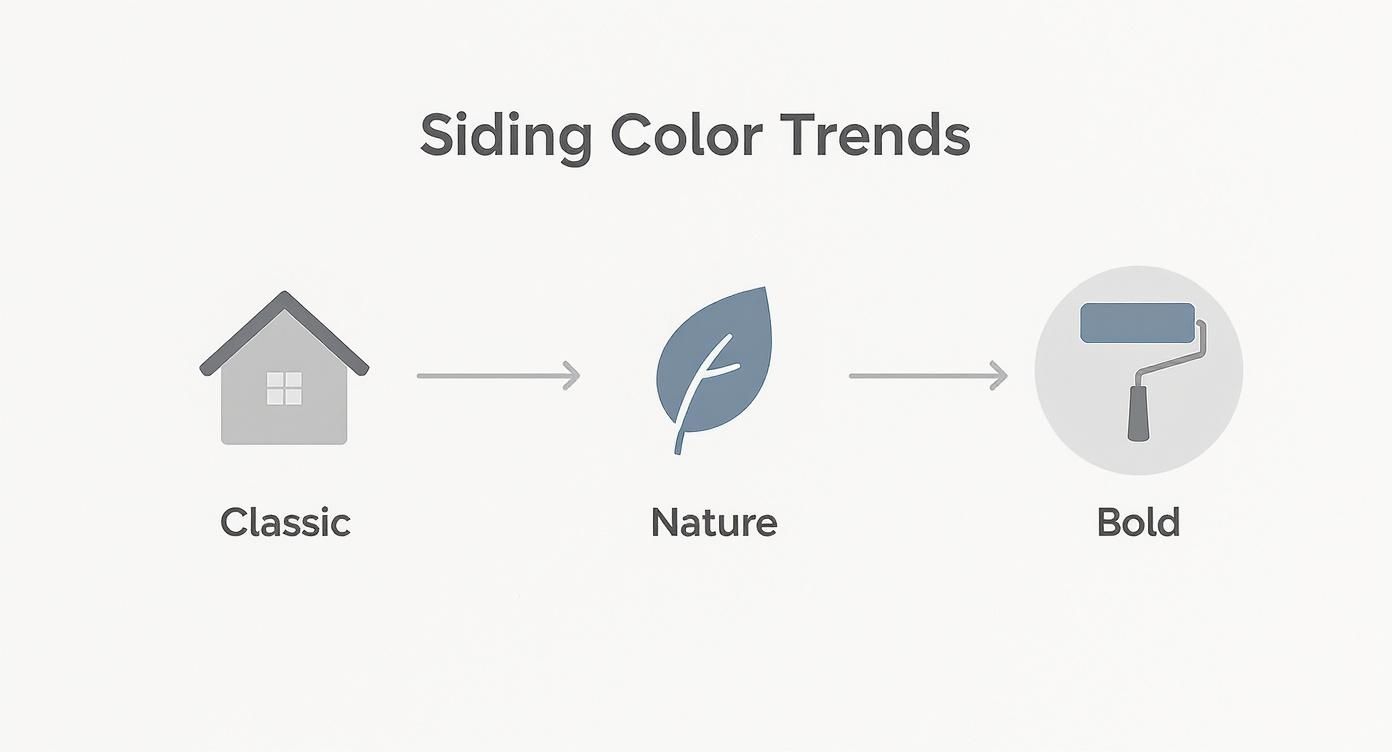
As you can see, classic, nature-inspired, and bold color families each have their own place depending on the home's style and the local environment.
Making a Climate-Smart Decision
Choosing a color that works with your local weather isn’t just a fad; it’s a smart, practical strategy. In colder regions, you see a lot more dark siding like deep grays and navy blues—they now make up around 35% of new installations in some northern areas, partly for their heat-absorbing properties. Down here, lighter neutrals are still king for their ability to reflect the sun and keep our homes cooler.
Think of your siding color as a functional part of your home's thermal envelope. Picking a shade that aligns with our climate can actually contribute to better energy performance and year-round comfort.
For homeowners in places like Asheville, where you get a real taste of both warm summers and chilly winters, finding the right balance is key. If you're exploring options for a mountain home, understanding the full range of siding materials designed for that unique climate can provide valuable local insight.
Ultimately, the secret to a choice you’ll love for decades is picking a color that not only looks great in your specific lighting but also performs well in your climate.
Building a Cohesive Exterior Color Palette
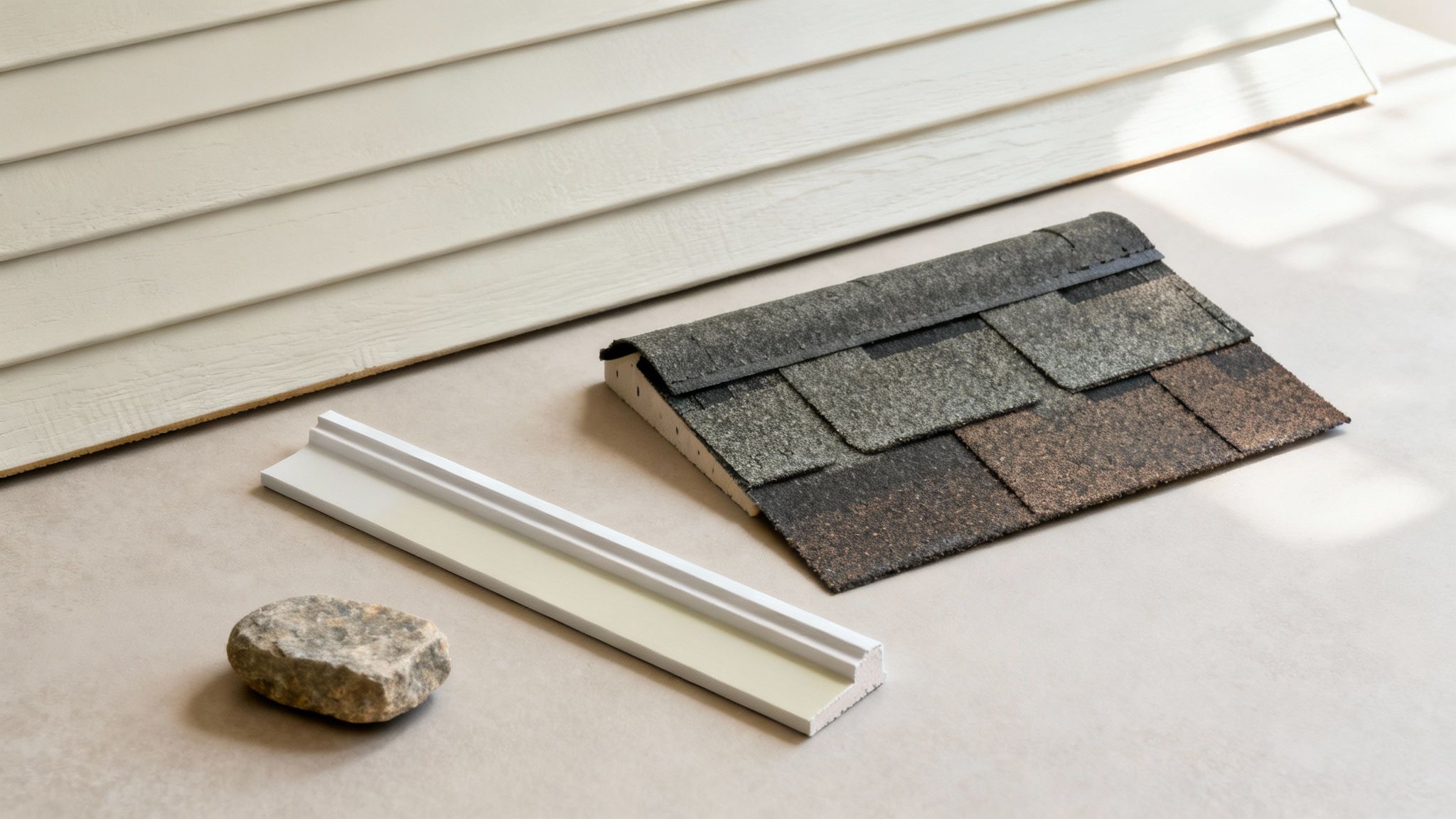
Your siding color is the star of the show, but it can’t perform alone. To get that truly stunning, put-together look, you need a solid supporting cast—your roof, trim, and any brick or stone accents. Think of it like putting together a great outfit; every piece needs to work with the others to create a polished, intentional style.
The best place to start? Look at the parts of your home you can't change. Get up close with your roof shingles or the mortar in your brickwork. Do you see warm, earthy tones like browns, reds, or tans? Or are they cooler, with hints of blue, black, or gray? That one little detail is your single most important guide.
Once you know the undertone, you can pick siding and trim colors that share the same "temperature." A warm, creamy white siding, for example, looks fantastic with a brown roof. On the other hand, a crisp, modern blue-gray siding will look sharp and sophisticated next to black or dark gray shingles.
Matching Your Trim and Accents
Trim is the frame for your siding masterpiece. It’s what outlines your home’s best features—the windows, doors, corners, and roofline. The right trim color makes your main siding color pop and pulls the whole look together.
You really have two main strategies here:
- High Contrast: This is the classic, can't-go-wrong approach. Think of a deep navy or charcoal siding paired with a brilliant white trim. It creates sharp, clean lines that really define your home’s architecture.
- Low Contrast (Monochromatic): For a more subtle, modern vibe, choose a trim color that’s just a few shades lighter or darker than your siding. This creates a soft, blended look that feels sophisticated and elegant.
Think of your trim as the punctuation for your home's exterior design. It can be a bold exclamation point or a subtle, quiet period, but its job is to give structure and definition to the main color story.
Creating Color Harmony
To make things even easier, we’ve put together a few tried-and-true combinations that always deliver a harmonious look. Use this table as a jumping-off point to see how different siding colors work with trim and roofing to create a professionally designed feel.
Siding and Trim Color Combination Ideas
| Warm Beige | Creamy Off-White or Deep Brown | Brown or Earth-Toned Shingles |
| Cool Gray | Bright White or Charcoal Gray | Black or Dark Gray Shingles |
| Navy Blue | Crisp White or Light Gray | Black, Gray, or Weathered Wood |
| Forest Green | Tan or Off-White | Dark Brown or Black Shingles |
| Classic White | White (for a clean look) or Black (for contrast) | Black, Gray, or even a Colored Metal |
This systematic approach takes the guesswork out of the equation, letting you build a cohesive color palette with confidence. By starting with your fixed elements, matching undertones, and then thoughtfully picking your trim, you can ensure every part of your exterior works together to create a beautiful and welcoming home.
Thinking About HOA Rules and Resale Value
Picking the perfect siding color feels like a deeply personal choice, but it's important to remember your home doesn't exist in a vacuum. It’s part of a neighborhood. Two big, practical factors can steer your decision: your Homeowners’ Association (HOA) guidelines and your home’s future resale value. Getting this wrong can mean fines, frustration, and a smaller pool of buyers when it's time to sell.
So, before you get your heart set on that perfect shade of navy blue or sage green, your very first stop should be your HOA's rulebook. Most HOAs have a pre-approved palette of siding colors to keep the neighborhood looking unified. Going off-script, even by accident, could land you a hefty fine or, worse, an order to re-side the whole house on your own dime.
Finding the Sweet Spot: Personal Style vs. Market Appeal
You absolutely should love coming home to your house every day. But if you think you might sell in the next 5 to 10 years, it’s smart to think like a future buyer, too. A bold, unconventional color might be a perfect reflection of your personality, but it could be a major turn-off for someone else.
When it comes to resale, safe and universally appealing neutrals are your best bet. Year after year, the colors that move houses fastest are:
- Versatile Grays: From light and breezy to deep, dramatic charcoal.
- Warm Beiges: Classic, inviting, and a breeze to match with stone or brick.
- Timeless Whites: Crisp off-whites and creams that always feel fresh and clean.
These colors make a great first impression. They act like a blank canvas, making it easy for potential buyers to imagine their own lives there. A smart, neutral exterior can seriously increase property value and help you sell faster when the time comes.
Think of your siding color as a strategic investment. A classic neutral is like a blue-chip stock—it appeals to the widest audience, making it a smart financial choice that pays off in both curb appeal and resale value.
Now, this doesn’t mean your home has to be boring! A fantastic strategy is to pick a crowd-pleasing neutral for the main siding and then let your personality shine through in the details—things that are easy and cheap to change down the road. A vibrant front door, bold shutters, or even colorful flower boxes can add that unique spark without locking you into a niche siding color that might scare away buyers. It’s the best of both worlds: a home that feels like you today, with broad appeal for tomorrow.
Making Your Final Siding Color Decision
Alright, you’ve done the homework. You’ve explored the trends, thought about your home’s architecture, and you get how light and climate can play tricks on color. Now it’s time to bring all that knowledge home—literally.
This is where the rubber meets the road. It’s the final, and most important, step before you write the check. This is how you turn a good idea into a reality you can see, touch, and absolutely love for decades.
The Power of Real-Life Samples
Reading about vinyl siding colors is one thing; seeing them propped up against your own brick, under the shade of your old oak tree, is something else entirely. Please, don't skip this part. It’s the single best way to avoid that sinking feeling of color regret.
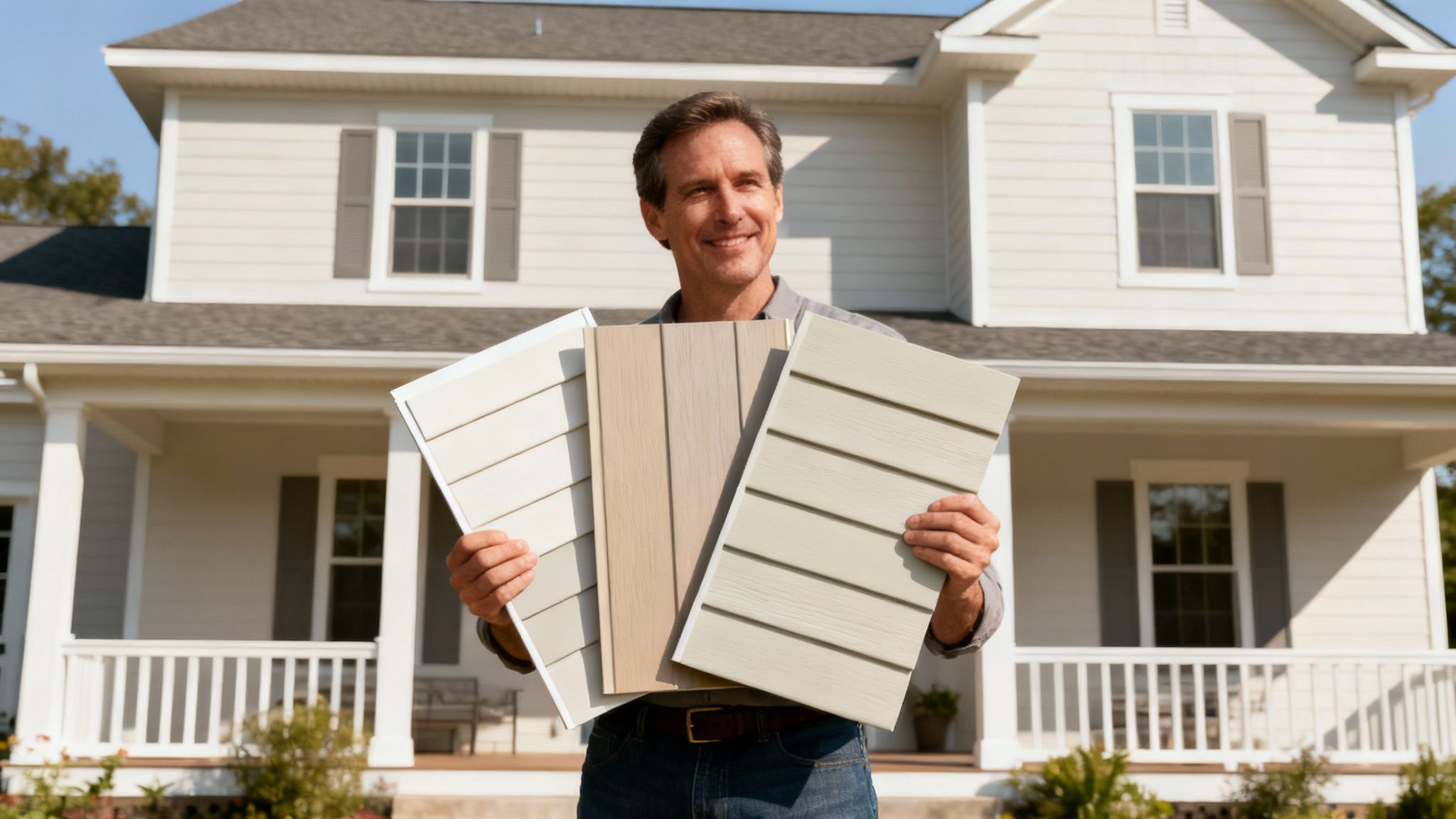
Brochure swatches and tiny color chips are notoriously misleading. What you need are the largest samples you can get your hands on for your top two or three choices. Any good siding contractor can get these for you.
Once you have the samples, don’t just lean them against the garage and call it a day. To do this right, you need to:
Walk them around the house. A color on the sun-blasted south side will look completely different from the same color on the cool, shaded north side.
Watch them all day long. Seriously. See how the color shifts in the crisp morning light, the intense midday sun, and the warm, golden glow of sunset.
Put them right next to the permanent stuff. Hold the sample directly against your roofline, your window trim, and any brick or stone. This is where you’ll instantly see if the undertones are friends or foes.
Using Digital Tools for a Sneak Peek
Along with physical samples, most siding manufacturers now offer online visualizer tools. These are fantastic. You can upload a photo of your house and "try on" different siding colors and styles digitally.
While a digital rendering is no substitute for a real-world sample, it’s an incredible way to get a big-picture preview. It helps you quickly rule out the definite "no's" and narrow down your "maybes."
Think of it this way: A visualizer tool helps you confidently narrow the field, while a physical sample helps you declare the winner. Use both, and you’ll have complete peace of mind.
To tie it all together, run through this final gut-check list. If you can give a confident "yes" to each of these, you're ready to make the call.
- Trends: Have you looked at what's popular but chosen a color with real staying power?
- Light & Climate: Does your color choice actually work with the amount and type of natural light your home gets?
- Coordination: Does the siding color play nice with your roof, trim, and any stone or brickwork?
- Rules & Resale: Are you clear on HOA guidelines? Have you considered how this choice might impact resale value down the line?
- Testing: Did you test large, physical samples on different sides of your house and at various times of the day?
Your Top Siding Color Questions, Answered
Picking the right vinyl siding color always brings up a few key questions. From how well a color will hold up over the years to making sure it works with your existing brick, it pays to get the facts straight before you make the final call.
We've put together some quick, straightforward answers to the most common questions we hear from homeowners right here in the Upstate. This is where we tackle the practical stuff—the concerns that pop up once you've started falling in love with a few color swatches.
Does Dark Vinyl Siding Fade Faster Than Light Siding?
This is probably the number one myth we bust for homeowners. While it was a real problem with older products, it’s just not the case anymore. Today's high-quality vinyl siding is made with powerful UV inhibitors and protective coatings that are literally baked into the material. The technology ensures that both deep, rich colors and light, airy shades stay true for decades.
The real key to getting a bold, dark color that lasts is choosing a trusted brand that backs its product with a rock-solid warranty against fading. That’s your guarantee that your home will look just as vibrant in ten years as it does on day one.
How Do I Match Siding to My Existing Brick or Stone?
The secret is all in the undertones. Before you do anything else, take a close look at your brick or stone in broad daylight. What subtle colors do you see? Is it pulling warm tones like reds, oranges, or browns? Or does it feel cooler, with hints of gray, blue, or even black?
Your goal is to pick a siding color that shares the same “temperature” as the main undertone in your masonry. For example, a warm, creamy off-white or a soft tan looks incredible next to classic red brick. On the other hand, a cool gray or a slate blue siding is the perfect partner for most gray stone.
Don't skip the most important step: get large samples and hold them up right against your brick or stone. Check them in the morning, at midday, and in the late afternoon to see how the light changes everything. It’s the only way to be 100% sure you’ll love the final result.
Can I Paint Vinyl Siding a Different Color Later On?
Yes, you absolutely can, but it’s a job that requires the right prep and the right products to get a finish that lasts. You can’t just use any old exterior paint; you need a high-quality, “vinyl-safe” acrylic latex paint. This special formula is designed to expand and contract right along with the siding as the temperature changes throughout the day.
One crucial tip: it’s best to choose a paint color that’s the same shade or lighter than the original siding. Going from a light color to a very dark one can cause the vinyl to absorb too much heat, which puts it at risk of warping or buckling over time.
Ready to see how a beautiful, durable, and low-maintenance new exterior can transform your home? The team at Atomic Exteriors is here to guide you through every step, from finding that perfect color to a flawless installation. Contact us today for a free, no-obligation estimate.