.png)

The Real Cost of Seamless Gutters Revealed
So, what's the bottom line on seamless gutters? For most homeowners, you can expect to pay somewhere between $7 to $15 per linear foot for the whole job, start to finish. That typically puts the total project cost for an average-sized home in the $1,500 to $3,000 range.
Of course, that final price tag depends on a few key things, like the material you choose, the size of your home, and local labor rates.
Your Quick Guide to Seamless Gutter Costs
When you start budgeting for new gutters, it’s easy to get bogged down in the details. What you really need is a straightforward idea of the investment you’re looking at.
Think of it like buying a car—the base price is just the starting point. The engine upgrade (your gutter material), the size of the vehicle (your home’s total linear footage), and the dealership’s location (regional labor costs) all play a role in that final number on the sticker.
By far, the biggest factor is the material. Aluminum is the crowd favorite because it’s easy on the wallet, while steel offers a step up in durability. For a truly premium, long-lasting look, copper is in a class of its own.
To give you a clearer picture of how these materials stack up, we've broken down the numbers.
Seamless Gutter Cost at a Glance by Material
This table gives you a quick side-by-side comparison of the estimated costs per linear foot for the most common seamless gutter materials, including installation.
| Aluminum | $7 - $13 | Lightweight, rust-proof, many color options | Can dent from impacts |
| Steel | $9 - $20 | Highly durable, weather-resistant | Heavier, can rust if scratched |
| Copper | $25 - $40+ | Extremely long-lasting, beautiful patina | Highest upfront investment |
As you can see, the material you pick makes a huge difference.
Industry data shows that the average residential seamless gutter project lands around $1,150, but it’s not uncommon to see prices range from $650 to $1,700 depending on the job's complexity. Labor alone often accounts for $4 to $10 per linear foot, with heavier materials like copper demanding more intensive work and driving up those costs.
You can learn more about how to budget for these kinds of projects in our guide on protecting your South Carolina home. Getting a handle on these variables will help you confidently sort through quotes and make a smart choice to protect your home.
Breaking Down the Key Cost Factors
Ever wonder why your seamless gutter quote came in at $1,800, but your neighbor’s was over $4,500? It’s not just a random number. The final price is a puzzle, pieced together from several key factors that determine the true cost of protecting your home.
Getting a handle on these variables is the first step to setting a realistic budget. The total cost isn't just about the length of your roofline; it’s about the unique details of your property, the materials you pick, and how complex the job really is.
This visual gives a great overview of what goes into a typical project estimate.
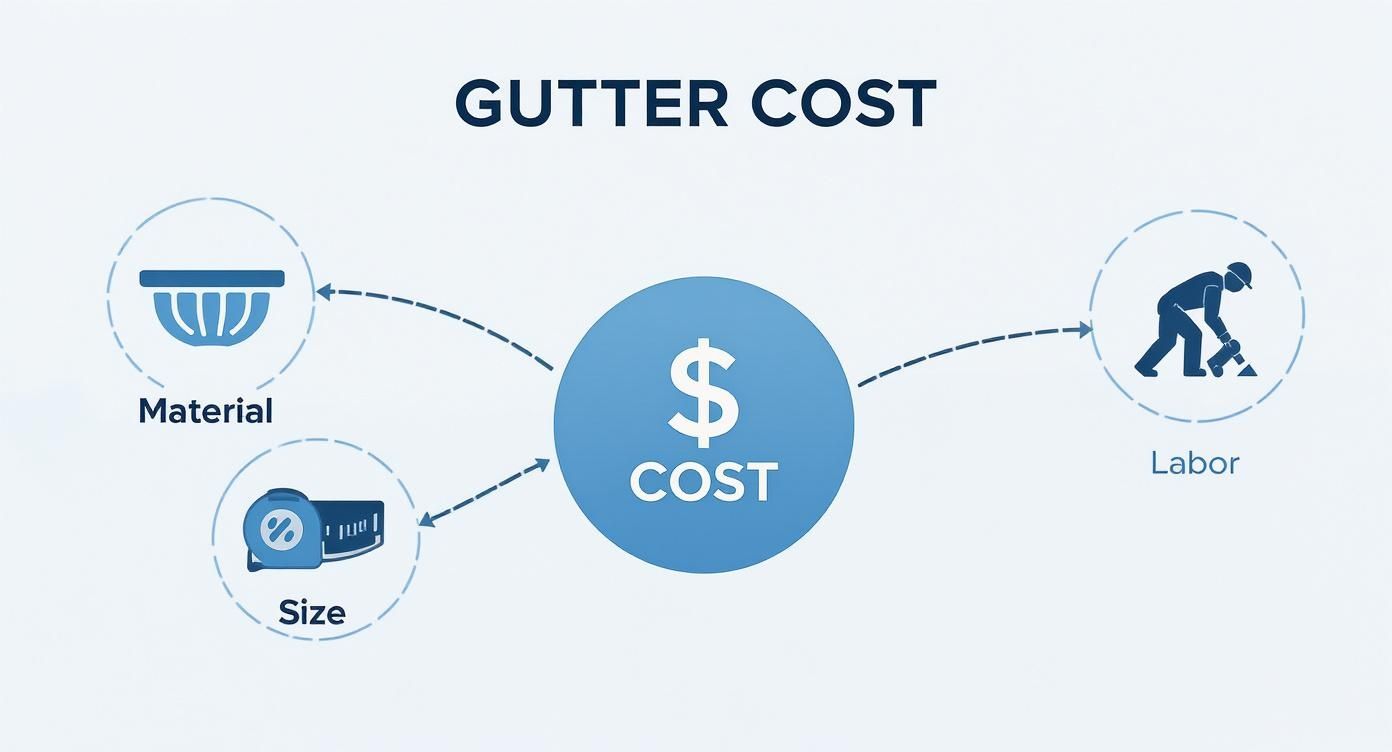
As you can see, the big three are your choice of material, your home's size, and the labor involved. Let's dig into how each of these plays a part in the final number you see on a quote.
Your Home's Size and Roof Complexity
This one’s the most straightforward factor. The more gutter you need, the higher the cost. A 1,500-square-foot ranch-style home will obviously require less material and time than a sprawling 3,500-square-foot two-story house. Simple enough.
But it’s not just about linear feet. The complexity of your roofline is a huge piece of the puzzle. A basic rectangular roof is easy, but a home with multiple gables, dormers, and different roof pitches is a different story entirely.
Each corner, whether it's an inside or outside turn, needs a custom-mitered cut and meticulous sealing. This doesn't just use up more material; it dramatically increases the skilled labor time required to craft a truly seamless, leak-proof system.
A home with a steep roof pitch or multiple stories also drives up labor costs. These jobs demand extra safety gear and more time for our crew to haul materials and reposition ladders, which naturally affects the installation price.
Labor and On-Site Fabrication
Unlike the sectional gutters you can grab off a shelf at a big-box store, seamless systems are custom-made right in your driveway. We bring a specialized truck with a roll-forming machine that fabricates each gutter section to the exact measurement of your roof.
This process guarantees a perfect fit, but it also means you're paying for skilled technicians and some pretty sophisticated equipment. Labor rates can shift based on your location and the crew's experience, but they almost always include:
- On-site measurement and fabrication: The magic behind creating a seamless system.
- Secure installation: Fastening the gutters to the fascia boards with the perfect slope for drainage.
- Downspout and corner sealing: Making sure every single connection is watertight.
Old Gutter Removal and Repairs
So, what about the old, leaky gutters you're replacing? Most professional quotes will include a line item for removing and disposing of the existing system. This typically adds $100 to $200 or more to the final bill.
This is also when we might uncover hidden problems. It's common to find rotted or damaged fascia boards right where the new gutters need to go. This kind of wood rot is almost always caused by water overflowing from clogged or failing old gutters. Those boards have to be repaired or replaced before the new system goes up, which can be an additional, and often unexpected, expense.
By understanding how all these pieces fit together, you can read your quotes with more confidence and appreciate the craftsmanship that goes into a professional installation. For a deeper dive into the different materials and styles available, check out our complete guide to seamless gutter systems.
How Gutter Materials Impact Your Budget
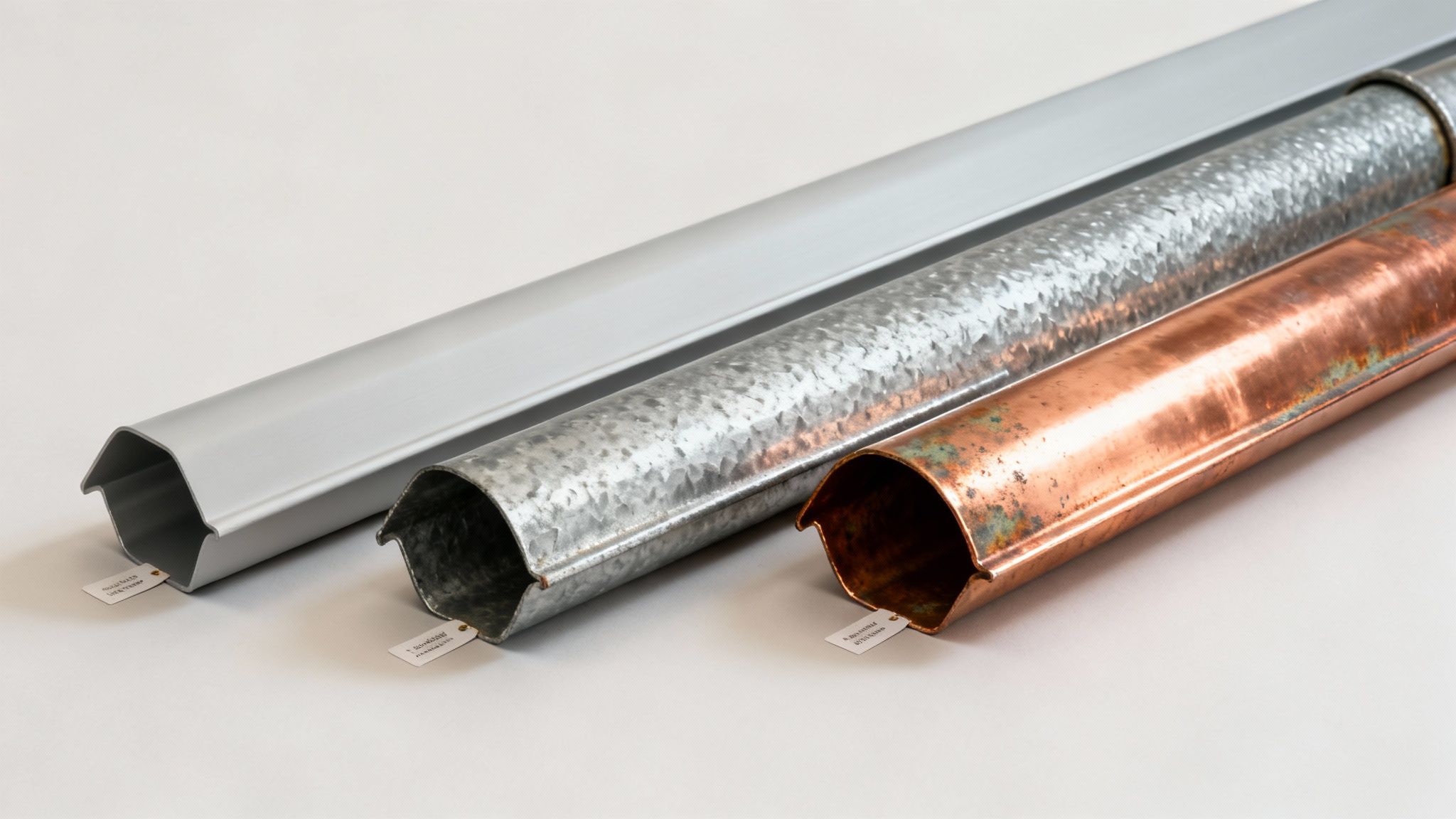
When it comes to the cost of a new seamless gutter system, the material you choose is the single biggest factor. It's like picking the engine for a car—your choice directly impacts performance, how long it will last, and, of course, the final price tag.
Each material offers a different mix of cost, durability, and style. Let's break down the most popular options so you can see how they stack up for your home and budget.
Aluminum: The Popular Choice
There's a good reason aluminum is the go-to material for most homeowners. It hits that perfect sweet spot between affordability and solid performance, making it the most common choice by a long shot.
Typically, you can expect installed seamless aluminum gutters to run between $7 and $13 per linear foot. It’s lightweight, which helps keep installation costs down, and it’s completely rust-proof—a huge plus in the humid climate we get here in Upstate South Carolina.
Aluminum gutters also come in a massive range of factory-baked colors, so matching your home's trim is a breeze. The only real downside is that it's a softer metal, so it can get dented by a misplaced ladder or heavy branches.
Galvanized Steel: The Durable Workhorse
If you're looking for something tougher, galvanized steel is a fantastic upgrade. It’s significantly stronger than aluminum, holding up much better to impacts from storms and the general wear and tear of the seasons.
The investment is a bit higher, usually ranging from $9 to $20 per linear foot. But that extra cost buys you a lot of peace of mind. A steel gutter system isn't going to sag or dent easily, even under the weight of a classic Carolina downpour.
The "galvanized" zinc coating is what protects the steel from rust. Just keep in mind that if this coating gets deeply scratched, the steel underneath can become vulnerable to corrosion over time.
Copper: The Premium Investment
For homeowners who want unmatched durability and a truly distinctive look, copper is in a class all its own. This is the top-of-the-line material, offering a lifetime of performance and a timeless look that can seriously boost your home's curb appeal.
The price tag reflects that quality, starting around $25 to $40+ per linear foot. While it's a major upfront investment, copper gutters can easily last for 50 years or more with very little upkeep.
What's really special is that copper doesn't rust. Instead, it develops a beautiful blue-green patina over the years. This natural aging process creates an elegant, classic appearance that's highly sought after for historic and high-end homes. It's less of a utility and more of a long-term architectural upgrade.
Understanding Professional Installation Costs
Seamless gutters aren't something you can just pick up from the hardware store and knock out over a weekend. Unlike the sectional gutters that come in 10-foot pieces, a seamless system is custom-made for your home, right in your driveway. We roll out continuous lengths of aluminum from a special machine mounted in our truck, ensuring a perfect, leak-free fit from corner to corner.
This custom-fabrication process means professional installation isn't just an option—it's part of the package. When you get a quote, you're not just paying for the metal. You're investing in the specialized equipment and, more importantly, the expertise required to create a water management system that’s built to protect your home specifically. The labor, typically priced per linear foot, covers everything from the initial precise measurements to the final cleanup.
Ultimately, that investment in skilled labor is what stands between your home and costly water damage. A professional crew makes sure every single component—from the hidden hangers to the downspout elbows—works together flawlessly.
The Value of Professional Expertise
The difference between a pro-level installation and a sloppy job can easily run into thousands of dollars in future repairs to your foundation, siding, or landscaping.
Here’s exactly what that professional touch prevents:
- Improper Slope: An expert installer knows how to set the exact angle needed for water to flow efficiently to the downspouts. This prevents standing water, which is a breeding ground for mosquitoes and a surefire way to cause mold and corrosion.
- Sagging and Pulling: We use the right type and number of hangers, securing the gutters firmly to the fascia board. This ensures they won't pull away or sag under the immense weight of a torrential downpour or a load of wet leaves.
- Leaks and Drips: Meticulous sealing at every corner and downspout connection is the hallmark of a quality job. This is what keeps water from dripping down your siding and pooling around your foundation.
The demand for high-quality rain gutters is on the rise, with the market expected to hit $9.3 billion by 2026. Homeowners are increasingly looking for durable, long-lasting solutions to protect their properties. However, this growth also brings challenges like rising material costs and a shortage of skilled installers, which can affect pricing in different regions. You can dig deeper into these market trends and their impact.
Factors That Increase Labor Costs
While there’s a base rate for labor, certain features of your home’s architecture can make the job more complex and time-consuming, which will be reflected in the final cost.
Think of it like this: a delivery driver charges a standard fee for a simple drop-off on a flat street. But if they have to navigate a steep, winding driveway and carry a heavy package up three flights of stairs, the price goes up. The same logic applies to installing gutters.
Your installer will take factors like these into account:
- Multiple Stories: Working on a second or third story is a different ballgame. It requires extra safety gear, taller ladders, and a lot more time and effort to move materials and equipment, naturally increasing the labor charge.
- Steep Roof Pitch: A steep roof isn't just harder to walk on; it's more dangerous. Our crews have to work more slowly and cautiously, which adds to the installation time.
- Limited Access: Navigating around tight spaces, fences, or dense landscaping can make it tricky to position ladders and equipment safely and efficiently.
Choosing a trusted local installer is the best way to ensure you get a fair price and a quality installation that can handle our local Upstate weather. To see what a professional crew can do, check out our full range of exterior remodeling services.
Hidden Costs and Common Upgrades
Your initial quote for seamless gutters almost always covers the essentials: the gutter troughs, the downspouts, and the labor to get it all installed perfectly. But just like buying a car, there are a few common upgrades and potential add-ons that can really influence your final bill.
Think of it this way: the base model car gets you from point A to B just fine. But features like all-weather floor mats or an upgraded sound system make the ride a whole lot smoother. It's the exact same idea with your gutter system. Knowing these options ahead of time helps you set a realistic budget and avoid any surprises when the final invoice arrives.
The Value of Gutter Guards
By far, the most popular and impactful upgrade you can make is adding a set of quality gutter guards. These systems are designed to keep leaves, pine needles, and all that other gunk out of your gutters while letting rainwater flow right through. This one addition can literally save you hundreds of dollars in professional cleaning fees over the years.
There are a few different types of gutter guards out there, each with its own price tag and performance level:
- Simple Screens: These are your most affordable option, usually made of plastic or metal mesh that just sits on top of the gutter. They do a decent job blocking big leaves but can still let smaller debris slip through.
- Micro-Mesh Systems: This is the premium choice for a reason. A super-fine stainless-steel mesh blocks everything from leaves down to tiny shingle grit, making sure your gutters stay clear and functional all year. They cost more upfront, but they offer the best long-term protection, hands down.
Investing in a quality gutter guard system is just proactive home maintenance. You're not just dodging the annoying chore of cleaning; you're preventing the clogs that cause water to overflow and potentially wreak havoc on your roof, siding, and even your foundation.
If you're still on the fence about guards, our guide offers some great tips on how to clean gutters safely and effectively yourself.
Other Important Add-Ons
Beyond gutter guards, a few other components might show up on your estimate, depending on what your home needs to manage water effectively.
- Larger Downspouts: Standard downspouts are fine for most homes. But if you have a large or particularly steep roof, you might need oversized downspouts (like 3x4 inches instead of the standard 2x3) to handle heavy rainfall without getting overwhelmed.
- Splash Blocks: These are simple concrete or plastic blocks that sit at the bottom of your downspouts. Their only job is to direct all that water away from your foundation, preventing soil erosion and keeping your flower beds from turning into a muddy mess.
- Heat Tape: This is less common here in the Upstate but crucial for homes in colder climates that deal with ice dams. Heat tape or heating cables can be installed inside gutters and downspouts to keep ice from building up and causing major problems.
Sample Gutter Estimates for Upstate SC Homes

Alright, let's bring these numbers to life. It's one thing to talk about cost per foot, but it's much more helpful to see what that looks like for real homes here in Upstate South Carolina.
The following scenarios are based on aluminum seamless gutters, the go-to choice for most homeowners in our area because it strikes the perfect balance between durability and cost. These figures include professional, on-site fabrication and a complete installation.
Of course, every home is different, but these examples should give you a solid starting point for your budget.
The Single-Story Ranch Home
Think of the classic 1,500 sq. ft. ranch homes you see all over Greenville and Anderson. They usually have a simple, straightforward roofline, making them fairly easy to work on. For a home like this, you're typically looking at about 150-180 linear feet of gutters.
- Estimated Linear Feet: 165 ft.
- Typical Cost Range: $1,400 – $2,145
This kind of job is usually quick and efficient. The easy access and simple roof design mean our crews can get in and out without much fuss, which helps keep the labor costs down.
The Two-Story Modern Home
Now let's step it up to a modern 2,500 sq. ft. two-story home. The extra square footage and height immediately add to the job's complexity. These homes often need around 180-220 linear feet of gutters.
- Estimated Linear Feet: 200 ft.
- Typical Cost Range: $1,800 – $2,600
The price jump here mostly comes down to labor. Working on a second story requires more time, extra safety gear, and careful ladder work. If the house has multiple gables or a more intricate roofline, the estimate will likely lean toward the higher end of that range.
The Large Custom Home
For a larger home—say, 3,500 sq. ft. or more—we're often dealing with a much more complex roof. Think multiple pitches, valleys, and dormers. This kind of architectural detail can push the required linear footage up to 250 feet or more.
- Estimated Linear Feet: 250+ ft.
- Typical Cost Range: $2,250 – $3,750+
On a project like this, it’s not just about the length. Every single corner needs a precise miter cut to create a perfect, seamless, and leak-proof fit. It’s custom work, and that extra craftsmanship is reflected in the cost.
To give you a clearer picture, here’s a quick breakdown of these common scenarios:
Sample Seamless Gutter Estimates for Upstate SC
This table provides a ballpark idea of what you can expect to invest in aluminum seamless gutters for common home styles in our area.
| Single-Story Ranch (1,500 sq. ft.) | 150 – 180 ft. | $1,400 – $2,145 |
| Two-Story Home (2,500 sq. ft.) | 180 – 220 ft. | $1,800 – $2,600 |
| Large Custom Home (3,500+ sq. ft.) | 250+ ft. | $2,250 – $3,750+ |
Remember, these are just estimates. The only way to get a firm, accurate price is to have a professional take a look at your specific property. If you're ready to get a detailed quote to protect your home, you can learn more about our process for installing gutters in the Greenville area and get a free assessment from our team.
Got Questions? We’ve Got Answers.
Even after breaking down all the numbers, you probably have a few things you're still wondering about. That's completely normal. Here are some straightforward answers to the most common questions we hear from homeowners budgeting for a new gutter system.
Are Seamless Gutters Really Worth the Extra Cost?
In our experience, absolutely. Think of it this way: traditional sectional gutters are like a chain—they're only as strong as their weakest link, which are the seams. Every single seam is a potential failure point for leaks.
Seamless gutters, on the other hand, are custom-made in one continuous piece for each side of your house. By getting rid of the seams, you eliminate the primary cause of leaks. This means no more water damage to your fascia, siding, or foundation, which can save you a fortune on expensive repairs down the road. Plus, their clean, custom-fit look is a serious upgrade to your home's curb appeal.
How Can I Get the Most Accurate Quote for My Home?
The only way to get a real, reliable number is to have a professional come out to your house. A quick phone call or an online calculator can give you a ballpark figure, but it won't account for the unique details of your home.
An experienced installer needs to walk the property to get precise linear foot measurements, check the condition of your fascia boards (to make sure they can support a new system), count every corner, and figure out the best placement for downspouts to handle water flow effectively.
Always aim to get at least two or three detailed, written estimates from reputable local companies before you make a decision. This lets you compare not just the final price, but exactly what’s included in the work and the quality of the materials they plan to use.
Do I Need to Replace Gutters That Are Just Dented or Sagging?
More often than not, yes. A sagging gutter is a major red flag. It’s a clear sign that the system is overloaded with heavy, water-logged debris and is pulling away from your house, which can damage the fascia boards it's attached to.
Dents and dings might seem minor, but they create low spots where water pools instead of draining. That standing water leads to rust, corrosion, and eventually, overflow right where you don't want it. While a single small issue might be repairable, widespread sagging or damage is a clear signal that it's time for a full replacement to protect your home’s foundation and structural integrity.
Ready to get a clear, honest price for protecting your Upstate South Carolina home? The team at Atomic Exteriors provides detailed, no-obligation estimates to help you make the best decision for your property. Get your free quote today!