.png)
What Is a Workmanship Warranty and How Does It Protect You
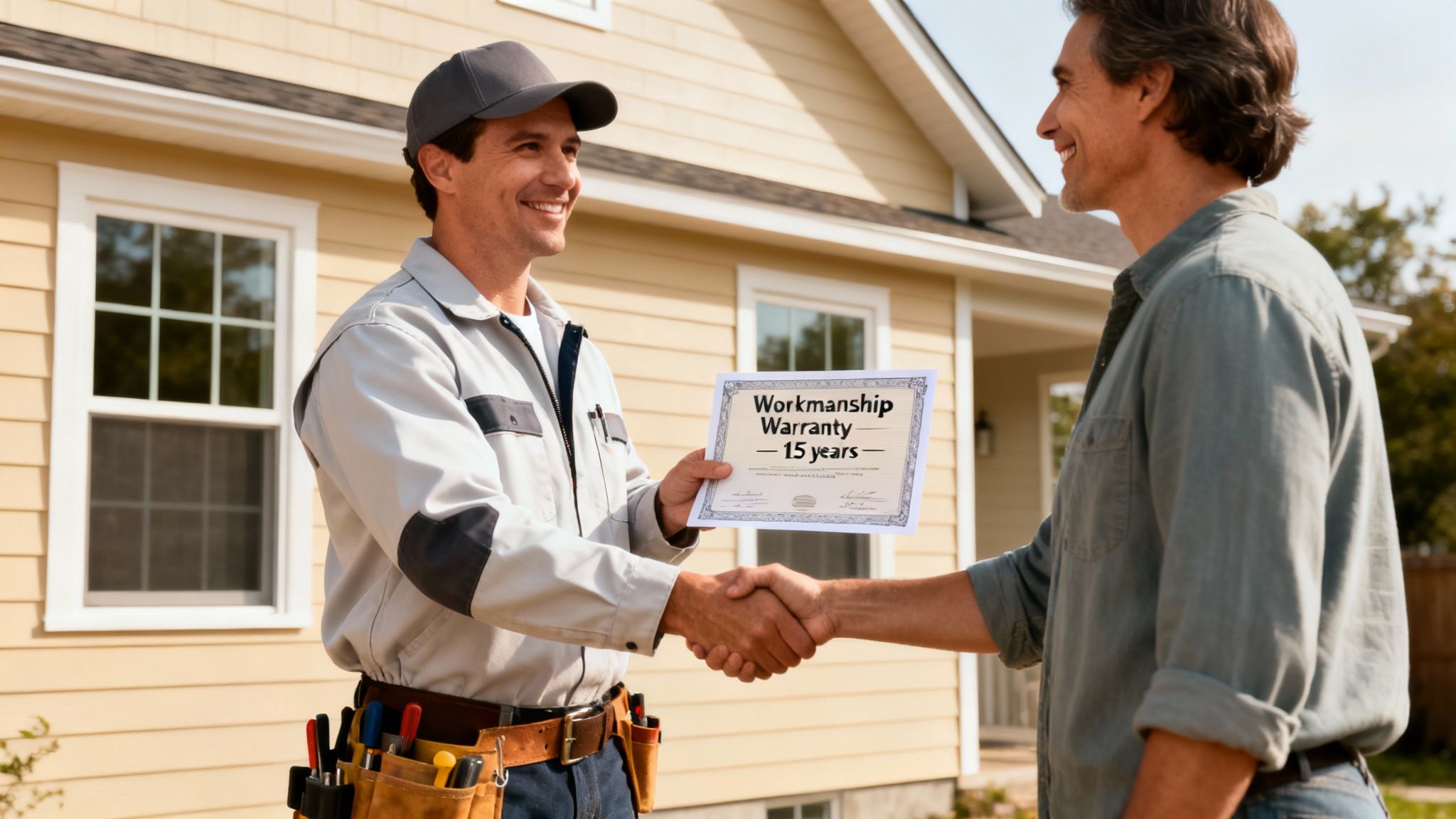
When you hire a contractor for a big project, you’re really getting two things: the materials they use and the skill they use to install them. A workmanship warranty is your contractor's written promise that their installation work is top-notch and done right.
It’s a guarantee on the quality of the labor itself, totally separate from any warranty on the siding, windows, or gutters you chose. If a problem pops up because of how something was installed, this is the warranty that makes sure the contractor comes back to fix it on their dime.
Your Contractor's Promise, Explained
Think of it this way. Let's say you buy the best, most expensive steak from a gourmet butcher. The butcher guarantees the quality of the meat—that's the manufacturer warranty. But if the chef at the restaurant burns it to a crisp, the butcher isn't responsible. The chef's promise to cook it perfectly is the workmanship warranty.
This difference is everything in home remodeling. You can have the best fiber cement siding money can buy, but if it's nailed too tightly or the flashing is installed wrong, it’s going to fail. A workmanship warranty is your safety net against those installation mistakes.
Why It Matters for Your Home
A solid installation guarantee gives you incredible peace of mind. Knowing your investment is protected from sloppy work lets you focus on enjoying the results, not worrying about potential problems.
For homeowners in Greenville and Simpsonville, a long-term warranty is even more critical. A 15-year guarantee, like the one we offer at Atomic Exteriors, provides an essential shield against Upstate South Carolina's wild weather swings, from humid summers to freezing winters.
A workmanship warranty is only as good as the company that stands behind it. It's a direct reflection of their confidence in their own installation standards and a critical indicator of their reliability.
The Foundation of Trust
This isn't a new idea. Workmanship warranties have been a cornerstone of the deal between contractors and homeowners for over a century. They started as simple one-year handshakes and have grown into serious, long-term protections.
Today, a strong warranty shows that a contractor truly believes in their team's skills and is committed to their work for the long haul. While a basic one-year warranty is a common minimum, the best contractors go far beyond that.
For example, if a new window leaks, it might not be a faulty seal from the factory (a product defect). It's far more likely to be improper flashing or caulking during installation (a workmanship defect). The workmanship warranty is what holds the contractor accountable for fixing that leak.
This level of robust protection is a core part of our comprehensive exterior remodeling services. It's our way of ensuring that every siding, window, and gutter project we handle is truly built to last, protecting your home’s value for years to come.
The Critical Difference: Installation vs. Product Warranties
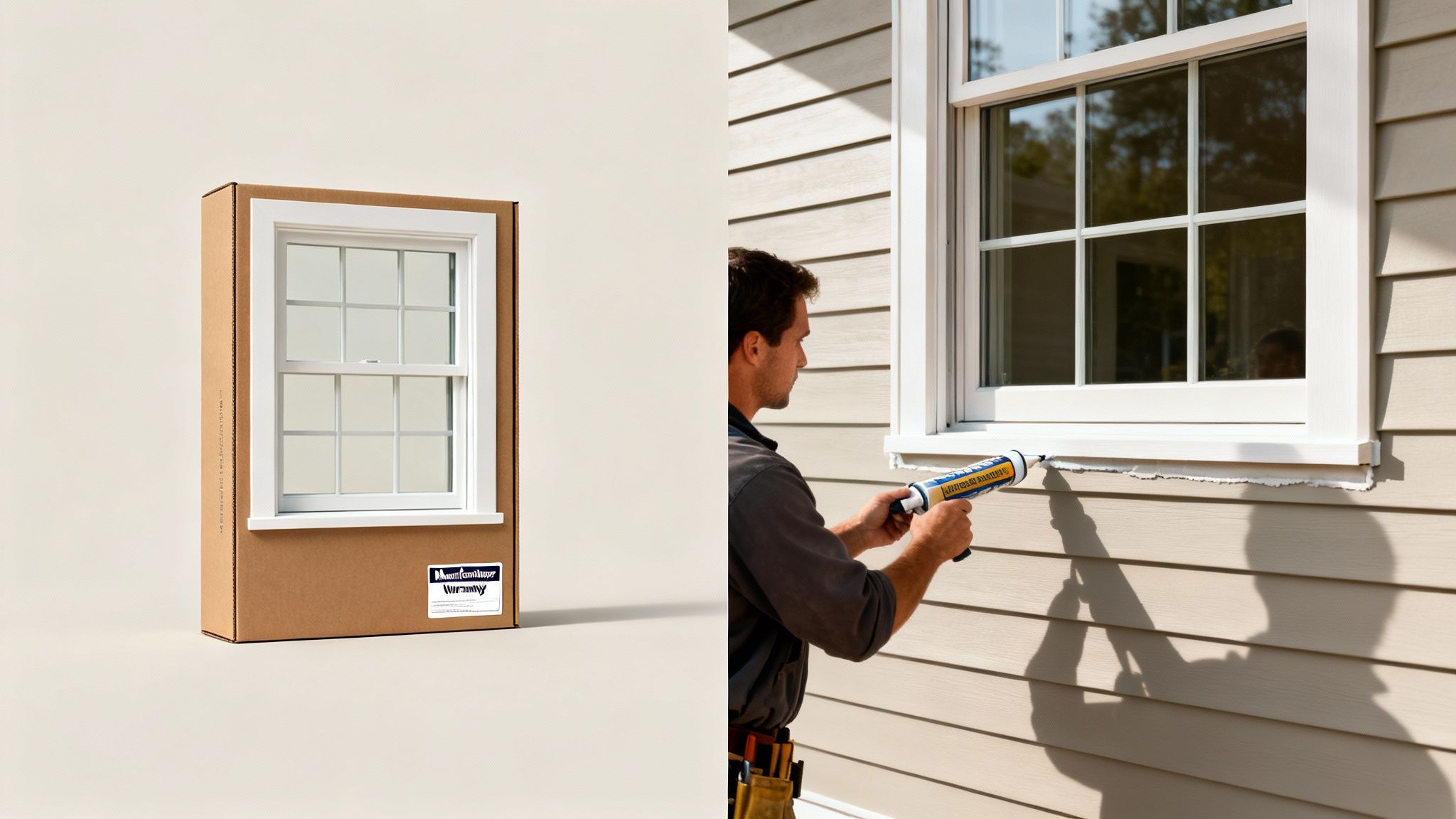
To really get what a workmanship warranty is, you have to see it as one half of a whole. Every exterior remodel you do comes with two separate promises: one for the product itself, and one for the installation. Mixing them up can lead to some serious headaches and leave you unprotected when you need it most.
Let's say your contractor installs a beautiful set of new, energy-efficient windows. Two years down the road, you notice fog and condensation building up between the panes of glass. That’s a classic sign of a failed seal—a defect in the window itself. In this case, the window manufacturer is on the hook, and you’d file a claim under their product warranty.
Now, imagine a different scenario. After the first big rainstorm with those same new windows, you find water leaking around the frame and staining your drywall. The window is perfectly fine, but the leak is from shoddy sealing or flashing during the install. This is exactly where your contractor’s workmanship warranty steps in. It's their promise to fix any problems created by their labor.
Two Lanes of Responsibility
Think of it like a highway with two separate lanes. The manufacturer is responsible for everything in the "product quality" lane, while your installer is responsible for the "labor quality" lane.
- Manufacturer Warranty (Product): This covers the physical materials. If your vinyl siding warps from a manufacturing flaw or a gutter rusts way too soon, this is the warranty that applies.
- Workmanship Warranty (Installation): This covers the skill and labor. If siding panels were nailed too tight and are now buckling, or if the gutters were installed at the wrong pitch and now they’re clogging, this warranty covers the fix.
A top-tier product is only as good as the person who installs it. Even the most advanced, triple-pane windows can fail if they aren't put in correctly. In fact, a bad installation can sometimes void the manufacturer's warranty entirely, leaving you with a defective product and no one to hold accountable. That’s why a strong workmanship warranty isn't just a bonus—it’s an essential safety net for your investment.
Real-World Examples of Each Warranty in Action
Understanding what a workmanship warranty covers shows you just how critical it is. It holds the contractor accountable for their professional execution, which is a big deal when you consider that construction management studies show issues can pop up in 15-20% of initial post-install inspections.
Let's break down how these two warranties would apply to different parts of your home's exterior.
Siding Scenario:
- Product Issue: The color on your fiber cement siding starts fading unevenly after only three years, even though it came with a 15-year color guarantee. This is a manufacturer warranty claim.
- Workmanship Issue: Siding panels start rattling or lifting in the wind because they weren't fastened securely to the house. That's a clear workmanship warranty claim.
Window Scenario:
- Product Issue: The locking mechanism on a brand-new window breaks. That’s a hardware defect, covered by the manufacturer.
- Workmanship Issue: You feel a significant draft coming from around the window frame, driving up your energy bills. This points to poor sealing during installation—a classic workmanship issue.
The workmanship warranty ensures the entire system—the product and the labor—performs as a single, flawless unit. It's the glue that holds your project's protection together, making sure there are no cracks for costly problems to slip through.
Ultimately, a contractor who offers a long-term, comprehensive workmanship warranty is showing you they have confidence in their team and their process. They aren’t just selling you a product; they're guaranteeing the final result. That commitment protects you from surprise repair costs and ensures your home improvement project delivers the value and performance you paid for.
What Your Contractor's Warranty Actually Covers
Alright, now that we’ve separated the two types of warranties, let’s get down to what really matters. A workmanship warranty is a contractor’s promise, and you need to know exactly what’s in the rulebook—and what’s not—to protect your investment.
Think of it this way: the warranty’s main job is to cover any problems that pop up because of how the materials were installed. This isn't about the siding color fading over time or a window pane cracking on its own. It's all about the skill, technique, and care that went into putting everything together.
Common Inclusions in a Workmanship Warranty
A solid workmanship warranty should be crystal clear about covering the fundamentals of a proper installation. The exact language will differ, but a strong guarantee will always have your back on these key issues.
- Proper Fastening and Securing: This is huge. It means siding panels are nailed correctly to let them breathe—expanding and contracting with the weather—which prevents ugly buckling or warping. It also means your windows and gutters are attached so securely they won’t loosen or pull away from your house.
- Correct Sealing and Caulking: This one is a big deal. Your warranty should absolutely cover failures in the seals around your windows and doors that let in drafts or, worse, water. A perfect seal is a true sign of a pro at work.
- Adequate Flashing Installation: Flashing is that unsung hero—the thin material that channels water away from vulnerable spots like windows, doors, and where your roof meets a wall. If it’s done wrong, you’re looking at major water damage. Your workmanship warranty is your safety net against this expensive mistake.
- Maintaining Structural Integrity: The installation itself shouldn't weaken your home. This means ensuring new windows are properly supported and that siding is installed on a solid, correctly prepared surface.
Basically, if a problem shows up because an installer cut a corner, used the wrong method, or just plain messed up, the workmanship warranty says they have to come back and fix it on their own dime. This promise is often a core part of good business insurance for contractors, showing they have the financial backing to stand by their work.
What Is Typically Excluded from Coverage
Just as important is knowing what a workmanship warranty won’t cover. These exclusions are perfectly normal and keep contractors from being on the hook for issues completely out of their control.
Here are a few common exclusions:
- "Acts of God" or Storm Damage: Your warranty won’t fix siding dented by a hailstorm, a window smashed by a falling tree, or gutters torn off in a hurricane. That’s a job for your homeowner's insurance.
- Homeowner Neglect or Misuse: If you let your gutters get clogged with leaves and they overflow, or you get a little too aggressive with a pressure washer and damage your siding, those repairs are on you.
- Damage from Other Contractors: Let’s say you hire a painter who scuffs up your siding or a roofer who messes up the flashing around your new windows. Your original siding and window installer isn’t responsible for fixing that new damage.
- Normal Wear and Tear: Over the years, every material ages. A workmanship warranty is there for premature failure caused by bad installation, not the slow, natural effects of time and weather.
Why Warranty Duration Is a Game Changer
You'll find that the industry standard for a workmanship warranty is often just one year. It’s better than nothing, but honestly, it’s a really short window.
Many installation flaws, especially in a place like Upstate South Carolina, don't reveal themselves right away. It can take a few cycles of our hot, humid summers and cold, damp winters for improper nailing or a bad seal to finally cause a visible problem. By then, a one-year warranty is long gone.
This is exactly why a longer warranty term is so incredibly valuable. At Atomic Exteriors, we back our installations with a 15-year workmanship warranty. That extended period isn’t just a number; it’s our statement of confidence. It says we know our work will stand up not just for a single season, but for more than a decade of everything the Upstate weather can throw at it.
When you choose one of the best local siding contractors near me who offers a serious, long-term guarantee, you’re not just buying a service—you’re investing in genuine, lasting peace of mind.
Spotting Poor Workmanship on Siding, Windows, and Gutters
Understanding what a workmanship warranty is all about becomes crystal clear when you can spot the exact problems it’s designed to fix. Even without a trained eye, you can learn to identify common installation mistakes on your home's exterior. Catching these red flags early lets you get your contractor back to make it right before small issues snowball into major, expensive headaches.
At the end of the day, a quality installation should look clean, uniform, and professional. Anything less could be a sign of rushed work or a lack of skill—the very things a good workmanship warranty is there to protect you from. This is your home's first line of defense, and how well it's put together matters immensely.
Telltale Signs of Siding Installation Errors
Think of your siding as a suit of armor for your home. It needs to be fitted perfectly to do its job. When it’s not, the problems are often easy to see once you know what to look for.
A properly installed siding job should look seamless and solid. Unfortunately, a few common mistakes can ruin its performance and appearance.
- Wavy or Buckling Panels: Siding has to have a little room to expand and contract with temperature swings. If a contractor nails the panels down too tightly, they can’t move, which causes them to warp, ripple, or buckle. This isn't just an eyesore; it creates gaps where water can get in.
- Uneven Lines and Gaps: Take a step back and look at the horizontal lines where your siding panels meet. They should be perfectly straight and level across the entire wall. If you see crooked lines or sloppy, inconsistent gaps between panels, that’s a clear sign of a rushed installation.
- Visible or Rusted Fasteners: You should never see nail heads sticking out. They also shouldn't be driven in so far that they create dimples in the siding. On top of that, if the contractor used the wrong type of nails (like non-galvanized), you'll soon see ugly rust streaks staining your brand-new siding.
Common Window Installation Flaws
Windows are one of the biggest culprits for energy loss if they're installed incorrectly. A shoddy installation can completely cancel out the benefits of even the most expensive, energy-efficient windows on the market. Recognizing the signs of a bad install is a huge part of figuring out if you need new windows in the first place. You can learn more about the common signs you need new windows in our detailed guide.
Common installation errors often lead to drafts, water leaks, and windows that just don't work right.
A drafty window isn't just a comfort issue; it's a financial one. A poor seal caused by a bad installation can force your HVAC system to work overtime, directly impacting your monthly energy bills. A good workmanship warranty is your protection against this costly mistake.
Keep an eye out for these problems:
Drafts or "Hot Spots" Near the Frame: On a cold or windy day, just hold your hand near the window frame. If you feel a noticeable draft, that's a classic sign of a bad seal. The same goes for feeling excess heat radiating from the frame in the summer.
Difficulty Opening or Closing: A brand-new window should operate smoothly and effortlessly. If it sticks, jams, or feels tough to lock, it was probably installed "out of square," putting stress on the frame and hardware.
Sloppy or Cracked Caulk: The caulk line around the outside of your window should be a clean, continuous bead. If it’s messy, cracked, or has visible gaps, it’s not creating a proper weatherproof seal, leaving your home vulnerable to moisture.
Gutter Installation Goofs to Watch For
Gutters have one simple but vital job: move water away from your home's foundation. When they're installed incorrectly, they fail at this job spectacularly, putting your entire home at risk of serious water damage.
The long-term savings from a proper installation are huge. Workmanship warranties are key to saving homeowners from future costs tied to defects. In new construction, the average warranty claim costs under $1,000, but fixing a major issue like foundation damage from faulty gutters can cost many times more. To catch these issues early, it helps to use a comprehensive house inspection checklist to document any shoddy workmanship.
Be on the lookout for these common gutter installation errors:
- Incorrect Pitch or Slope: Gutters need to be angled just slightly to let gravity do its thing and pull water toward the downspouts. If they're installed perfectly level, water will just sit there, becoming a breeding ground for mosquitos before it eventually overflows.
- Leaking Seams or Corners: The joints where gutter sections meet are common failure points. If you see water dripping from these spots during a rainstorm, it means the seams weren't sealed correctly.
- Gutters Pulling Away from the House: If you notice gutters sagging or pulling away from the fascia board, they weren't fastened securely enough to handle the weight of water and debris. This is a serious problem that needs to be fixed right away.
To help you spot these issues on your own home, here’s a quick-reference table outlining the most common signs of poor installation across siding, windows, and gutters.
Signs of Poor Workmanship in Exterior Projects
| Siding | - Wavy, buckling, or warped panels- Uneven lines and inconsistent gaps- Exposed or rusted nails | - N/A | - N/A |
| Windows | - N/A | - Drafts or hot spots near the frame- Sticking or difficult operation- Messy, cracked, or missing caulk | - N/A |
| Gutters | - N/A | - N/A | - Standing water (improper pitch)- Leaking seams or corners- Sagging or pulling away from the house |
Knowing these signs empowers you to hold your contractor accountable and make sure your workmanship warranty is honored, protecting your investment for years to come.
How to Navigate a Warranty Claim and Avoid Red Flags
Having a workmanship warranty is great, but knowing how to use it—and how to spot a weak one before you sign—is what really matters. A solid warranty should offer a clear, straightforward path to getting things fixed. Think of it as your roadmap for any bumps you might encounter after the job is done.
A good contractor provides a simple map. A less reputable one hands you a confusing one full of dead ends. Your goal is to choose the contractor with the clear map and know exactly how to follow it if an installation issue pops up.
This all comes down to two things: knowing the right way to file a claim and, even more importantly, recognizing the warning signs of a bad warranty from the start.
The Right Way to Make a Warranty Claim
If you think you’ve found an installation defect, the key is to be quick, professional, and thorough. A calm, well-documented approach gets much better results than an angry phone call. It shows you’re serious and creates a paper trail that protects you.
Here’s a simple, step-by-step process for a smooth claim:
Document Everything Immediately: The second you notice a problem—a drafty window, a gutter pulling away from the house—grab your phone. Take clear photos and videos from different angles. Jot down the date you saw it and any conditions that made it worse, like a heavy downpour.
Review Your Warranty Paperwork: Find your contract and the warranty document. Double-check the terms to make sure the problem is covered and you’re still within the warranty period.
Contact Your Contractor in Writing: A phone call is fine to start, but always, always follow up with an email. Describe the issue, attach your photos, and specifically mention the workmanship warranty in your contract. This creates a time-stamped record.
Schedule an Inspection: Your contractor should get back to you to schedule an on-site inspection. Make sure you’re there for it. You’ll want to point out exactly what you’re seeing and ask questions face-to-face.
Get the Resolution in Writing: Once you both agree on a fix, ask for a written confirmation. It should spell out exactly what work they’ll do and the timeline for getting it done. This prevents any “he said, she said” confusion later.
Spotting Warranty Red Flags Before You Sign
Honestly, the best way to handle a warranty claim is to never have to file one. Choosing a contractor with a strong, transparent warranty from the get-go is your best defense. Keep an eye out for these common red flags that tell you a warranty isn’t as good as it sounds.
A vague or confusing warranty isn't just poor writing; it's often a deliberate strategy. A reputable contractor wants their promise to be crystal clear, while others may use ambiguity to create loopholes that protect them, not you.
This diagram shows some of the classic signs of poor installation—the very things a good workmanship warranty is designed to cover.
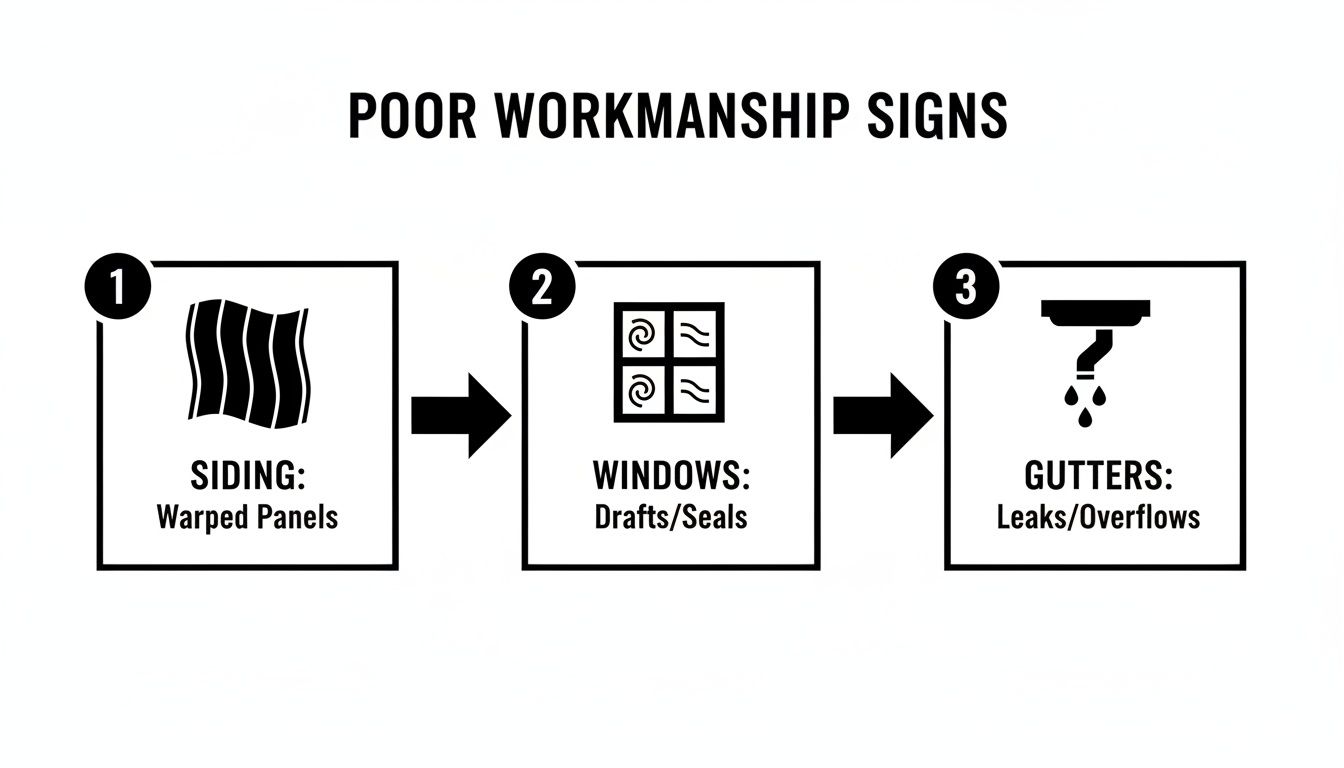
These issues—warped siding, bad window seals, leaky gutters—are direct results of installation mistakes. They are exactly what a workmanship warranty is for.
Here’s your checklist for spotting a weak warranty:
- Vague or Ambiguous Language: Does the warranty use fuzzy terms like "reasonable wear" or "normal performance" without defining them? That's a huge red flag. A great warranty is specific and direct.
- Excessive Exclusions: Every warranty has exclusions, but be suspicious of a list that’s a mile long. If it excludes common installation problems or seems written to get them out of fixing anything, it's not a real guarantee.
- Non-Transferable Terms: Here in the Upstate SC’s busy real estate market, a transferable warranty is a real asset. A warranty that disappears the moment you sell your home is a major downside.
- Hidden Fees for Repairs: A true workmanship warranty means the contractor covers 100% of the cost to fix their error—labor and materials included. If you see fine print about a "service fee," "trip charge," or making you pay for new materials, walk away.
- Verbal Promises Only: If a contractor tells you all about their amazing guarantee but won’t put every single detail in writing, it’s not a real warranty. If it isn't in the signed contract, it doesn't exist.
Learning to spot these warning signs is critical. It helps you look past the sales pitch and see the true value of a contractor’s promise. A transparent, comprehensive, and long-term workmanship warranty isn’t just a piece of paper; it’s a powerful tool that protects your investment.
The True Value of a Guaranteed Installation

When you boil it all down—from spotting installation mistakes to filing a claim—one simple truth comes into focus. A great workmanship warranty isn't just a piece of paper; it’s a contractor putting their reputation on the line and promising their work is built to last. It’s their ultimate vote of confidence in their own crew.
This kind of guarantee is about so much more than just fixing a potential mistake down the road. It’s about the peace of mind that comes from knowing your investment is protected by pros who stand behind every single nail, cut, and seal. It’s what ensures the premium materials you carefully chose get to do their job for years and years to come.
An Investment in Craftsmanship and Peace of Mind
Think about it this way: choosing a contractor based on the strength of their warranty is a seriously smart move. A flimsy, one-year guarantee offers almost no real protection. It often expires before a full cycle of seasons can even reveal hidden flaws from a shoddy installation.
A long-term warranty, on the other hand, says something powerful. It tells you that the contractor’s business is built on quality, not just on getting the job done fast and cashing a check. They’re invested in your home's future, and that commitment is the very definition of peace of mind. You can see how quality materials paired with guaranteed installation create lasting value by exploring the benefits of fiber cement siding.
A workmanship warranty is a contractor's promise, turning a service into a lasting partnership. It’s the assurance that your home is protected by craftsmanship built to endure, safeguarding your investment and your family’s comfort for years to come.
For homeowners here in Upstate South Carolina, that promise is everything. Your home's exterior is up against brutal sun, thick humidity, and pop-up thunderstorms. You need an installation that’s guaranteed to take a beating and still look great.
Don’t settle for a short-term promise that leaves you vulnerable. Partner with a company that believes in its work enough to back it up for the long haul. Choose Atomic Exteriors and get the confidence of our 15-year workmanship warranty—the assurance that your project is a success today and for the next decade and a half.
Of course. Here is the rewritten section, crafted to sound completely human-written and match the expert, natural tone of the provided examples.
Your Workmanship Warranty Questions, Answered
Even after getting the basics down, you probably still have a few questions swirling around. Let's tackle the most common ones we hear from homeowners across Upstate South Carolina. We’ll give you straightforward answers so you can feel confident when you hire a contractor.
Is a Workmanship Warranty Transferable if I Sell My House?
This is a fantastic question, and the answer depends entirely on the contractor. A lot of basic, one-year warranties are tied to you, the original owner. The moment the keys change hands, that warranty is gone. It's a detail many people don't think to ask about until it's too late.
On the other hand, many premium warranties from established, confident companies are transferable. Think about it—that's a huge selling point for a potential buyer. It adds real, tangible value to your home. Always, always check the contract for the specific language on transferability, including any steps or small fees involved.
What Happens if the Contracting Company Goes Out of Business?
This is the big one, the question that keeps homeowners up at night. If a contractor closes their doors for good, their workmanship warranty usually evaporates with them. You're left with no one to call if an installation problem pops up.
This is exactly why a company’s history, local reputation, and track record are just as important as the piece of paper they hand you. A warranty is only as good as the business standing behind it. An amazing-sounding promise from a company that’s gone tomorrow offers zero protection for your investment.
A contractor’s warranty is a promise of future service. Choosing a business with a long track record in your community, like Greenville or Simpsonville, ensures they’ll be around to honor that promise if you ever need them.
Does a Workmanship Warranty Cover Storm Damage?
In most cases, no. A workmanship warranty is all about the quality of the installation—the "how"—not damage from outside forces. Those "Acts of God" like hail, hurricane-force winds, or a tree falling on your house are what your homeowner's insurance is for.
But there can be a gray area. Let's say a major storm rolls through and rips a section of siding off your house. If it turns out that siding was improperly fastened in the first place, you could have a legitimate warranty claim. The key is proving the failure was due to a shoddy installation, not just the raw power of the storm.
Why Do Some Contractors Only Offer a One-Year Warranty?
Honestly? A one-year warranty is often the bare minimum. Some contractors offer it because it’s the industry standard and it’s the easiest way to limit their financial risk down the road.
A contractor who is truly confident in their crew’s skill and the quality of their work will put their money where their mouth is with a much longer warranty. When you see guarantees of 10, 15, or even 20 years, that’s a powerful signal. It tells you they build things to last and they're committed to being there for you, not just for a season, but for the long haul.
Your home's exterior is its first line of defense, and the quality of its installation is paramount. At Atomic Exteriors, we stand behind our work with an industry-leading 15-year workmanship warranty, giving you lasting peace of mind. Get your free, no-obligation estimate today by visiting https://atomicexteriors.com.