.png)
8 Crucial Signs You Need New Windows in Upstate SC for 2025
Your home's windows do more than just let in light; they are a critical barrier against the elements, a key component of your home's energy efficiency, and a major factor in its curb appeal. But like any part of your house, they have a finite lifespan. Ignoring the subtle (and not-so-subtle) clues they provide can lead to skyrocketing energy bills, uncomfortable drafts, and even structural damage. Many homeowners in Upstate South Carolina, from Greenville to Anderson, unknowingly live with underperforming windows, attributing high utility costs or chilly rooms to an overworked HVAC system.
This guide is designed to help you listen to what your home is telling you. We will walk you through the most definitive signs you need new windows, moving beyond generic advice to provide actionable DIY checks and expert insights. Understanding these key indicators will empower you to make an informed decision that enhances your home’s comfort, value, and protection for years to come.
We'll cover everything from the obvious drafts and visible frame damage to the less apparent financial drain caused by outdated technology and rising utility costs. By the end of this list, you will be able to confidently determine if a window upgrade is the right investment for your property. This article will help you identify the problems, understand their severity, and know when it's time to take the next step.
1. Drafts and Unexplained Air Leaks
One of the most noticeable and frustrating signs you need new windows is the persistent presence of drafts. If you feel a distinct chill when sitting near a window in the winter or notice curtains moving on a still day, your windows are likely failing. These drafts occur when seals around the glass break down, weatherstripping deteriorates, or the window frame itself warps from age and exposure. This allows outside air to freely enter your home.
This constant, uncontrolled air exchange creates uncomfortable cold spots and forces your HVAC system into overdrive. It struggles to maintain a consistent temperature, leading to wasted energy and a significant increase in your heating and cooling bills. While a minor draft might seem like a small inconvenience, it’s a clear symptom of a bigger problem: a compromised building envelope that is costing you money every month.
How to Identify and Test for Drafts
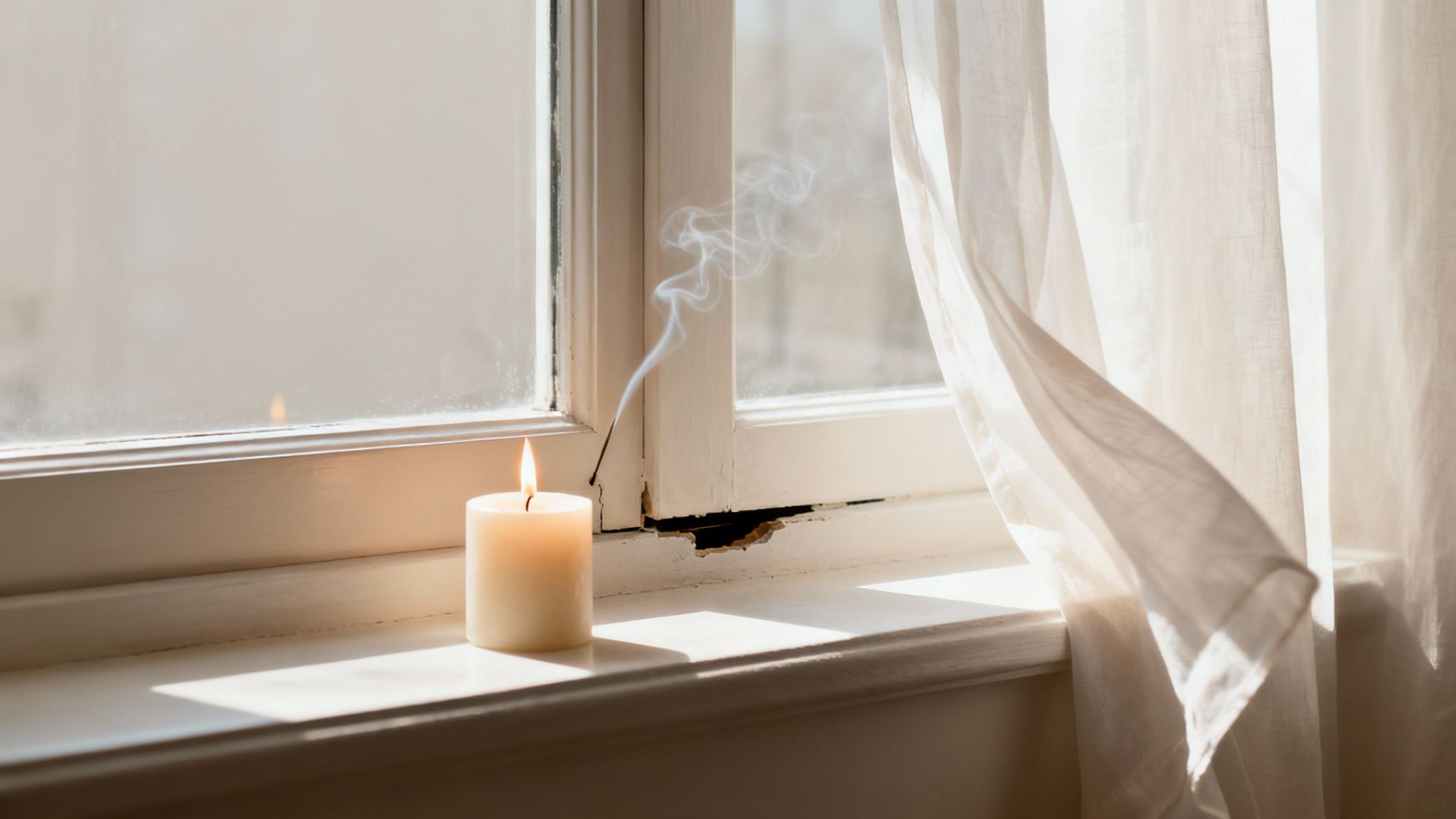
Pinpointing the exact source of a draft is the first step toward a solution. A simple, effective DIY method is the classic "candle test."
- The Candle Test: On a windy day, carefully light a candle or an incense stick. Slowly move it around the entire perimeter of your window frame where the sash meets the frame and where the frame meets the wall. If the flame flickers or the smoke wavers and blows sideways, you have located an air leak.
- The Visual Inspection: Look for cracked or peeling caulk on the exterior of the window. Check the condition of the weatherstripping; it should be pliable and intact, not brittle, compressed, or missing in sections.
Key Insight: A draft isn't just about comfort; it's a direct pathway for energy loss. The U.S. Department of Energy estimates that air leaks from windows can account for 25%-30% of a home's heating and cooling energy use.
While applying new caulk or weatherstripping can be a temporary fix for a minor issue, it often acts as a short-term patch on a failing system. If you find drafts around multiple windows or if the drafts return shortly after your repair attempts, it’s a definitive sign that the windows have reached the end of their functional lifespan. Upgrading to modern, properly sealed windows is the only permanent solution to restore your home's comfort and energy efficiency.
2. Condensation and Moisture Between Panes
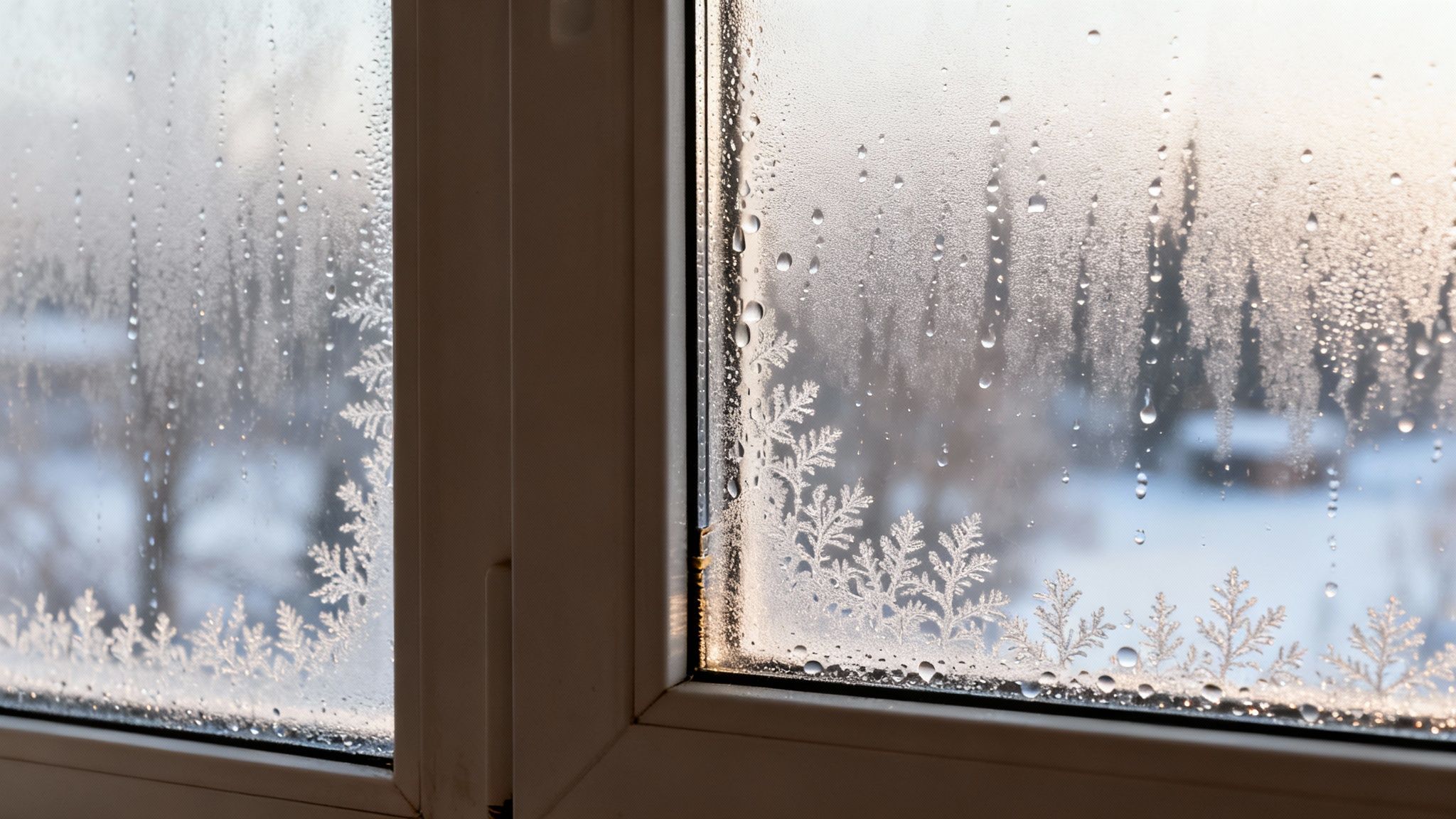
Seeing fog or moisture trapped between the panes of your double- or triple-pane windows is more than just an aesthetic issue; it's a critical failure. This condensation signifies that the airtight seal between the glass layers has broken. This seal is responsible for holding an insulating layer of gas (typically argon or krypton) that prevents heat transfer.
Once the seal fails, moisture-laden air gets sucked into the space, and the insulating gas escapes. The window loses its thermal efficiency, becoming little more than a single pane of glass. This dramatically reduces its ability to keep your home comfortable and energy-efficient, effectively negating the benefits you paid for when you purchased insulated glass units.
How to Identify and Address Seal Failure
A failed window seal is usually easy to spot, but it’s important to distinguish it from normal household condensation that forms on the interior surface of the glass.
- The Wipe Test: Try to wipe the condensation away from both the inside and the outside of the window. If the fogginess or moisture droplets remain trapped in the middle and you can't touch them, the seal has failed.
- Look for Patterns: The moisture may appear as a light haze, small water droplets, or even a frosty, crystalline pattern in cold weather. It often starts in the corners and spreads over time. You may also see mineral deposits or a dirty film on the interior glass surfaces that you cannot clean.
Key Insight: A broken window seal is not repairable. The entire insulated glass unit (IGU) or, more practically, the entire window must be replaced to restore its insulating properties. Ignoring it means you are paying for energy-efficient windows that are no longer performing.
This persistent moisture can also lead to more serious problems. The damp environment inside the window can promote mold and mildew growth, which can affect indoor air quality. If continuous moisture from your windows has resulted in mold growth, learn about how to implement these safe and effective mold removal techniques. Ultimately, condensation between panes is one of the most definitive signs you need new windows, as the core technology of the unit has been compromised beyond a simple fix.
3. Visible Rot, Warping, or Physical Damage
Beyond hidden issues like air leaks, some of the most urgent signs you need new windows are the ones you can see and touch. Physical deterioration of the window frame, sill, or sash is a critical red flag that indicates structural integrity has been compromised. This damage often manifests as wood rot, warping, or visible cracks, signaling that the window is no longer providing adequate protection against the elements.
Rot occurs when moisture penetrates wood frames, leading to decay that weakens the entire structure. Warping happens when materials expand and contract with temperature changes over many years, causing the frame to twist out of shape. Both issues create gaps that compromise energy efficiency, invite pests, and can lead to more significant water damage within your home's walls. Ignoring this physical decay can turn a window problem into a major structural repair.
How to Identify and Test for Physical Damage
A hands-on inspection is the best way to assess the physical condition of your windows. These simple checks can reveal the extent of the damage.
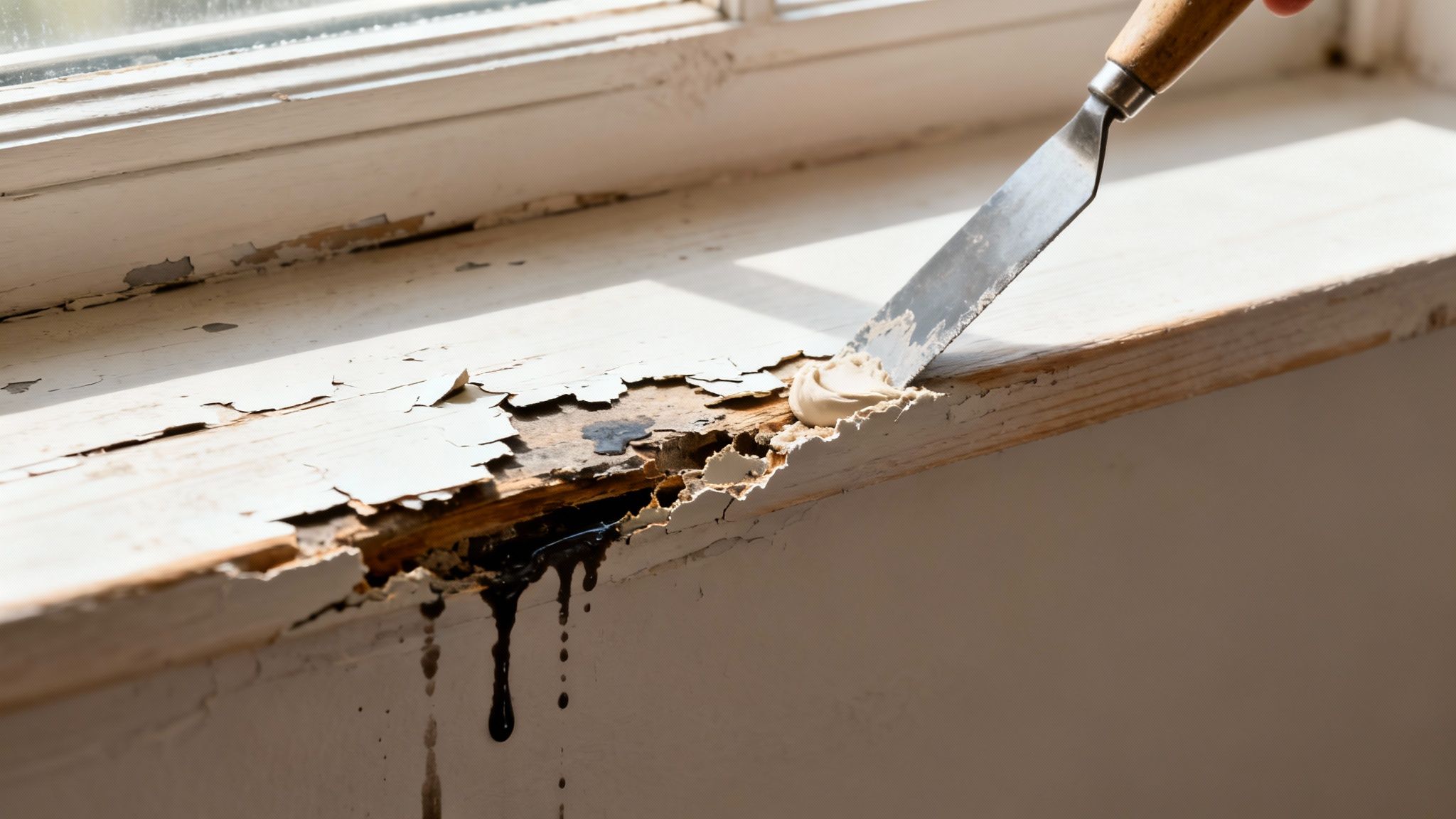
- The Probe Test: Gently press a screwdriver or putty knife into the wooden parts of your window frame, particularly the sill and bottom corners where water accumulates. If the wood feels soft, spongy, or crumbles easily, you have active rot. Healthy wood will feel solid and resist the pressure.
- The Visual Inspection: Look closely for cracks in the frame, peeling paint that exposes the wood underneath, or dark, discolored stains indicating persistent water intrusion. Check if the sashes line up correctly or if there are visible gaps due to warping. Also, inspect for any chipped or broken glass panes, which pose a significant safety risk.
Key Insight: Window frame rot is rarely an isolated issue. It often points to a larger moisture control problem, such as clogged gutters or improper flashing, that must be addressed alongside the window replacement to prevent future damage.
While wood filler might seem like an easy fix for a small soft spot, it’s merely a cosmetic patch that does not address the underlying moisture issue or restore structural strength. When you discover widespread rot, warped frames that prevent a proper seal, or any physical breakage, the window has failed. Upgrading to modern, durable windows made from materials like vinyl or fiberglass is the only way to permanently solve the problem and protect your home.
4. Difficulty Operating Windows
A window’s primary function, beyond providing light and a view, is to open and close on demand. When this simple operation becomes a struggle, it’s a clear indication of underlying structural problems. If you find yourself wrestling to open a window, forcing it shut, or using a prop to keep it open, your window’s mechanical components are failing. This operational difficulty is a significant sign you need new windows.
This issue often stems from a warped frame caused by years of temperature fluctuations and moisture exposure. It can also be due to worn-out balances in double-hung windows, corroded rollers in sliding windows, or stripped cranks in casement styles. Beyond being an annoyance, a window that won’t operate correctly is a safety hazard, potentially preventing a quick exit during an emergency. It also compromises your home's security and ventilation control.
How to Identify and Test Operational Issues
Testing a window's functionality is straightforward but reveals a lot about its overall condition. A few simple checks can help you diagnose the severity of the problem.
- The Operation Test: Attempt to open and close each window fully. Does it glide smoothly, or does it stick, jam, or require excessive force? For double-hung windows, test both the upper and lower sashes. A properly functioning window should move with minimal effort.
- The Balance Test: For a double-hung window, open the lower sash halfway and let go. If it stays in place, the balance system is working. If it slides down or slams shut, the balances are broken and need replacement, which often points to the end of the window's life.
- The Visual Inspection: Look for obstructions in the window tracks, such as dirt, debris, or dried paint from a past project. Check for visible damage like cracked frames or bent hardware that could be hindering movement.
Key Insight: A "sticky" window isn't just inconvenient; it's a symptom of structural failure. Warping and balance system failure indicate that the window is losing its fight against gravity and the elements, compromising its seal, efficiency, and safety.
While cleaning tracks and applying a silicone-based lubricant can sometimes provide temporary relief, it won't fix a warped frame or a broken balance. If these simple fixes don’t restore smooth operation, the window's core components are compromised. Investing in new, high-performance replacement windows is the best solution to ensure effortless function, safety, and long-term reliability.
5. High Energy Bills and Temperature Inconsistency
If you find yourself constantly adjusting the thermostat or dreading the arrival of your monthly utility bill, your windows could be the primary culprit. Older, inefficient windows are essentially thermal holes in your home's structure. Their poor insulation properties, often due to single-pane glass, non-existent gas fills, or failing seals, allow for significant heat transfer. This means precious heated air escapes in the winter, and stifling summer heat radiates inward, forcing your HVAC system to work much harder.
This constant battle against the elements results in noticeably inconsistent temperatures from room to room and a direct, measurable increase in your energy consumption. A west-facing room might feel like a sauna in the afternoon, while a north-facing room remains chilly, all while your HVAC unit runs nonstop. This inefficiency is one of the most compelling financial signs you need new windows, as the money you're spending on wasted energy could be invested in a long-term solution.
How to Identify and Test for Energy Loss
Connecting high bills directly to your windows requires a bit of investigation. These steps can help you confirm that your windows are the weak link in your home’s energy efficiency.
- Compare Utility Bills: Pull up your energy bills from the same month over the last two to three years. If you notice a steady, unexplained climb in usage and cost (after accounting for rate hikes), it often points to a decline in your home’s insulation, with windows being a common source.
- The Touch Test: On a very cold or very hot day, carefully place your hand on the interior surface of your window glass. If the glass feels intensely cold in the winter or hot in the summer, it indicates significant thermal transfer. Modern, energy-efficient windows should feel much closer to the ambient room temperature.
- Professional Energy Audit: For a definitive analysis, consider a professional home energy audit. An auditor can use tools like a thermal imaging camera to create a visual map of where your home is losing the most energy, often highlighting windows as bright red or yellow hotspots.
Key Insight: Upgrading from single-pane windows to modern, ENERGY STAR certified windows can reduce a home's energy bills by an average of 12%, according to the U.S. Environmental Protection Agency. This translates to hundreds of dollars in annual savings.
While you can't repair poor insulating properties, you can make a strategic upgrade. Investing in the best replacement windows for your home with features like low-E coatings and argon gas fills provides an immediate and lasting impact on both your home’s comfort and your monthly expenses. The long-term savings often make window replacement one of the most financially sound home improvements.
6. Outdated Aesthetic or Style Mismatch
While poor function is a primary driver for window replacement, a severely outdated aesthetic is another one of the crucial signs you need new windows. Your windows are a dominant architectural feature, and if they clash with your home's style, it can dramatically reduce curb appeal, personal enjoyment, and even property value. Dated styles, faded colors, or materials that don't complement your home's design create a jarring and neglected appearance.
This issue goes beyond simple looks; it impacts how your home is perceived and valued. An otherwise beautiful colonial home fitted with mismatched, modern aluminum sliders or a sleek contemporary house with chunky, sun-faded brown frames from the 1980s loses its intended character. Upgrading your windows is a powerful way to unify your home's design, create a polished exterior, and significantly boost its marketability.
How to Identify and Address a Style Mismatch
Determining if your windows are aesthetically holding your home back requires looking at the bigger picture of your home’s architectural identity.
- Architectural Harmony Check: Stand back from your home and assess if the window style aligns with its overall design. Do the grid patterns, frame thickness, and color complement your home's era and structure (e.g., Craftsman, Colonial, Modern)? If they feel like an afterthought, they are likely a mismatch.
- Material and Color Assessment: Look at the window frame material and color in relation to your siding, trim, and roof. Faded aluminum, discolored vinyl, or painted-over wood in a clashing color are clear indicators that an update would provide a major visual lift. For example, upgrading to bold black frames can instantly modernize a home's exterior.
Key Insight: According to the National Association of Realtors' "Remodeling Impact Report," a vinyl window replacement project can recoup over 67% of its cost upon resale, largely due to the significant improvement in curb appeal.
Choosing new windows presents a fantastic opportunity to enhance your home's best features. If you are exploring a complete refresh, you can find more inspiration by reviewing some modern home exterior renovation ideas to see how windows tie into a cohesive design. While aesthetics may seem secondary to function, updating your windows is one of the most impactful investments you can make to modernize your home and align it with your personal style.
7. Excessive Noise from Outside
Your home should be a sanctuary, a quiet retreat from the bustling world outside. If you constantly hear every passing car, neighborhood conversation, or barking dog as if they were in the next room, it's a clear sign that your windows are failing to provide adequate sound insulation. Older single-pane windows or even early-generation double-pane units offer very little resistance to sound waves, allowing excessive noise pollution to disrupt your peace and quiet.
This constant auditory intrusion can affect everything from your sleep quality to your ability to concentrate while working from home. A home that feels loud and unprotected is less relaxing and can be a source of daily stress. If outside noise is a persistent problem, it’s one of the key signs you need new windows, as modern glazing technology can dramatically transform your home's acoustic environment.
How to Evaluate Noise Levels and Window Performance
Determining if your windows are the primary culprit for noise issues is straightforward. You can assess their performance with a few simple observations.
- Listen Closely: Pay attention to the difference in noise levels when you are in a room with windows versus an interior room like a closet or bathroom. If the difference is dramatic, your windows are the weak link in your home's sound barrier.
- Check the Glass: Do your windows have only a single pane of glass? You can usually tell by looking at the edge of the glass where it meets the sash. If it’s very thin with no visible spacer between panes, it's a single-pane window with minimal soundproofing capability.
- Identify the Noise Source: Is the noise from a specific source, like a busy road in front of your house or a nearby commercial area? Upgrading the windows on that side of your home can provide the most significant and immediate relief. For example, homeowners near Greenville-Spartanburg International Airport often use acoustic windows to specifically target and minimize flight noise.
Key Insight: A window's ability to block sound is measured by its Sound Transmission Class (STC) rating. A standard single-pane window may have an STC rating of 21-28, while specialized laminated glass windows can achieve ratings of 35 or higher, reducing perceived noise by over 50%.
While heavy curtains or window inserts can offer a minor improvement, they don't address the core problem. The only truly effective, long-term solution is to replace outdated windows with modern units designed for sound reduction. Learn more about the best windows for noise reduction and how different technologies can restore tranquility to your home. Upgrading is an investment in your comfort and well-being.
8. Age of Windows (20+ Years Old)
Sometimes, the most compelling sign you need new windows isn't a single catastrophic failure but simply the passage of time. Like any major home component, windows have a finite lifespan. Most residential windows are designed to last between 15 and 30 years. If your home was built in the early 2000s or before and still has its original windows, they are likely nearing or have already surpassed their expected functional life.
Even if they appear to be in decent condition, windows over two decades old lack the advanced technology found in modern replacements. They were built to different energy standards and are inherently less efficient. Over the years, cumulative exposure to sun, rain, and temperature fluctuations in the Carolinas causes a slow, often unnoticed degradation of seals, frames, and glazing, leading to a gradual decline in performance that impacts your home's comfort and energy bills.
How to Determine Your Windows' Age and Plan for Replacement
Identifying your windows' age and planning proactively can save you from the headache of an emergency replacement. It allows for thoughtful budgeting and scheduling during optimal weather conditions.
- Check for Clues: Look for a manufacturer's label etched into a corner of the glass or on a sticker inside the frame. This often includes a manufacturing date. If that's missing, your home's original construction date is a reliable indicator for the age of the original windows.
- Plan Ahead: Don't wait for total failure. If your windows are approaching the 20-year mark, begin researching replacements. Proactive replacement prevents dealing with a leaky, broken, or insecure window during a storm or heatwave.
- Consider Phased Replacement: If replacing all windows at once isn't in the budget, prioritize. Start with the windows that show the most significant signs of wear, are in rooms you use most often, or face the harshest sun and weather exposure.
Key Insight: Proactively replacing aging windows is not just about preventing problems; it's a strategic investment. Modern windows offer superior insulation, UV protection, and security, directly contributing to your home's marketability. To explore this further, you can learn more about how new windows increase property value.
Waiting until old windows fail completely often leads to bigger problems, like water damage to your walls and floors. Treating age itself as a primary sign you need new windows allows you to upgrade on your terms, enhancing your home's energy efficiency, comfort, and curb appeal before minor issues become major expenses.
8-Point Comparison: Signs You Need New Windows
| Drafts and Air Leaks | Low 🔄 — easy to diagnose; may need weatherstripping or full replace | Low–Moderate ⚡ — caulk/weatherstripping or replacement ($300–$900/window) | ⭐⭐ — immediate comfort and reduced drafts | Rooms with cold spots or visible air movement | 💡 Easy DIY detection; clear energy-loss indicator |
| Condensation and Moisture Between Panes | High 🔄 — sealed-unit failure requires professional replacement | Moderate–High ⚡ — sealed-glass unit or full window replacement | ⭐⭐⭐ — restored clarity and insulating performance | Windows with persistent fogging between panes | 💡 Definitive visual failure; prioritize prompt replacement |
| Visible Rot, Warping, or Physical Damage | High 🔄 — may involve structural repair and frame replacement | High ⚡ — variable; often $400–$1,200+/window plus possible structural costs | ⭐⭐⭐ — restores safety, weather protection, and prevents spread | Windows with soft wood, cracks, or visible decay | 💡 Obvious justification for replacement and insurance claims |
| Difficulty Operating Windows | Moderate 🔄 — possible cleaning/lubrication or mechanism replacement | Low–Moderate ⚡ — maintenance $50–$200; replacement $300–$900/window | ⭐⭐ — smoother operation and improved safety | Stiff, stuck, or misaligned sashes and tracks | 💡 Often test/clean first; replacement if lubrication fails |
| High Energy Bills & Temperature Inconsistency | Moderate 🔄 — requires energy audit to confirm cause | High ⚡ — whole-home replacement costly; per-window savings $150–$500/yr | ⭐⭐⭐ — measurable energy savings and comfort improvement | Homes with rising utility costs or uneven room temps | 💡 Financial justification via rebates/credits; prioritize worst exposures |
| Outdated Aesthetic or Style Mismatch | Low–Moderate 🔄 — selection and coordinated installation | Moderate ⚡ — cosmetic replacement; value increase estimated 2–5% | ⭐⭐ — improved curb appeal and resale potential | Renovations, staging for sale, or style upgrades | 💡 Choose long‑term styles; consult mockups/HOA rules |
| Excessive Noise from Outside | Moderate–High 🔄 — requires acoustic glazing and precise installation | High ⚡ — acoustic windows $500–$1,500+/window | ⭐⭐⭐ — substantial noise reduction (≈30–50%) | Homes near highways, airports, or noisy commercial areas | 💡 Request STC ratings; combine with treatments for best results |
| Age of Windows (20+ Years) | Moderate 🔄 — assessment and phased replacement planning | High ⚡ — whole-home cost $2,500–$15,000+ depending on scope | ⭐⭐ — preventive performance boost and planned budgeting | Homes with original windows >20 years or outdated standards | 💡 Plan phased replacements; align with other exterior upgrades |
Your Next Steps: From Recognizing the Signs to Taking Action
You’ve navigated the tell-tale indicators of failing windows, from the subtle drafts that chill a room to the frustrating struggle of a stuck sash. Recognizing these issues is the crucial first step. It's easy to dismiss a bit of condensation or a slight increase in your energy bill, but as we've explored, these are often the early warnings of a more significant problem. Ignoring the clear signs you need new windows doesn't make them disappear; it simply allows them to compound, potentially leading to more extensive and costly repairs down the line.
Think of your windows as a complete system that protects your home's envelope. When one part fails, like a seal breaking or a frame beginning to rot, it compromises the entire system's performance. The consequence isn't just one problem, but a cascade of issues: diminished energy efficiency, potential moisture intrusion that can lead to mold, and a decrease in your home's overall comfort and security.
From Diagnosis to Decision
The journey from identifying a problem to choosing a solution can feel overwhelming, but it doesn't have to be. The DIY checks we covered, like the flame test for drafts or a close inspection of window frames, are your diagnostic tools. They empower you to assess the severity of the situation and move forward with confidence. You now understand that persistent condensation between panes isn't just a cleaning issue; it’s a definitive sign of seal failure. You know that a warped frame isn't just an aesthetic flaw; it’s a breach in your home's insulation.
This knowledge transforms you from a passive homeowner into an informed decision-maker. You can now differentiate between a minor issue that might be remedied with new weatherstripping and a major failure that demands a full replacement. This clarity is invaluable, especially when considering the significant return on investment that new, energy-efficient windows provide.
Key Takeaway: The signs of window failure are interconnected. A draft is a symptom of poor sealing, which contributes to higher energy bills. Recognizing this relationship helps you understand that replacing windows is a comprehensive solution, not just a cosmetic upgrade.
Considering Your Upstate South Carolina Home
For homeowners here in Upstate South Carolina, from Greenville to Spartanburg, these signs carry extra weight. Our hot, humid summers and chilly winters put immense stress on window materials and seals. Old, single-pane aluminum windows that "sweat" in August are not just an annoyance; they are actively working against your air conditioner, driving up your cooling costs. Windows that let in drafts during a January cold snap are a direct drain on your heating budget.
Investing in modern, high-performance windows designed for our climate is one of the most effective upgrades you can make. It directly addresses the region's specific environmental challenges, leading to a more stable indoor temperature, lower humidity levels, and a significant reduction in energy consumption year-round.
When to Take Immediate Action
While some signs indicate a gradual decline, others demand immediate attention. Severe rot that compromises the structural integrity of the wall, visible cracks in the glass that pose a safety hazard, or windows that are completely inoperable are not issues to postpone. These situations can affect your family's safety and your home's security.
Similarly, if you're dealing with extreme physical damage from an unforeseen event, the situation requires a swift and professional response. For instance, understanding how to handle the aftermath of damage from a car impact on your home involves a different set of steps, often involving insurance claims and structural assessments, where a secure and properly installed window replacement is a critical part of the restoration.
Ultimately, acting decisively on the clear signs you need new windows is an investment in your property's future. It enhances curb appeal, boosts resale value, and, most importantly, transforms your house into a more comfortable and efficient home. You've done the work to identify the problems; now is the time to embrace the solution.
Ready to see how new, energy-efficient windows can transform your home? The team at Atomic Exteriors specializes in high-performance Wincore® window installations tailored for Upstate South Carolina homeowners. Contact us today for a free, no-obligation consultation and estimate to take the next step toward a more beautiful and comfortable home.