.png)
Your Upstate SC Window Replacement Cost Estimator
So, you’re thinking about replacing your windows and wondering what it's going to cost. It's the first question everyone asks. Here in Upstate South Carolina, most homeowners can expect a full window replacement to run somewhere between $450 and $1,200 per window, and that includes professional installation. That's a pretty wide range, but it covers the typical materials and styles we see most often in our area.
Breaking Down a Window Replacement Quote
Before you can really nail down a budget, you have to understand what you're paying for. Every quote you get is basically built on two big things: the price of the actual window and the cost of the labor to get it installed perfectly.
Think of it as a simple, three-part flow.
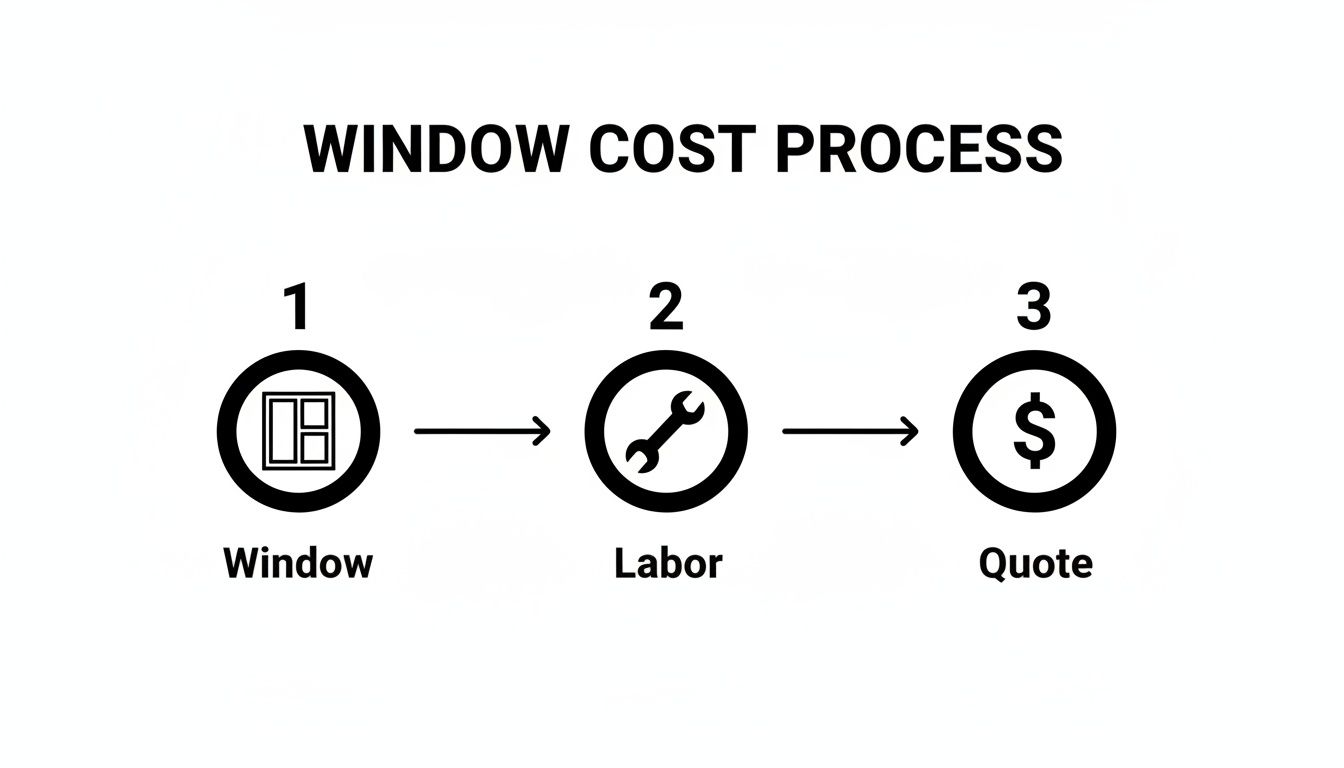
As you can see, it all starts with picking your window. From there, the labor is calculated, and those two pieces come together for your final quote. Knowing this takes the mystery out of the process and helps you ask the right questions.
The Two Core Parts of Your Quote
That final number isn't just pulled out of a hat. It's a careful calculation based on several key factors that can push the material and labor costs up or down. I’ve seen homeowners surprised by how much these details can swing the final price.
Here's what moves the needle:
- Window Material: Vinyl is usually the most budget-friendly, while fiberglass and wood sit at higher price points for different reasons.
- Window Style: A simple double-hung window is going to cost a lot less than a big, beautiful bay or bow window.
- How Tough is the Job?: A straightforward insert replacement is quicker and cheaper. A full-frame installation that means messing with trim and siding? That's a much bigger job.
A recent survey of 1,000 homeowners really drove this point home. It found that while the national average spent was $477 per window, the range was huge—from $232 to $740 for most folks. And for high-end, custom jobs, that number could shoot up to $1,400. It just proves that your specific choices are everything.
Key Takeaway: Your total cost is a balance. It’s never just about the window itself; it’s about the product and the skill needed to install it so it lasts for decades.
Of course, the initial replacement cost is just one piece of the puzzle. It helps to think about the bigger picture, like future maintenance. For a little perspective, you can check out guides like this Phoenix Window Cleaning Cost Per Window Guide to see how other related services are priced. Smart financial planning is a huge part of successful home exterior renovation ideas. Once you get these core concepts down, you’ll be in a much better position to tackle your project without any sticker shock.
Quick Look At Average Window Replacement Costs in Upstate SC
To give you a starting point, here’s a table that breaks down what you might expect to spend based on the scope of your project and the materials you choose. These are just ballpark figures, but they're a good way to get a feel for potential costs in our local market.
| Single Window | $450 – $750 | $800 – $1,500 | $1,600 – $3,000+ |
| Small Project (3-5 Windows) | $1,800 – $3,750 | $3,500 – $7,500 | $7,000 – $15,000+ |
| Whole House (10-15 Windows) | $5,500 – $11,250 | $10,000 – $22,500 | $20,000 – $45,000+ |
Remember, these numbers can shift based on the specific factors we'll dig into next. But for now, this should help you frame your budget and set realistic expectations for your investment.
How Window Materials And Styles Drive Your Final Cost
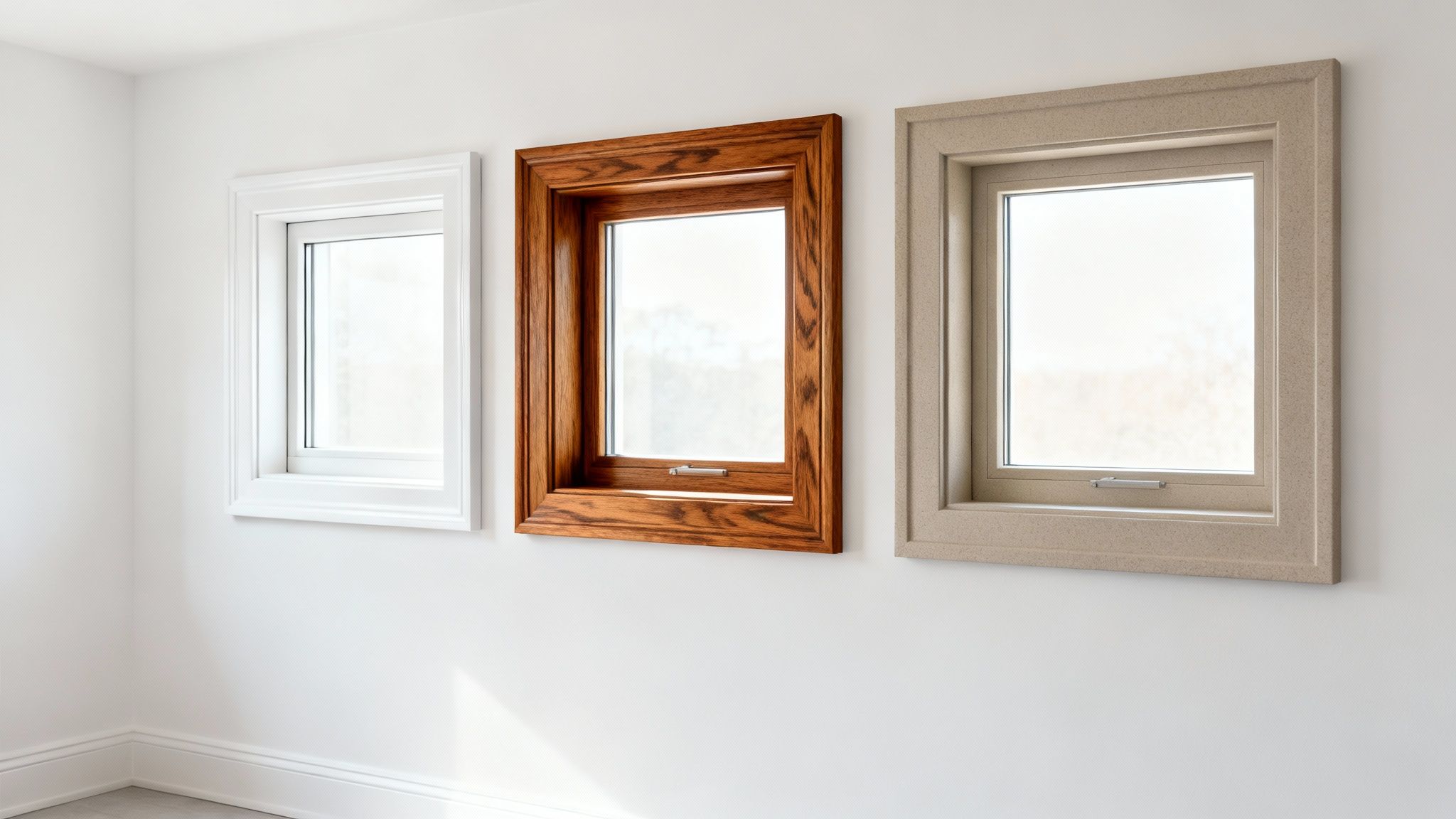
When you start plugging numbers into a window replacement cost estimator, you'll quickly notice two things that move the needle more than anything else: the frame material and the window's operational style.
These aren't just cosmetic choices. They have a massive impact on durability, maintenance, and energy efficiency—especially here in the humid climate of Upstate South Carolina. You have to think beyond the upfront price and ask how each option will hold up over the next 15 to 20 years.
Choosing The Right Frame Material
The material you pick for your window frames is the foundation of your investment. Each one has a different personality, with real pros and cons for homes in the Greenville and Spartanburg area. Let's break down the usual suspects.
Vinyl Frames Vinyl is, hands down, the most popular and budget-friendly choice out there. It's a workhorse material that requires practically zero maintenance (no painting, ever) and does a great job insulating your home. Its natural resistance to moisture makes it a perfect fit for our sticky summers.
The downside? The color selection is limited, and you can't really paint it. Vinyl also expands and contracts with our temperature swings, which, over many years, could potentially affect the window's seal. It’s a fantastic, no-fuss option for a rental property or for any homeowner focused on getting the best bang for their buck.
Wood Frames For pure, classic charm, nothing beats the look of real wood. It’s a fantastic natural insulator and can be painted or stained to match any home style, which is why it's a go-to for historic properties. The curb appeal is undeniable.
But that beauty comes with a price—in both dollars and time. Wood frames demand regular sealing and painting to keep moisture out and prevent rot, a very real threat in South Carolina. If you fall behind on maintenance, they can warp and deteriorate, completely undermining their purpose.
Fiberglass and Composite Frames These materials are the best of both worlds, blending serious durability with top-tier performance. Fiberglass is incredibly strong, refusing to swell, rot, or warp even in our most extreme heat and humidity. You can paint it, and it offers excellent insulation, making it a "buy it for life" kind of investment.
Composite windows, often a mix of wood fibers and tough polymers, give you that handsome wood look without all the high-maintenance baggage. Both fiberglass and composite cost more than vinyl, but they pay you back in strength and longevity.
Expert Insight: Across the country, the average window replacement costs about $1,047 per window, based on data from over a million homeowner projects. Material is the biggest factor here. Vinyl typically lands between $450 and $850, while wood can easily jump to $800 to $1,500 per window.
To give you a clearer picture of what to expect here in our area, we've put together this quick comparison guide.
Upstate SC Window Material And Style Cost Comparison
This table breaks down the average installed cost per window right here in the Upstate, giving you a realistic idea of how frame material and operational style come together.
| Vinyl Double-Hung | $450 – $850 | Low maintenance, energy-efficient, budget-friendly | Rental properties, homeowners prioritizing value and ease of ownership. |
| Vinyl Casement/Slider | $550 – $950 | Excellent ventilation, modern look, secure seals | Kitchens, bathrooms, and areas needing maximum airflow. |
| Fiberglass Double-Hung | $800 – $1,300 | Extreme durability, paintable, resists warping | Homeowners seeking a long-term investment that withstands SC humidity. |
| Wood Double-Hung | $800 – $1,500+ | Unmatched aesthetics, natural insulator | Historic homes or homeowners who prioritize classic architectural beauty. |
| Composite Picture | $900 – $1,600 | Wood look without the rot, superior strength | Living rooms with great views where a durable, high-end look is desired. |
| Bay or Bow Window | $2,500 – $6,000+ | Adds space, dramatic curb appeal, panoramic views | Creating a stunning focal point in a dining room or master bedroom. |
As you can see, the price ranges can be significant. The key is finding that sweet spot where performance, aesthetics, and your budget all align.
How Window Style Affects Your Quote
Beyond the frame, the way a window actually opens—its style—also has a big say in the final price. The more complex the mechanism and the more hardware it needs, the more it's going to cost.
Here’s a quick rundown of common styles and where they fall on the price spectrum:
- Double-Hung Windows: This is the quintessential American window, with two sashes that slide up and down. They’re versatile, a breeze to clean, and usually one of the most affordable options you can buy.
- Casement Windows: These are hinged on the side and crank outward. They offer incredible ventilation and a wide-open, unobstructed view. That crank mechanism makes them a bit more expensive than a simple double-hung.
- Picture Windows: These are large, fixed panes of glass that don't open at all. While the sheer size of the glass can make the unit itself pricey, the fact that there are no moving parts can simplify installation, putting them in the mid-to-high price range.
- Bay or Bow Windows: These are the showstoppers. Because they're actually three or more windows joined together to jut out from the house, they're the most expensive style. The installation is complex and requires structural work, adding to the overall cost.
Finding the right combination is everything. Our guide to the best replacement windows for homes dives even deeper into matching specific window types to your home's needs and architecture. Getting that balance right ensures you get the performance you need at a price that makes sense.
Uncovering The Hidden Factors In Your Estimate
A window replacement cost estimator is a fantastic starting point, but the number it spits out is built on standard assumptions. The real-world cost for your project often comes down to the details—the stuff that goes far beyond the window unit itself. These so-called "hidden" factors can significantly shift your final bill, and understanding them is the key to creating a budget that isn’t full of surprises.
Many homeowners are caught off guard when they learn that not all installations are created equal. The complexity of the job is a massive cost driver. Simply swapping an old window for a new one of the same size is one thing. Custom projects? That's a whole different ballgame.
Custom Sizes And Architectural Shapes
If your home has standard window openings, you’re looking at a straightforward, cost-effective replacement. But many homes, especially older ones you see all over Greenville and Spartanburg, have non-standard sizes or unique architectural shapes like arches, circles, or trapezoids.
These custom windows demand more than just a different product off the shelf; they require a much higher level of craftsmanship during installation.
- Manufacturing Costs: Creating a window that isn't a standard dimension simply costs more in materials and factory labor. There’s no way around it.
- Installation Time: The process for installing a custom-shaped window is far more meticulous and time-consuming, which naturally leads to higher labor charges.
- Structural Modifications: Sometimes, the opening itself has to be reframed to properly support the new architectural window. This adds another layer of complexity and cost to the job.
The bottom line is, the more your project deviates from a simple, rectangular swap, the more you should budget for both the window itself and the specialized labor needed to get it installed right.
Insert vs. Full-Frame Installation
Another crucial detail that will impact your quote is the type of installation you need. This is something an online estimator can't possibly know, but it’s one of the first things a professional will spot during an in-home consultation.
An insert replacement (also called a pocket replacement) is the simpler, more affordable route. In this scenario, the new window unit is installed directly into the existing window frame. This works great if the old frame, sill, and jamb are structurally sound and completely free of rot.
A full-frame replacement, on the other hand, is a much bigger job. This involves tearing out the old window entirely—frame, trim, and all—right down to the rough opening. You'll need this when the existing frame is damaged, rotted, or if you want to change the size or style of the window opening. While it's more expensive, it's the only way to guarantee a perfect, weather-tight seal and top-notch insulation.
Key Insight: A full-frame installation can sometimes cost 25% to 50% more than an insert replacement because of the extra labor and materials for siding, trim work, and insulation. It’s a bigger investment, but it’s the right choice for ensuring long-term performance and preventing future water damage.
Upgrading Your Glass Package
The glass you choose is just as important as the frame holding it. Standard double-pane glass is the baseline for most modern windows, but upgrading your glass package can have a huge impact on your home's comfort and your monthly energy bills.
Think about these common upgrades:
- Low-E Coatings: This is a microscopically thin metallic coating on the glass that reflects heat. In the summer, it keeps heat out; in the winter, it keeps heat in. It's a small upgrade, often adding $50 to $100 per window, that can seriously lower your heating and cooling costs.
- Argon Gas Fills: Argon is a harmless, inert gas that’s denser than air. When it’s used to fill the space between glass panes, it provides way better insulation than air alone, putting another barrier between you and the weather.
- Triple-Pane Glass: For homeowners dead set on maximum energy efficiency and soundproofing, triple-pane windows are the top of the line. This upgrade gives you an additional layer of glass and an extra insulating chamber. It's the perfect choice if you're looking for the best windows for noise reduction to finally get some peace and quiet.
Finally, don't forget about local red tape. Depending on where you live in Upstate SC, your project might require a building permit, which has its own fee. A professional contractor will handle this process for you, but it's a real cost that will be factored into your final estimate.
Understanding Your Installation And Labor Costs
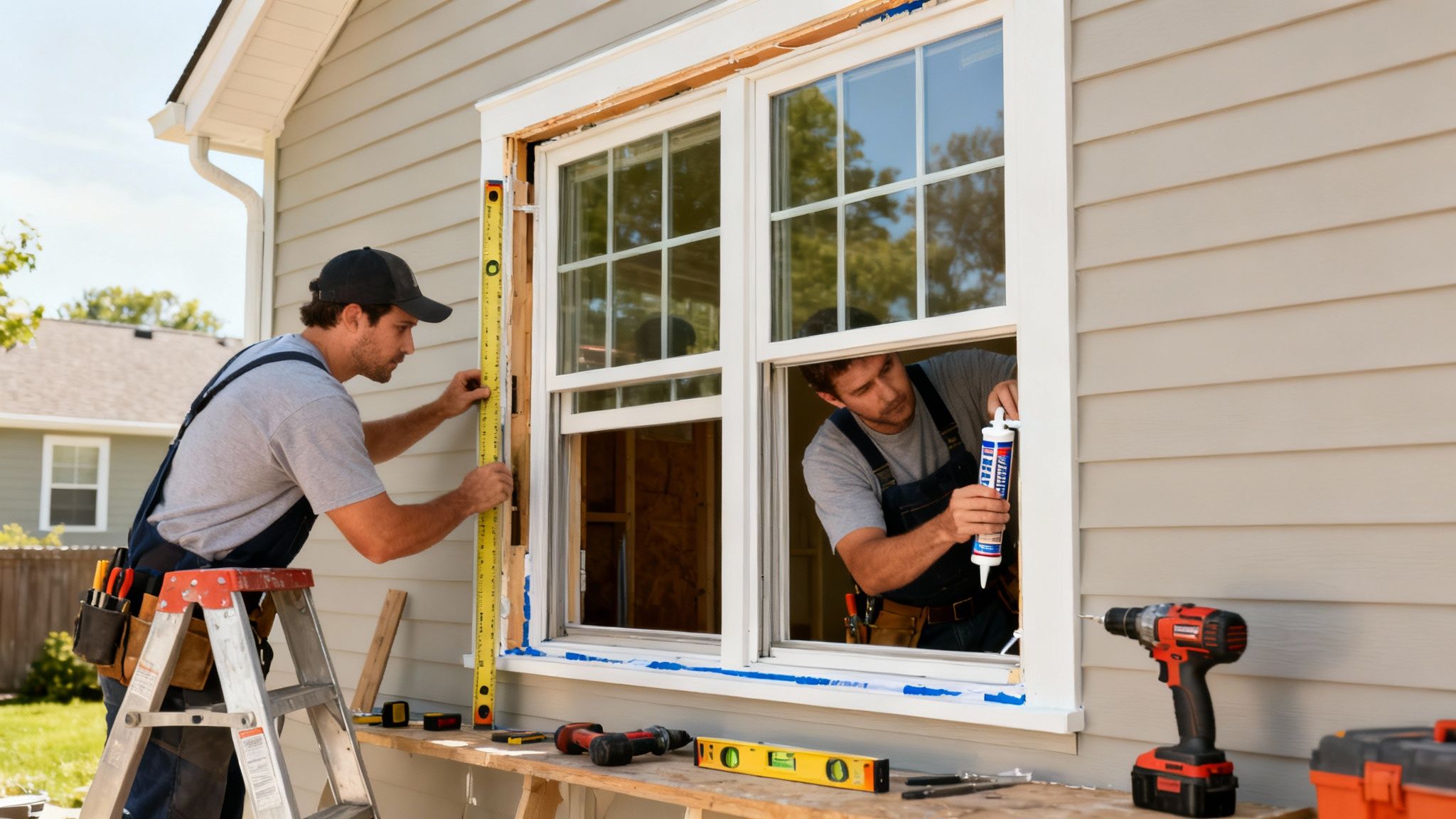
Let's be blunt: the best window in the world is junk if it's installed poorly. That’s why expert installation isn't just a line item on your quote; it's the most critical part of the entire project. You're not just paying someone to pop in a new window. You're investing in the craftsmanship that guarantees your home stays warm, dry, and efficient for decades.
This is where the numbers can start to swing. Labor costs for window installation typically run anywhere from $100 to $300 per window, but that’s just a baseline. According to figures from Angi.com, the average project can land around $7,357, and complex jobs can easily push that labor cost higher.
This isn't an area to cut corners. A quality installation is what separates a drafty house from a comfortable one.
Retrofit vs Full Frame Installations
The first big question that impacts your labor cost is the type of installation your home needs. A professional will quickly identify whether you’re a candidate for a simpler retrofit installation or if you need a more involved full-frame replacement. Knowing the difference will help you make sense of any estimate you receive.
A retrofit (also called a pocket installation) is the quicker, more affordable route. Here, the new window unit is fitted directly into the existing window frame. This is a solid option only if your current frame is perfectly square, structurally sound, and shows zero signs of rot or water damage.
A full-frame replacement is the whole nine yards. The installer removes everything—the old window, the frame, and all the surrounding trim—right down to the studs. This is non-negotiable if the old frame is shot, or if you're changing the size or style of the window. It costs more, but it’s the only way to fix hidden rot and guarantee a perfect, weathertight seal.
Key Takeaway: A full-frame installation allows us to add new, high-performance insulation around the entire window opening, maximizing energy efficiency. A retrofit relies on the quality of the original install, which might be decades old and not up to modern standards.
Common Factors That Increase Labor Costs
Beyond the basic installation type, several real-world scenarios can add hours and complexity to the job. A good installer accounts for these variables upfront so you aren't hit with surprises.
Don't be surprised if your labor costs tick up if the job involves:
- Upper-Story Windows: Any work above the ground floor is a different ballgame. It means ladders, scaffolding, and extra safety gear. This adds time and risk, which naturally adds to the cost.
- Discovering Wood Rot: It’s incredibly common to pull out an old window and find soft, rotted wood in the sill or framing. That damage must be repaired before the new window goes in, adding both material and labor costs to the project.
- Tricky Architectural Features: Installing a window into a brick or stone wall is a far more delicate and time-consuming process than working with standard wood siding. The same goes for historic homes with unique angles or trim work.
- Lead Paint Abatement: If your home was built before 1978, the old window frames might be coated in lead paint. Federal law requires certified professionals to handle its removal and disposal safely, which is an additional, necessary cost.
At Atomic Exteriors, we believe in transparent pricing that reflects the true condition of your home. Our team has seen it all and knows how to handle these complexities the right way, the first time. You can check out the full scope of our professional installation services to see how we approach every aspect of an exterior renovation. It’s that attention to detail that makes a window replacement a lasting investment, not just a quick fix.
Investing In Energy Efficiency For Long-Term Savings
When you’re pricing out new windows, it’s easy to get sticker shock from the high-performance, energy-efficient options. That initial number can make you hesitate, but it’s crucial to see this as a strategic investment, not just an expense. Here in Upstate South Carolina, with our hot, humid summers and surprisingly chilly winters, your windows are on the front lines of your home’s energy battle.
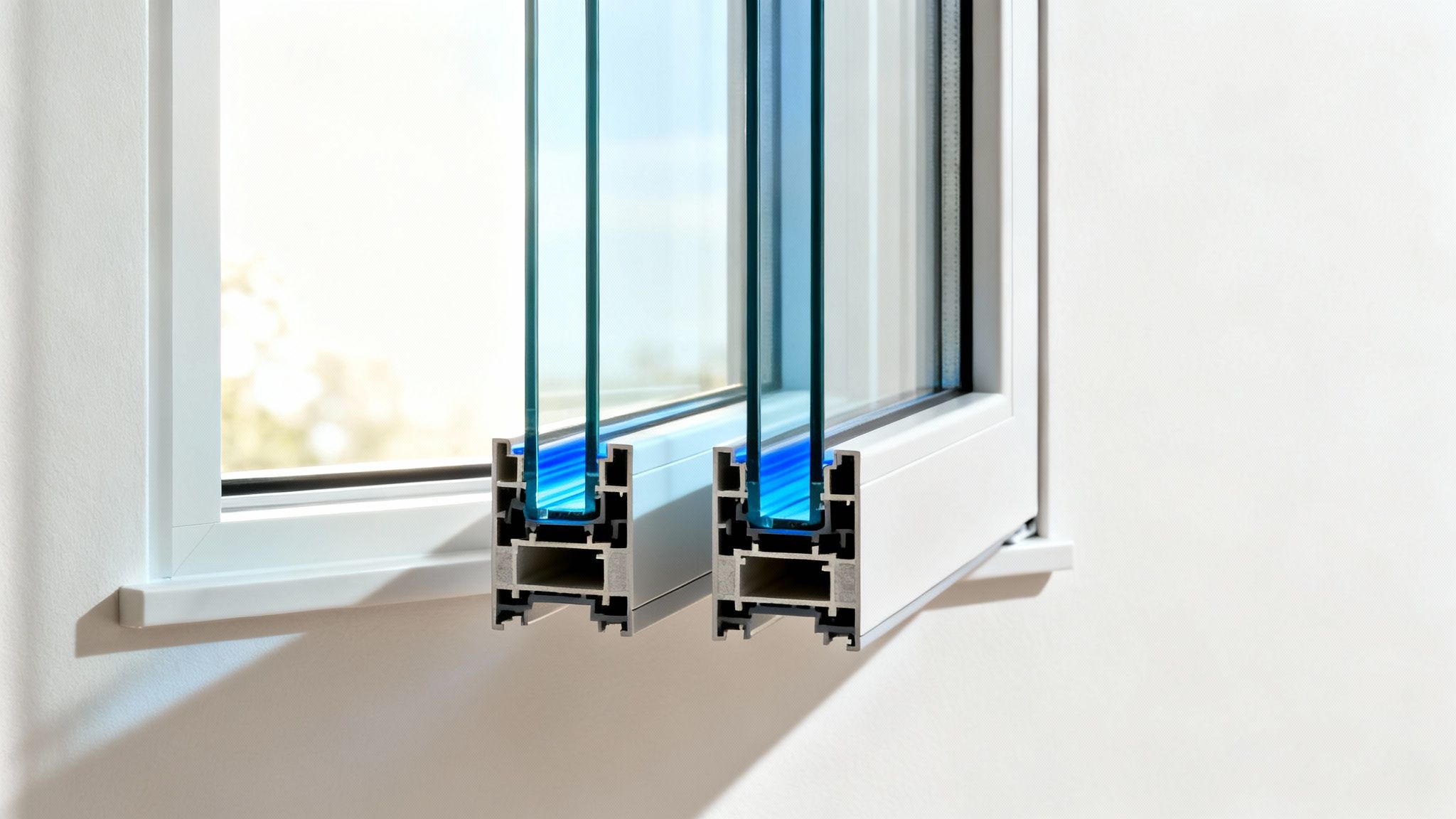
Upgrading to ENERGY STAR certified windows can knock down your household energy bills by a national average of 12%. For many homeowners around here, that translates to hundreds of dollars in savings every single year. This isn't magic; it's a combination of advanced technologies working together to create a powerful thermal barrier.
Key Features That Drive Savings
So, what are you actually paying for when you opt for an energy-efficient package? It comes down to a few specific features that dramatically improve performance and turn a standard window into a money-saving asset.
Here are the core components to look for:
- Double or Triple-Pane Glass: Modern windows should have at least two panes of glass. Adding a third pane (triple-glazing) creates another insulating air pocket, which is fantastic at reducing heat transfer and even dampening outside noise.
- Low-E Coatings: A Low-Emissivity (Low-E) coating is a microscopically thin, transparent layer of metal oxide. Think of it as a heat bouncer. In the summer, it reflects the sun's infrared heat away from your home. In the winter, it reflects your home’s heat back inside, keeping you cozier. This one feature might add $50 to $100 per window, but it pays for itself in both comfort and savings.
- Inert Gas Fills: The space between the glass panes is filled with a dense, harmless gas like argon or krypton. Because these gases are thicker than air, they slow the movement of heat right through the window, giving you far better insulation.
Key Insight: Choosing these upgrades isn't just about the numbers on your utility bill. It’s about creating a more comfortable living space. Good windows get rid of drafts, eliminate those annoying cold spots near the glass, and even protect your furniture and flooring from fading by blocking harmful UV rays.
Calculating Your Return on Investment
Let's run a quick, practical scenario. Say your average summer cooling bill in Greenville is $300 per month. Upgrading from old, leaky single-pane windows to new ENERGY STAR double-pane windows could realistically slash that bill by 15% to 20%.
That’s a savings of $45 to $60 every single month during the hottest part of the year. Add in the winter heating savings, and the annual return starts looking pretty good. If the energy-efficient upgrades for your whole house cost an extra $2,000, you could recoup that investment in just a few years—all while making your home more valuable.
Of course, new windows are a big step, but other solutions can also offer substantial savings. For instance, some homeowners explore options like window tinting to reduce cooling costs, which can be a great complement to a full replacement project.
Ultimately, the decision to invest a bit more upfront for energy efficiency comes down to your long-term goals. If you plan on staying in your home for years to come, the cumulative savings and enhanced comfort make it one of the smartest upgrades you can make. It transforms your window project from a simple replacement into a powerful financial and functional improvement for your home.
Finalizing Your Budget With An Upstate SC Partner
Once you've run the numbers and have a solid idea of the costs, it's time for the most important step: choosing the right local partner to bring your vision to life. This is where your research and a good cost estimator pay off, helping you transition from a rough budget to a concrete plan.
But let’s be clear—moving forward isn’t just about finding the lowest price. It’s about evaluating what a contractor truly delivers for that price.
A trustworthy quote is more than a single number at the bottom of a page. It should be a completely transparent breakdown of every single component: the window brand, the exact style, the glass package, and the specific installation method they plan to use. If you get a vague, one-line estimate, consider it a major red flag. Those often leave the door wide open for surprise charges down the road.
Looking Beyond The Price Tag
I've seen it time and time again: the cheapest quote is almost never the best value, especially for an investment as important as your home's windows. A slightly higher price from a reputable, established company almost always includes critical assurances that protect you and your home for decades.
Before you sign on the dotted line, make sure you've covered these bases:
- Workmanship Warranty: The manufacturer’s warranty is great—it covers the window itself. But what about the installation? A strong workmanship warranty, like our 15-year guarantee at Atomic Exteriors, protects you from issues like leaks, drafts, or operational failures that stem from the installation itself.
- Company Reputation: Do your homework. Look for a contractor with a long, consistent history of positive reviews right here in the Upstate. Don't forget to verify their licensing and insurance to ensure you're fully protected. A good reputation is earned through years of quality work and happy customers.
- Installation Standards: This is where the pros separate themselves from the amateurs. Ask them about their process. What kind of sealants do they use? How do they insulate the rough opening around the window frame? A flawless installation is the only way to get the energy efficiency and longevity you're paying for.
Our Promise to Upstate Homeowners: At Atomic Exteriors, we believe in transparent, no-pressure consultations. We provide incredibly detailed estimates that explain every line item, so you know exactly what your investment covers. Our entire focus is on a perfect installation that boosts your home's comfort and value.
We get it—this is a big decision. That's why we're committed to making it a smooth and confident one for our neighbors in Greenville, Spartanburg, and across the Upstate. Our team is ready to give you a free, comprehensive estimate that’s built around your home's unique needs and your budget.
When you’re ready to finalize your plans, let us show you the difference that professional craftsmanship and a real commitment to quality can make. You can learn more about our premium Wincore replacement windows and see how they can transform your home.
Contact Atomic Exteriors today for your transparent, no-obligation quote.
A Few Common Questions We Hear
When you’re starting a window replacement project, it’s natural to have a few questions. Getting straight answers helps you make sense of any cost estimator and walk into the process feeling confident. Here are a few things homeowners in the Upstate ask us all the time.
How Accurate Are Online Window Replacement Cost Estimators?
Think of online estimators as a fantastic starting point. They’re great for getting a ballpark figure based on regional or national data, which helps you wrap your head around the basic costs before you even pick up the phone.
But for a final, rock-solid quote? An in-home consultation is a must. An expert on-site can see the things a calculator can't—like the condition of your home's walls, the integrity of the existing frames, or any weird installation quirks that need a professional eye.
Is It Cheaper To Replace All My Windows At Once?
Absolutely. In almost every case, you'll save a significant amount of money by tackling all your windows in one go. Contractors can give you much better pricing when they can line everything up efficiently.
There are a few reasons for this:
- Bulk Material Orders: Buying all the windows at once simply costs less per unit from the manufacturer.
- Streamlined Labor: One big project means one setup, one cleanup, and fewer trips. That saves time and money.
- Price Protection: Getting the job done now locks you in at today's prices, protecting you from future increases in material and labor costs.
Splitting the project into phases just means you’re paying for multiple service calls and gambling on what prices will look like a year or two from now.
The biggest mistake homeowners make is focusing only on the per-window price while ignoring the quality of the installation and the warranty. A cheap window installed incorrectly can lead to drafts, water damage, and voided manufacturer warranties, costing you far more in the long run. Always factor in the contractor's reputation, installation process, and the comprehensiveness of their labor and material warranties when making your final decision.
Ready to get a precise, no-surprise quote for your Upstate SC home? The team at Atomic Exteriors provides transparent, detailed estimates backed by our 15-year workmanship warranty. Contact us today for your free, no-obligation consultation!