.png)

What Is the Best Time to Replace Windows? A Homeowner's Guide
While popular opinion points to spring and early summer, the best time to replace windows really comes down to your priorities. Are you looking to save money, get on a contractor’s schedule quickly, or solve an urgent problem like a leak?
Think of it like booking a vacation. You can go during peak season for perfect weather but pay a premium, or you can travel in the off-season to find incredible deals and skip the crowds.
Finding the Perfect Time for Your Window Replacement
Deciding when to kick off your window project is a balancing act between three things: the weather, contractor demand, and your budget. Each one influences the others, and figuring out how they work together is the first step toward making a smart, confident decision.
It’s no secret that home improvement spending skyrockets in the spring and early summer. The U.S. windows market, valued at USD 12.32 billion in 2022, is heavily driven by this seasonal rush. Most contractors see their schedules fill up between March and July when the weather is ideal for home projects.
Aligning Your Project with Market Cycles
This peak demand creates a classic supply-and-demand squeeze. If you try to schedule during these busy months, you're competing with countless other homeowners for a limited number of installation slots. That often means longer wait times and higher prices.
The trick is to plan ahead. Booking in late winter or early spring can help you lock in a spot and potentially get more competitive pricing before the madness begins. This proactive approach gives you all the benefits of great installation weather without the headaches of peak-season scheduling.
The "best" time isn't just a date on the calendar. It's a strategic window of opportunity where your needs for cost, convenience, and quality all line up perfectly.
Key Factors Influencing Your Decision
At the end of the day, your personal situation is what matters most. To find your ideal timing, ask yourself a few questions:
- What’s Your Budget? Are you trying to get the lowest possible cost, or are you willing to pay a premium for convenience? Off-season projects in late fall or winter often come with attractive discounts.
- How Urgent Is It? Is a broken seal causing foggy glass, or is a nasty draft sending your energy bills through the roof? Urgent needs might mean you can't wait for the "perfect" season.
- What Does Your Schedule Look Like? When is the most convenient time for your family to have installers working on your home for a day or two?
Weighing these points alongside the seasonal trends will point you in the right direction. And if your new windows are part of a bigger makeover, exploring different home exterior renovation ideas can help you coordinate all your timelines for a smooth, efficient project.
To make things even simpler, here's a quick cheat sheet summarizing the key factors.
Quick Guide to Window Replacement Timing
| Cost Savings | Late Fall / Winter | Lower demand often leads to off-season discounts and better deals. |
| Contractor Availability | Late Fall / Winter | Schedules are more open, making it easier to book your preferred installer. |
| Installation Weather | Spring / Early Summer | Mild temperatures are ideal for installation and for your home's comfort. |
| Project Urgency | Immediately | For leaks, broken glass, or security issues, don't wait—address it now. |
Ultimately, the best time is when these factors align with your personal needs and priorities for a stress-free and successful project.
Seven Telltale Signs Your Windows Need Replacing Now
Before you even start thinking about the best time of year to replace your windows, you need to be certain they actually need replacing. The good news? Your house usually sends you pretty clear signals when its windows are failing. Learning to spot these warning signs can save you a mountain of money on energy bills and prevent costly damage down the road.
Think of an old window like a leaky thermos. A brand-new one keeps your coffee piping hot for hours, right? But once that vacuum seal is broken, the heat escapes almost instantly. It's the same idea with your windows. When a seal fails, it can no longer insulate your home, which forces your HVAC system to work overtime just to keep up.
The Most Common Window Failure Signs
You can learn a lot just by paying attention to how your home feels day-to-day. Here are a few of the biggest red flags that your windows are past their prime:
- You Feel Persistent Drafts: If you can feel a noticeable breeze standing next to your windows—even when they're closed and locked—that’s a classic sign. The seals have worn out, letting outside air sneak right into your home.
- Condensation Builds Up Between Panes: Seeing fog, frost, or little water droplets trapped between the layers of glass is a dead giveaway. The insulating gas (usually argon) has escaped, and the window's energy efficiency is shot.
- Your Energy Bills Are Climbing: Are your heating and cooling costs creeping up for no obvious reason? Your windows are a prime suspect. Aging, inefficient windows can be responsible for 25%–30% of your home's heating and cooling energy use.
A window isn't just a pane of glass; it's a complex system of seals, frames, and insulating materials. When one part fails, the entire system's ability to protect your home is weakened.
Physical Damage and Operational Issues
Sometimes, the problems are things you can see and feel every day. Don't just shrug off physical damage or windows that are a pain to operate. These issues almost always get worse and can compromise your home’s safety.
For instance, frames that are visibly warped, cracked, or rotting are more than just an eyesore. A damaged frame can’t support the window properly, creating gaps that let in both air and moisture. That moisture can lead to much bigger problems, like water damage rotting the wood inside your walls.
On top of that, if your windows are a struggle to open, close, or lock, it points to a deeper issue. The hardware might be failing, or the window itself could be sagging out of alignment. It's not just frustrating—it's a serious safety hazard in an emergency. If you've also noticed that outside noise seems louder than it used to, you might want to look into the best windows for noise reduction to get your peace and quiet back.
Water Intrusion and Predicting Future Failures
Water leaks are one of the most urgent signs you can get. If you see any evidence of moisture, mold, or water stains on the wall or windowsill, it's a critical failure. You need to address it immediately to prevent structural rot from setting in.
Beyond just looking for these obvious clues, modern tech is getting better at anticipating major home repairs. If you're curious about a more forward-looking approach, you can explore how pros are using AI for predicting wear and tear and scheduling renovations. It offers a fascinating glimpse into planning for future needs.
If you’ve spotted one—or several—of these seven signs, it's time to stop thinking about repairs and start planning for a full replacement.
A Seasonal Guide to Replacing Your Windows
Trying to pick the best time to replace windows can feel a lot like timing a vacation—every season has its pros and cons. The right choice really comes down to what you value most: perfect weather, a flexible schedule, or the best possible price.
So, let's walk through the year and see how each season stacks up for a window replacement project.
But before we dive into the calendar, it’s worth knowing what signs to look for. If you're seeing any of these classic issues, it's probably time for an upgrade, no matter what month it is.
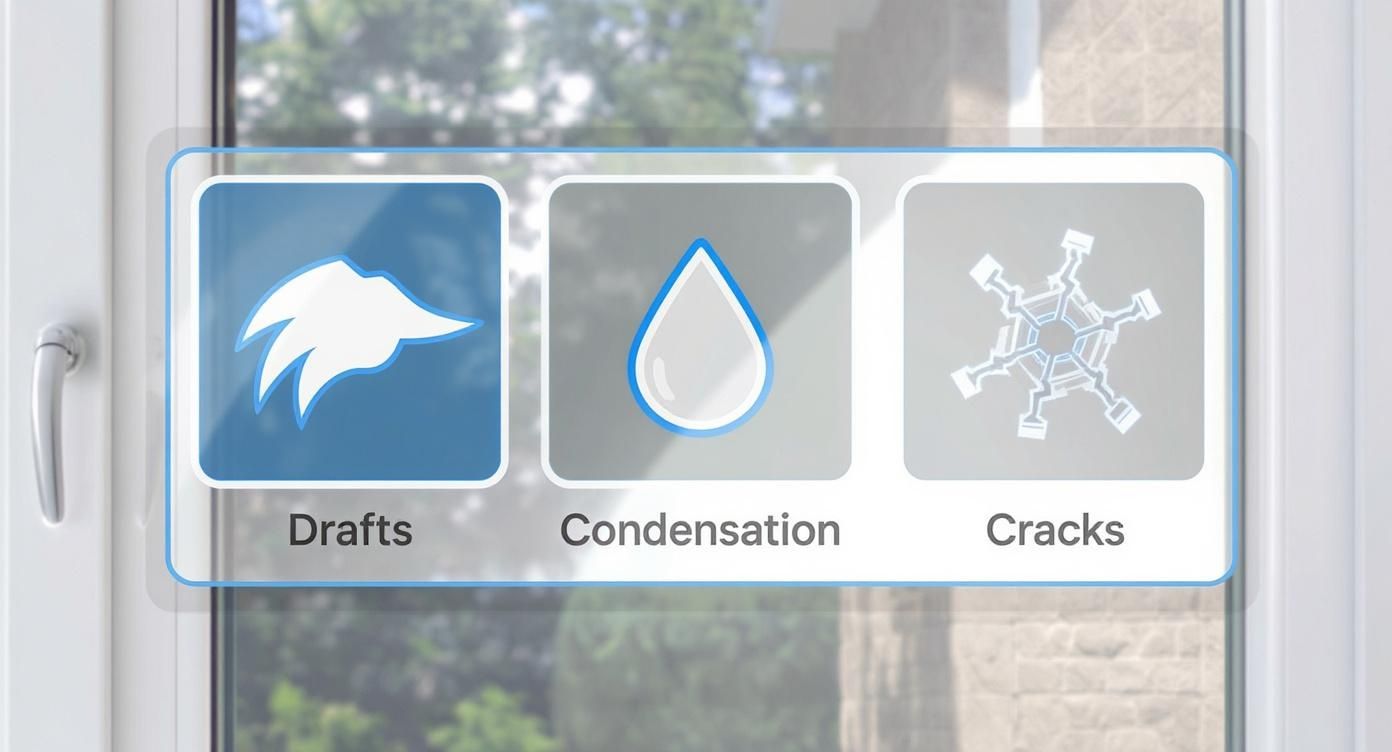
These tell-tale signs—drafts you can feel, fog between the panes, and obvious cracks—are your home’s way of telling you its windows are past their prime.
Spring: The Popular Choice
Spring is the undisputed champion of home renovation season, and for good reason. The weather is usually mild and comfortable, which makes for ideal installation conditions. Your home isn't exposed to blistering heat or bone-chilling cold, and materials like sealants and caulk cure perfectly in moderate temperatures.
The only catch? Everyone else has the same idea. This is a classic double-edged sword. Contractor schedules book up months in advance, and that high demand often means you’ll be paying peak-season prices.
Summer: Long Days and High Heat
Summer brings one huge advantage: long daylight hours. Installers have more time to get the job done right without feeling rushed, which is a big plus for larger projects that might span multiple days.
But the flip side is the oppressive heat and humidity, especially here in Upstate South Carolina. Opening up a wall, even for a short time, lets all that hot, sticky air pour in, forcing your AC to work overtime. Plus, those pop-up afternoon thunderstorms can throw a wrench in the schedule.
Fall: The Ideal Balance
Ask any pro, and they'll likely tell you that autumn is the sweet spot for replacing windows. The weather is once again pleasant and dry, creating perfect conditions for the crew and the materials. The worst of the summer heat is gone, so your house stays comfortable throughout the job.
Even better, the spring and summer rush is over. This means contractors have more openings in their schedules and are often looking to fill their calendars before winter sets in. You’ll find more flexibility and might even snag a better price as demand cools off. It’s the perfect time to button up your home for the cold ahead.
Winter: The Smart Saver
Most people instinctively shy away from a winter installation, picturing their home being wide open to the freezing air. It's a common misconception. A professional crew knows exactly how to minimize heat loss. They work on one window at a time and often use temporary barriers to seal off the immediate work area from the rest of your house.
The biggest perk of a winter project? The savings. It's the slowest time of year for exterior work, so companies are eager for business. You'll find the best appointment availability and the most attractive off-season pricing. A winter installation is also a great chance to tackle other cold-weather prep; for example, while upgrading your windows, it's a great time to learn about preventing ice dams in gutters, another critical step in winterizing your home.
To make it even clearer, here’s a quick breakdown of what to expect from each season.
Seasonal Pros and Cons of Window Replacement
| Spring | Mild weather is ideal for installation and material curing. | High demand leads to long wait times and peak pricing. |
| Summer | Long daylight hours allow for more efficient, longer workdays. | Extreme heat strains your AC; surprise storms can cause delays. |
| Fall | Pleasant, dry weather is perfect for installation. Contractor availability is much better. | Demand can still be high, so it's wise to book in advance. |
| Winter | The absolute best pricing and scheduling flexibility. | Potential for cold drafts during install; risk of weather delays. |
Ultimately, while fall often hits that perfect balance of good weather and better availability, a quality installation team can handle the job any time of year. The best time is when it fits your budget and your home needs it most.
How Cost and Contractor Schedules Shape Your Timeline
Let's talk about the two elephants in the room: your budget and your contractor's schedule. Beyond the weather, these two factors have a huge impact on the best time to replace your windows. Getting a handle on how they work together is the key to a smooth project that doesn't break the bank or leave you waiting months for an installation crew.
It all boils down to simple supply and demand. Think about booking a flight for a holiday weekend—you’ll always pay more when everyone else wants to fly. The world of home improvement is no different. Late spring and summer are peak season, and high demand means contractors are booked solid. This often translates to longer wait times and premium labor costs.
Navigating Peak Season Pricing
During these busy months, companies don't have much incentive to offer discounts because their schedules are already packed. If you absolutely need a project done between May and August, you can expect to pay top dollar for that convenience.
That doesn't mean a fair price is impossible, but it does require some forward-thinking. Booking your project well in advance, sometimes as early as late winter, helps you lock in a spot before the spring rush really kicks off. Getting multiple quotes is also a must to make sure you're getting a competitive rate.
By thinking like an economist, you can turn seasonal demand to your advantage. Scheduling your window replacement during a contractor's slow period is one of the most effective ways to control project costs.
The Financial Advantage of the Off-Season
On the flip side, late fall and winter are the industry's off-season. Demand for exterior work drops off, and installation companies are eager to keep their skilled crews busy. This shift puts you, the homeowner, in a much stronger negotiating position.
During these slower months, you are far more likely to find:
- Lower Labor Costs: Companies may offer discounts on labor just to attract business and keep their teams working.
- Greater Scheduling Flexibility: It’s much easier to book an installation date that fits perfectly with your schedule, not the other way around.
- Faster Turnaround Times: With fewer projects in the queue, your custom windows can often be ordered and installed much more quickly.
While the upfront cost is a huge piece of the puzzle, don't forget the long-term value. Choosing the best replacement windows for your home ensures you get the best possible energy efficiency and durability for years to come. You can even take it a step further by exploring other smart home savings tips to reduce utility bills to maximize your investment.
By strategically timing your project during the off-season, you can lock in high-quality windows and professional installation for a much lower overall cost. It's one of the smartest moves you can make.
Your Step-By-Step Window Replacement Planning Checklist
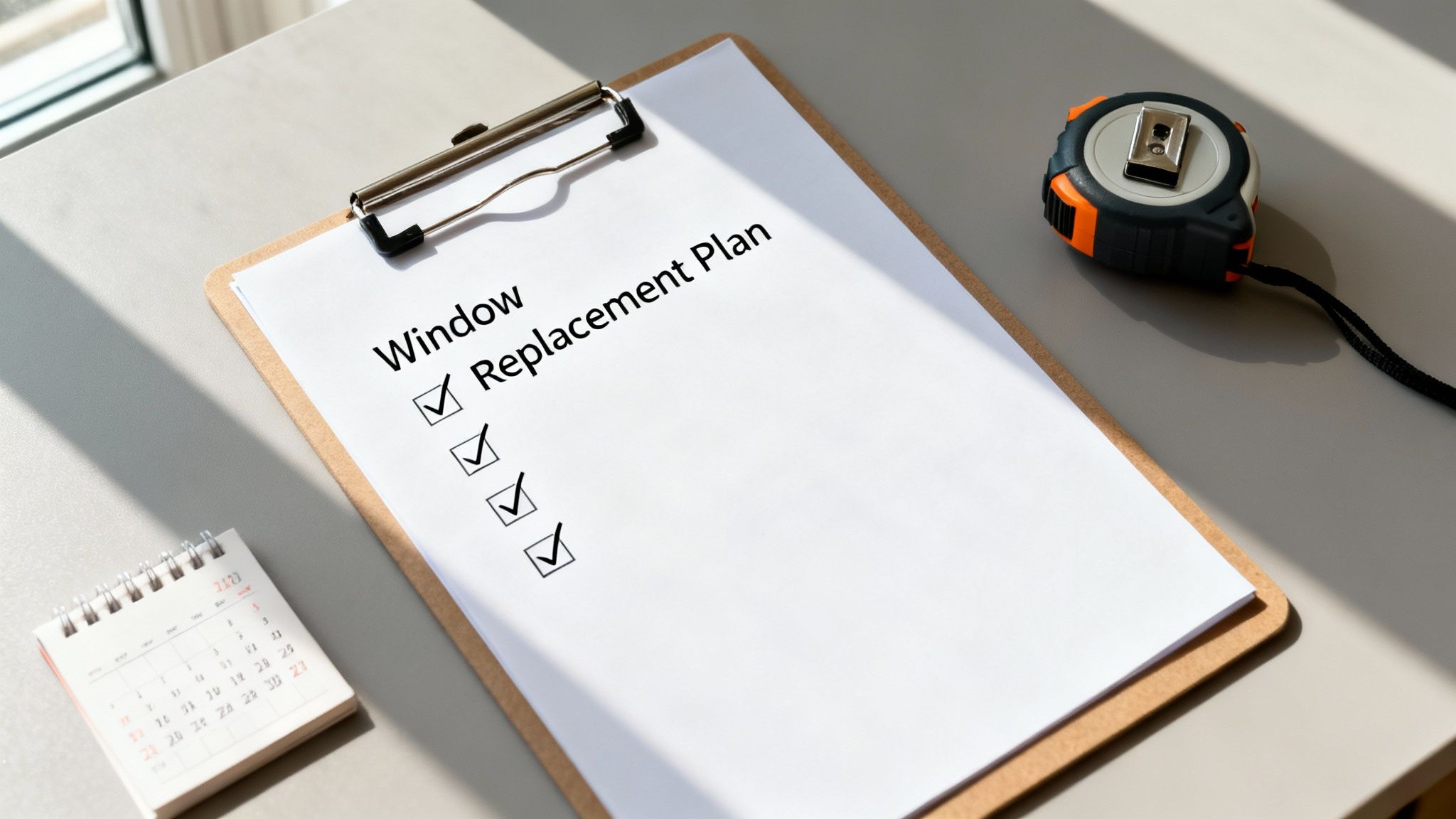
Knowing when to replace your windows is just the first step. Turning that knowledge into a successful, stress-free project comes down to having a solid plan. A clear, step-by-step approach can transform what feels like an overwhelming task into a series of manageable actions, ensuring nothing important gets missed along the way.
Think of it like planning a big road trip. You wouldn’t just hop in the car and start driving; you’d map your route, check the vehicle, and pack your bags first. This checklist is your project roadmap, guiding you from the initial idea all the way to the final, beautiful result.
Phase 1: The Research and Budgeting Stage (3+ Months Out)
This is where your project really begins to take shape. Start by taking a walk through your home and identifying which windows are the highest priority. Use the warning signs we covered earlier as your guide—are there obvious drafts, foggy glass, or frames that are a pain to open and close?
Next, it’s time to talk numbers. Do a little research on the average cost of window replacement right here in Upstate South Carolina and set a realistic budget. Don't forget to factor in the number of windows you're replacing, the material you prefer (like vinyl or fiberglass), and the potential labor costs.
This is also the perfect time to explore your options and get inspired. You can learn more about the different types of replacement windows we offer to see what best fits your home's style and your energy efficiency goals.
Phase 2: Contractor Vetting and Selection (2 Months Out)
With a budget and a vision in hand, you can start looking for qualified local contractors. Your goal here is to find a team with a proven track record, proper licensing, and full insurance coverage. No shortcuts.
Follow these key steps to find the right partner for your project:
- Gather Recommendations: Ask friends, family, and neighbors for referrals. You can also check out highly-rated companies online.
- Request Multiple Quotes: Always get at least three detailed estimates. This allows you to compare not just pricing, but the scope of services offered.
- Check References: A reputable contractor will be more than happy to provide references from past clients. Give them a call!
- Review the Contract: Before you sign anything, read the contract carefully. Make sure you understand the full scope of work, the payment schedule, and all the warranty details.
A detailed quote isn't just a number; it's a reflection of a contractor's professionalism. It should clearly outline material costs, labor, and a projected timeline, leaving no room for surprise expenses down the road.
The window replacement market is growing fast, with projections showing it will jump from USD 89 billion in 2025 to USD 123 billion by 2030. A huge driver of this is America's aging housing stock. For homeowners, this is a good thing—replacing old, inefficient windows can slash heat loss by up to 50%. A well-planned project not only improves your home but puts you ahead of a major trend in home renovation.
Phase 3: Final Preparations (Week Of Installation)
The big day is almost here! A little prep work now will make the installation process go so much smoother for both you and the installation crew. The main goal is just getting the work areas ready.
Here’s a quick pre-installation checklist:
- Clear the Space: Move furniture, take down decorations, and remove curtains from around the interior and exterior of the windows being replaced.
- Create a Path: Make sure the installers have a clear and safe path from their truck to the work areas inside your home.
- Secure Pets and Children: For everyone's safety, keep kids and pets in another part of the house, away from the work zones.
By following this simple plan, you can tackle your window replacement with confidence, knowing you’ve covered all your bases for a seamless, hassle-free upgrade.
Of course. Here is the rewritten section, crafted to sound like a human expert and match the provided writing style.
Your Window Replacement Questions, Answered
Jumping into a window replacement project is a big step, and it’s totally normal to have a few questions floating around. Getting clear, straightforward answers to the most common concerns is the best way to feel confident you're making the right call.
Let's cut through the noise and tackle the questions we hear most often from homeowners.
How Long Does This Whole Process Actually Take?
Most people are shocked by how fast the actual installation day goes. It’s surprisingly efficient. An experienced crew can have a single window out and a new one in, sealed, and finished in about 45 to 60 minutes. For a whole house of, say, 10 to 15 windows, the entire job is usually wrapped up in just one or two days.
The part that really takes time is everything that happens before we show up. Once you give the green light, your windows have to be custom-made. That manufacturing lead time can be anywhere from four to twelve weeks, depending on the manufacturer’s backlog and the time of year.
Can I Just Replace One Window for Now?
Absolutely. While tackling all your windows at once creates a clean, uniform look—and can sometimes earn you a better price—it’s not always practical or necessary. Phasing the project is a smart and very common strategy.
You can definitely replace windows one by one or in small batches. A great approach is to start with the ones in the worst shape—the drafty one in the living room or the one that’s fogged up for good. Another popular method is to do one side of the house at a time, like the wall that gets blasted by the hot afternoon sun or faces the brunt of the winter wind. This lets you manage your budget while still making real progress on your home's comfort and efficiency.
The most important thing is to start. Swapping out even one failing window is a far better investment than just letting drafts and high energy bills continue.
Will New Windows Genuinely Save Me Money on Energy Bills?
Yes, for the overwhelming majority of homeowners, the savings are real and significant. When you upgrade from old, leaky single-pane windows to modern, ENERGY STAR certified double- or triple-pane units, you can cut your heating and cooling costs by an average of 10% to 25% a year.
Now, your exact savings will depend on a few things. The Upstate SC climate, how bad your old windows are, and the specific energy rating of the new windows all play a part. But over the life of your windows, those monthly savings really add up and can go a long way toward offsetting the initial cost.
Ready to get answers tailored to your home? The team at Atomic Exteriors is here to provide a clear, no-pressure consultation and a free estimate to help you plan your project with confidence. Learn more and schedule your appointment today at https://atomicexteriors.com.