.png)

Decoding Double Pane Window Repair Cost
Seeing that tell-tale fog between your window panes can be frustrating. The good news? It’s often a much more affordable fix than you might think. A typical double pane window repair cost ranges from $75 to $400 for a single window, making it a budget-friendly alternative to a full replacement.
Opting for a repair can often save you hundreds of dollars while bringing back your window's clarity and energy-saving performance.
Your Quick Guide to Window Repair Costs
When you notice a problem with your double-pane windows—whether it's fog, drafts, or a small crack—the first question on your mind is probably, "What's this going to cost me?" Is this a minor fix or a major hit to the wallet?
Understanding the financial difference between simply repairing the glass and replacing the entire window unit is the first step toward making a smart decision for your home.

Think of it like getting a flat tire. If the tire's tread is still good (meaning your window frame is solid), you just need to patch the hole or, in this case, replace the failed glass unit. This targeted approach saves money, time, and materials.
Repair vs. Replacement: A Cost Snapshot
For most homeowners, the decision really comes down to the numbers. Here’s a quick breakdown to help you see the difference.
Quick Look At Double Pane Window Repair vs Replacement Costs
This table lays out the typical costs side-by-side, so you can quickly see where your project might land.
| Double-Pane Window Repair | $75 – $400 | Addressing fog, failed seals, or single pane cracks when the frame is still in good condition. |
| Full Window Replacement | $400 – $1,000+ | Old, damaged, or inefficient frames, or when you want to upgrade to modern, energy-saving windows. |
As you can see, the savings are significant. A full window replacement can easily average $400 to over $1,000 per window once you factor in the new window and professional installation. This means a strategic repair can save you anywhere from 30% to 80% when your window frames are still in good shape. For a deeper look at national averages, you can explore resources like HomeAdvisor.com.
A targeted repair restores your window's performance and appearance for a fraction of the cost of a full replacement, making it a powerful tool for maintaining your home's value and efficiency.
Ultimately, this decision impacts more than just your immediate budget; it affects your long-term property value. By making smart choices about window maintenance, you’re directly contributing to your home’s overall worth. To learn more, check out our guide on how to increase property value through these kinds of home improvements.
What Really Drives Your Bill
Ever wonder why one double-pane window repair quote comes in at $150 while another is closer to $500? It helps to think about it like a car mechanic’s invoice. The final price isn't just one random number; it's a combination of specific parts, the time it takes to do the work, and the exact problem being fixed.
Just like a mechanic bills you for a new alternator and the time it takes to install it, your window repair cost is a mix of the new insulated glass unit (IGU) and the skilled labor needed to seat it perfectly. Several key factors are at play here, and understanding them will demystify your estimate.
Labor and Materials: The Core Costs
At the end of the day, the two biggest things influencing your final bill will always be labor and materials. A simple, ground-floor window repair is naturally going to cost less in labor than a tricky job on a third-story window that needs ladders, special equipment, and extra safety measures.
Likewise, what your window is made of plays a huge role. Installation labor alone can run from $36 to $153 per window, but the total installed price often lands between $350 and $1,200 once you account for all the components. The frame material, for instance, creates a huge price range—affordable vinyl is on one end, and premium wood or fiberglass is on the other. For a deeper dive into how these choices stack up, guides from resources like This Old House offer great breakdowns.
The Type and Size of Damage
Not all window problems are created equal, and the specific issue is a major cost driver. A simple seal failure, which causes that frustrating fog between the panes, is usually the most common and affordable fix. In that case, the frame is still good; you just need a new, perfectly sealed IGU swapped in.
But the game changes if the glass is physically broken.
- Cracked or Shattered Glass: This is a more urgent replacement and can be a bit more expensive, especially for a large pane of glass.
- Frame Damage: If the window frame itself is rotting, warped, or cracked, the job escalates from a glass repair to a much more involved project. At that point, you might be looking at a full window replacement.
- Window Size and Shape: It's just common sense—a huge picture window or a custom arched window will always cost more to repair than a small, standard bathroom window. The sheer amount of glass and the complexity of manufacturing and handling a custom unit push the material cost up.
Special Glass Features and Upgrades
Today’s windows are packed with optional features that boost performance but also add to the repair cost. If your damaged window has these upgrades, the new IGU has to be made with them, too, so it matches the rest of your home.
The very features that make your windows great at saving energy or blocking noise also make them more specialized—and expensive—to produce. A basic, clear IGU is the starting point, but every addition will bump up the material price.
For example, a low-emissivity (Low-E) coating, which reflects heat and blocks UV rays, is a popular feature that adds to the cost. If your window has argon or krypton gas fill for top-tier insulation, the replacement unit needs the same gas. Tinted glass or tempered safety glass will also increase the price.
And if noise is a big concern for you, your windows might have special sound-dampening construction. We actually have a whole guide covering the best windows for noise reduction if you're interested in learning more about that technology.
Deciding When To Repair Or Replace Your Windows
Making the call between repair and replacement is one of the most important decisions you'll face when dealing with a faulty window. This isn't just about the immediate double pane window repair cost; it’s a strategic investment in your home's comfort, efficiency, and long-term value. The right choice really boils down to the health of your existing window frames and how bad the damage is.
Here’s a simple analogy: if your car has a flat tire but the engine is running smoothly, you wouldn't junk the whole car. You’d just get a new tire. It's the same with windows. If your frame is solid, modern, and doing its job, just replacing the failed glass unit is the smart, cost-effective move.
Spotting the Signs for Repair
Often, a targeted repair is the best way to go, especially when the window's core structure is still in great shape. This approach fixes the specific problem without the cost and hassle of a full tear-out.
You're likely a great candidate for a window repair if you're seeing:
- Fog or Condensation: This is the classic, textbook sign of a failed seal. The rest of the window is probably just fine.
- A Single Cracked Pane: If one layer of glass is broken but the frame is untouched, a simple glass replacement is all you need.
- Minor Drafts at the Glass Edge: A failing seal can let small drafts sneak in. A new insulated glass unit (IGU) will solve that problem immediately.
This flowchart breaks down the key factors—from the type of damage to the materials involved—that help point you toward the right solution.
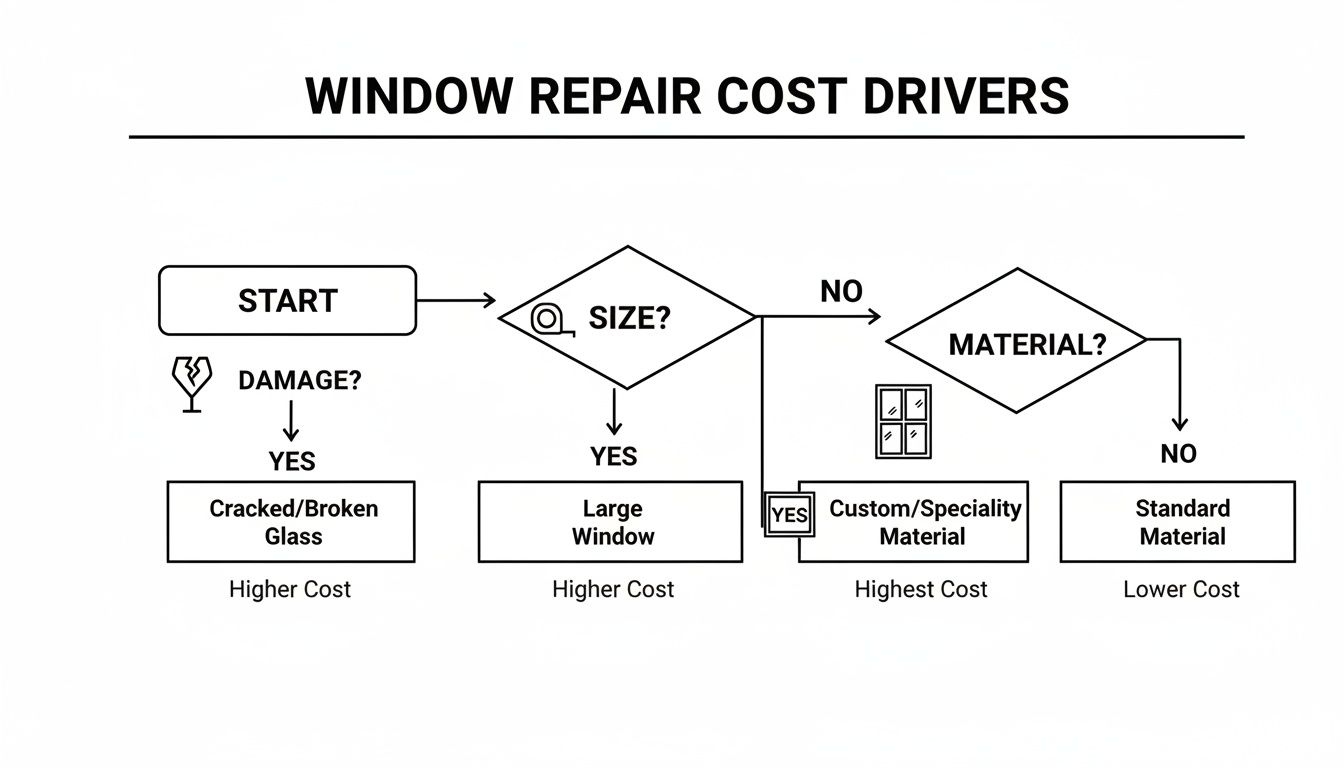
As you can see, as long as that frame is in good condition, repairing the glass is almost always the most direct and economical path forward.
Recognizing When Replacement Is Necessary
On the other hand, some problems are just too big for a simple fix. Trying to repair the glass in a failing frame is like putting a band-aid on a broken bone—it just doesn't work. When you've got major structural issues, a full window replacement becomes the necessary and much wiser long-term investment.
When the window frame itself has failed, pouring money into a glass repair is a poor investment. The new glass will be sitting in a deteriorating structure, leading to future problems and wasted energy.
Keep an eye out for these red flags. They’re clear signals that it’s time to replace the entire unit:
- Rotting Wood or Corroded Frames: Widespread wood rot, rust, or corrosion means the frame can no longer provide a stable, weatherproof home for the glass.
- Warped or Bowed Frames: If a frame no longer sits flush against the house, it creates huge gaps for air and water to pour in.
- Operational Failure: The window is a real pain to open, close, or lock. At this point, the whole mechanism is likely compromised.
- Outdated Technology: Still have old single-pane windows? Upgrading is a no-brainer for energy savings. Homes with modern double-pane windows can save up to 30% on energy bills compared to those old single-pane models.
Choosing to upgrade can feel like a big step, but it’s also a fantastic opportunity to seriously boost your home’s performance and comfort. To get a better feel for your options, check out our guide on the best replacement windows for homes to find a solution that fits your budget and style.
The Hidden Risks of DIY Window Repair
The urge to fix a foggy window yourself is completely understandable. You see a tutorial online, it looks simple enough, and the thought of saving a few hundred bucks on the double pane window repair cost is tempting. And for some minor tasks, like cleaning a grimy track or lubricating a stiff hinge, a little DIY spirit is perfect.
But messing with the insulated glass unit (IGU) itself? That’s a whole different ballgame.
This isn’t like patching a small hole in the wall. Think of it more like performing surgery on a critical part of your home’s insulation system. Trying to replace the glass on your own is a path loaded with pitfalls that can quickly turn a weekend project into a costly, frustrating mess. It takes specialized tools and a level of precision most homeowners just don't have in their garage.
Why DIY Often Goes Wrong
Whenever you're weighing a home repair, it’s smart to understand where the line is between a manageable task and a job that really needs a specialist. You see this in all sorts of areas; for example, evaluating the complexities of DIY versus professional solutions in home maintenance often shows that some jobs just aren't worth the risk.
Window repair brings its own unique set of challenges to the table.
- Risk of Personal Injury: An IGU is heavy, awkward to handle, and the edges are incredibly fragile. One slip, and you're not just dealing with broken glass—you're looking at a serious risk of deep cuts.
- Improper Sealing: This is the make-or-break step. The entire point of a double-pane window is the airtight seal between the panes. If that seal isn't perfect—and it almost never is on a first-time DIY attempt—you'll see fog creeping back in within months. All that work and money will be for nothing.
- Voided Warranties: Most window manufacturers will wash their hands of a warranty the second an untrained person tries to service the IGU. If the frame or the window fails later on, you'll be completely on your own.
Attempting a DIY glass replacement might feel like you're saving money today, but you're really gambling with the long-term performance and warranty of your entire window. A bad seal means you get zero energy savings, which completely defeats the purpose of having the window in the first place.
In the end, it’s the precision that separates a quick patch from a real, lasting solution. Professionals have the right tools, use specific glazing compounds, and know the techniques to create a flawless seal that will hold up for years. Without that hands-on expertise, a DIY fix is usually just a temporary illusion that leads to more frustration and wasted cash when the fog inevitably returns.
What a Professional Window Repair Actually Looks Like
Let's be honest, the thought of contractors working in your home can be a little stressful. But a professional window repair is surprisingly quick and clean. It’s not some massive, messy construction project.
Think of it more like a surgical procedure for your window. The goal is to fix what's broken with precision, leaving everything else untouched and getting your home back to normal with minimal fuss.
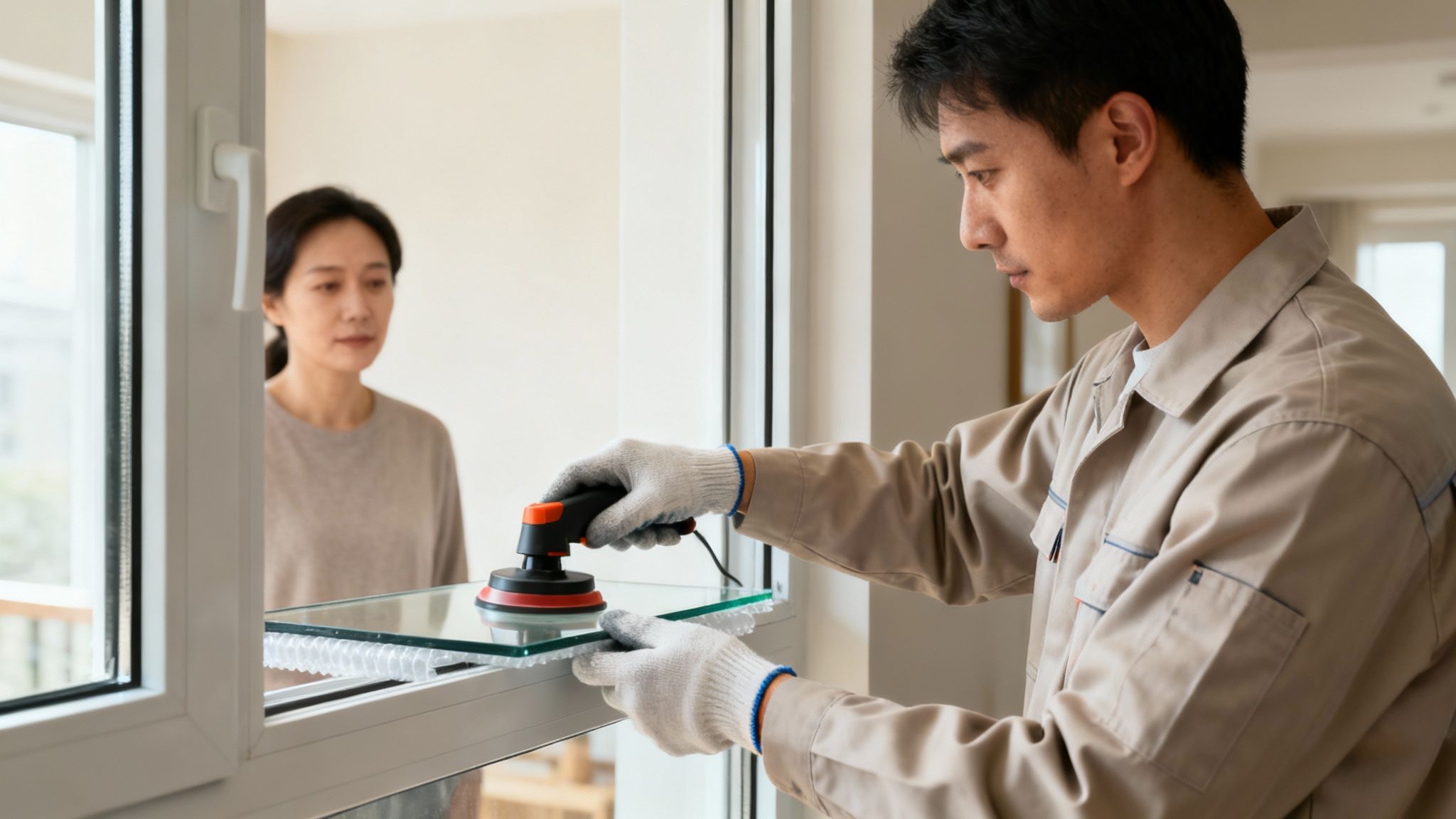
It all starts with a thorough assessment. A good technician won't just glance at the foggy glass and give you a price. They’ll come to your home and inspect the entire window unit—the frame, the sash, and all the seals around it. This is a critical first step to make sure there isn't some hidden issue, like wood rot or a warped frame, that would make a simple glass repair a waste of money.
From Measurement to Installation Day
Once the technician gives your window frame a clean bill of health, they’ll take meticulous measurements of the glass. This has to be exact, because the new insulated glass unit (or IGU) is custom-made to fit your specific window perfectly. An order is placed, and it usually takes about one to three weeks for the new unit to be manufactured and delivered.
On repair day, the process is streamlined and efficient. The technician doesn't rip out your entire window. Instead, they carefully remove the small pieces of trim holding the old, failed glass unit in place.
A professional repair focuses exclusively on the damaged component—the glass. By leaving the perfectly good window frame intact, the process saves you significant time, money, and mess compared to a full replacement.
The old IGU is lifted out, and the frame is cleaned and prepped for its new counterpart. Then, the new, crystal-clear glass is expertly set into the frame. Technicians use specialized glazing tapes and sealants to create a permanent, airtight, and waterproof bond.
To finish, the trim is reinstalled, and the area is cleaned up completely. For a standard-sized window, the on-site work often takes less than an hour. You’re left with a perfectly restored view and the energy efficiency you were missing.
This professional approach ensures your double pane window repair cost delivers real, lasting value. If you're considering this for your home, you can learn more about the high-performance replacement windows and repair services that keep homes in Upstate SC looking their best.
So, What's the Next Step for Your Upstate SC Windows?
Okay, so now you’ve got a much better handle on what goes into the cost of fixing a double-pane window. You can tell the difference between a simple seal failure and a more serious frame issue, and you know when it makes sense to roll up your sleeves versus calling in a pro.
The most important takeaway? That foggy glass or annoying draft isn't just a cosmetic problem. It's a flashing neon sign that your home's thermal barrier—the very thing keeping your energy bills in check—has been breached.
The final piece of the puzzle is turning that knowledge into action. If you're seeing that frustrating condensation between the panes, feeling a constant draft, or wrestling with a window that just won't open and close right in your Upstate SC home, it's time to get a real answer.
Get a Professional Assessment
The only way to know for sure what you’re dealing with is to have an expert take a look. A quick, professional evaluation is the fastest way to get a precise cost and an honest recommendation for your home.
A trained technician can spot things you might miss. They can quickly tell if your window frames are still in great shape and just need new glass, or if a full replacement is the smarter long-term investment. This simple step takes all the guesswork out of the equation and gives you a clear path forward.
For homeowners in Greenville, Simpsonville, Anderson, and the surrounding towns, getting that expert opinion is easy. We always recommend scheduling a free, on-site estimate to see exactly what your options are.
A professional estimate is so much more than a price tag. It's an investment in clarity and peace of mind, making sure your home stays comfortable, efficient, and beautiful for years to come.
Tackling these issues today stops a small headache from turning into a major expense down the road. To get started and see the full range of window and exterior solutions we offer, you can learn more about our professional window replacement and repair services. Let us help you get your view back and restore your home's performance with a clear, honest assessment.
Common Questions About Double Pane Window Repair
Even after you've got the basics down, a few questions always pop up. It's completely natural. When you’re talking about double pane window repair cost and figuring out what’s really going on with your windows, you want straight answers to make a smart decision.
Think of this as the final check-in, clearing up those last few "what if" thoughts so you can move forward with confidence.
How Can I Tell If My Double Pane Window Seal Has Failed?
The biggest giveaway is something you can see but can't touch. You’ll spot fog, moisture, or a hazy film trapped between the two panes of glass. It’s the kind of condensation you can’t wipe away, no matter how hard you try on the inside or outside.
That trapped moisture is the smoking gun—it proves the airtight seal has broken and humid air is getting in. If left alone, you might even notice streaks or mineral deposits as that moisture evaporates and leaves gunk behind.
The second you see fog you can't clean, your window's insulating power is gone. It's now performing no better than an old-fashioned single-pane window, and your energy bills will start to prove it.
Another clue? The insulating argon or krypton gas has likely escaped. You might notice that sounds from outside are suddenly louder, or you feel a slight draft when you're near the glass. It’s your window telling you it's not doing its job anymore.
Is It Cheaper To Replace Just The Glass Or The Whole Window?
Nine times out of ten, it is far more budget-friendly to replace only the insulated glass unit (IGU). This is like a surgical strike—it fixes the specific problem (the broken seal or cracked glass) without the cost and mess of tearing out the entire window frame.
Here’s a simple way to think about it:
- Glass-Only Replacement: A precise, targeted fix for a single failed component.
- Full Window Replacement: A major renovation involving the removal of the entire window system.
A full window replacement only makes financial sense when the frame itself is the problem. If you're dealing with extensive wood rot, a warped frame that won't close properly, or other serious structural damage, then a brand-new window is the smarter long-term investment. Learning how to stop condensation on windows can also help you spot seal failure early.
How Long Does A Professional Window Glass Replacement Take?
Most homeowners are surprised by how fast the on-site work is. The real waiting happens before we show up—the new, custom-sized IGU has to be manufactured first.
Once that new glass unit is ready, a skilled technician can pop out the old one and install the new one in about 30 to 60 minutes for a standard-sized window. The lead time for the custom glass to be made is typically one to three weeks from the day we take measurements.
Ready to find out exactly what your windows need? The team at Atomic Exteriors gives homeowners across Upstate SC honest advice and free, no-pressure estimates. Get a clear price for your double pane window repair and bring clarity back to your home by visiting us at https://atomicexteriors.com.