.png)
Your Guide to the Energy Star Windows Tax Credit
Let's be honest, we all love finding ways to save a little money, especially on big home projects. The federal government is actually willing to give you a hand with this through the Energy Star windows tax credit.
So, what is it? Think of it as a direct reward for making your home more energy-efficient. It's not a rebate you have to mail in and wait for; it's a dollar-for-dollar reduction of your income tax bill.
This credit lets homeowners claim up to 30% of the cost of new windows, with a yearly cap of $600. It's a fantastic way to make those high-performance window upgrades a little easier on your wallet while setting yourself up for lower energy bills for years to come.
How The Energy Star Windows Tax Credit Works For You
The simplest way to think about this tax credit is as a thank-you note from the government for upgrading your home's efficiency. It's a powerful financial tool designed to encourage homeowners to invest in products that save energy.
A Dollar-for-Dollar Reduction
Here’s the best part: the credit comes right off the top of what you owe in taxes.
Let's say you owe Uncle Sam $3,000 in federal taxes for the year. If you qualify for the full $600 window credit, your new tax bill drops to just $2,400. That’s real money back in your pocket, effectively lowering the real cost of your beautiful new windows.
This credit is specifically for homeowners who install qualifying windows in their primary residence—the home you live in for most of the year. It helps close the price gap between standard, builder-grade windows and the high-performance models that truly keep your home comfortable and your energy bills down.
By taking advantage of this federal incentive, you not only receive an immediate tax break but also invest in a home that consumes less energy, leading to lower monthly utility bills for years to come.
As you plan your home improvements, it's smart to stay on top of the broader tax credit landscape. Some incentives do have expiration dates, and you can get a good overview from this resource on the Last Chance for Major Home Energy, EV, and Solar Tax Credits.
Don't worry, though. We're here to break down exactly what you need to know to make sure you get every penny you're entitled to.
Window Tax Credit At a Glance
To make it even clearer, here’s a quick summary of the key details for the current federal window tax credit.
| Maximum Credit | $600 per year |
| Percentage | 30% of the product cost (installation not included) |
| Who Qualifies | Homeowners upgrading their primary residence |
| Product Requirements | Windows must meet regional Energy Star criteria |
| Annual Limit | Resets each year, so you can plan projects over time |
This table gives you a straightforward look at the benefits. The annual limit is a great feature, allowing you to tackle different home improvement projects in different years and claim credits for each one.
Why This Tax Credit Exists
To really get why the Energy Star window tax credit is such a big deal, you have to look at the 'why' behind it. This isn't just some random government handout. It’s a smart, strategic policy that’s been around for a while, designed to get all of us homeowners to pitch in on a nationwide push for energy independence.
Think of it like a massive community carpool. When one person decides to carpool, they save a little on gas—which is great for them. But when thousands of people do it, the ripple effect is huge. Traffic gets lighter, city-wide pollution drops, and everyone benefits. It's the same idea with your windows. When you upgrade to energy-efficient ones, you save on your bills. When thousands of us do the same, we collectively lighten the load on the national power grid.
A Long-Term Commitment to Efficiency
This federal incentive is part of a long-term national game plan to cut down our overall energy use. Older, drafty homes are a massive source of wasted energy, and you guessed it—poorly sealed windows are one of the biggest offenders. By offering a financial carrot, the government gives us a nudge to seal up those energy leaks and shrink our carbon footprint.
The program's history shows just how serious this commitment is. The credit has come a long way since it first started. Back in 2005, under the Energy Policy Act, the credit was a mere 10% of the cost, capped at just $200. Fast forward to today, and thanks to the Inflation Reduction Act of 2022, the credit is now 30% up to $600 for Energy Star Most Efficient windows, as part of a larger $3,200 annual cap through 2032.
That's a 200% increase from its early days, which tells you everything you need to know about the renewed focus on residential energy savings. You can dig deeper into how the credit has changed by reading about the window and skylight tax credit history.
Your window upgrade is more than just a home improvement project. It’s a direct contribution to a national strategy aimed at building a more sustainable future, one household at a time.
Connecting Your Home to a Larger Goal
Every time a homeowner in the Upstate installs Energy Star certified windows, they're not just boosting their property value. They’re actively helping our country hit some pretty critical energy goals. This simple upgrade contributes to:
- Reduced Carbon Emissions: Using less energy to heat and cool your home means a smaller carbon footprint for your family and for the nation as a whole.
- A More Stable Power Grid: Lowering household energy demand takes a lot of stress off the electrical grid, especially during those sweltering South Carolina summers.
- Increased Energy Independence: The less energy we waste as a country, the less we have to rely on foreign sources.
By taking advantage of this credit, you’re making a real, tangible difference. Your choice turns a simple home upgrade into a meaningful action, and it's one of the smartest home exterior renovation ideas that pays you back in more ways than one.
Checking Your Eligibility for the Credit
Before you can pocket any savings, you need to make sure both you and your new windows are on the approved list. Think of it as a two-part checklist for the Energy Star windows tax credit: one side for you, the homeowner, and the other for the windows themselves. Getting this right from the start is the single most important step to a hassle-free tax season.
First, let's talk about homeowner eligibility. The good news is, these rules are pretty straightforward. You must own the home, and it has to be your primary residence—the place you hang your hat most of the year. This credit is specifically designed to help people upgrade existing homes, so it unfortunately doesn't apply to new construction or rental properties.
The second part of the checklist is all about the windows. This is where things get a little more technical, but it’s easy to break down. You can’t just pick any window off the shelf; it needs to have a “performance scorecard” proving it meets some of the highest efficiency standards out there.
Understanding Window Performance Ratings
To qualify for this tax credit, your new windows have to meet the demanding requirements for the Energy Star Most Efficient certification. This isn't just a marketing gimmick—it’s a seal of approval based on two critical performance metrics that measure how well a window insulates your home and handles the sun’s heat.
- U-Factor: This number tells you how well the window stops heat from escaping your home. The lower the U-Factor, the better the insulation. That's a huge deal for keeping your house cozy during those chilly Upstate South Carolina winters without cranking up the thermostat.
- Solar Heat Gain Coefficient (SHGC): This one measures how much of the sun's heat the window blocks from getting inside. A lower SHGC is exactly what we need in our climate, as it helps keep your home cooler during those blazing hot summers and gives your air conditioner a much-needed break.
These performance numbers can vary depending on your specific climate zone. The Inflation Reduction Act shook things up a bit, updating the rules to offer homeowners a credit for 30% of the project costs, capped at $600 for exterior windows that meet these tough new criteria. You can see the specific federal tax credit requirements right from the source to get the exact numbers for our region.
A common point of confusion we hear from homeowners is what the credit actually covers. It's crucial to remember that the tax credit applies only to the cost of the window and door products themselves, not the cost of installation labor.
Knowing which windows actually hit these high-performance marks is key. Our guide on the best replacement windows for homes takes a much deeper look into the specific features that make a window truly energy-efficient. It’s the perfect resource to help you move forward confidently, knowing you’re picking a product that will save you money on energy bills and qualify you for a nice little bonus from Uncle Sam.
A Step-by-Step Guide to Claiming Your Credit
Knowing about the Energy Star window tax credit is one thing, but actually claiming it is another beast entirely. Let's walk through the process, step-by-step, to make sure you get every dollar you're entitled to without any tax-season headaches.
The secret? It's all about documentation. Think of it like preparing for a big trip—you wouldn't show up at the airport without your ID and tickets. For this credit, your "tickets" are your purchase receipts and, most importantly, the Manufacturer's Certification Statement. This is the official document from the window maker proving your specific windows meet the strict Energy Star performance requirements.
Your Essential Paperwork Checklist
The best advice I can give is to start a folder for this stuff the moment you sign the contract. Don't wait until tax time to hunt for everything.
- Detailed Purchase Receipts: You'll need itemized invoices that clearly separate the cost of the windows from the installation labor. The credit only applies to the product cost.
- Manufacturer’s Certification Statement: This is non-negotiable. It's your golden ticket. You can usually download it right from the manufacturer’s website, or your installer can provide it. I always recommend saving a digital copy and keeping a paper one in your folder.
- Installation Date Records: Jot down the exact date your new windows were fully installed and ready for use. This date determines which tax year you can claim the credit in, and it's a common point of confusion.
This simple flowchart breaks down the path to getting your credit.
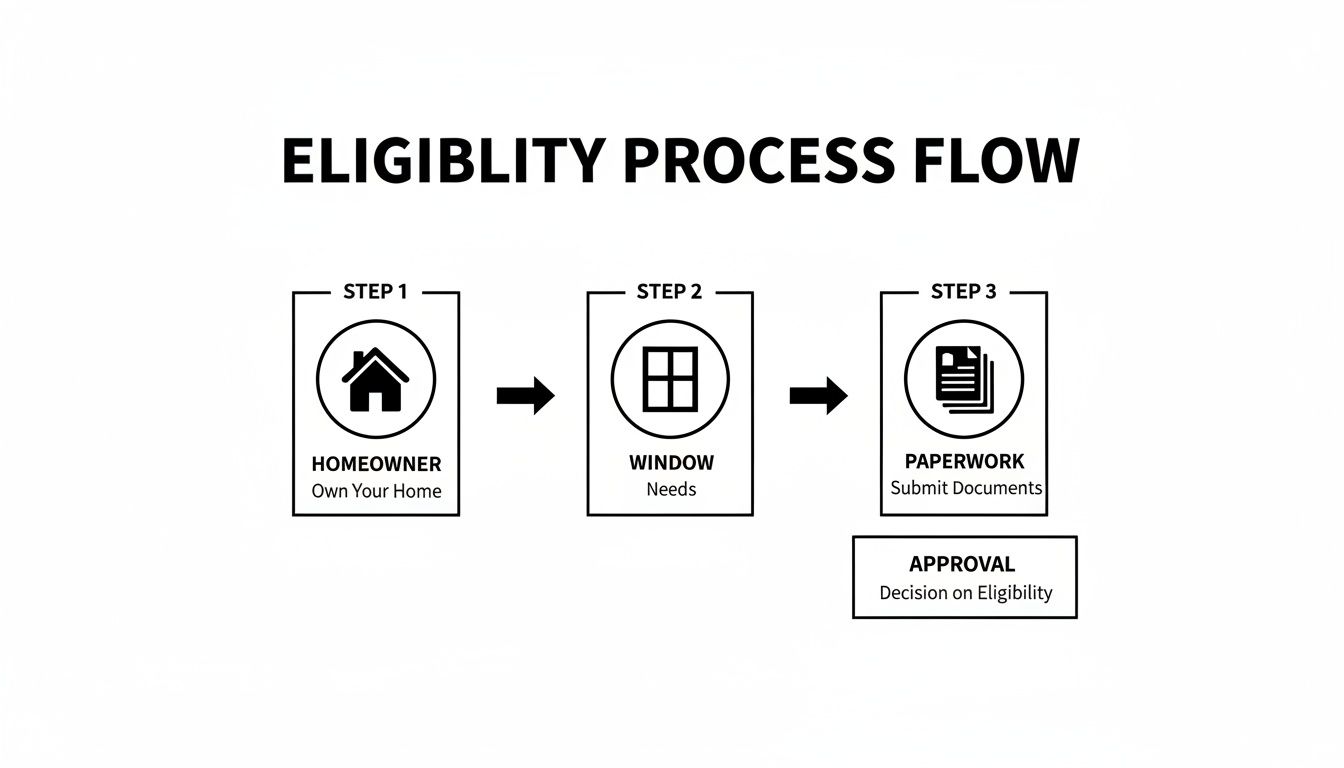
From owning your home, to choosing the right windows, to gathering the paperwork—this is the exact road you'll follow.
Filing with the Right IRS Form
Once your documents are in order, the final step is filing the right paperwork with your annual tax return. The specific form you’re looking for is IRS Form 5695, Residential Energy Credits. This is the government's official form for claiming all qualifying home energy improvements, including windows, doors, and insulation.
You’ll use the numbers from your receipts to fill out the section for "Exterior Windows and Skylights."
Here's a crucial tip: the credit is claimed for the tax year the windows are placed in service (fully installed), not necessarily the year you bought them. For example, if you paid for your windows in December 2023 but the installation didn't happen until January 2024, you would claim the credit on your 2024 tax return, which you file in 2025.
The process really is designed to be straightforward. If you have your documents ready, filling out Form 5695 is just a matter of transferring the numbers from your receipts onto the form. A little organization upfront makes for a smooth, stress-free claim.
Calculating Your Total Financial Benefits
It’s one thing to talk about the Energy Star windows tax credit, but it’s another to see the numbers add up in your bank account. Let’s walk through a real-world example to show you how powerful this incentive can be, especially when you start stacking it with other savings.
Imagine you're ready to replace a few drafty old windows in your Greenville home. The total cost for new, qualifying Energy Star Most Efficient windows comes to $2,500 for the products alone (not counting labor). The federal tax credit lets you claim 30% of that cost.
So, the math looks like this: $2,500 (window cost) x 0.30 (30%) = $750.
But here's the key detail: the credit for windows is capped at $600 per year. So, in this scenario, you'd claim the maximum $600 on your tax return. That’s $600 that directly slashes what you owe the IRS. It’s a simple, effective way to lower your upfront investment.
Stacking Savings with Local Rebates
The good news doesn't stop there. For homeowners here in Upstate South Carolina, you can often "stack" that federal credit with local utility rebates to save even more. It's a savvy move that many people overlook.
Utility providers like Duke Energy, for instance, often roll out their own incentive programs for energy-efficient upgrades. These local rebates can put hundreds of extra dollars back in your pocket. Always check your utility provider’s website for the latest offers on window replacements—combining these with the federal credit is the smartest way to get the biggest bang for your buck.
The real power of this upgrade lies in its dual benefit: immediate tax savings combined with a lifetime of lower energy bills. It's an investment that pays you back from day one and continues to deliver value for decades.
Quantifying the Long-Term Return
Beyond the initial credits and rebates, the real financial win comes from the year-over-year energy savings. High-performance windows are an investment that pays dividends every single month.
These windows can slash conducted heat loss by up to 40% compared to old, non-certified models. That kind of efficiency shortens the payback period on your investment from a typical 15 years down to just 8-10. Over the life of the windows, your savings could easily top $20,000, especially as energy costs continue to climb. You can dive deeper into the official details on the Energy Star website.
This ongoing reduction in your heating and cooling bills is where the true value shines. Not only does it save you money, but it also makes your home more comfortable and desirable. As our guide on how to increase property value explains, energy-efficient upgrades are a huge selling point for today's homebuyers. New windows are one of the smartest improvements you can make, delivering a return that goes far beyond just one tax season.
How Atomic Exteriors Makes Sure Your Project Qualifies
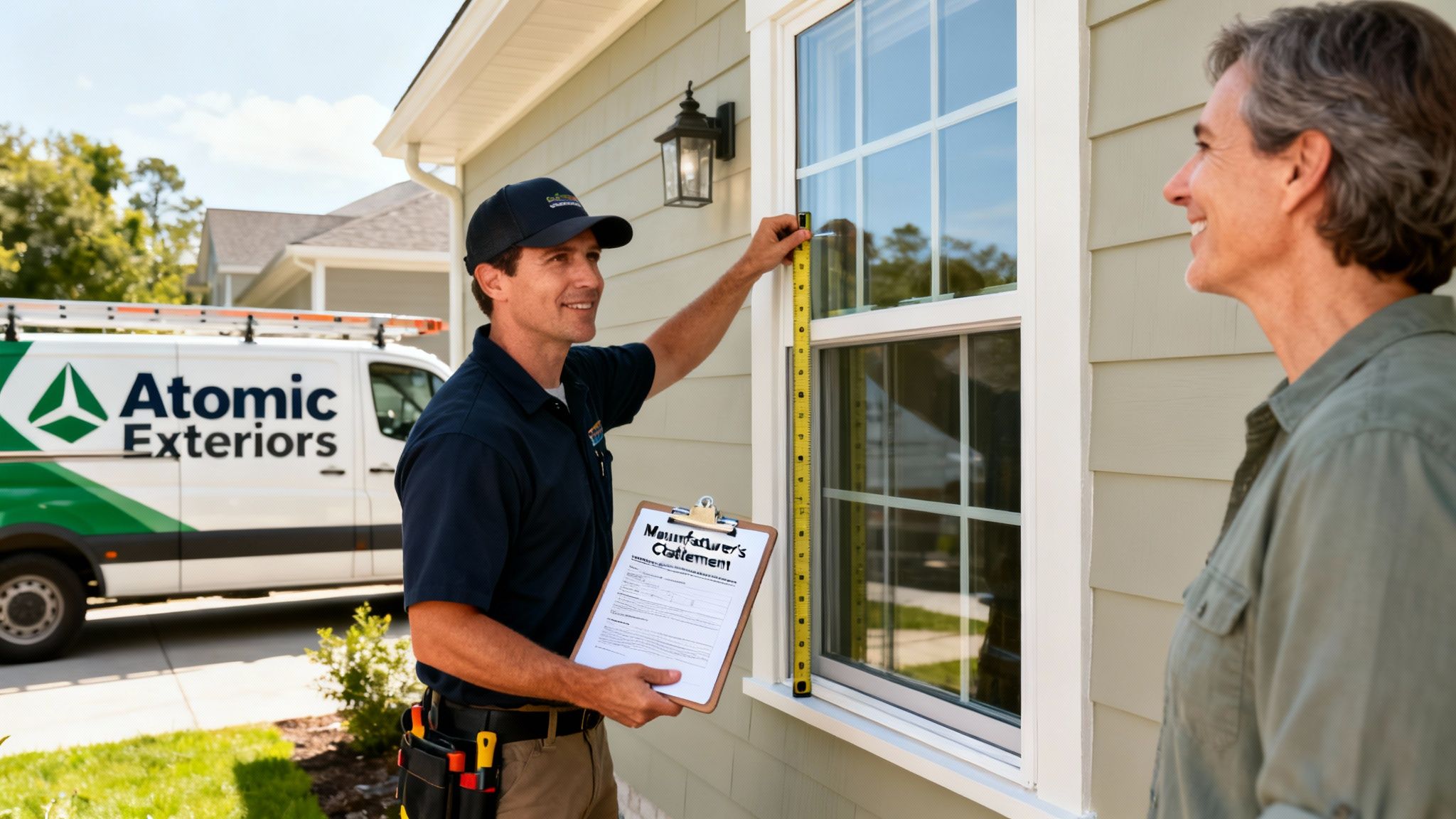
Trying to sort through all the technical rules for the Energy Star tax credit can be a real headache. The good news is, you don’t have to do it alone. When you work with a knowledgeable partner like Atomic Exteriors, we take all the guesswork out of the equation.
We start by guiding you to the right window products—ones that are guaranteed to meet the strict ‘Energy Star Most Efficient’ standards for our climate here in Upstate South Carolina. This means focusing on models with the exact U-factor and SHGC ratings you need to qualify for the maximum credit.
The Right Products and Professional Installation
Choosing the right window is only half the battle; how it’s installed is just as important. Our certified team installs every window according to the manufacturer's precise specifications. This isn't just about following rules—it’s about making sure your windows actually deliver the energy savings they promise.
A perfect installation means no air leaks, no drafts, and no performance gaps that could cost you money down the road.
We keep things simple by handling all the critical details:
- Guaranteed Compliant Products: We only recommend and install windows that carry the 'Most Efficient' designation.
- Expert Installation: Our workmanship warranty backs every project, so your windows perform exactly as they should.
- Stress-Free Paperwork: We provide you with the Manufacturer's Certification Statement—the official document you'll need for your tax records.
Our mission is simple: we want you to love your new windows and get every dollar you're entitled to. We make the whole process seamless and rewarding.
And just as we ensure you get the best, we also invest in our own business. To deliver high-quality, energy-efficient installations, we rely on top-tier tools and equipment financing solutions to keep our operations running smoothly.
This commitment to quality means you can invest in your home with total confidence. You can learn more about the beautiful and tax-credit-eligible Wincore replacement windows we offer right here.
Common Questions About the Window Tax Credit
Even with a detailed guide, it’s completely normal to have a few questions buzzing around. Let's tackle some of the most common ones we hear from homeowners, so you can move forward with total confidence.
Think of this as your quick-reference cheat sheet for those final details.
Can I Claim the Credit If I Install the Windows Myself?
Yes, you absolutely can. This is one of the most frequent—and important—questions we get. The tax credit is specifically designed to cover the cost of the window products themselves, not the installation labor.
So, if you’ve got the skills to handle a DIY installation, you are still 100% eligible to claim 30% of the window's cost, up to that $600 annual limit. The real key here is keeping meticulous records. You have to save your product receipts and the Manufacturer's Certification Statement to prove the windows you bought meet those strict Energy Star Most Efficient standards.
Does This Credit Apply to New Construction Homes?
Unfortunately, no. The Energy Efficient Home Improvement Credit is exclusively for upgrades to an existing home that you use as your primary residence.
The whole point of the credit is to encourage homeowners to improve the efficiency of the country's current housing stock. Because of that, it can't be applied to windows installed in a brand-new build or a property you don't live in, like a vacation home or a rental house.
A great little detail to remember: The $600 credit for windows is an annual limit, not a lifetime one. This means if you decide to replace your downstairs windows one year and the upstairs ones the next, you could potentially claim the credit in both years, as long as the program is still running.
How Does This Credit Impact Other Upgrades?
The $600 window credit is actually just one piece of a much larger annual tax credit. The total amount you can claim for all qualifying energy efficiency upgrades—think doors, insulation, and even heat pumps—is capped at $3,200 per year.
This structure is great because it allows for strategic planning. You could tackle new windows this year and then focus on adding attic insulation next year, maximizing your tax benefits over time. Just remember, each upgrade category has its own specific cap within that larger annual limit.
On top of tax savings, high-performance windows are also fantastic at hushing outside noise. If a quieter, more peaceful home is on your wish list, you might want to check out our guide on the best windows for noise reduction.
Ready to upgrade your home with windows that save you money now and for years to come? The team at Atomic Exteriors is here to help you select and install the perfect Energy Star-qualified windows for your home.