.png)
Fiber Cement Vs Vinyl Siding Cost A Complete Breakdown
When you're trying to figure out the fiber cement vs vinyl siding cost, it's easy to get a quick answer: vinyl is cheaper upfront. But that initial price tag is just the first chapter of a much longer story. The real investment, the true cost, plays out over the entire life of the siding on your home.
Understanding The Full Cost Of New Siding
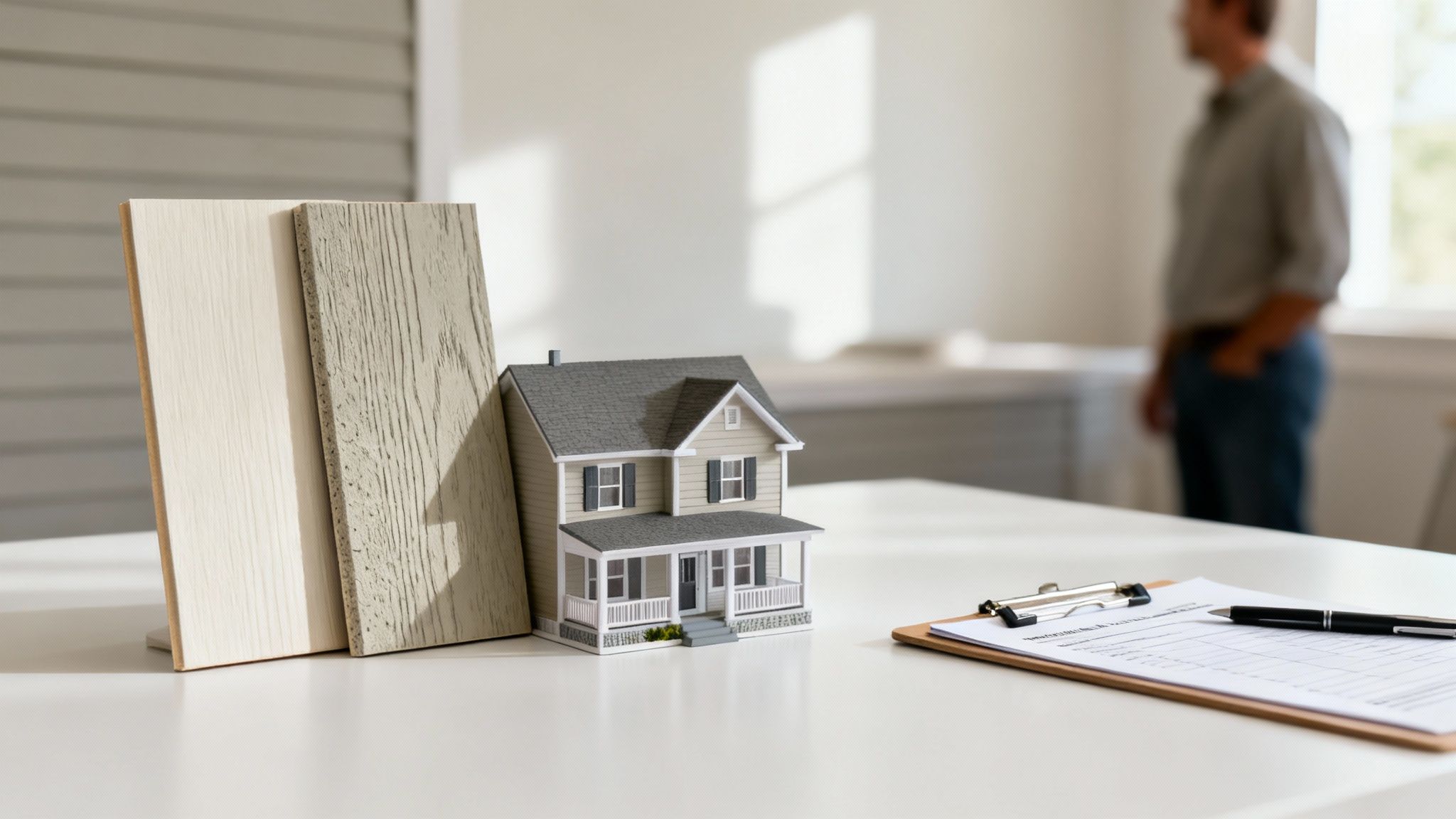
Putting new siding on your house is one of the biggest upgrades you can make. It’s a decision that completely changes your home’s curb appeal, strengthens its defense against the elements, and has a major impact on your long-term budget. While the number on the initial quote is important, a smart homeowner knows to look at the complete financial picture.
This guide breaks down the costs specifically for homeowners here in Upstate South Carolina. We'll go beyond the surface-level price difference to give you a clear, honest look at what you’re really investing in.
Key Cost Considerations
To make the right call, you need to weigh a few different layers of expense and value:
- Initial Project Cost: This isn’t just the material. It includes the specialized labor and tools needed for a proper installation.
- Long-Term Maintenance: What will you spend on repainting, repairs, and cleaning over the next few decades? This adds up.
- Durability & Lifespan: How long will the siding actually last before it needs a complete do-over? A longer lifespan means a lower cost per year.
- Return on Investment (ROI): When it’s time to sell, how will your siding choice affect your home's value?
Siding Cost And Performance At A Glance
To keep things simple, here's a quick comparison of the big-picture differences between vinyl and fiber cement. This table gives you a high-level summary of what to expect in terms of cost, lifespan, and upkeep.
| Upfront Cost | Lower (More budget-friendly) | Higher (Premium investment) |
| Average Lifespan | 20-30 Years | 30-50+ Years |
| Maintenance Needs | Low (Washing) | Moderate (Repainting every 10-15 years) |
| Resale Value | Good | Excellent |
Looking at the numbers side-by-side makes it clear that the initial savings of vinyl are balanced by the impressive longevity and value boost of fiber cement.
A lot of homeowners find it helpful to use tools like a detailed cost calculator to see the total expenses for a project. The same idea applies here—you have to look at all the variables to understand what you're really paying for.
The lowest initial price doesn't always translate to the best long-term value. Factoring in durability, maintenance, and resale potential reveals a more accurate picture of the total cost of ownership.
Getting a handle on these differences is the first step toward picking the perfect material for your home and your budget. As you think about your options, feel free to learn more about the specific siding services we provide to protect and beautify homes all over the Upstate. In the next sections, we’ll dive deeper into each of these cost factors.
Breaking Down The Upfront Investment Costs
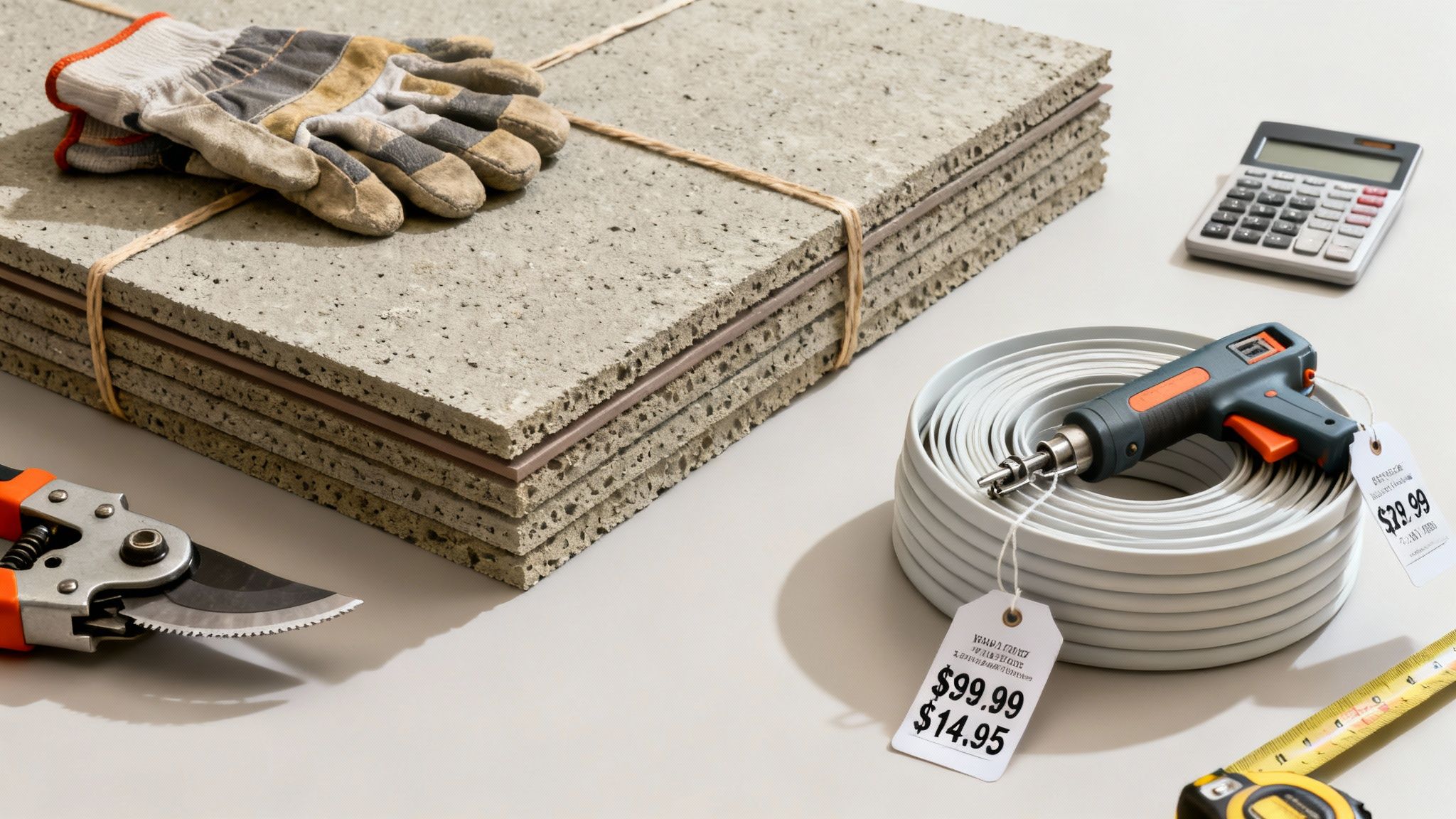
Let's talk about the number everyone looks at first: the initial quote. While it's just one piece of the puzzle, understanding what drives that upfront investment is the first step toward a confident decision. This is where the fiber cement vs vinyl siding cost conversation really begins—with the materials themselves and the labor needed to get them on your house.
Right out of the gate, vinyl siding is the more budget-friendly choice. Its manufacturing process is incredibly efficient, and the material itself is simply less expensive to produce. This makes it a go-to option for homeowners focused on immediate project costs or working within a tight budget.
Fiber cement, on the other hand, carries a higher initial price tag. Made from a sturdy blend of cement, sand, and cellulose fibers, it’s a much denser and more substantial material. That inherent heft, along with a more involved manufacturing process, naturally leads to a higher cost per square foot.
The Critical Role of Installation Costs
The price difference isn't just about the panels; installation labor is a huge piece of the pie. The unique properties of each material dictate the time, tools, and even the size of the crew needed for the job, creating a significant gap in labor quotes.
Vinyl is lightweight and flexible. That makes it relatively easy for a smaller crew to handle and install quickly. No special equipment is needed, and the interlocking panel design speeds things up considerably. For homeowners in the Upstate, that efficiency translates directly into lower labor costs and a shorter project timeline.
Installing fiber cement is a different ballgame—it’s a specialized craft. The material is heavy, tipping the scales at around 300 pounds per 100 square feet, and it's brittle. It demands careful handling by a larger, more experienced team to prevent costly breakage. You also need special saws with dust-reducing tech to cut it safely. All of this adds up to a more meticulous, time-consuming process that naturally increases labor expenses.
Realistic Cost Ranges For Upstate SC Homes
So, what does this look like in dollars and cents? When you compare the upfront cost of fiber cement siding versus vinyl siding, vinyl is the clear winner for initial savings.
For a typical 2,000-square-foot home in our area, you can expect a full vinyl siding project to land somewhere between $6,000 and $16,000. That same home with fiber cement? You're likely looking at a range from $10,000 to $30,000.
The price gap between vinyl and fiber cement isn't just about the material. It's a direct reflection of the specialized labor, tools, and time required for a professional installation that will actually last.
Of course, these are just ballpark figures. Several key variables can shift your final quote up or down from these averages.
Factors That Influence Your Final Quote
No two siding projects are ever the same. Your final estimate will be shaped by your home's unique character and the specific details of the job. Getting a handle on estimating project costs and getting accurate quotes is a crucial skill for any big home improvement project.
Here are the main things that will adjust your upfront investment:
- Home Size & Architectural Complexity: A big, multi-story home with lots of gables, dormers, and tricky angles will require more material, more complex cuts, and a lot more labor than a simple one-story ranch.
- Removal of Old Siding: If your existing siding has to be torn off and hauled away before the new stuff goes on, that will add to the labor cost and the project timeline.
- Trim and Soffit Work: We almost always recommend upgrading or replacing trim, fascia, and soffits at the same time for a clean, finished look. It’s the right way to do it, but it does add to the overall price.
- Insulation and House Wrap: Adding or upgrading the house wrap and insulation behind your new siding is a fantastic move for energy efficiency, but it's an additional material and labor cost to factor in.
Each of these elements contributes to the total fiber cement vs vinyl siding cost. While vinyl offers that immediate savings, the robust nature of fiber cement makes it a different kind of investment—one focused on long-term performance. You can dig deeper into what makes it such a durable choice in our guide on the pros and cons of fiber cement siding.
Calculating Long-Term Value And Total Ownership Cost
The quote you get for your siding project is a big number, but it’s just the first chapter of the story. To really understand the fiber cement vs vinyl siding cost, you have to look past installation day and think about the total cost of ownership over the entire life of the material. A smart homeowner knows the cheapest option now isn't always the most economical choice over 20, 30, or even 50 years.
This long-term view is where the financial script completely flips. While vinyl often wins the race for upfront affordability, fiber cement is engineered for the long haul, and that changes the math entirely.
Lifespan And Replacement Cycles
The biggest factor in your long-term cost is how long the siding will actually last before it needs a complete—and expensive—replacement. This is where the two materials go in very different directions.
- Vinyl Siding Lifespan: A quality vinyl siding job should last you 20 to 30 years. Here in the Upstate SC, with our intense sun and humidity, you might see lower-quality vinyl start to fade or turn brittle even sooner. This means you could be looking at a full re-siding project at least once, maybe even twice, over a 50-year period.
- Fiber Cement Lifespan: Fiber cement, on the other hand, is built like a tank. With proper installation and care, it has a lifespan of 50 years or more. That incredible durability means you install it once and likely never have to think about a full-scale replacement again for as long as you own your home.
This massive difference in longevity is the heart of fiber cement's value proposition. You're paying more today to completely avoid the huge expense and headache of a second siding project down the road.
By investing in a 50-year product instead of a 25-year one, you effectively cut your lifetime siding cost in half. The higher initial investment in fiber cement is a strategic move to eliminate future replacement expenses.
Maintenance Costs Over Time
Beyond replacement, routine upkeep adds another layer to the total cost. While both materials are considered low-maintenance compared to wood, what they need from you is different.
Vinyl siding is famously easy to manage. A quick wash with a pressure washer or a hose and soft brush once a year is usually all it takes to handle dirt and mildew. The downside? If a panel gets cracked by a stray baseball or a hailstorm, the whole panel has to be replaced, and trying to color-match new siding to older, faded panels can be a real headache.
Fiber cement also just needs an annual cleaning. Its main long-term maintenance cost is repainting. To keep it looking sharp and maintain its protective seal, fiber cement siding generally needs a fresh coat of high-quality exterior paint every 10 to 15 years. While this is an expense to plan for, it also gives you a fantastic opportunity: you can completely change your home's color and reboot its curb appeal whenever you want.
Factoring In Resale Value And ROI
Your home is an investment, and the siding you choose has a direct impact on its value. When you decide to sell, curb appeal is your first and best shot at making a great impression. The solid, premium look of fiber cement siding almost always translates to a higher perceived value for potential buyers.
The numbers back this up. Real estate data consistently shows that fiber cement siding delivers one of the highest returns on investment of any major home remodel. The long-term cost-effectiveness leans heavily in favor of fiber cement siding despite its higher initial price tag, thanks to its superior durability and lifespan. Over a 50-year period, the total ownership cost for fiber cement, including one repaint cycle, is estimated to be $25,000-$40,000. For vinyl, factoring in two full replacements, that cost can climb to $30,000-$50,000. Furthermore, fiber cement's premium aesthetics can boost resale value by 5-7%—potentially adding up to $15,000 to a $300,000 home. You can learn more about how siding and other upgrades influence your home's market price in our guide on how to increase property value.
This financial benefit solidifies fiber cement's position as a true long-term investment in your home's equity. When you look at the complete financial picture—lifespan, maintenance, and resale value—the initial cost difference becomes part of a much larger, more compelling story about lasting value.
Why Installation And Labor Costs Differ So Much
When you start comparing quotes, the labor costs are often what cause the most sticker shock. The gap in the fiber cement vs vinyl siding cost isn't really about the material itself—it’s about what it takes to get it on your house properly. These two materials require entirely different skills, tools, and even team sizes to install correctly.
The heart of the difference comes down to one simple thing: weight. Vinyl siding is a featherweight, tipping the scales at just 60 to 70 pounds for every 100 square feet. Fiber cement, on the other hand, is an absolute heavyweight at around 300 pounds for the same area. That five-fold difference is the single biggest reason labor costs are so far apart.
The Demands Of Heavyweight Materials
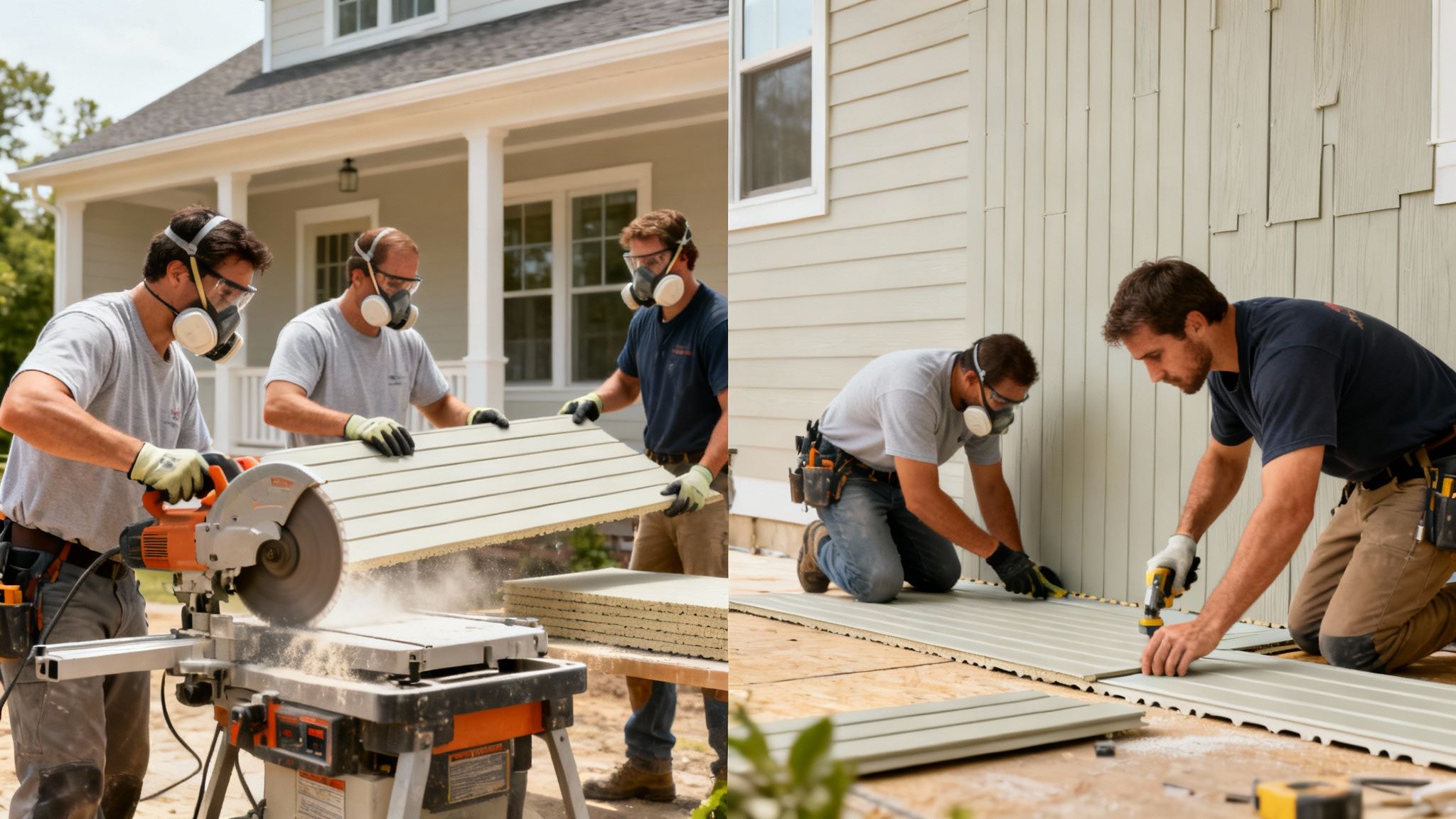
Putting up fiber cement siding is a true craft. It demands precision, specialized gear, and a bigger, more experienced crew. Because it’s so heavy and rigid, every single plank has to be handled with care to avoid chipping or cracking it before it’s even nailed to the wall. It often takes a two- or three-person team just to lift and position one board correctly.
On top of that, you can't just cut fiber cement with any old saw. It requires special diamond-tipped blades to get a clean, factory-perfect edge. The cutting process also kicks up fine silica dust, which is a serious health hazard. Professional crews have to use saws with built-in dust collection systems or wear proper respiratory gear, adding another layer of complexity—and cost—to the job. All this careful, meticulous work naturally takes more time, which means higher labor bills.
The Efficiency Of Lightweight Vinyl
Vinyl siding is a completely different story. It’s light and flexible, which means a smaller crew—sometimes even a single skilled installer—can move fast. You don’t need specialized equipment to cut it; standard tools like tin snips or a reversed circular saw blade do the job just fine, with no need for dust management.
The panels are designed to interlock, which makes aligning and fastening them a much simpler process. An experienced installer can cover a large section of wall in a fraction of the time it would take to hang the same area in fiber cement. The result? A much shorter project and, you guessed it, lower labor costs.
The installation contrast is stark: vinyl siding installation is built for speed and efficiency, while fiber cement demands meticulous craftsmanship and strict safety protocols. This difference directly translates to labor costs that can be 30-50% higher for fiber cement.
You can see this play out clearly in the final numbers. Vinyl’s easy-to-handle nature makes for a rapid install, often cutting labor time by 30-50% compared to fiber cement. This keeps labor costs in the $2-$5 per square foot range. For a typical 2,000 sq ft home, that’s about $4,000-$6,000 in labor over one or two days.
Meanwhile, fiber cement's hefty weight and specialized needs push labor costs to $4,000-$16,000 and can take three to five days. It’s why professional installation is non-negotiable for fiber cement. You can get more insights on how installation impacts siding costs on HomeGeniusExteriors.com.
How Upstate SC Climate Impacts Your Siding Choice
Choosing the right siding in Upstate South Carolina isn’t just about looks or what fits the budget. It’s about picking a material that can stand up to our unique weather challenges. From Greenville to Spartanburg and Anderson, our climate throws a lot at our homes: relentless summer humidity, intense sun, and the constant threat of a good old-fashioned thunderstorm.
These local conditions are a real-world stress test for any siding material, and they absolutely play a role in the long-term fiber cement vs vinyl siding cost. Your siding is your home’s first line of defense, and our weather will push it to its limits from day one. A material that works great in a dry, mild climate can fall apart here, so understanding how vinyl and fiber cement handle our environment is crucial for making a smart investment.
The Battle Against Humidity And Pests
We all know about South Carolina’s legendary humidity. It’s not just uncomfortable—it’s a constant source of moisture that can cause serious problems for a home's exterior. This dampness is the perfect breeding ground for mold and mildew, and it creates an open invitation for pests like termites that love moist, wood-based materials.
Here’s how the two siding options stack up:
- Fiber Cement: Made from a mix of cement, sand, and cellulose, fiber cement just doesn't absorb much moisture. It won't rot, swell, or warp from our constant humidity. More importantly, it’s completely inedible to termites and other wood-boring insects. This natural resilience means you’re avoiding expensive repairs from moisture damage or pest infestations down the road.
- Vinyl Siding: While vinyl itself is waterproof and can't rot, the real issue is what can happen behind it. If it’s not installed perfectly, vinyl can trap moisture against your home’s wooden sheathing. This can lead to hidden rot and mold that you won’t discover until it’s a huge, expensive mess. In our climate, professional installation with top-notch house wrap and flashing isn't just a good idea—it's non-negotiable.
For anyone living in the Upstate, moisture is the enemy. Fiber cement’s very makeup gives it a built-in defense against rot and pests. With vinyl, its performance is completely at the mercy of a flawless installation to keep that moisture out.
Resisting Intense Sun And Summer Heat
The summer sun here is no joke. That constant UV exposure can make siding fade, break down, and lose its strength over time. The heat also causes materials to expand and contract, which is what leads to ugly warping and buckling.
Fiber cement holds onto its color incredibly well, especially the factory-finished products with baked-on coatings that are designed to resist fading for decades. Because it's so dense and stable, it doesn't expand and contract much in the heat. It just lays flat and clean against your home, even during the most brutal August heat waves.
On the other hand, standard vinyl siding is more likely to fade under our intense sun, though newer, higher-quality vinyls do have better UV protection. The bigger issue is that vinyl expands and contracts a lot with temperature swings. If an installer doesn't leave enough room for this movement, it will buckle and look wavy on hot days, creating an uneven, cheap appearance. While our climate may not get frigid, you can see how different materials handle temperature extremes in our guide on the best siding for cold climates.
Choosing The Right Siding For Your Home And Goals
After breaking down every angle of the fiber cement vs. vinyl siding cost debate, the final call comes down to you. There's no single "best" siding—only the right one for your specific budget, your home, and your long-term plans. The key is to match the material’s strengths to what you want to achieve as a homeowner here in the Upstate.
This guide simplifies the choice by focusing on our challenging local climate, from the high humidity and intense sun to our frequent storms.
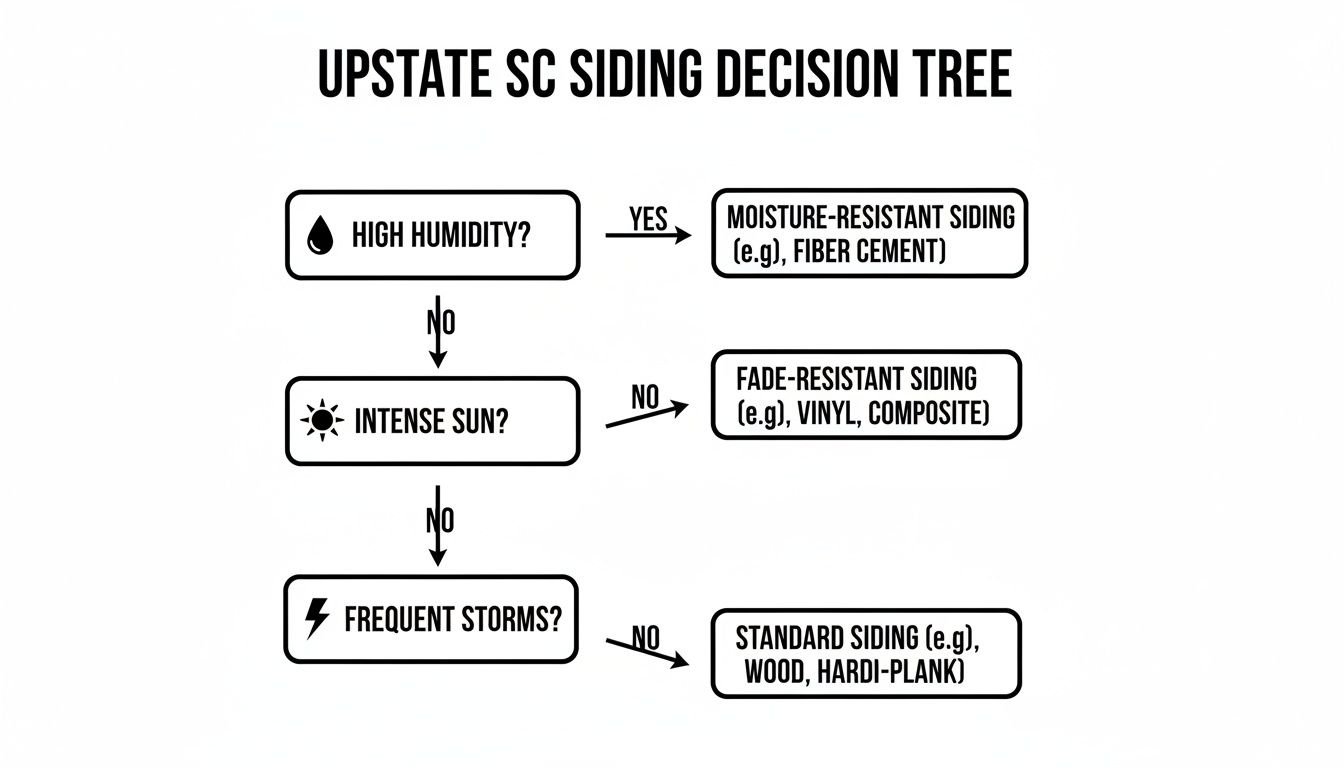
This flowchart really brings it home, showing how fiber cement’s natural toughness against moisture, UV rays, and impacts makes it a perfect fit for the environmental pressures we see all the time in South Carolina.
When Vinyl Siding Is The Smart Choice
For homeowners who need to keep a close eye on their upfront investment, vinyl siding is the hands-down winner. It delivers a clean, modern look without the premium price tag, making it a brilliant financial move in several scenarios.
You should lean toward vinyl siding if you are:
- A Budget-Conscious Homeowner: Is your main goal to refresh your home's exterior with something durable and low-maintenance while keeping initial costs at an absolute minimum? Vinyl is the perfect fit.
- A Rental Property Owner: For investment properties, vinyl hits that sweet spot of affordability, durability, and minimal upkeep. Its lower cost helps your cash flow, and its easy-to-clean surface means fewer maintenance headaches between tenants.
- Planning to Sell Soon: If you're thinking of selling your home in the next five to ten years, vinyl siding gives you a huge boost in curb appeal and helps you sail through a home inspection without the heavier investment of fiber cement.
Vinyl is a practical, immediate solution that looks great and gets the job done reliably. And with modern advancements, the design possibilities are bigger than ever. You can explore some of the most popular vinyl siding colors to find the perfect shade for your house.
When Fiber Cement Is The Best Investment
Fiber cement is the definitive choice for homeowners who are playing the long game—focused on maximum durability, long-term value, and a truly premium aesthetic. That higher upfront cost isn't just an expense; it's a strategic investment in your home’s future that pays off in both performance and equity.
Fiber cement is for the homeowner building their “forever home.” It’s an investment in decades of performance, superior curb appeal, and the peace of mind that comes from knowing your home has the ultimate protection.
Choose fiber cement siding if you are:
- Focused on Long-Term Durability: If you plan on staying in your home for decades, fiber cement's 50+ year lifespan means you'll likely never have to think about replacing your siding again. This erases future costs and actually makes it the more economical choice over the long haul.
- Seeking Maximum Resale Value: For your primary home, the premium look and solid feel of fiber cement directly boost your property value. It delivers one of the best ROIs of any home improvement project, making it a powerful asset when it's eventually time to sell.
- Prioritizing a Premium Aesthetic: If you want the rich, authentic look of wood without all the headaches, nothing comes close to fiber cement. Its ability to hold deep, vibrant colors and mimic natural textures gives you a high-end finish that truly sets your home apart from the rest.
A Few More Siding Questions We Hear All the Time
Even after laying out all the numbers, most homeowners in the Upstate still have a few specific questions pop up. It's totally normal. Getting straight answers to these common concerns is the last step before you can feel 100% confident in your choice.
Does Fiber Cement Or Vinyl Siding Offer Better Energy Efficiency?
Here’s something that surprises a lot of people: neither siding material, on its own, is a great insulator. The real hero of your home’s energy efficiency is the system behind the siding—a high-quality house wrap paired with good rigid foam insulation. That combination does the heavy lifting to keep your home cool in the summer and warm in the winter.
You might see "insulated vinyl siding" on the market, which has foam fused to the back of each panel. While it helps a little, focusing on the complete wall system is a much better strategy. A good installer will make sure whatever siding you choose is part of a complete package designed for maximum energy savings right here in South Carolina.
How Do Warranties Compare Between Fiber Cement And Vinyl Siding?
Warranties tell you a lot about how long a manufacturer expects its product to last. With a good-quality vinyl siding, you'll typically see a limited lifetime warranty. The key word there is "limited"—it's usually prorated, meaning the coverage value drops as the years go by.
On the other hand, a top-tier fiber cement brand like James Hardie usually offers a 30-year non-prorated warranty on the siding planks. On top of that, you often get a separate 15-year warranty that covers the factory-applied color finish.
A quick but critical note: The installer's workmanship warranty is just as important. Sloppy installation is the fastest way to void a manufacturer's warranty for either material, which is why hiring a trusted, local crew is non-negotiable.
Will My Homeowners Insurance Be Lower With Fiber Cement Siding?
There's a very good chance it will be. Insurance companies love materials that lower their risk, and that’s where fiber cement really shines.
Think about it from their perspective. Fiber cement gives them several reasons to offer a discount:
- It’s Non-Combustible: It won’t ignite or add fuel to a house fire. That’s a huge plus.
- It’s Tough: It stands up incredibly well to hail and wind-blown debris, which is a real concern during our Upstate thunderstorms.
- It’s Pest and Rot-Proof: Termites can’t eat it and moisture can’t rot it, eliminating two of the most common and costly sources of structural damage claims.
Because vinyl siding can melt and is more easily damaged by impact, it rarely qualifies for these kinds of premium reductions. It’s always worth a call to your insurance agent to ask about potential discounts—the long-term savings can make a real dent in the higher upfront cost of fiber cement.
Ready to see what a siding replacement would cost for your Upstate SC home? The team at Atomic Exteriors provides clear, no-pressure estimates that break down all your options. Get your free, detailed quote today by visiting https://atomicexteriors.com.