.png)
What Are Energy Star Windows and Why Do They Matter?
When you see that little blue ENERGY STAR sticker on a window, think of it as a seal of approval. It’s the U.S. Environmental Protection Agency’s way of telling you this isn’t just any window—it’s a high-performance product built to lower your energy bills, make your home more comfortable, and go a little easier on the environment.
The Foundation of Energy Star Windows
So, what really makes a window worthy of the ENERGY STAR label? It’s not just about one feature. It’s an entire system—the glass, the frame, and the hardware—all engineered to work together as a powerful thermal barrier for your home.
This is a world away from the standard builder-grade windows you often find in new construction, which are typically chosen for their low upfront cost, not their performance. An ENERGY STAR window is designed to do two jobs exceptionally well: keep your heated air inside during our chilly Upstate South Carolina winters and block the sun’s brutal heat during our long, humid summers.
The whole point is to reduce the workload on your HVAC system. Since heating and cooling are the biggest energy hogs in most homes, a better window means your furnace and AC don’t have to run nearly as often.
Key Performance Indicators
To earn that blue sticker, a window has to prove its worth. It’s graded on two critical metrics that tell you exactly how it will perform in your home:
- U-Factor: This number tells you how well a window prevents heat from escaping. Think of it like the R-value for your walls—the lower the U-factor, the better the insulation.
- Solar Heat Gain Coefficient (SHGC): This measures how much of the sun’s heat gets through the glass. In a hot climate like ours, a lower SHGC is crucial to keep your home from turning into a greenhouse all summer.
Here’s the official ENERGY STAR climate zone map. It shows how different parts of the country need windows with different performance specs.
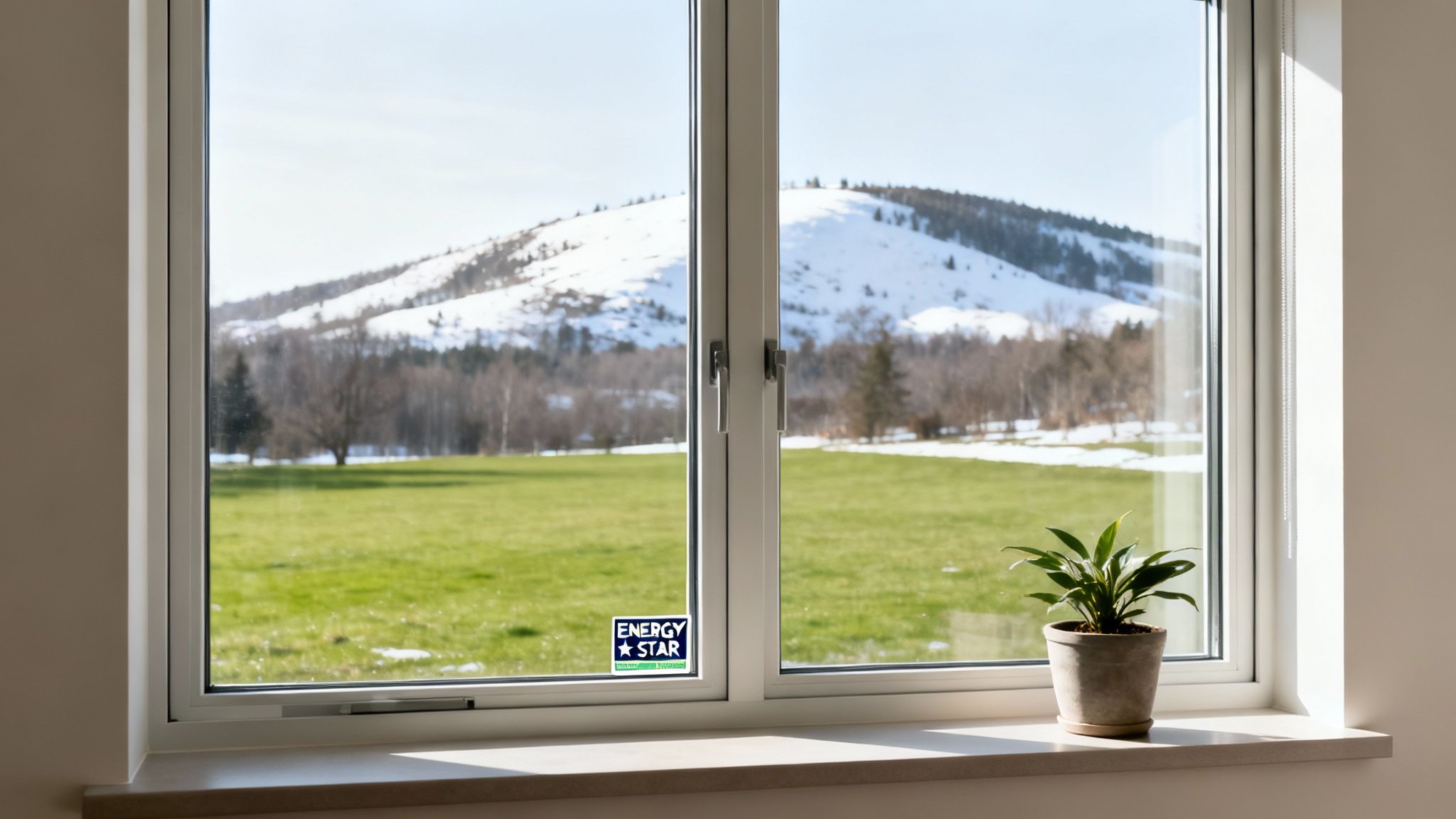
As you can see, Upstate South Carolina is in a mixed-climate zone. That means we need a balanced window—one that insulates well in the winter but also does a great job blocking solar heat in the summer. If you want to dig deeper into finding the perfect fit, check out our guide on the best replacement windows for homes.
These windows use advanced technologies to hit their performance targets, which we'll break down next. The result? They can slash your heating and cooling costs by 15% to 20% compared to old, inefficient single-pane windows.
What’s Inside an Energy Star Window?
So, how do these windows actually achieve those impressive U-Factor and SHGC ratings? It’s all about the combination of modern materials and smart engineering.
Here’s a look at the core components that make it happen:
Key Components of an Energy Star Window
| Low-E Coatings | A transparent, micro-thin metallic layer applied to the glass. | Reflects heat back to its source—keeping heat inside in winter and outside in summer—without blocking visible light. |
| Inert Gas Fills | Harmless gases like Argon or Krypton sealed between the panes of glass. | These gases are denser than air, so they dramatically slow the transfer of heat through the window, boosting insulation. |
| Multiple Panes | Two (double-pane) or three (triple-pane) layers of glass. | The air (or gas) gap between the panes creates a powerful insulating barrier that single-pane windows just can't match. |
| Efficient Frames | Frames made from materials like vinyl, fiberglass, or composite that don’t conduct heat well. | An insulated frame prevents heat from leaking out around the edges of the glass, improving the window's overall performance. |
Each of these technologies works together to create a window that’s far more than just a piece of glass. It’s a complete, high-performance system designed to make your home more efficient and comfortable from day one.
How High-Performance Window Technology Works
To really get what makes an ENERGY STAR window so special, you have to look past the frame and dive into the science behind it. Think of it this way: an old, basic window is pretty much just a hole in your wall with a single pane of glass. But a modern, high-performance window? That's a sophisticated system where several different technologies work in concert to manage how energy moves in and out of your home.
Let's break down the key ratings and components you’ll see on the label. Understanding these will give you the confidence to compare products and pick the absolute best window for your home.
U-Factor: The Sweater Rating
First on the list is the U-factor. This is easily the most important number for measuring a window's insulating power. It tells you exactly how well the window keeps heat from escaping your house.
I like to think of it as a sweater for your window. A thin, cheap sweater isn't going to do much for you on a cold day. But a thick, well-made wool sweater? That keeps you warm and comfortable.
The U-factor works just like that, but in reverse: the lower the number, the better the insulation. A window with a low U-factor is like wearing that thick wool sweater—it’s fantastic at keeping the heated air you're paying for right where you want it: inside. This is a game-changer for both comfort and your heating bills during those chilly winters.
SHGC: The Sunglasses Rating
Next up is the Solar Heat Gain Coefficient (SHGC). This rating measures how much of the sun's heat the window lets through into your home. For us here in Upstate South Carolina, this one is a huge deal.
Think of SHGC as a pair of sunglasses for your house. On a bright, glaring day, dark sunglasses block the sun's intensity and keep your eyes comfortable. Lighter-tinted glasses, on the other hand, let more light—and heat—pass through.
A window with a low SHGC is like wearing those dark sunglasses. It blocks a huge chunk of the sun's infrared radiation, which stops your home from baking in the summer and prevents your air conditioner from running nonstop. A lower SHGC number means less solar heat gain, which is exactly what we need to survive our hot and humid summers.
The Invisible Tech Behind the Glass
So, how do window manufacturers get these impressive U-factor and SHGC numbers? It’s not magic—it's a combination of advanced materials engineered to work together perfectly.
- Low-E Coatings: "Low-E" is short for low-emissivity. It’s an incredibly thin, totally transparent metallic coating applied right onto the glass. It basically acts like a heat mirror, reflecting heat back to where it came from. In the winter, it bounces your home's heat back inside; in the summer, it reflects the sun's heat back outside.
- Inert Gas Fills: The space between the panes in a double- or triple-pane window isn't just empty air. It’s filled with a dense, harmless gas like argon. Because argon is much denser than regular air, it dramatically slows down heat transfer. It's like an invisible blanket of insulation tucked between the glass.
These technologies do more than just save energy—they also create a quieter home. That combination of multiple glass panes and dense gas fill is one of the best ways to improve window noise reduction, muffling annoying sounds from traffic, lawnmowers, and barking dogs. And for homes needing a boost without a full replacement, innovative options like secondary glazing solutions can also make a big difference.
When you put all these pieces together, a simple pane of glass is transformed into a high-performance barrier against the elements.
Why Your Climate Zone Is a Deciding Factor
Here’s something most people don’t realize: a high-performance window that’s perfect for a brutal Minneapolis winter would be an awful choice for a sweltering summer in Upstate South Carolina. This is exactly why the ENERGY STAR program doesn't use a one-size-fits-all approach. Instead, it tailors its certification requirements to different climate zones across the country.
Your location dictates the ideal balance between keeping heat in during the winter and keeping it out during the summer. For a homeowner in Maine, the number one priority is insulation. They need an incredibly low U-factor to trap every ounce of furnace heat inside. In that scenario, solar heat gain is actually a welcome bonus, helping warm their home for free.
But down here, we’re fighting a completely different battle. Our climate demands a careful balancing act. We need windows that provide solid insulation for our chilly winter nights but are also masters at blocking the intense solar heat that defines our long, humid summers. This means finding the perfect combination of U-factor and SHGC is non-negotiable for year-round comfort and energy savings.
The Upstate South Carolina Sweet Spot
For homeowners in Greenville, Anderson, and the surrounding areas, the ENERGY STAR guidelines are crystal clear. Our mixed-humid climate means we need windows that can pull double duty.
- A Low U-Factor is Important: We need good insulation to stop heat from escaping when the temperature drops. This keeps your home cozy and your heating bills from creeping up.
- A Low SHGC is Crucial: This is our main defense against the punishing summer sun. A low SHGC value means your windows are reflecting that heat away from your home, giving your air conditioner a much-needed break.
The real takeaway here is that an ENERGY STAR window certified for our region has been tested and proven to handle both our heating and cooling needs. It’s not just a generic "good" window; it's the right window for our specific weather patterns.
This chart gives you a great visual of how U-Factor and SHGC ratings work. Think of U-Factor as a window's insulating power and SHGC as its ability to block solar heat.
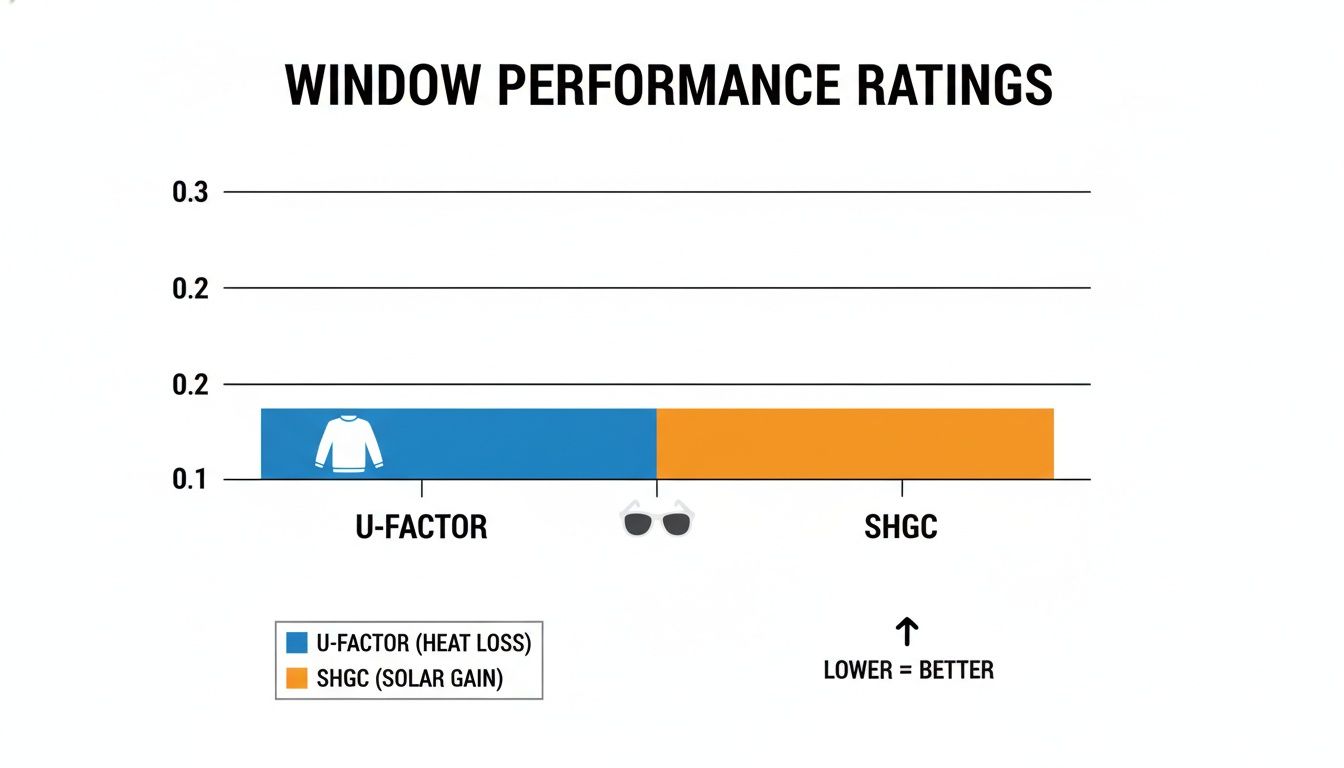
As you can see, a lower U-factor is like a warm sweater for your home, while a lower SHGC acts like a good pair of sunglasses, blocking out unwanted solar rays.
Comparing Regional Needs
To put this into perspective, let's look at how these requirements change across the country. What works for us in the South-Central zone is completely different from what's needed up north or deep in the Sun Belt.
Energy Star Window Requirements by Climate Zone
| Northern | ≤ 0.25 | Any |
| North-Central | ≤ 0.28 | ≤ 0.40 |
| South-Central (Our Zone) | ≤ 0.30 | ≤ 0.25 |
| Southern | ≤ 0.40 | ≤ 0.25 |
This table makes it obvious. A window built for the Northern Zone can have almost any SHGC because solar heat is a good thing there. But here, and further south, a low SHGC of ≤ 0.25 is absolutely critical to keep cooling costs under control.
Our South-Central zone is unique because it demands a product that doesn't sacrifice one performance metric for the other. Understanding what ENERGY STAR windows are means recognizing they're designed for local performance. Choosing a window certified specifically for our climate isn't just a good idea—it's the single most important step you can take to maximize your investment and see real, noticeable savings on your energy bills.
The Real-World Benefits of Upgrading Your Windows
Okay, let's move past the technical specs and climate zone maps. What difference does upgrading to ENERGY STAR windows actually make in your daily life? The answer is: a huge one. Those complex ratings translate into tangible benefits you'll feel and see every single day.
The most obvious benefit, of course, is the energy savings. These certified windows are engineered to beat federal minimum efficiency standards by a whopping 20-40%. For you, that typically means saving 7-15% on your total home energy bills.
For an average household, that can put an extra $200-$400 back in your pocket every single year.
More Than Just Savings
While saving money is a great motivator, the advantages of modern, high-performance windows go so much further. They fundamentally change how comfortable and usable your home is.
- Consistent Indoor Comfort: Say goodbye to those annoying cold drafts in the winter and the sweltering hot spots near windows in the summer. The superior insulation and solar heat control create a stable, comfortable temperature all year round.
- A Quieter, More Peaceful Home: That same technology insulating you from the heat and cold—multiple panes of glass and dense argon gas fills—is also an excellent barrier against outside noise. You’ll notice a real difference in the sounds from traffic, neighbors, and lawnmowers.
- Protection for Your Interior: The Low-E coatings in ENERGY STAR windows block up to 99% of harmful ultraviolet (UV) rays. Think of it as sunscreen for your house, preventing your hardwood floors, furniture, rugs, and artwork from fading over time.
Investing in ENERGY STAR windows is an investment in your quality of life. It’s about creating a quieter, more comfortable, and more secure living space while simultaneously lowering your monthly expenses.
A Smart Financial Investment
The good news doesn't stop at comfort and savings. Upgrading your windows is a smart financial move that pays off in more ways than one. For starters, many high-efficiency window projects qualify for federal energy tax credits, which can seriously reduce the upfront cost of your investment.
On top of that, new windows are a huge draw for potential homebuyers. This upgrade not only boosts your home's curb appeal but can also directly increase its market price. You can dive deeper into how new windows increase property value in our detailed guide.
Remember, even after the upgrade, simple maintenance can keep your windows performing at their best. It's surprising how window cleaning impacts energy efficiency, as this helpful article explains.
Making the Right Choice for Your Home
Alright, now that you have a handle on the technology and the benefits, let's get practical. Choosing the right ENERGY STAR windows isn't just about picking the one with the best numbers; it’s about striking the perfect balance between performance, your budget, and the look you want for your home.
Let's walk through the key decisions, from the glass package to the frame material, to make sure you land on the perfect fit.
The first big question is usually about the glass: double-pane or triple-pane? It's true that triple-pane windows offer the absolute best insulation, giving you the lowest possible U-factor. But they're also heavier and come with a bigger price tag.
For us here in Upstate South Carolina, high-performance double-pane windows are almost always the sweet spot. They deliver fantastic energy efficiency without the extra cost and structural weight of that third pane of glass, making them perfectly suited for our climate's demands.
Choosing the Right Frame Material
The frame is the skeleton of your window. The material you pick has a huge impact on durability, how much maintenance you'll be doing, and how well it insulates. Each one comes with its own set of pros and cons.
Here’s a quick rundown of the most common materials:
- Vinyl: This is a fan favorite for a reason. Vinyl is a great insulator, stands up to moisture, and you'll never have to paint it. It's a cost-effective, low-maintenance choice that delivers excellent energy efficiency.
- Fiberglass: If strength is what you're after, fiberglass is a champion. These frames barely expand or contract with temperature swings, which means a much lower risk of seal failure over time. They provide top-tier insulation and can be painted to match your home.
- Wood: Nothing beats the classic, warm look of wood, and it’s a natural insulator. The trade-off? Wood demands regular maintenance—staining or painting—to keep it from rotting or warping. It's beautiful, but it's a commitment.
- Aluminum: While it's lightweight and strong, aluminum is a poor insulator. It conducts heat and cold easily, making it a less-than-ideal choice for our climate unless it's built with a "thermal break" to boost its efficiency.
Thinking about how new windows will fit into a larger exterior refresh? For more inspiration, check out our guide on home exterior renovation ideas.
Why We Trust Wincore Windows
At Atomic Exteriors, we're very particular about what we install. That's why we exclusively recommend and install Wincore® windows. Their products aren't just generic; they are engineered from the ground up to meet and exceed the ENERGY STAR requirements specifically for our South-Central climate zone.
That means they deliver the ideal blend of a low U-factor to keep heat in during the winter and a low SHGC to block solar heat in the summer. This focus on regional performance is a game-changer. Globally, the demand for energy-efficient windows is skyrocketing—60% of new U.S. homes are expected to have ENERGY STAR windows by 2025. This isn't just a trend; it's a response to rising energy bills and new regulations. You can read more about these global market trends to see why a smart, localized choice is so important.
By choosing Wincore, you’re not just buying a window. You’re investing in a solution that’s been tested and proven to perform right here in the Upstate. Their commitment to quality manufacturing means you’ll get comfort and energy savings for decades.
Making a truly informed decision means looking at the whole package—the glass, the frame, and the official certification. By zeroing in on products designed for our unique climate, you can confidently pick windows that will make your home more beautiful, more comfortable, and more valuable for years to come.
Why Expert Installation Is Non-Negotiable
You can invest in the best ENERGY STAR windows on the market, but that’s only half the battle. Think of it this way: the most high-tech, energy-efficient window is no better than a bargain-bin special if it’s installed poorly. The installation is the final, critical step where all those promised energy savings are either locked in for good or completely lost.
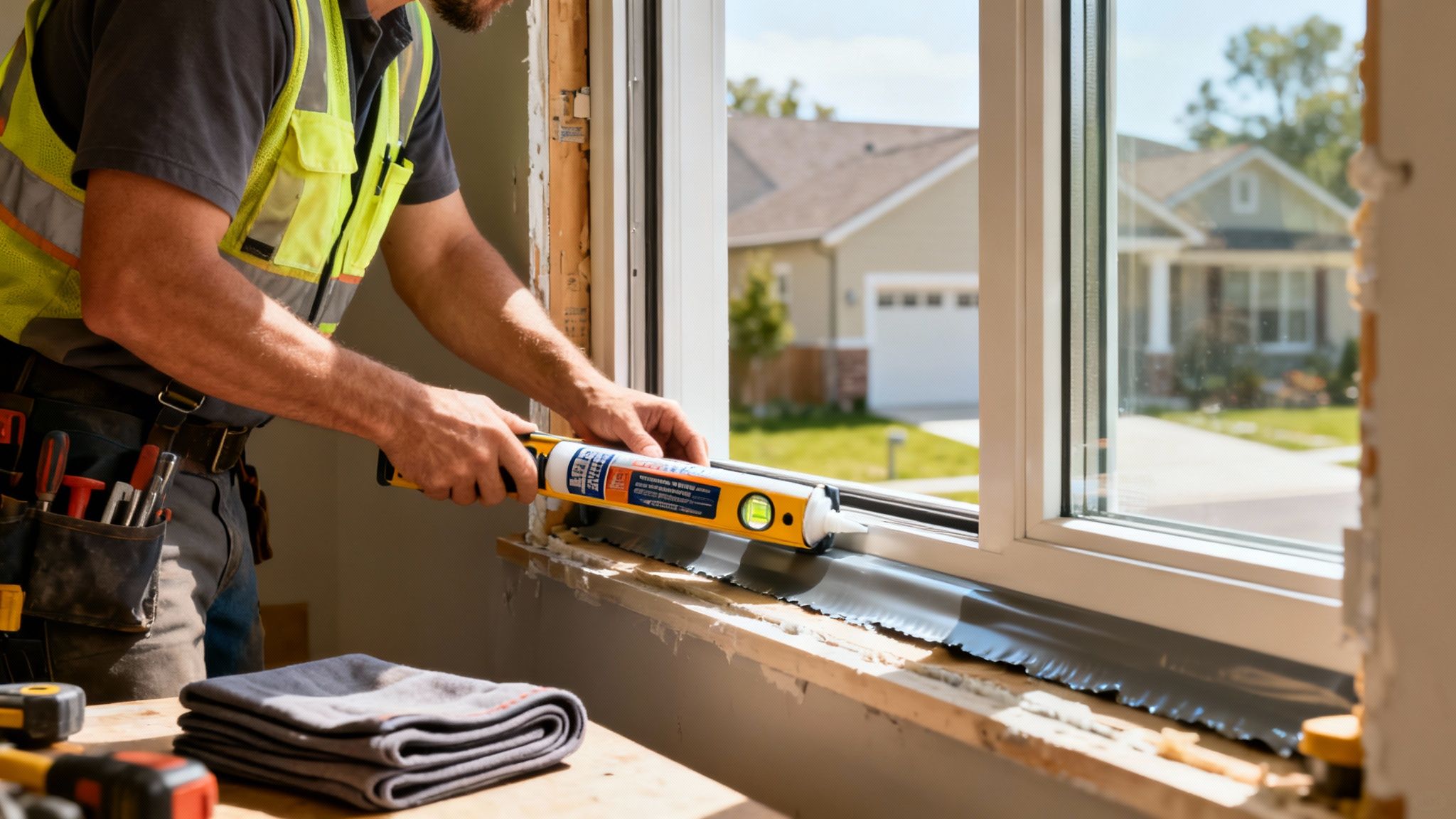
A shoddy installation job is a recipe for disaster. The number one mistake we see is improper sealing around the window frame. Even tiny, barely visible gaps can cause major air leaks, creating those annoying drafts that make your HVAC system work overtime. Worse, those gaps let moisture sneak in, which can lead to wood rot and mold growth inside your walls.
The Atomic Exteriors Difference
This is exactly why we say professional installation isn't just a good idea—it's absolutely essential. At Atomic Exteriors, our certified installers are meticulous. We follow a strict process to make sure every single window creates a perfect, weathertight seal that will last for decades.
It’s a hard fact: an improperly installed window can lose up to 30% of its potential energy efficiency. Our process guarantees the frame is perfectly level, square, and insulated, so you actually get the performance you paid for.
We get it. Replacing your windows is a major investment in your home's comfort, efficiency, and value. Our commitment is to protect that investment with craftsmanship that’s as good as the products we install. We make sure every Wincore window we put in performs at its peak from day one.
Choosing the right installer is the final, crucial decision in your window replacement journey. Explore our full range of expert window installation services to see how our unwavering commitment to quality makes all the difference.
Got Questions About Energy Star Windows? We've Got Answers
Even after you get the basics down, it’s natural to have a few more specific questions. Let's tackle some of the most common ones we hear from homeowners right here in the Upstate.
How Much More Do Energy Star Windows Actually Cost?
You can expect certified windows to have a higher price tag upfront, often 15-30% more than the basic, builder-grade models you’d find at a big-box store.
But it's best to think of that extra cost as a long-term investment, not an expense. That initial bump covers the advanced technology—like those high-tech Low-E coatings and argon gas fills—that will save you serious money on heating and cooling bills for years to come.
Can't I Just Replace the Glass in My Old Windows?
That’s a common thought, but unfortunately, no. Just swapping out the glass in an old, drafty frame won't get you an ENERGY STAR certification.
The entire window unit—the frame, the sash that holds the glass, and the glass package itself—is tested and certified as one complete system. An old, inefficient frame will always undermine the performance of new, high-tech glass, creating energy leaks that defeat the whole purpose.
What's the Difference Between the NFRC Label and the Energy Star Label?
This is a great question because the two labels work hand-in-hand.
Think of it like this: The NFRC label is the "nutrition facts" on a food package, giving you all the specific performance numbers. The ENERGY STAR label is the "Heart-Healthy" seal of approval, telling you those numbers meet the strict efficiency standards for your climate.
The NFRC (National Fenestration Rating Council) provides the unbiased, third-party ratings for U-factor and SHGC. The EPA then uses those exact NFRC ratings to grant the ENERGY STAR certification to products that meet or beat their tough criteria for a given region.
Ready to upgrade to windows that are actually proven to perform in Upstate South Carolina's climate? The certified team at Atomic Exteriors is here to help you select and install the perfect Wincore windows for your home.