.png)

Choosing the Best Gutters for Heavy Rain
For homes in heavy rain climates, the answer is clear: 6-inch K-style seamless aluminum systems paired with oversized 3x4-inch downspouts. This combination gives you the high capacity, structural strength, and clog resistance you need to handle intense downpours and keep your home safe from water damage.
Why Standard Gutters Just Can't Keep Up in Heavy Rain
Here in Upstate South Carolina, we're no strangers to sudden, intense thunderstorms. Standard gutter systems simply weren't built for the sheer volume of water a summer downpour can dump on your roof. A single inch of rain might not sound like much, but it unleashes a torrent that can overwhelm your entire water management system.
When your gutters fail, it’s more than a little overflow. The real danger is where all that water goes—pooling right up against your home's foundation. This isn't just a minor headache; it's a direct threat to your property's structural integrity.
The True Cost of Undersized Gutters
An underperforming gutter system is a huge financial risk. The damage from uncontrolled roof runoff can be severe and expensive, creating a domino effect of problems across your home.
- Foundation Damage: When the soil around your foundation is constantly saturated, it expands and contracts. This movement leads to cracks, settling, and incredibly costly structural repairs down the line.
- Basement and Crawlspace Flooding: Water always finds a way in. As it pools at the base of your home, it seeps through the tiniest cracks, leading to floods, musty smells, mold growth, and ruined belongings.
- Landscape Erosion: Uncontrolled water flow acts like a power washer on your yard, stripping away topsoil, mulch, and landscaping. It carves out ugly channels and destroys your curb appeal. You can learn more about managing this with our guide on backyard drainage systems.
A typical 1,500-square-foot roof can shed nearly 1,000 gallons of water from just a 1-inch rainstorm. With undersized gutters being a leading cause of basement flooding, just one inch of water inside can lead to $25,000 in damages—costs often not covered by standard insurance.
Ultimately, investing in the right gutters for heavy rain is a critical defensive play for your home. But the system doesn't stop at the troughs. Ensuring water is carried far away from your foundation is just as important. For a deeper dive, it's worth learning about effective downspout extensions and other water management solutions.
A Practical Comparison of Gutter Materials
When it comes to choosing gutters for a home in Upstate South Carolina, the material is everything. It’s your first and best line of defense against the torrential downpours we get. The right choice needs to be strong enough to handle the sheer weight of rushing water, tough enough to resist corrosion from our constant humidity, and stable enough to survive temperature swings without failing.
Forget generic pro-con lists. Let’s talk about how these materials actually hold up when a real Upstate thunderstorm hits. This isn’t just a cosmetic decision—it’s a critical one for your home's long-term health. Gutter failure isn't a small problem; it's a financial nightmare waiting to happen.
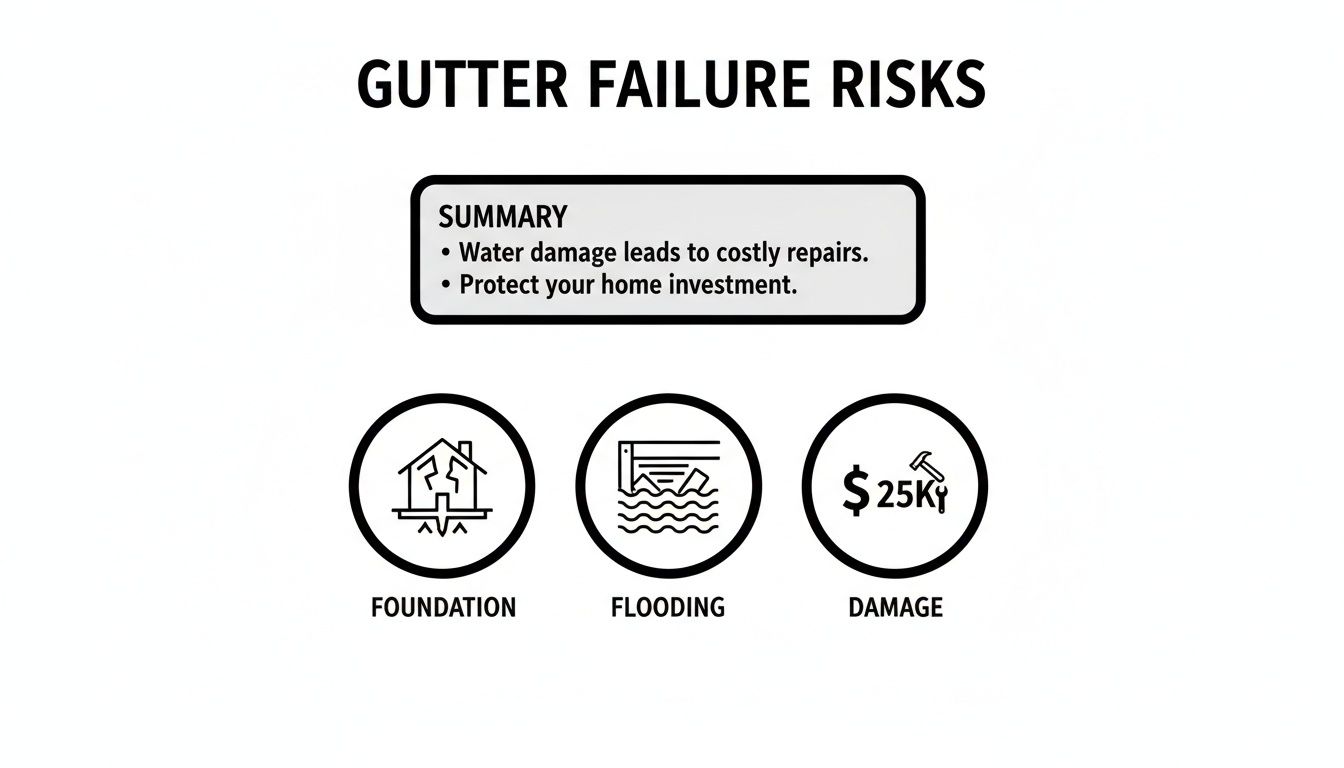
As you can see, a busted gutter system can quickly lead to a cracked foundation or a flooded basement, with repair bills that can easily top $25,000. That’s why picking the right material from the start is so important.
Vinyl Gutters: A High-Risk Choice in Stormy Climates
I get it—vinyl is cheap and easy to find at any big-box store, making it a tempting DIY option. But while the initial cost is low, vinyl is a major liability in our climate. It’s a classic case of getting what you pay for.
The biggest problem is that vinyl just isn't very strong, and it gets weaker over time. Constant sun exposure makes it brittle. Imagine a cold snap followed by a sudden, heavy downpour—that brittle plastic can easily crack under the stress, failing exactly when you need it most.
In a region with intense sun and heavy rain like ours, vinyl gutters are a short-term patch for a long-term problem. They sag, they crack, and they become unreliable, putting your home's foundation at risk.
On top of that, vinyl expands and contracts like crazy with temperature changes. This constant movement puts a ton of stress on the seams, leading to leaks all over the place. For a home in a heavy rain zone, those weak points just aren't worth the upfront savings.
Steel Gutters: Strength at the Cost of Maintenance
Galvanized steel is a beast. It’s incredibly strong and won't buckle under the weight of a deluge or get dented by a misplaced ladder. If pure strength is what you're after, steel delivers.
But here’s the catch: rust. The protective zinc coating on steel is its only defense against corrosion. One deep scratch during installation or from a falling branch is all it takes for rust to get a foothold. In our humid climate where gutters stay damp for long stretches, that rust can spread fast, eating through the metal and causing leaks.
To keep steel gutters working, you have to be vigilant. Every scratch and sign of corrosion needs to be sealed immediately. It's a tough material, but it demands a lot of upkeep.
Copper Gutters: The Premium Durability Option
If you want the absolute best, it’s copper. It's the most durable and long-lasting material out there, often lasting 50 years or more with almost no maintenance. It will never rust. Instead, it develops that beautiful, distinguished green patina over time that looks incredible on historic or high-end homes.
When it comes to performance, copper is unmatched. It can handle any weather you throw at it without buckling or corroding.
The roadblock for most people, of course, is the cost. Copper is dramatically more expensive than any other material, making it a luxury choice. It’s an amazing performer, but its price tag puts it out of reach for the average homeowner.
Aluminum Gutters: The Optimal Balance for Heavy Rain
This brings us to aluminum, which, for most homeowners in Upstate South Carolina, hits that perfect sweet spot between durability, performance, and value. It's lightweight but surprisingly strong—more than enough to handle our torrential downpours, especially when it’s formed into a seamless gutter system right at your home.
Unlike steel, aluminum is naturally rust-proof, which is a huge advantage in our wet, humid climate. It doesn’t get brittle and crack like vinyl, and it holds its shape year after year. A quality, heavy-gauge aluminum system gives you reliable, long-term protection without the sky-high cost of copper or the constant maintenance of steel.
This is why aluminum is the foundation of the high-performance seamless gutter systems we install—it’s simply the smartest, most effective choice for protecting homes in our region.
To make it even clearer, here’s a quick breakdown of how these materials stack up in environments like ours.
Gutter Material Performance in Heavy Rain Environments
This table offers a comparative look at common gutter materials, focusing on how they perform under the stress of intense rainfall, humidity, and other factors common to the Upstate.
| Aluminum | Good to Excellent | Excellent (will not rust) | 20-30+ Years | The practical, all-around best choice for most homes, especially seamless systems. |
| Vinyl | Poor | Excellent (will not rust) | 10-15 Years | Budget-conscious DIY projects in mild, dry climates. Not recommended here. |
| Steel | Excellent | Fair (prone to rust if scratched) | 15-20 Years | Homes needing maximum impact resistance where proactive maintenance is planned. |
| Copper | Excellent | Excellent (develops a patina) | 50-100+ Years | High-end or historic homes where aesthetics and longevity are top priorities. |
Ultimately, while every material has its place, aluminum provides the most reliable and cost-effective performance for handling the specific weather challenges we face year after year in the Carolinas.
Seamless vs. Sectional Gutters for Stormy Weather
When it comes to choosing gutters that can handle a real downpour, the debate between seamless and sectional isn't just about looks—it’s about whether your system will hold up when you need it most. Both are meant to move water, but how they're built makes all the difference under the stress of a classic Carolina thunderstorm.
Sectional gutters are what you’ll find in 10-foot lengths at the big-box hardware stores. You buy the pieces and parts and assemble them on-site. The problem? That assembly process creates the system's biggest weakness: the seams.
Every single spot where one piece meets another—a straight section, a corner, an end cap—is a potential failure point. These joints rely on sealant, which simply can't stand up to years of sun, heat, and rushing water. It cracks, it shrinks, and eventually, it leaks.
A small drip might not seem like a big deal at first, but in a heavy rainstorm, that drip becomes a steady stream. It soaks your fascia boards, drips down your siding, and pools right next to your foundation. Suddenly, the very system designed to protect your home is the source of the problem.
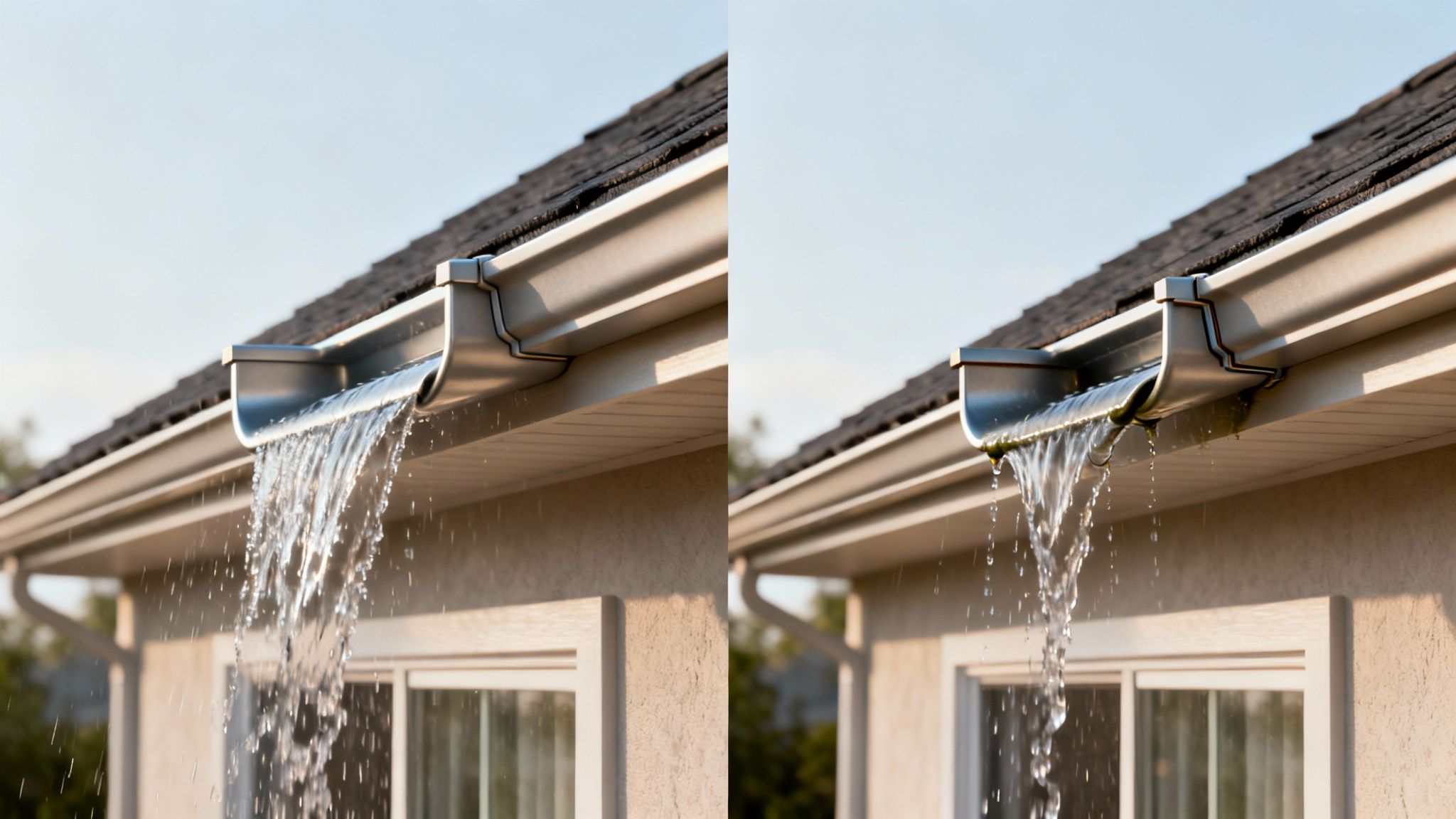
The Hidden Dangers of Sectional Gutter Seams
It gets worse. Leaks aren't the only issue. The seams inside sectional gutters create little ridges that snag leaves, pine needles, and shingle grit. Think of it like a tiny dam. Debris gets caught, more debris piles up behind it, and soon you have a full-blown clog.
When water can't flow, it backs up and spills over the sides. All that trapped water and soggy debris is also incredibly heavy. A single 10-foot section of a 5-inch gutter can hold over 12 gallons of water, weighing in at roughly 100 pounds. Add soaked leaves, and you're putting immense strain on the hangers and fascia, often causing the gutters to sag or pull away from the house entirely.
For homeowners in storm-prone regions, choosing a gutter system is a strategic investment in preventing water damage. Sectional gutters introduce dozens of potential failure points, whereas a seamless system is engineered as a single, uninterrupted unit designed for maximum resilience and flow.
This is where seamless gutters completely change the game. Instead of piecing together pre-cut sections, seamless gutters are custom-made right at your home from a single coil of aluminum. A specialized machine rolls out a continuous gutter cut to the exact length of your roofline, eliminating every single seam along the way.
Why Seamless Gutters Excel in Heavy Rain
The biggest advantage is obvious: no seams means no leaks. It’s that simple. By getting rid of those weak connection points, you get a stronger, more reliable channel that can handle a massive volume of water without breaking a sweat.
The smooth, uninterrupted interior also lets water and debris flow straight to the downspouts. There are no ridges to cause clogs, which is a huge deal during those intense summer storms when your gutters need to clear hundreds of gallons of water in just a few minutes. You can dig deeper into the advantages by reading about the key differences between seamless gutters vs regular gutters.
This custom-fit approach also guarantees a perfect, snug fit against your fascia boards, giving you a cleaner look and far better performance. While the upfront cost might be a bit more than a DIY sectional kit, the long-term value is undeniable. A professionally installed seamless gutter system is simply a smarter, more reliable defense against heavy rain—preventing the leaks, clogs, and water damage that plague sectional systems.
Picking the Right Gutter Size and Profile
Even if you choose the best materials and get flawless seamless construction, your gutter system is only as good as its capacity. This is where size and profile come in—a technical detail, but maybe the most important one for handling a sudden Upstate downpour.
You'll mainly see two gutter shapes on the market: K-style and half-round. Half-round gutters have that traditional, semi-circular look you see on historic homes, but that classic design just can’t move a lot of water.
K-style gutters, however, have a flat back that sits flush against the fascia and a decorative front that looks a bit like crown molding. That unique shape isn't just for looks; it lets a K-style gutter carry way more water than a half-round gutter of the same width. For a storm-prone area like Upstate South Carolina, K-style is the clear winner for performance.
Why Gutter Sizing Is More Important Than Ever
Once you’ve landed on the K-style profile, the next call is the size. For decades, 5-inch gutters were the go-to for residential homes. But as our weather patterns change and storms get more intense, that old standard just doesn't cut it anymore, especially for homes with bigger or steeper roofs.
This is where an upgrade to 6-inch gutters makes a massive difference. It might only be one inch wider, but a 6-inch gutter can handle nearly 50% more water volume than a 5-inch one. That extra capacity is a critical safety net during those intense summer storms, stopping the overflow that tears up your landscaping and damages your foundation.
Outdated gutter sizing is a silent killer for homes in heavy rain zones. Many of the old sizing charts still rely on rain intensity data that’s 40 years old—it simply doesn't reflect today’s climate reality. Heavy storms in the U.S. are now dumping more water than ever, with projections showing they could deliver 20-30% more by the end of the century. You can discover more about how climate change impacts building standards in this white paper.
The Critical Role of Downspouts
A high-capacity gutter is worthless if the water can't get out fast enough. That’s the downspout’s job. Think of your gutters as the highway and your downspouts as the off-ramps—if the ramps are too small, you get an immediate traffic jam.
Standard downspouts are typically 2x3 inches. For a 6-inch gutter system designed to handle our kind of rain, these are just too small. The water will fill the gutters faster than the downspouts can drain it, and you'll get overflow every time.
The right move is to pair your 6-inch gutters with oversized 3x4-inch downspouts. This bigger outlet can manage a much higher flow, ensuring the whole system works together to get water off your roof and away from your home’s foundation.
A common mistake is investing in larger gutters without upgrading the downspouts. This creates a bottleneck that completely negates the benefit of the higher-capacity system. For true heavy-rain protection, the entire system—gutters and downspouts—must be sized correctly.
The placement and number of downspouts are just as critical. A good rule of thumb is one downspout for every 20-30 feet of gutter. A professional installer won't just follow a rule, though; they’ll analyze your roof's unique layout, pitch, and valleys to map out the best placement for maximum drainage.
Making the Right Choice for Your Home
Figuring out the perfect combination of gutter profile, size, and downspout setup isn’t a guessing game. It requires a careful look at your home’s specific needs.
Key factors that influence this decision include:
- Roof Size: A bigger roof catches more rain, plain and simple. It needs a higher-capacity system.
- Roof Pitch: A steep roof sends water down in a hurry, putting a huge, sudden demand on your gutters.
- Tree Coverage: If your home is surrounded by trees, your system has to handle both water and a ton of debris.
- Local Rainfall Intensity: Around here, we get short, intense downpours. The system needs to be built for that reality.
Ultimately, a professional assessment is the only way to guarantee your gutter system is properly engineered for your home and our local climate. An experienced contractor can run the numbers to make sure your gutters are ready to protect your home from the next big storm, giving you peace of mind that lasts.
Why Professional Installation and Gutter Guards Matter
You can pick out the absolute best gutter system on the market, but it’s destined to fail if the installation is botched. It’s a hard truth. Choosing the right materials and size is only half the battle; if the execution is sloppy, your home is still left vulnerable when the skies open up. Professional installation isn't just a service—it's the critical final step that transforms high-quality parts into a reliable defense against heavy rain.
An expert installer does a lot more than just hang gutters. They meticulously calculate the precise slope, making sure every drop of water flows efficiently toward the downspouts instead of sitting stagnant. A classic DIY mistake is setting the gutters too level, which creates standing water that adds weight, breeds mosquitoes, and eventually causes overflow.
A pro also ensures every single detail is buttoned up, from using heavy-duty hangers spaced correctly to prevent sagging under a deluge, to perfectly sealing every corner and end cap. These small things are what make all the difference during a severe thunderstorm.
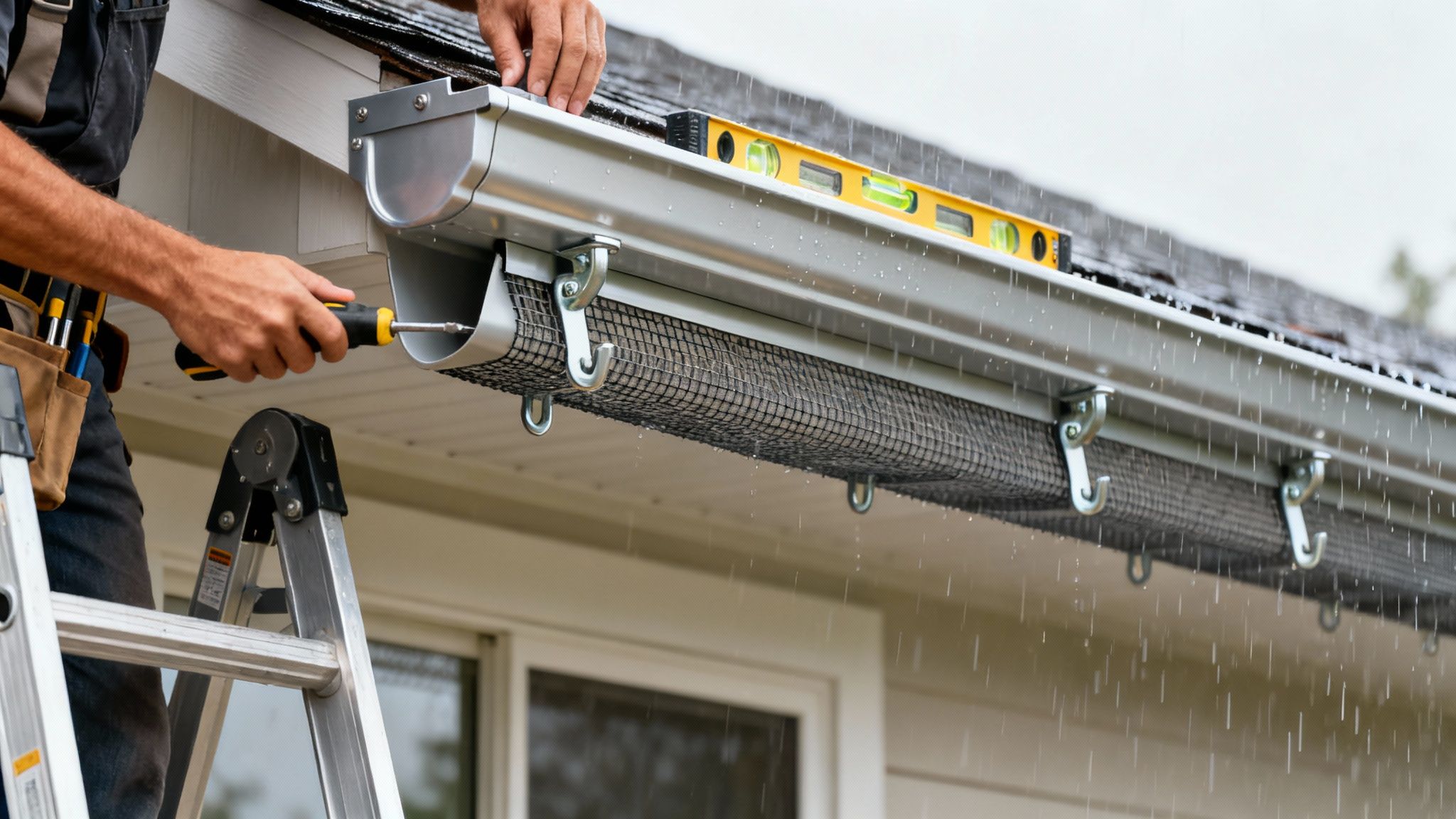
The Non-Negotiable Role of Gutter Guards
Here in Upstate South Carolina, with our beautiful mature trees and intense downpours, clog-resistant technology is absolutely essential. Gutter guards aren’t some luxury add-on; they are a core component of any high-performance system built for our climate. Without them, your gutters are just open troughs waiting to be choked with leaves, pine needles, and shingle grit.
A single clog can make an entire section of your gutter system worthless. When water hits that dam, it has nowhere to go but over the edge, cascading down your siding and pooling right up against your foundation. This overflow is the number one cause of serious home issues, and you can learn more about how to stop roof leaks before they get out of hand.
Clogs also add a dangerous amount of weight. Wet, compacted debris is shockingly heavy, putting immense strain on the hangers and the fascia board they're attached to. A gutter full of soggy leaves can easily weigh hundreds of pounds, leading it to pull away from the house, sag, and even damage your roofline.
A professional installation is the foundation of a reliable gutter system. It guarantees the correct slope for drainage and secure attachment to handle water weight. Gutter guards complete the system, preventing the clogs that cause overflows and structural damage, ensuring your gutters work flawlessly when you need them most.
The Atomic Exteriors Installation Promise
At Atomic Exteriors, we know firsthand that the best gutters for heavy rain are a combination of superior products and expert craftsmanship. Our professional team doesn't just hang gutters; we engineer a complete water management solution tailored to your home’s specific needs. We use heavy-gauge aluminum to custom-fabricate seamless gutters right on-site, ensuring a perfect, leak-proof fit from end to end.
Our installation process is built on precision:
- Precise Pitch Measurement: We set the perfect slope to guarantee rapid water flow, even in the heaviest downpours. No standing water, ever.
- Secure Hanger Placement: We use premium hangers spaced much closer than the industry standard to support the immense weight of rushing water and prevent sagging over time.
- Clog-Resistant Technology: We integrate top-tier gutter guards to keep debris out, ensuring your system stays clear and effective year-round without you having to climb a ladder.
This meticulous approach means your investment not only looks sharp but provides lasting, real-world protection against water damage, all backed by our commitment to quality and durability.
Your Go-To Checklist for Rain-Ready Gutters
Choosing the right gutter system can feel like a big decision, but it really just comes down to a few key factors. This checklist breaks down the process, step by step, so you can feel confident you're making a smart investment in your home's future.
This isn't just about swapping out old gutters. It’s about building a water management system that’s truly designed for Upstate South Carolina's weather.
Step 1: Figure Out Your Home's Specific Needs
Every house is different. Before you even start looking at products, take a walk around your property and get a feel for its unique challenges. A quick assessment now ensures you get a system that fits your home, not a generic, one-size-fits-all solution.
- Look at Your Roof: How big is it, and how steep is the pitch? A large, steep roof acts like a massive funnel, shooting huge amounts of water down at high speeds. That calls for a higher-capacity system, period.
- Check the Trees: Are you surrounded by oaks and pines? Heavy tree cover means you’ll be in a constant battle with leaves, needles, and other gunk. Clog-resistant tech like gutter guards isn't just a luxury—it's a necessity.
- Watch the Water Flow: Next time it rains, see where the water goes. Does it pool near the foundation? Knowing this helps you and your installer map out the best spots for downspouts to get that water far away from your house.
Step 2: Pick the Right Parts for the Job
Once you know what your home is up against, you can pick the components that will actually perform when the skies open up. You want to focus on materials and designs proven to handle our intense downpours and year-round humidity.
For homes in Upstate South Carolina, the winning combination is almost always a 6-inch K-style seamless aluminum gutter system paired with oversized 3x4-inch downspouts. This setup gives you the capacity, strength, and leak-proof integrity to handle whatever our storms throw at it.
Here’s what to prioritize:
Material: Go with heavy-gauge aluminum. It’s the best bang for your buck—it won’t rust and it’s built to last.
Build: Always insist on seamless gutters. They get rid of the leaky seams and weak spots that plague the sectional gutters you see at big-box stores.
Size: Choose 6-inch gutters. The old 5-inch standard just doesn't cut it anymore with the heavy rain we see today.
Downspouts: Pair your gutters with oversized 3x4-inch downspouts. This is crucial for preventing backups and moving water away quickly.
Step 3: Insist on a Professional Installation
This last step is critical. You can buy the best gutter system in the world, but it will fail if it's not installed correctly. The quality of the installation is every bit as important as the quality of the materials.
A true professional will give you a clear plan that covers everything: calculating the precise slope for proper drainage, using enough hangers so the gutters never sag, and providing a solid warranty on both the materials and their work. When you work with a trusted local expert like Atomic Exteriors, you know the job will be done right from day one.
Your Gutter Questions, Answered
Choosing the right gutters for a place like Upstate South Carolina, where heavy rain is a given, often comes down to a few final details. Getting clear, practical answers is the key to making a confident decision that protects your home for decades.
Let's tackle the most common questions homeowners ask when it’s time to upgrade.
How Often Should I Clean Gutters Built for Heavy Rain?
Even with the best gutter guards, a quick inspection once or twice a year is smart. Think of it as a wellness check for your home's drainage system.
While a quality guard system stops the big stuff, a professional check-up in the spring and fall confirms no small debris has gotten through and that everything is still pitched correctly. For homes surrounded by trees here in the Upstate, a quick glance after a big storm is a great habit, too. It’s all about making sure water is flowing freely away from your foundation.
For a deeper dive into doing it right, check out our guide on how to clean gutters safely.
Can I Install Larger 6-Inch Gutters on My Existing Fascia?
In most cases, yes. The standard fascia boards on modern homes are usually wide enough to handle the upgrade from 5-inch to 6-inch gutters.
But—and this is a big one—any reputable installer will insist on inspecting your fascia and soffit first. If there’s any rot or damage from your old, leaky gutters, it has to be repaired. This is a non-negotiable step to ensure the new, heavier system is anchored securely for the long haul.
A pre-installation assessment isn't just a suggestion; it's a critical step. It guarantees the foundation of your new gutter system—the fascia board—is strong enough to handle the increased weight and water volume. Skipping this can lead to total system failure and costly repairs down the road.
This professional check ensures your investment is built on a solid base.
Are Seamless Aluminum Gutters Worth the Higher Initial Cost?
Absolutely. While you might save a few bucks upfront with sectional gutters from a big-box store, seamless aluminum gutters deliver far greater value over the long run, especially in our climate.
The game-changer is the elimination of seams. Seams are the weak points where leaks and failures almost always start. By getting rid of them, you drastically cut down on future maintenance and repair bills.
More importantly, the custom fit and superior durability provide rock-solid protection against the kind of water damage that can ruin your foundation, siding, and landscaping. It’s a smart investment that pays for itself by preventing catastrophic failures—making it an essential part of any gutter system truly built for heavy rain.
Ready to equip your home with a gutter system built to handle anything Upstate South Carolina's weather can throw at it? The expert team at Atomic Exteriors specializes in high-performance seamless aluminum gutters with clog-resistant technology, all installed with precision craftsmanship. Protect your home's foundation and value with a system designed for our climate. Get your free, no-obligation estimate today by visiting us at https://atomicexteriors.com.