.png)
The Real Cost of Hardie Board Siding Explained
Let's get right to it: the big question on everyone's mind is, "What's this going to cost?"
For a typical home, the average cost for a full Hardie board siding installation lands around $21,300. Of course, that’s just an average. Most projects we see fall somewhere in the $7,000 to $40,000 range. Broken down per square foot, you can expect to pay anywhere from $7 to $18 for a complete, professional job.
Your Quick Guide to Hardie Board Siding Costs
Budgeting for a new exterior is a big deal, and it's important to understand the numbers upfront. Unlike basic vinyl siding, which often gets picked for its low initial price tag, James Hardie fiber cement siding is a serious investment in your home's future. You're paying for long-term durability and fantastic curb appeal.
That higher price reflects its premium makeup—a tough blend of cement, sand, and cellulose fibers. This is the stuff that gives it superior resistance to pests, fire, and the wild weather we get here in the Upstate.
To help you visualize where your project might land, here’s a quick look at the typical cost spectrum.
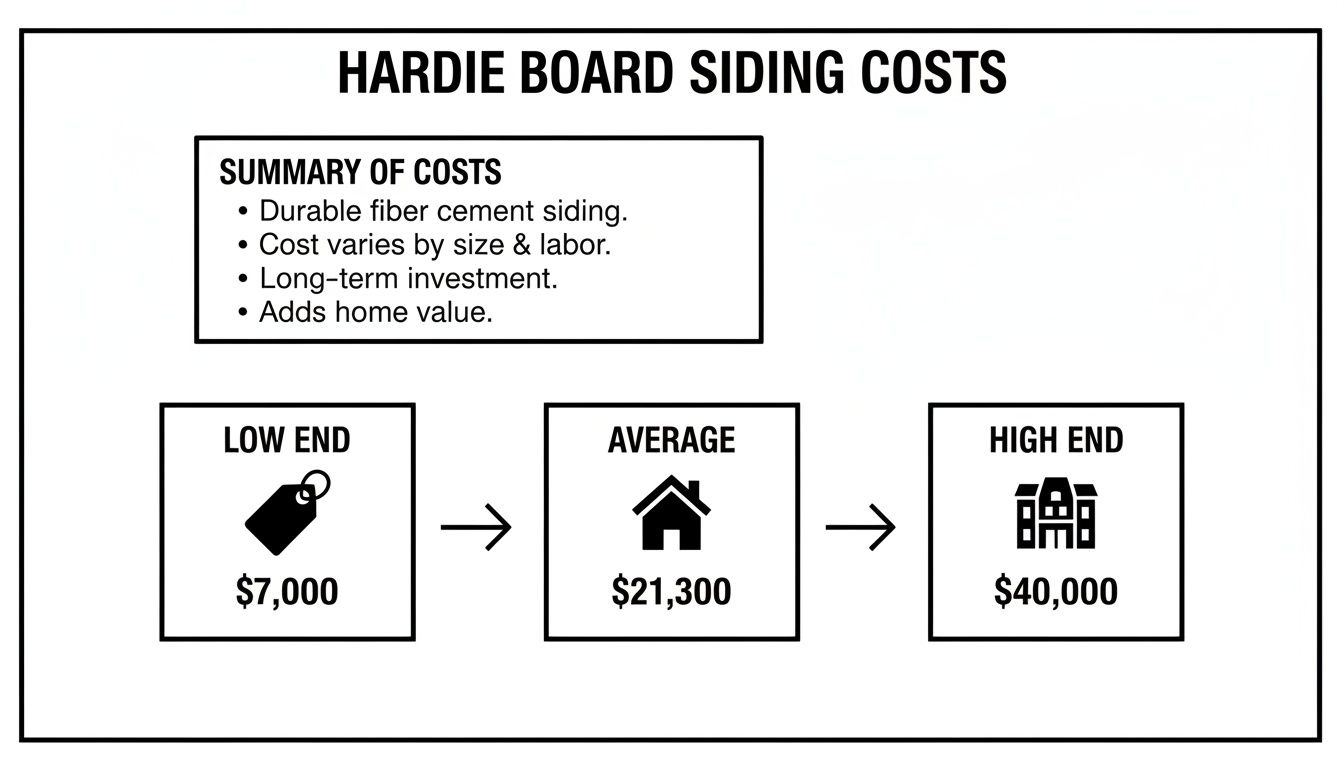
This gives you a good frame of reference. While the average project hovers near that $21,300 mark, you can see that smaller jobs are much more affordable, and larger, more complex homes will naturally cost more.
Hardie Board Siding Cost At A Glance
To make it even clearer, here’s a simple table that estimates total project costs based on the size of your home.
| 1,000 | $7,000 – $14,000 |
| 1,500 | $10,500 – $21,000 |
| 2,000 | $14,000 – $28,000 |
| 2,500 | $17,500 – $35,000 |
| 3,000 | $21,000 – $42,000 |
Keep in mind these are estimates. The final price depends on the specific style you choose, your home's design, and other factors we'll dig into later.
Understanding the Numbers
The total cost of any Hardie board project is a mix of two things: the material itself and the skilled labor needed to install it right.
Across the U.S., the installed price generally shakes out to be $7 to $18 per square foot. Where you land in that range depends on the siding style you pick, how complex your home’s architecture is, and local labor rates.
For a little perspective, basic vinyl siding often falls in the $3 to $7 per square foot range. This means Hardie board can cost roughly 2 to 3 times more upfront. But—and this is a big but—its fiber cement formula is engineered to last 30 to 50 years with very little maintenance. That’s a game-changer for homeowners here in Upstate South Carolina who deal with humidity and harsh sun.
The higher initial cost of Hardie board is often balanced by its lower total cost of ownership over its decades-long lifespan, thanks to reduced maintenance and replacement needs.
This incredible durability is precisely why so many homeowners see it as a smart, worthwhile upgrade.
If you're thinking this premium option might be right for your home, our team can give you a detailed breakdown of the costs involved. You can learn more about our fiber cement siding installation services and get a clear, no-obligation estimate tailored to your project.
Breaking Down Your Quote: Materials vs. Labor
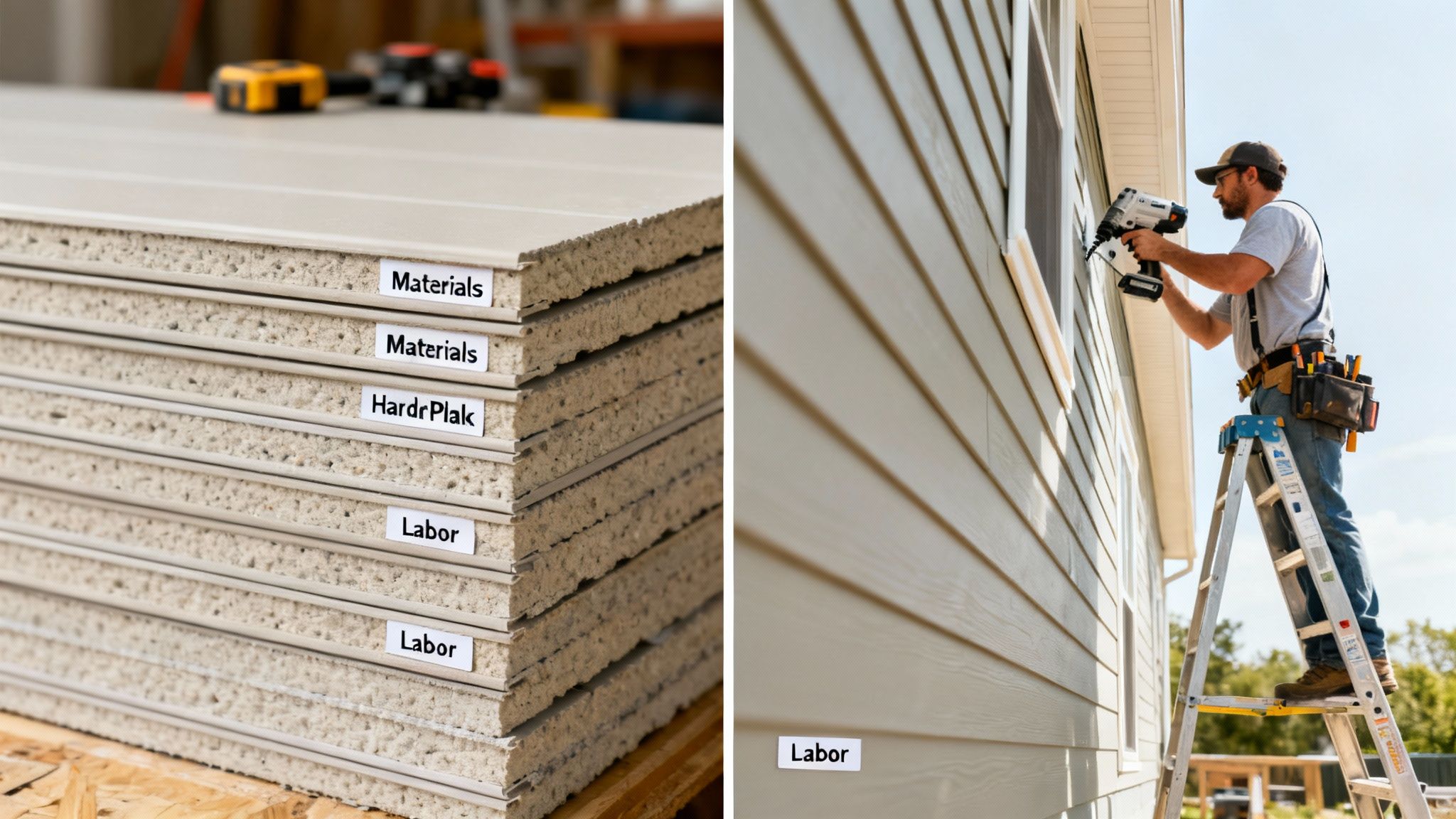
When a siding quote lands in your inbox, it's natural to zero in on the bottom line. But to really get a handle on what you're paying for with Hardie Board, you have to look under the hood. That final number is really a combination of two key things: the physical siding and trim, and the skilled labor needed to install it perfectly.
Think of it like commissioning a custom piece of furniture. You’re not just paying for the high-quality wood; you're also paying for the artisan's skill to cut, join, and finish it into something beautiful and lasting.
For most Hardie projects, the cost is split pretty evenly down the middle. You can generally expect materials to account for 40-50% of your total project cost, while labor makes up the other 50-60%. This balance tells you something important: the installation is just as critical as the product itself.
The Material Cost Breakdown
Not all Hardie Board carries the same price tag. The specific style you choose has a direct impact on the material side of your budget. The most common choice, HardiePlank® lap siding, is typically the most budget-friendly option and gives you that classic, timeless look.
But if you want to add some architectural flair with different textures or styles, your material costs will start to climb.
- HardieShingle® Siding: This style beautifully mimics the look of cedar shakes and is a popular choice for gables or accent walls. It costs more than standard lap siding.
- HardiePanel® Vertical Siding: For a clean, modern aesthetic, vertical panels are a great fit. They're often combined with trim to create a "board-and-batten" style, which also bumps up the material expense.
The finish makes a difference, too. You can get boards that come pre-primed, which are less expensive upfront. The catch? You'll have to factor in the cost (and hassle) of painting your entire house after the installation is done. The alternative is James Hardie’s ColorPlus® Technology. These products arrive at your home with a durable, factory-painted finish that’s baked on for incredible longevity. It costs more out of the box, but it saves you from hiring a painter right away.
Why Hardie Board Labor Costs More
The labor line item on your quote is where the real expertise shines through, and it’s a big reason the overall cost of Hardie Board is higher than, say, vinyl. Putting up fiber cement siding is a specialized craft. It’s not a quick, slap-it-on-the-wall kind of job.
Unlike lightweight vinyl siding that one person can cut and hang with ease, Hardie planks are heavy, rigid, and require at least two installers to handle and position correctly. This isn't a one-person job.
Because fiber cement is a dense, composite material, installers must use special diamond-tipped blades for clean cuts and follow strict fastening protocols to prevent cracking and ensure the siding performs as designed.
This careful, by-the-book process is what protects your investment and keeps your warranty intact. The higher labor rate reflects the advanced skill, specialized equipment, and extra time required to do the job right. You’re not just paying for installation; you’re paying for craftsmanship and the peace of mind that comes with knowing your home’s new armor will last for decades.
Key Factors That Drive Your Final Price
Ever wondered why one Hardie Board siding project comes in at $15,000 while a similar-looking house down the street gets a quote for $40,000? It’s not a random number. The final price tag is a direct reflection of your home's unique personality and the specific work required to get the job done right.
Think of it this way: siding a simple, one-story ranch is like painting on a flat, blank canvas. It’s straightforward and efficient. But siding a complex, multi-story home with dormers, bay windows, and funky rooflines? That’s more like painting a detailed mural full of nooks and crannies. It demands more time, more precision, and more material, which naturally drives up the cost.
Architectural Complexity and Home Size
The biggest line items on your bill will always be the sheer size and shape of your house. A larger home means more siding and more hours on the job—that’s the easy part. But it’s the complexity of your home’s architecture that often surprises homeowners.
These specific features add a lot more labor to the project:
- Multiple Stories: Working high off the ground isn't just slower, it requires scaffolding and extra safety gear. Every board, tool, and person has to go up and down, adding significant time.
- Gables and Dormers: Those beautiful triangular sections at the top of your house? They're a puzzle of precise, angled cuts. Siding a gable takes far more time and skill than running a long, straight wall.
- Tons of Windows and Doors: Every single opening has to be worked around. That means careful measurements, exact cuts, and meticulous sealing with trim to make it all weatherproof.
Basically, the more corners, angles, and interruptions your home has, the more time and craftsmanship it takes to make the siding look seamless and perform perfectly.
Removal of Old Siding
Before the beautiful new Hardie Board can go up, the old stuff has to come down. This "tear-off" and disposal process is a major step and a real cost driver. The material being removed makes a big difference—lightweight vinyl siding is much faster and cheaper to pull off than heavy, old wood planks or stubborn stucco.
This is also the phase where we find surprises. Once the old siding is gone, we might uncover hidden wood rot, pest damage, or other issues with the sheathing underneath. Fixing that underlying structure is non-negotiable for a quality installation, but it will add to your final cost.
Expect siding removal and disposal to tack on anywhere from $1,000 to $3,000 or more to your total project cost. The final number really depends on your home’s size and what kind of siding is coming off.
Trim, Accents, and Finish Choices
The details are what give a home its character, and they also shape the budget. Standard trim is part of any project, but if you want to upgrade to wider, more decorative trim boards for your windows and corners, that will increase material costs. Same goes for adding beautiful accents, like using HardieShingle® in the gables for a rustic touch or creating a modern board-and-batten look with HardiePanel® sheets.
Your choice of finish matters, too. You can get Hardie Board that's just primed, ready for a painter to come in after installation. Or, you can opt for their factory-finished ColorPlus® products. While ColorPlus® costs more upfront, you're getting a durable, baked-on finish and you don't have to hire and coordinate a separate painting crew. Many homeowners find the longevity and convenience are well worth the investment.
If you're weighing the options, it helps to understand the full picture. You can learn more by exploring the pros and cons of fiber cement siding.
How Hardie Board Stacks Up Against Other Siding
When you first see the price tag for Hardie Board, it's totally normal to wonder if it's really worth the extra cash. But here’s the thing: siding isn't just something you buy, it's an investment in your home's future. The real answer comes into focus when you shift from thinking about the upfront cost to the long-term value.
Think of it like buying a car. You can get a basic, no-frills model that gets you from A to B, and that’s fine. Or, you can invest in a premium vehicle known for its performance, safety, and durability—one that holds its value and gives you peace of mind for years. Vinyl siding is that reliable, budget-friendly car. It works. But Hardie Board? That's the premium model, engineered from the ground up to outperform and outlast everything else.
Siding Material Cost And Value Comparison
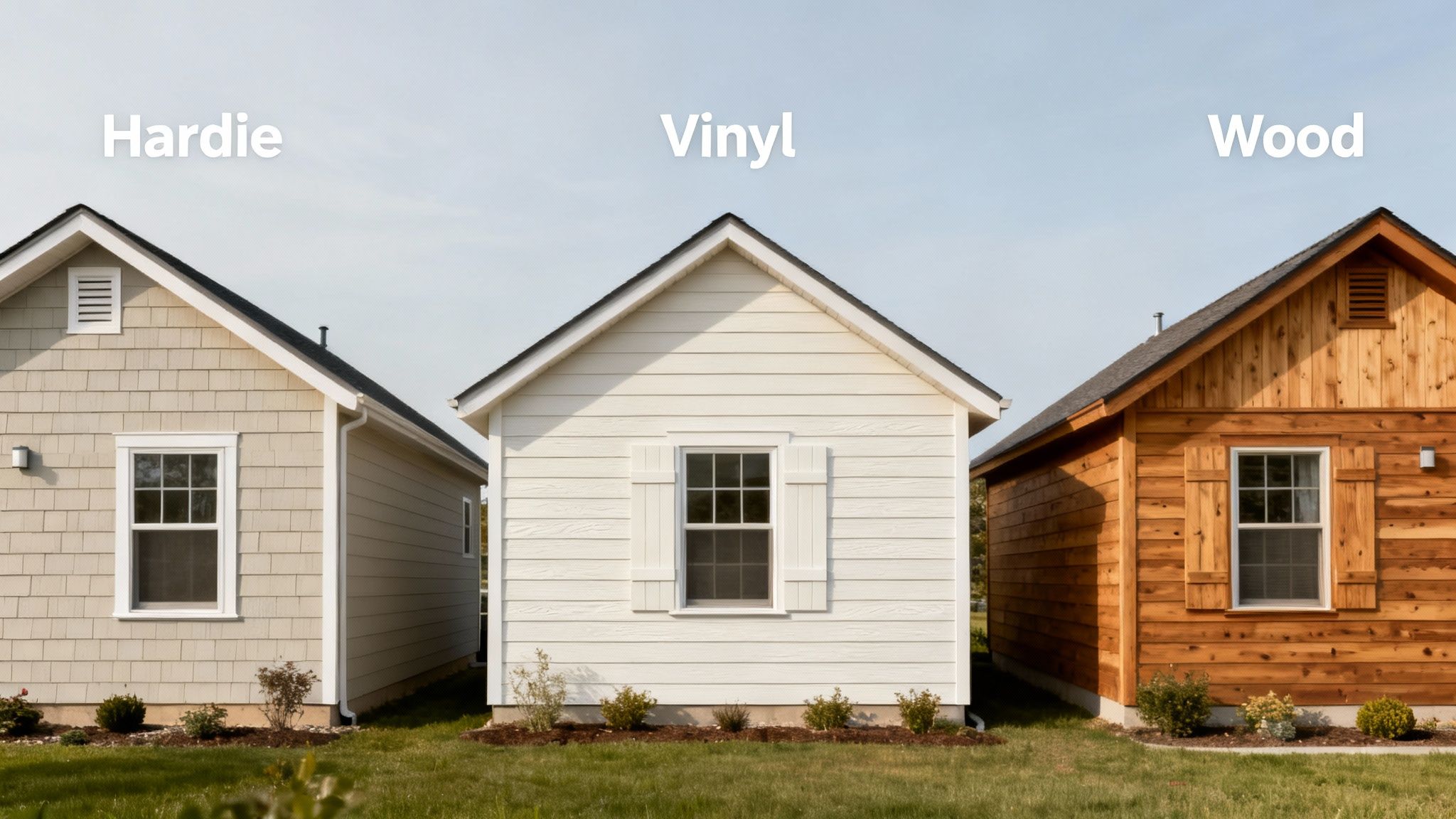
To really see what you’re paying for, let’s put the most common siding choices side-by-side. While Hardie Board does have a higher initial cost, you’ll quickly see where that money goes—especially when you consider its resilience against the punishing sun and thick humidity we get here in Upstate South Carolina.
| Hardie Board | $7 – $18 | 30-50+ Years | Low |
| Vinyl Siding | $3 – $7 | 20-40 Years | Very Low |
| Wood Siding | $8 – $15 | 20-50 Years (with care) | High |
| Engineered Wood | $6 – $12 | 20-30 Years | Low to Moderate |
As you can see, there’s a clear trade-off. Vinyl is the cheapest to install, but it’s also the most likely to fade, warp, or crack under pressure. Natural wood siding looks incredible, but it’s a part-time job to maintain—requiring constant staining, sealing, and fighting off pests, which adds up big time over the years.
Thinking About the Total Cost of Ownership
This is where Hardie Board truly separates itself from the pack. The "total cost of ownership" isn't just the price on the invoice; it’s the initial installation cost plus all the money and time you'll spend on maintenance for the next few decades.
Hardie Board’s biggest advantage is its sheer resilience. It's non-combustible, so it won’t feed a fire. It also shrugs off warping, rotting, and damage from pests like termites and woodpeckers—all common headaches for homeowners with traditional wood siding.
For a more granular breakdown of the numbers, you can check out our detailed guide comparing fiber cement siding vs. vinyl cost.
That built-in toughness means fewer weekend repairs and a much, much longer time before you even need to think about repainting, especially if you opt for the factory-baked ColorPlus® finish. Over 30 years, the minimal upkeep of Hardie Board often makes it cheaper in the long run than the cycle of scraping, sanding, and repainting wood siding.
For homeowners who want lasting value and genuine peace of mind, that’s a difference that makes all the difference.
Planning Your Budget For A Flawless Project
Turning a ballpark estimate into a real, workable budget is where the rubber meets the road. This is the step that takes the stress out of a big project, moving you from fuzzy numbers to a clear financial plan. When you know your numbers inside and out, you can have confident conversations with contractors and avoid those dreaded surprise costs.
Think of it like drawing up a detailed blueprint before you break ground on a house. You wouldn't start without one, right? A little planning upfront ensures the project you end up with is the one you envisioned—both in looks and in cost.
First things first, you need to get a handle on the true scope of your project. That means calculating the total square footage of your home's exterior walls that will get new siding. A crucial tip: remember to subtract the area of large windows and doors. This little detail will give you a much more accurate number for materials. If you want a hand with the math, our online siding installation cost calculator is a great place to start.
From Estimate To Action Plan
Once you have your measurements, you can put together a comprehensive request for a quote (or RFQ). A detailed RFQ is your best tool for getting precise, comparable bids from different installers.
Make sure your RFQ includes:
- The total square footage you need sided.
- Your preferred Hardie Board style (e.g., HardiePlank lap siding, HardieShingle, etc.).
- Your finish preference—are you going with pre-primed siding to paint yourself, or the factory-finished ColorPlus®?
- Details about removing and hauling away the old siding.
Putting this level of detail in your request ensures every contractor is quoting the exact same job. It makes comparing their bids a true apples-to-apples process.
A solid budget isn't just about the final number; it's about understanding what goes into it. Know the cost of materials, the labor rates, any fees for demolition, and a contingency for hidden repairs. And don't forget the warranties—for both the product and the installation.
Protecting Your Investment
Warranties are a huge, and often overlooked, piece of the puzzle. James Hardie backs its products with a seriously impressive 30-year non-prorated warranty on most siding and a 15-year warranty on its ColorPlus® Technology finish. This protects you against any manufacturing defects in the product itself.
Just as important, though, is your contractor's workmanship warranty. This is their guarantee on the quality of the installation. Any reputable installer will stand behind their work with a multi-year promise, giving you total peace of mind that your investment is protected from every angle. To keep that investment in top shape, it's also smart to brush up on siding cleaning best practices.
A lot of homeowners also look into financing to make a big home improvement project more manageable. Things like home equity loans, HELOCs, or even special financing offered directly by a contractor are all common options. Looking into these early can help the project fit comfortably into your financial picture, letting you move forward with a clear head and a confident plan.
Why Local Expertise Matters For Your Home
The final cost of Hardie board siding isn't just a simple calculation of materials and labor. Your specific location plays a huge role, too. Siding isn't a one-size-fits-all product; think of it as your home's first line of defense against the local climate. For anyone living in Upstate South Carolina, this is a critical piece of the puzzle.
Here in places like Greenville and Anderson, our homes battle a unique combination of intense summer sun, thick humidity, and pop-up seasonal storms. This environment is famously tough on exterior materials. We’ve all seen vinyl warp and fade under the relentless UV rays, while wood is a constant target for moisture-related rot and pests.
Built For The Upstate Climate
This is exactly where Hardie Board truly shines. Its fiber cement makeup is uniquely suited to withstand our regional challenges. It doesn't swell or rot in the humid air, and its dimensional stability means it won’t buckle or warp during those scorching summer afternoons.
Choosing a siding that’s engineered for your specific climate isn't just a smart upgrade—it's a long-term investment in your home's structural integrity and curb appeal.
An experienced local contractor understands these environmental pressures firsthand. They know which installation techniques are essential for managing moisture and ensuring your siding can "breathe" properly, preventing problems before they ever start.
The Value Of A Local Pro
A contractor who is genuinely local to Upstate South Carolina brings more than just tools and a crew to your project. They bring specialized knowledge that protects your investment and guarantees a flawless result.
Here's what that local expertise really delivers:
- Code Compliance: They're experts in local building codes, ensuring your project is fully compliant without any surprise delays or fines.
- Proven Techniques: They use installation methods specifically proven to protect homes against the Upstate's humidity and storm patterns.
- Established Supply Chains: Local teams have reliable relationships with regional suppliers, ensuring your materials arrive on time and are sourced correctly.
Choosing the right team is crucial for getting the most out of your siding investment. To learn more about what to look for, check out our guide on finding the best local siding contractors near you. This kind of expertise is what turns a good material into a great, long-lasting exterior.
Of course. Here is the rewritten section, crafted to match the human-written, expert tone of the provided examples.
Answering Your Top Hardie Board Cost Questions
Even after you’ve got a detailed quote in your hands, a few questions are probably still bouncing around in your head. It’s smart to think about the long-term value and any "gotchas" that might not be on the initial invoice. Getting clear on these things now is the key to budgeting with confidence.
One of the first questions I always get is, "Does it actually increase my home's value?" The answer is a big, resounding yes. Time and time again, fiber cement siding replacement ranks as one of the best home improvement projects for return on investment. Its premium look, incredible durability, and rock-solid reputation mean buyers see real, tangible value.
Painting and Those Pesky Hidden Costs
Another common concern is painting. What’s the long-term upkeep going to look like? If you go with Hardie’s ColorPlus® Technology, the color is baked on right at the factory. It’s backed by a 15-year warranty that covers chipping and fading, so you’re set for a long time. If you opt for the primed boards that you paint yourself, plan on repainting every 10-15 years, depending on how much sun that side of your house gets.
Now, what about unexpected costs? This is the big one. The most common surprise we run into is finding rotted sheathing or even structural damage hiding behind the old siding once we pull it off. You just never know what’s lurking underneath.
That’s why I always tell homeowners to set aside a contingency fund—think 10-15% of your total project cost. This little buffer is your peace of mind. If we uncover hidden issues, you can handle the repairs properly without derailing your budget or your timeline.
Having that fund ready means you can address any problems the right way, without the financial stress.
Ready to invest in an exterior that adds lasting value and stands up to anything our Upstate South Carolina weather throws at it? The team at Atomic Exteriors delivers transparent quotes and expert installation you can trust. Get your free, no-obligation estimate today at https://atomicexteriors.com.