.png)
Does New Siding Increase Home Value An Expert ROI Analysis
Let's cut right to the chase: absolutely. New siding dramatically increases your home’s value. In fact, when it comes to exterior remodeling projects, siding consistently ranks as one of the smartest investments you can make, offering a surprisingly high return on investment (ROI).
It's better to think of it not as an expense, but as a strategic move that boosts your property’s future worth and its all-important curb appeal.
The True Impact of Siding on Your Home's Value
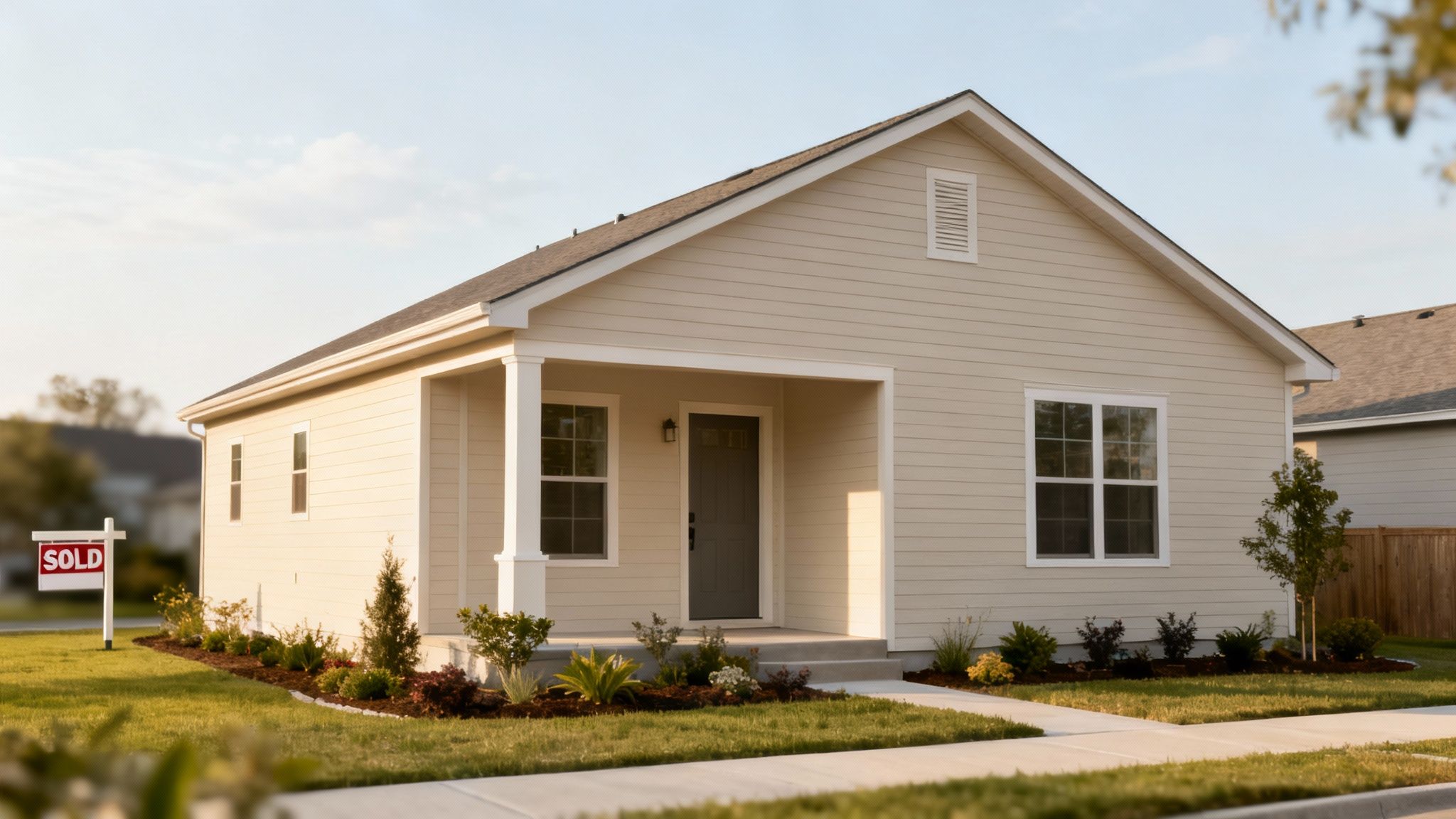
When a potential buyer pulls up to your house, the exterior makes the first impression. And siding is the star of that show. If they see worn, faded, or damaged siding, their immediate thought is neglect. But a fresh, modern exterior? That signals a well-maintained home that’s worth a premium.
That immediate visual upgrade is a huge reason why new siding has such a powerful effect on resale value.
But the benefits run much deeper than just looks. To really understand the financial upside, you have to know how to calculate property value like a pro, using methods that factor in both curb appeal and the home’s structural integrity. New siding checks both of these boxes, big time.
Understanding Siding Return on Investment
ROI is a simple concept: it’s the percentage of your project cost you get back when you sell the house. If a project has an 80% ROI, it means that for every $10,000 you spend, your home's value jumps by $8,000. When it comes to ROI, siding projects consistently crush it, often outperforming popular remodels like kitchens or bathrooms.
The numbers don't lie. Let's take a look at some of the industry-standard data.
Quick Look Siding ROI Averages
Industry reports confirm siding's powerful financial impact year after year. Here's a quick summary of what you can expect based on national averages from trusted sources like Remodeling Magazine's annual Cost vs. Value Report.
| Vinyl Siding Replacement | 94.7% | $16,307 on a $17,854 project |
| Fiber Cement Replacement | 88.5% | $19,036 on a $21,505 project |
As you can see, the data is pretty clear. A vinyl siding replacement, for example, was ranked 5th out of 23 major projects in the 2023 analysis, proving it's a financially sound decision for nearly any homeowner looking to sell.
Of course, your final return will depend on a few key things:
- Siding Material: Both vinyl and fiber cement offer a great return, but they have different looks and durability profiles.
- Installation Quality: A professional job prevents costly future repairs and ensures that flawless finish buyers love.
- Local Market Trends: Here in Upstate South Carolina, buyers are smart. They prioritize durable, weather-resistant materials that can handle our climate.
Understanding how long does siding last helps frame the project correctly—not as a quick cosmetic fix, but as a long-term investment that boosts your home’s marketability and worth for years to come.
What Kind of Return Can You Expect on New Siding?
When you’re thinking about big home improvement projects, it helps to see them as financial investments, a lot like stocks. Some are risky gambles, while others are steady, reliable growers. A siding replacement project? That falls squarely into the "blue-chip stock" category—it's a high-performing investment that consistently delivers strong returns.
Figuring out that return isn't complicated. It’s all about Return on Investment (ROI), the key metric that answers the big question: "does new siding actually increase my home's value?"
The formula is pretty straightforward: it just measures how much of your project’s cost you get back when you sell your home.
ROI Calculation Made Simple (Value Added to Home / Total Project Cost) x 100 = ROI %
Let's say you spend $15,000 on new siding, and it adds $12,000 to your home's resale value. Your ROI is 80%. This simple math is the best tool you have for seeing exactly how an exterior upgrade boosts your financial bottom line.
Breaking Down the Costs of a Siding Project
Before you can figure out your return, you need a clear picture of the initial investment. The total cost of a siding replacement is more than just the price of the panels. A professional quote from a reputable company will cover all the pieces needed for a high-quality job that lasts.
Here in Upstate South Carolina, a complete siding project usually includes:
- High-Quality Materials: This is the siding itself (like vinyl or fiber cement), plus all the necessary trim, soffit, fascia, and moisture barriers.
- Professional Labor: The cost for a skilled, licensed, and insured team to do the job right—and safely.
- Removal and Disposal: The expense of tearing off the old, damaged siding and hauling away the debris.
- Permits and Inspections: Any local permits required to make sure the work meets Upstate SC building codes.
Getting a handle on these costs is the first step toward a smart investment. For a more detailed breakdown for your specific home, our easy siding installation cost calculator can give you a much clearer estimate. That number gives you the "cost" part of the ROI equation, setting you up for an accurate projection.
Why Siding Consistently Delivers Such a High ROI
So, what makes siding such a slam-dunk investment? Year after year, trusted industry sources like Remodeling Magazine and Angi report that siding projects recoup a huge portion of their cost at resale. Most homeowners can expect an ROI somewhere between 75% and 95%, which puts it right at the top of the list for exterior remodeling projects.
This isn't an accident. A high return is driven by real benefits that homebuyers are actively looking for.
New siding provides an instant, dramatic boost to curb appeal, making a killer first impression. It also sends a clear signal that the home is well-maintained and protected from the elements, which tells a potential buyer they won't have to worry about costly maintenance down the road.
On top of that, modern siding materials can seriously improve a home's energy efficiency. Insulated vinyl siding, for instance, acts like a thermal blanket, helping to lower those heating and cooling bills. In a climate like ours, that’s a huge selling point.
When you mix stunning looks with practical improvements in durability and efficiency, you create undeniable value. It's this powerful one-two punch that makes investing in new siding more than just spending money—it's a strategic move to reposition your home in the market for a faster sale and a higher price.
Key Factors That Maximize Your Siding ROI
Getting an impressive return on your new siding isn't about luck—it's about making smart, strategic choices. While the national averages look great on paper, a few key variables can be the difference between a good ROI and an exceptional one.
Think of it like baking a cake. You can have the best ingredients, but if you skip a step or get the temperature wrong, the result just won't be the same. To truly answer the question, "does new siding increase home value?" you have to look past the general numbers. When all the right factors align, your home doesn't just look better; it becomes a more valuable, more marketable asset.
The Right Siding Material
The siding material you choose is the foundation of your project's success. It dictates everything from cost and durability to maintenance and overall aesthetic—all of which directly sway a buyer's perception and, ultimately, your ROI. Here in Upstate South Carolina, two choices reign supreme: vinyl and fiber cement.
- Vinyl Siding: This is the undisputed champion of affordability and low maintenance. Modern vinyl siding comes in a massive range of colors and styles, offering a clean, updated look that appeals to just about everyone. Because the initial investment is lower, it’s often easier to hit a high ROI.
- Fiber Cement Siding: For homeowners who want superior durability and a premium, high-end appearance, fiber cement is an incredible choice. It’s tough against rot, pests, and fire, which are all major selling points for savvy buyers. The upfront cost is a bit higher, but its resilience and upscale look can justify a higher asking price, especially in a competitive neighborhood.
The trick is to pick a material that not only fits your budget but also matches your home's architectural style and the standards of your neighborhood.
The Power of Professional Installation
Even the most expensive, top-of-the-line siding will fail if it's installed poorly. Professional installation is completely non-negotiable if you want to maximize your ROI. A skilled crew makes sure every single panel is secure, every seam is sealed tight, and the structure underneath is fully protected from moisture.
A shoddy installation job can lead to warping, buckling, and water getting in behind the walls—these are expensive problems that will wipe out any value you gained. An expert job, on the other hand, guarantees the siding performs exactly as it should for decades. That promise of quality gives potential buyers huge peace of mind.
Think of it this way: the siding panels are the armor, but the installation is the craftsmanship that makes the armor work. An amateur job leaves gaps in your home's defense, while professional work creates an impenetrable shield that adds real, lasting value. Understanding how to increase property value often starts with choosing quality craftsmanship for major projects like this.
Unforgettable Curb Appeal
You only get one chance to make a first impression, and in real estate, that impression is everything. New siding gives your home the single biggest boost to its curb appeal, but the specific color and style you choose can take that impact to the next level. A dated color or a style that clashes with your home’s architecture can seriously limit your returns.
Today’s siding options offer incredible versatility. You can go with a modern board-and-batten style, classic horizontal lap siding, or even textured finishes that mimic natural wood. Choosing a contemporary color palette that complements your roof and trim can make your home the standout property on the block, attracting more eyeballs and higher offers.
Local Market Dynamics and Climate
Finally, your local market plays a huge role. Here in Upstate South Carolina, with our humid summers and wild weather swings, homebuyers put a premium on durability. Siding that can stand up to moisture, fading from the intense sun, and damage from seasonal storms is seen as a massive asset.
The overall impact of new siding is undeniable, with industry reports consistently placing its ROI between 75% and 95%. In fact, data from 2023 showed vinyl siding delivering an incredible 94.7% ROI, with fiber cement right behind it at 88.5%. This means an investment of around $17,854 could add over $16,300 back to your home's value, cementing its place as a top-tier exterior remodel.
While siding is a fantastic investment, it helps to see how it stacks up against other projects. Take a look at other top home renovations for resale value to see how a siding upgrade fits into a bigger strategy for maximizing your property's worth. When you align your choices with these key factors, you turn a standard home improvement project into a powerful financial investment.
Vinyl Siding vs. Fiber Cement: A Head-to-Head Value Comparison
Picking a siding material is a lot like choosing the engine for a car. Both vinyl and fiber cement will get you where you want to go—a higher home value—but they take different routes. They offer different performance, costs, and long-term benefits.
Your decision here is probably the biggest factor in maximizing your return on investment. It directly shapes how much value your new siding really adds to your home.
The Case for Vinyl Siding
For many homeowners, especially those focused on immediate ROI and ditching the maintenance chores, vinyl siding is the clear winner. There's a reason it's the most popular siding choice in America.
Vinyl offers incredible cost-effectiveness. The initial investment is lower, which makes hitting a high percentage return much easier. Plus, modern vinyl is surprisingly versatile, coming in a huge range of colors and styles that can mimic more expensive materials without the matching price tag.
The Case for Fiber Cement Siding
On the other hand, if your goal is long-term, rugged durability and a premium, high-end look, fiber cement is an exceptional investment.
Made from a tough composite of cement, sand, and cellulose fibers, it is ridiculously resilient. It stands up to pests, rot, and even fire in a way other materials just can't. That kind of toughness gives potential buyers a sense of security they’re often willing to pay more for.
Breaking Down the Financials
The first thing most homeowners notice is the upfront cost difference. Vinyl siding is generally the more budget-friendly option, making it a great choice for anyone wanting a major visual upgrade without a massive initial outlay. The installation is also typically faster and less labor-intensive, which helps keep those costs down.
Fiber cement comes with a higher price tag for both the material and the installation. It’s heavier, requires specialized tools to cut, and demands a much more meticulous installation process to perform correctly. However, that higher initial cost can pay off big time in the right market, especially on homes where a premium finish is expected. For a more detailed look at the numbers, you can explore our full comparison of fiber cement vs. vinyl siding costs.
Lifespan and Maintenance: A Long-Term View
Beyond the initial price, you have to think about the long-term cost of ownership. This is where the value of each material really comes into focus.
- Vinyl Siding: This is as low-maintenance as it gets. A simple wash with soap and water once a year is usually all it needs to look great. High-quality vinyl has the color baked all the way through, so it won't chip or flake, which means you'll never have to paint it. While durable, it can get brittle in extreme cold and is more susceptible to cracking from a hard impact.
- Fiber Cement Siding: It's exceptionally durable, but it does require more upkeep over its long life. Most fiber cement comes with a factory-applied finish warrantied for around 15 years. After that, it will need to be repainted to maintain its protective qualities and appearance—an expense you'll need to factor into your long-term budget.
The infographic below shows how material, installation, and curb appeal all come together to determine your final ROI.
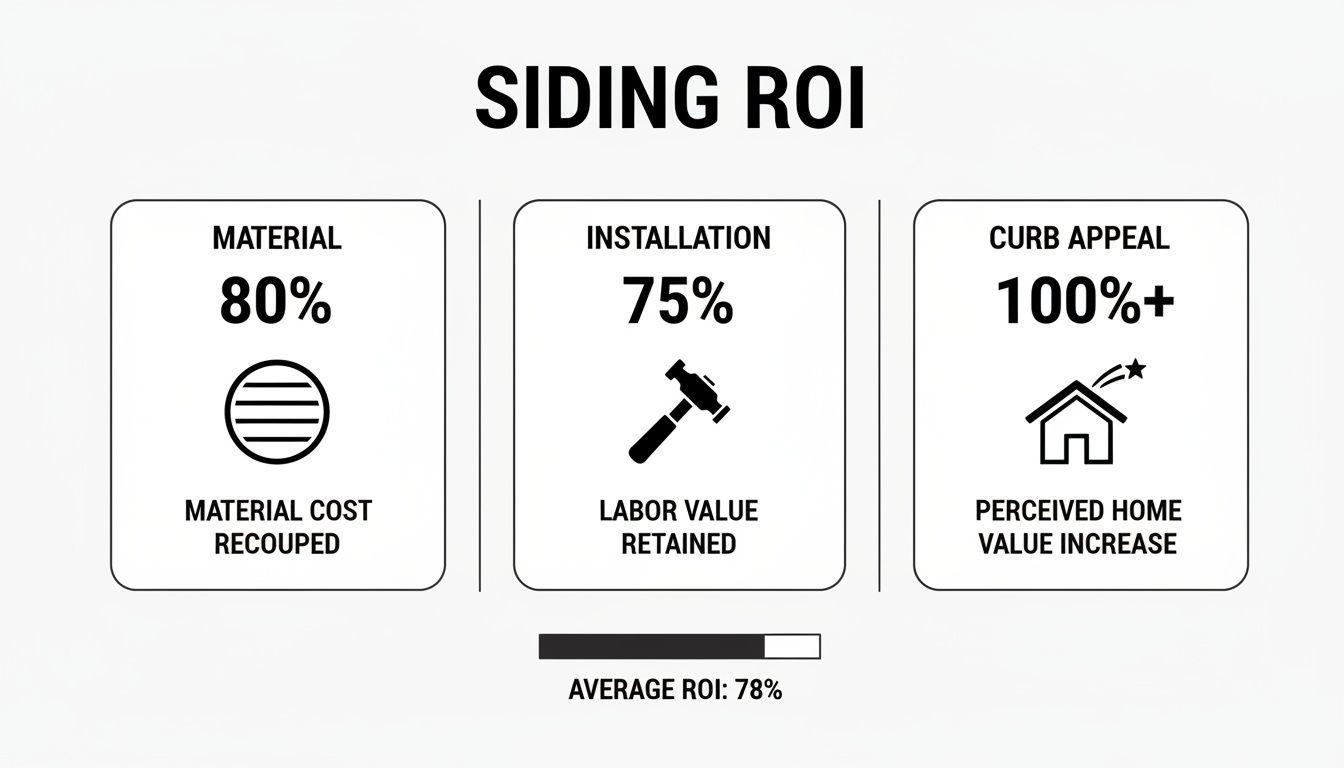
This visual makes it clear: while the material choice is huge, expert installation and the curb appeal it creates are what truly lock in your financial return.
Comparing Key Attributes Side-by-Side
To make the decision a little easier, let's put these two fantastic materials head-to-head. The table below breaks down the essential features that impact your budget, your time, and ultimately, your home's resale value.
Vinyl vs. Fiber Cement Siding Comparison
| Upfront Cost | Lower initial investment for materials and labor. | Higher upfront cost for both materials and specialized installation. |
| Typical ROI | Very high, often 90% or more due to lower initial cost. | Strong, typically 80-88%, justified by its premium quality. |
| Lifespan | 20-40 years, with some premium products lasting longer. | 50+ years, offering exceptional long-term durability. |
| Maintenance | Low. Requires occasional cleaning; no painting needed. | Moderate. Requires repainting every 10-15 years. |
| Durability | Good resistance to moisture and insects. Can crack or dent. | Excellent resistance to fire, rot, pests, and impact. |
| Aesthetic Appeal | Wide variety of colors and styles, including wood-look textures. | Mimics wood, stone, or stucco with a high-end, authentic look. |
Ultimately, the best choice really depends on your specific goals.
If you're looking for a fast, affordable upgrade that delivers an incredible ROI and frees you from maintenance headaches, vinyl is a fantastic choice. If you're planning to stay in your home for the long haul or want to position your property at the top of the market with unmatched durability and a luxury aesthetic, fiber cement is an investment that’s built to last.
Real-World Siding Upgrades in Upstate South Carolina
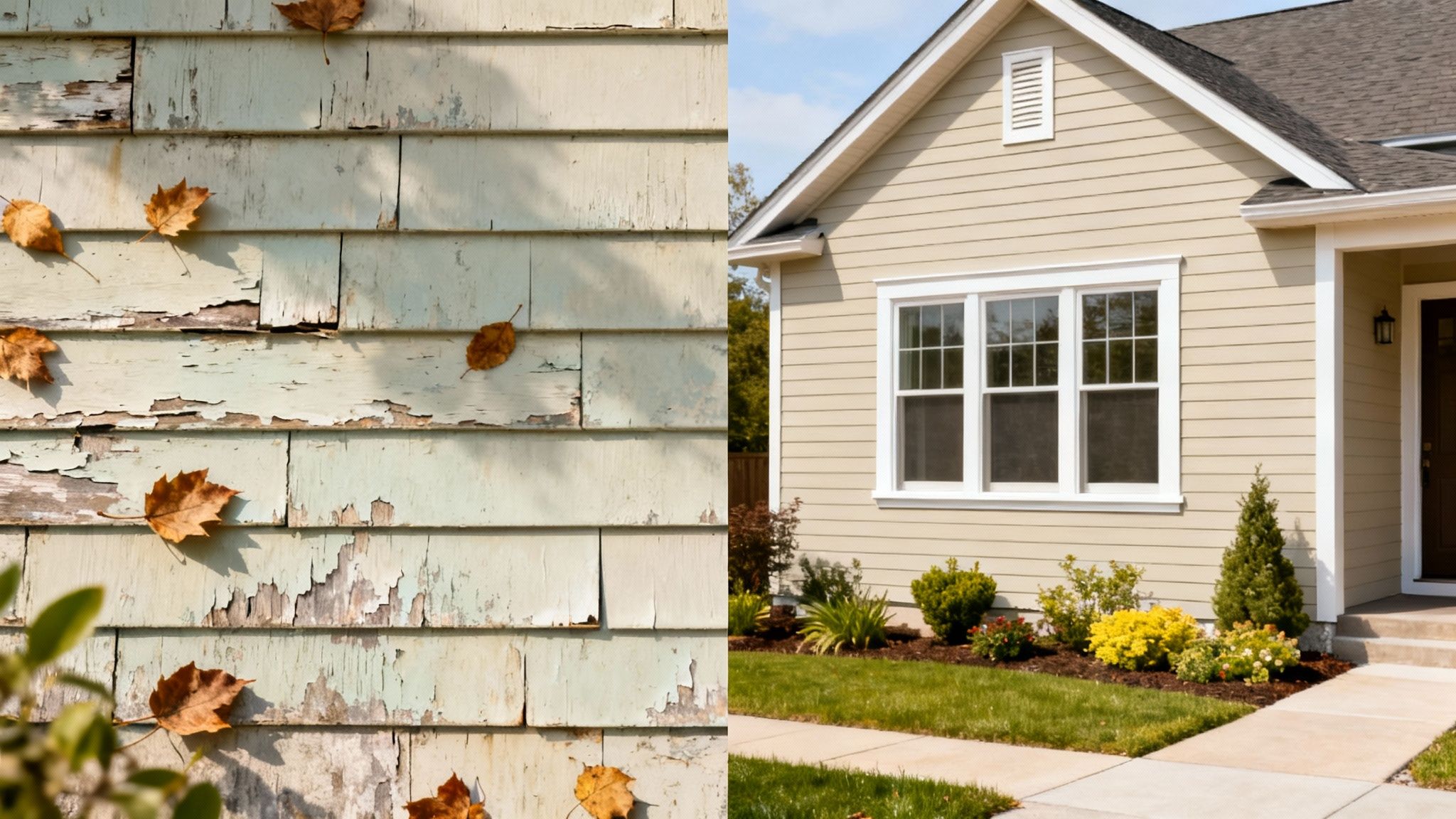
The data and ROI numbers are great, but nothing beats seeing the transformation with your own eyes. Let’s bring these concepts to life by looking at a few common scenarios we see every day right here in Upstate South Carolina.
We'll step away from the theory and look at three real-world situations. Each story shows how a smart siding investment, aimed at a specific goal, pays off in curb appeal, protection, and real financial value.
The Greer First-Time Homebuyer's Transformation
Picture a young couple who just bought their first starter home in Greer. The house has a solid foundation, but the outside is a real letdown. The siding is that faded, chalky yellow you see after decades of sun, and there are a few cracked panels near the ground. It just doesn't match the pride they feel as new homeowners.
Their goal? Maximum visual impact on a tight budget. After looking at the options, they land on a stylish and affordable vinyl siding in a modern charcoal gray.
The "after" is a showstopper. That drab, tired exterior is gone, replaced by a clean, contemporary look that makes the house feel brand new. This single upgrade doesn't just make them happier coming home every day; it massively boosts the home’s future marketability. By choosing a cost-effective material known for a high ROI, they've added instant equity without breaking the bank.
The Anderson Investor's Resale Strategy
Next, let's look at a seasoned property investor flipping a house in a hot Anderson neighborhood. She’s already renovated the entire interior, but the original wood siding is still there—and it’s showing signs of rot and pest damage. She knows that any potential buyer will spot this from the street and immediately start subtracting the cost of a major repair from their offer.
Her goal is simple: pure ROI and long-term durability. She invests in premium fiber cement siding.
This isn't just a cosmetic choice; it's a strategic one. It tells savvy buyers that this home is built to last. They see a house that's not just superficially updated but fortified against moisture, pests, and fire. The higher upfront cost is a calculated move that lets her list the property at a premium, confident that the exterior will fly through inspection and justify the higher valuation.
This decision turns the flip from a "house with potential problems" into a "turnkey, low-maintenance home." That distinction can dramatically shorten its time on the market and maximize her profit.
The Simpsonville Homeowner's Recovery
Our final story is about a family in Simpsonville who has loved their home for over 20 years. A recent hailstorm left their old aluminum siding dented, buckled, and battered. It’s not just ugly; it’s a breach in their home's defense, leaving them vulnerable to water intrusion and energy loss.
Their goal is restoration and protection. They need a fix that not only erases the damage but also shields their home for the next two decades. For more on what's available, our guide to siding in Greenville, SC is a great resource for local homeowners.
They decide to go with an insulated vinyl siding system. Here’s what that one choice accomplishes:
- Restored Beauty: The home’s curb appeal is completely back, with no trace of the storm's damage.
- Enhanced Protection: The new siding forms a seamless, weather-tight barrier that’s far more resilient against future storms than their old aluminum ever was.
- Improved Efficiency: That extra layer of insulation starts lowering their monthly utility bills right away, giving them a return on investment they can feel every month, not just when they sell.
In this case, the new siding is more than an upgrade—it's an essential repair that brings back their peace of mind, improves daily comfort, and protects the long-term value of their biggest asset. Each of these stories hammers home the same point: whether your goal is affordability, resale value, or pure protection, a well-planned siding project is one of the smartest ways to increase your home's worth.
So, How Do You Turn This Knowledge Into Action?
At this point, you've seen the proof. From the eye-opening ROI numbers to the specific materials that give you the biggest bang for your buck, it’s clear that new siding is far more than just a maintenance chore—it's one of the smartest financial moves you can make for your home.
But knowledge is one thing; a plan is another. Let's walk through the exact steps to take that potential value and make it a reality.
The whole process kicks off with a simple, no-pressure conversation. Your first step should be to schedule a free, transparent estimate with a trusted local expert. This isn't a sales pitch or a commitment. It's the critical information-gathering stage that lays out your project's scope and costs, tailored specifically to your home.
Your Game Plan For A Higher Home Value
Once you have a detailed quote in hand, you can start making the right calls. A professional consultation is designed to help you weigh the pros and cons of different materials—like versatile vinyl versus durable fiber cement—against your budget and what you hope to achieve.
Here’s a simple roadmap to follow:
Define Your Main Goal: Are you looking for a quick curb appeal boost to sell fast? Or are you playing the long game with maximum durability and protection? Your answer here shapes every other choice.
Pick the Right Material: With your estimate and expert advice, you can confidently choose the siding that aligns with your goal, whether it’s the cost-effective, high-ROI performance of vinyl or the premium, long-lasting resilience of James Hardie fiber cement.
Review the Warranty: A quality job is always backed by a solid warranty. Don’t just ask about the manufacturer's warranty on the siding itself—ask about the installer’s workmanship warranty, too. This two-part protection is your guarantee that your investment is built to last.
Investing in new siding is one of the most reliable ways to boost your home’s value, often outperforming flashier renovations like kitchen or bath remodels. The secret to success is simple: pair a high-quality material with an expert, professional installation.
Protecting Your Investment For The Long Haul
A great siding project delivers more than just a stunning new look; it delivers lasting peace of mind. The benefits keep paying off long after the "For Sale" sign comes down (or even if you never plan to sell).
You’ll feel it in your wallet with lower monthly utility bills, thanks to improved energy efficiency. And you'll feel it in your gut, knowing your home has a stronger shield against the heat, humidity, and storms we get here in Upstate South Carolina.
This single upgrade makes your home more attractive to buyers and a more comfortable, secure place for your family today. By following this plan, you're not just guessing—you're making a smart, profitable decision that protects your most valuable asset for years to come.
Got Questions? We’ve Got Answers.
When you're thinking about a big project like new siding, questions are a good thing. It means you’re doing your homework. Here are a few of the most common ones we hear from homeowners, with some straight-shooting answers to help you feel confident about your decision.
How Long Will My House Be a Construction Zone?
This is probably the number one concern, and the answer is usually a pleasant surprise. A professional siding installation isn't a months-long ordeal. For a typical home in our area, a skilled crew can get the entire job done in just one to two weeks.
That timeline covers everything—tearing off the old siding, checking the structure underneath for any issues, putting up the new material, and cleaning up so thoroughly you'd never know we were there. We move efficiently because we know you want to get back to your normal life as quickly as possible.
Will New Siding Actually Lower My Energy Bills?
Yes, and you'll notice the difference. Think of modern siding, especially the insulated vinyl options, as a cozy blanket for your house. It wraps your home in an extra layer of protection that helps stop thermal bridging—that’s the technical term for when heat escapes through the studs in your walls.
By creating a solid thermal barrier, your furnace and AC don't have to cycle on and off as much to keep you comfortable. That directly translates to lower energy bills month after month, giving you a return on your investment you can actually see.
What's the Real Difference Between Warranties?
Understanding your warranties is key to protecting your investment for the long haul. It's not as complicated as it sounds, because there are really only two types you need to know about:
- Material Warranty: This one comes straight from the manufacturer, like James Hardie or the company that made your vinyl siding. It covers defects in the siding itself—things like unusual fading, cracking, or peeling under normal wear and tear.
- Workmanship Warranty: This is our promise to you. It covers the quality of the actual installation. If you ever have an issue caused by how we fastened a panel or sealed a corner, this warranty has your back.
When you have a strong material warranty paired with a trustworthy workmanship warranty, you get total peace of mind knowing your home is protected for decades to come.
Ready to see how a siding upgrade can transform your home's protection and value? The team at Atomic Exteriors provides free, no-obligation estimates to help you plan your project with confidence. Get Your Free Estimate Today.