.png)
How Long Does Siding Last? A Complete Homeowner's Guide
When you're putting new siding on your home, the first question on your mind is probably, "So, how long is this stuff actually going to last?" It's a great question, and the honest answer is... it depends. You could be looking at anywhere from 20 years to a lifetime, and the final number comes down to the material you pick, who puts it on, and our unique Upstate weather.
This guide will walk you through what you can realistically expect from your home’s exterior shield.
How Long Does Siding Really Last?
Think of siding as your home's armor. It's the first thing standing between your family and the elements, deflecting rain, wind, pests, and the summer sun. But just like a winter coat, not all siding is made the same, and its lifespan is a story told by a few key characters.
For homeowners here in Upstate South Carolina, that story gets a little more intense. Our combination of blazing summer sun and thick humidity can be brutal on a home's exterior. Knowing how different materials stand up to these specific challenges is the key to making a smart investment that you won't regret in a decade.
We're going to break down the big variables that decide how long your siding will hold up.
We'll cover things like:
- The real-world lifespans of popular materials like vinyl and fiber cement.
- Why a professional installation can literally add decades to your siding's life.
- The simple maintenance that stops small issues from becoming major failures.
Our goal is to give you a clear, no-nonsense understanding of how to choose siding that doesn’t just boost your curb appeal but provides rock-solid, lasting protection for years to come.
Comparing the Lifespan of Siding Materials
Think of your home’s siding as its suit of armor. Just like armor, some materials are built to withstand more punishment than others, and that directly impacts how long they last. The biggest enemies for siding here in Upstate South Carolina are moisture, pests, and the relentless sun.
Let's walk through how long you can really expect the most common siding options to hold up. This will help you balance the upfront investment with the long-term value and the amount of upkeep you're signing up for.
Vinyl Siding Durability
There’s a reason you see vinyl siding on so many homes—it hits a sweet spot between being budget-friendly and tough. It's basically a durable plastic shell for your house that resists most pests and, best of all, never needs a paint job.
For most homeowners, vinyl siding is a set-it-and-forget-it option that performs well for decades. You can typically count on vinyl siding to last somewhere between 20 and 40 years, which makes it a smart, low-maintenance choice for anyone who values curb appeal without the constant upkeep.
Fiber Cement Siding Longevity
If vinyl is good armor, then fiber cement siding is a fortress. This stuff is engineered from a tough blend of cement, sand, and cellulose fibers, making it incredibly resilient. It’s non-combustible, termites and rot don’t stand a chance, and it laughs off the warping and cracking that can plague other materials in our humid climate.
Fiber cement is the undisputed champion of longevity, often lasting 50 years or even longer with very little maintenance. Its rock-solid composition means it holds paint far longer than wood and won't buckle or melt under the intense summer sun.
Because it’s so durable, fiber cement usually comes with some of the best warranties in the business, which tells you a lot about the manufacturer's confidence in the product. To learn more, check out our guide on the pros and cons of fiber cement siding.
This chart gives you a quick visual of how the lifespans of popular siding materials stack up.
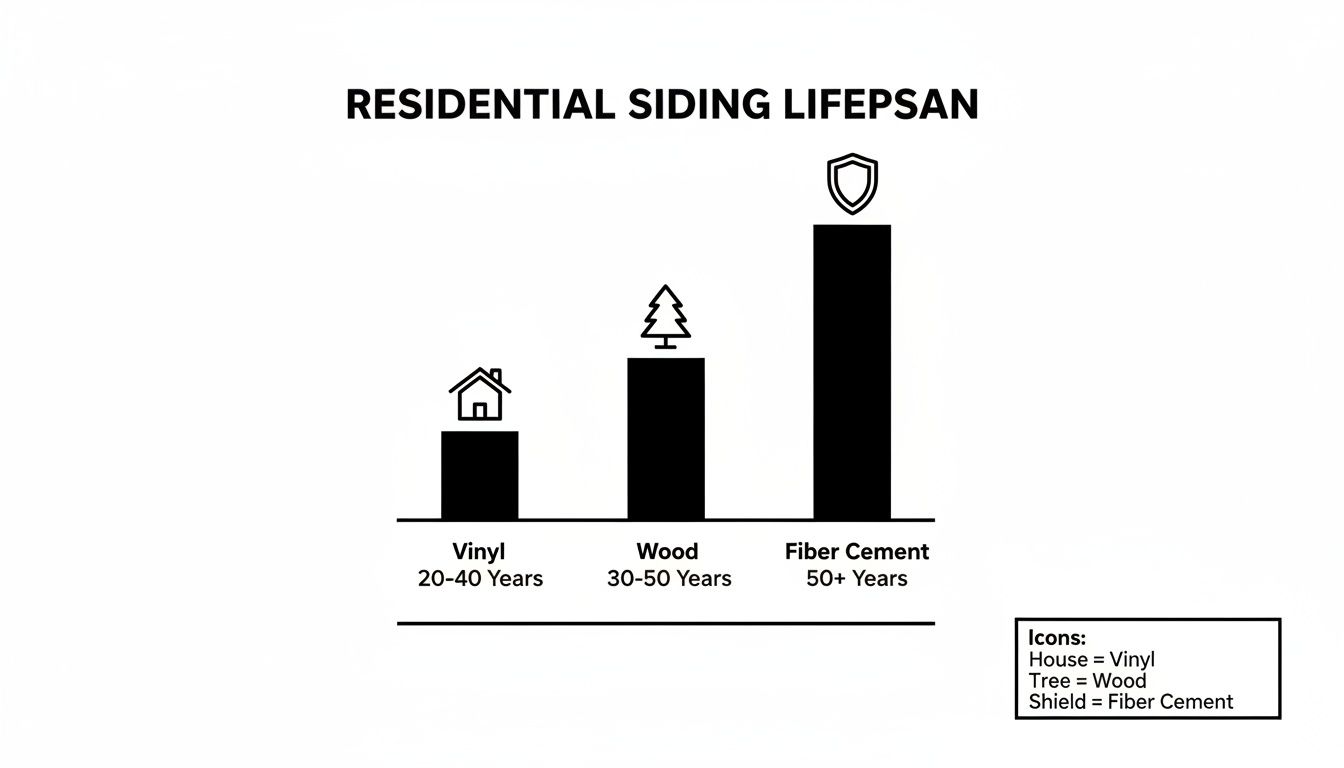
As you can see, fiber cement offers a potential lifespan that pulls way ahead of both vinyl and traditional wood.
Wood Siding Lifespan and Upkeep
You just can't beat the timeless, natural look of real wood siding. Materials like cedar bring a classic warmth that many people absolutely love. But that beautiful aesthetic comes with a pretty big catch: a whole lot more maintenance and vulnerability.
Wood has a few natural enemies that can seriously shorten its life:
- Moisture Damage: If the protective seal fails, wood soaks up water like a sponge. That leads to rot, warping, and mildew—a constant battle in our humid climate.
- Pest Infestations: Termites, carpenter bees, and woodpeckers see wood siding as an open invitation, and they can cause a shocking amount of damage over time.
- Constant Maintenance: To keep it looking good and protected, wood siding needs to be repainted or re-stained every 3 to 7 years.
If you're diligent with the upkeep, wood siding can last 20 to 40 years, sometimes even longer. But if that maintenance schedule slips, its lifespan can get cut in half—fast.
What Determines Your Siding's Lifespan?
That lifespan printed on a siding brochure? It's really just half the story. While the material itself sets a baseline for how long siding should last, a handful of real-world factors can either stretch that timeline or cut it short.
Think of it like a new car—even a well-built model won't last long if you drive it through harsh mountain roads and never bother with an oil change. The exact same principle applies to your home's exterior. Three key things will dictate whether your siding lives up to its potential: our local climate, the quality of the installation, and your own maintenance routine.
The Impact of Local Climate
Your home's location puts relentless pressure on your siding, day in and day out. Here in Upstate South Carolina, our unique weather patterns bring a specific set of challenges that can really accelerate wear and tear.
The biggest culprits are:
- Intense UV Exposure: That strong summer sun is no joke. It can cause lower-quality vinyl to fade, turn brittle, or even warp over time.
- High Humidity: Our persistent humidity creates the perfect breeding ground for mold, mildew, and algae, especially on shaded walls. This is particularly tough on wood siding, which can quickly start to rot if it isn't perfectly sealed and maintained.
- Seasonal Storms: The strong winds and driving rain we get can force their way behind improperly installed siding panels. This leads to water damage you might not even notice until it’s a massive problem.
The Critical Role of Professional Installation
You can buy the most expensive, high-tech siding on the market, but a shoddy installation can easily cut its lifespan in half. Siding isn’t just tacked onto the wall; it’s a complete system designed to breathe, expanding and contracting with the temperature swings we see here.
A professional installation is non-negotiable for longevity. Simple mistakes like nailing panels too tight, skipping the flashing around windows, or leaving improper gaps can cause buckling, water intrusion, and widespread failure. Even worse, these errors almost always void the manufacturer’s warranty, leaving you on the hook for the full cost of repairs.
This is why the quality of the workmanship is every bit as important as the quality of the material itself. A great installation is the foundation your siding’s entire lifespan is built on.
Your Maintenance and Upkeep Routine
Finally, a little proactive care can add years to your siding’s life. Even though materials like vinyl and fiber cement are hailed as "low-maintenance," they are absolutely not "no-maintenance." Over time, dirt, grime, and mildew will build up, trapping moisture and taking away from your home’s curb appeal.
An annual inspection and a gentle cleaning can catch small issues before they snowball into expensive repairs. For a complete rundown of what to look for, our exterior home maintenance checklist is a fantastic starting point. This small effort goes a long way in preventing premature aging and keeping your home protected and looking its best.
Let's break down how these factors work together.
Factors Affecting Siding Longevity
| Climate | Mild, dry conditions with low UV exposure. | High humidity, extreme temperature swings, frequent storms, intense sun. |
| Installation | Professional installation with correct fastening, flashing, and spacing. | DIY or poor-quality work causing gaps, buckling, and moisture leaks. |
| Maintenance | Regular annual cleaning and inspections to catch issues early. | Neglect, allowing dirt, mold, and damage to accumulate. |
| Material Quality | Premium materials like fiber cement or thick-gauge vinyl. | Builder-grade or thin, unsupported vinyl that warps and cracks. |
| Surroundings | Ample space and sunlight around the home to promote drying. | Overhanging trees, dense shrubs trapping moisture against the walls. |
As you can see, the lifespan of your siding isn't set in stone. It's an outcome shaped by a combination of your environment, the initial quality of the work, and your commitment to upkeep.
Warning Signs Your Siding Is on Its Last Legs
Even the most durable siding has a shelf life. The key is knowing what to look for so you can tackle problems before they snowball into serious, expensive structural damage. Think of your siding like the tires on your car—running them bald puts the whole vehicle at risk.
Catching these issues early is everything. A single cracked panel might just be a quick fix, but when you start seeing widespread problems, it's a huge red flag that the whole system is failing and it’s time to start thinking about a replacement.
The Obvious Signs of Damage
These are the kinds of problems you can spot from the curb. Take a slow walk around your house and keep an eye out for clear signs of wear and tear. If you see any of these, your siding is crying out for help.
Be on the lookout for these red flags:
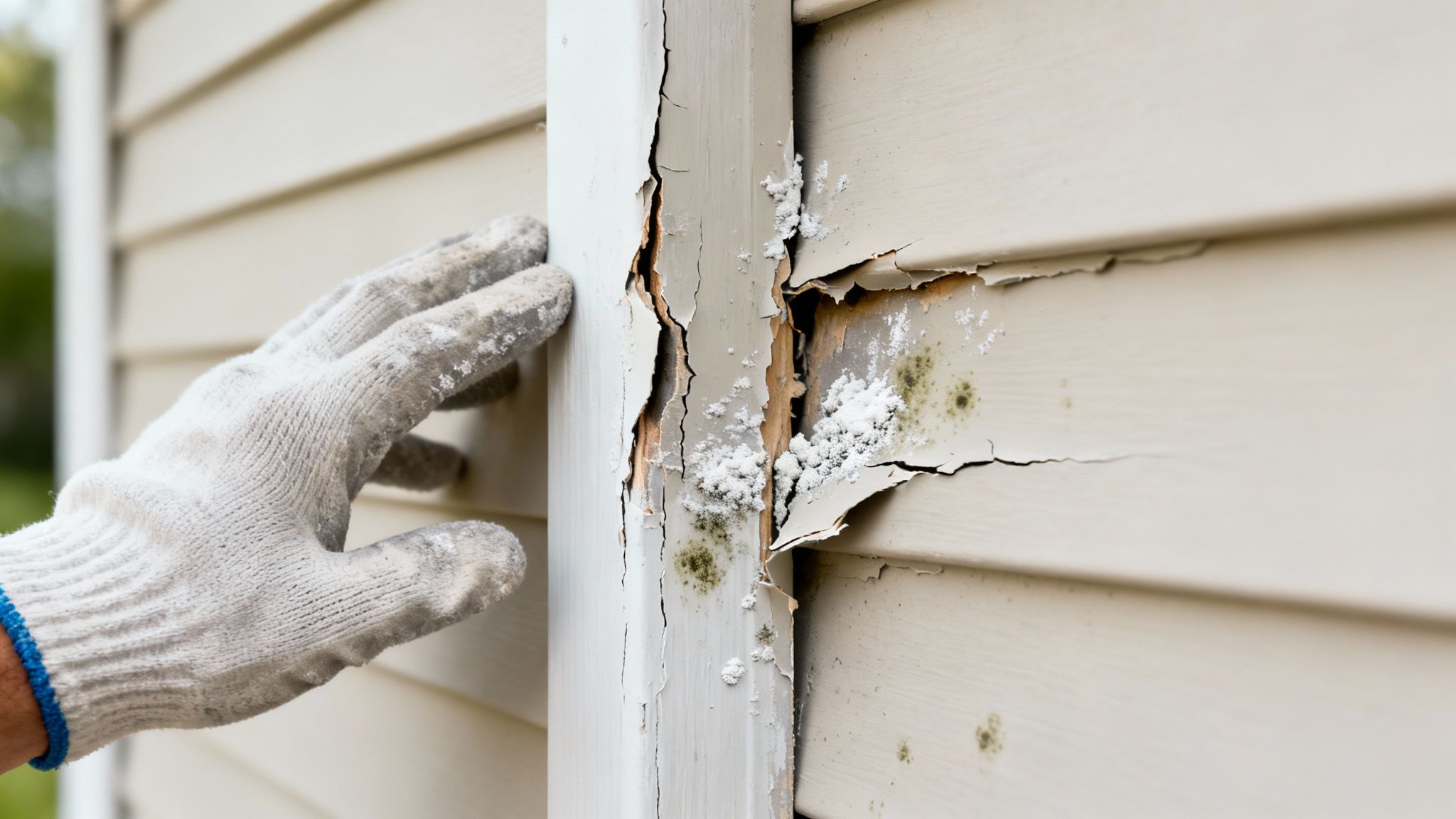
- Widespread Cracking or Holes: Look, a single crack from an errant baseball isn't the end of the world. But if you see cracks all over the place or panels that look brittle and fragile, the material is at the end of its useful life.
- Warping or Buckling: Siding is supposed to lie perfectly flat against your home. If you notice wavy, bulging, or buckled sections, it’s a classic sign that moisture has crept in behind it. It can also mean the siding was nailed too tightly during installation, leaving no room for natural expansion and contraction.
- Visible Rot or Soft Spots: This is a big one, especially for wood siding. Grab the handle of a screwdriver and gently press on any areas that look suspicious. If the board feels spongy or soft, you’ve got rot. Worse, that decay is likely affecting the wall structure underneath.
The Sneaky Clues That Siding Is Failing
Not every sign of siding failure is as dramatic as a gaping hole. Sometimes, the most critical warnings are subtle and require you to look a little closer. These clues often point to moisture intrusion—siding’s number one enemy.
Pay attention to what's happening inside your house, too. Peeling paint or stained wallpaper on an exterior wall is a major clue that water is getting through your failing siding and causing damage from the inside out.
Keep an eye peeled for these less obvious signs:
- Bubbling or Blistering: See bubbles under the paint? That’s a dead giveaway that water is trapped between the siding and its finish, or even between the siding and the wall sheathing itself.
- Fungus, Mold, or Mildew: Any persistent green or black splotches, particularly around the seams and joints, tell you that moisture is hanging around way too long.
- Chalky Residue: Run your hand across the siding. If it comes away coated in a chalk-like powder, the siding’s protective finish has been broken down by years of sun exposure. It’s no longer weather-resistant.
- Spiking Energy Bills: If your heating and cooling costs are suddenly creeping up for no apparent reason, your siding and the insulation behind it might be failing. This allows precious conditioned air to leak right out of your home.
How to Maximize the Life of Your Siding
Getting the most out of your siding investment isn’t about luck—it's about proactive care. Think of your home’s exterior like a car. You wouldn't skip oil changes and expect it to run forever, right? A little routine maintenance goes a long way in preventing costly breakdowns and ensuring your siding reaches its full potential.
This simple, preventative care plan is something any homeowner can tackle. By catching small issues early, you can save a ton of money, keep your home looking sharp, and make sure your siding provides decades of reliable protection.
Create an Annual Inspection Habit
Once a year, maybe in the spring after the winter thaw or in the fall before things get cold, take a slow walk around your home with a critical eye. This simple habit is your best tool for spotting trouble before it turns into a major headache.
Your yearly checklist should include:
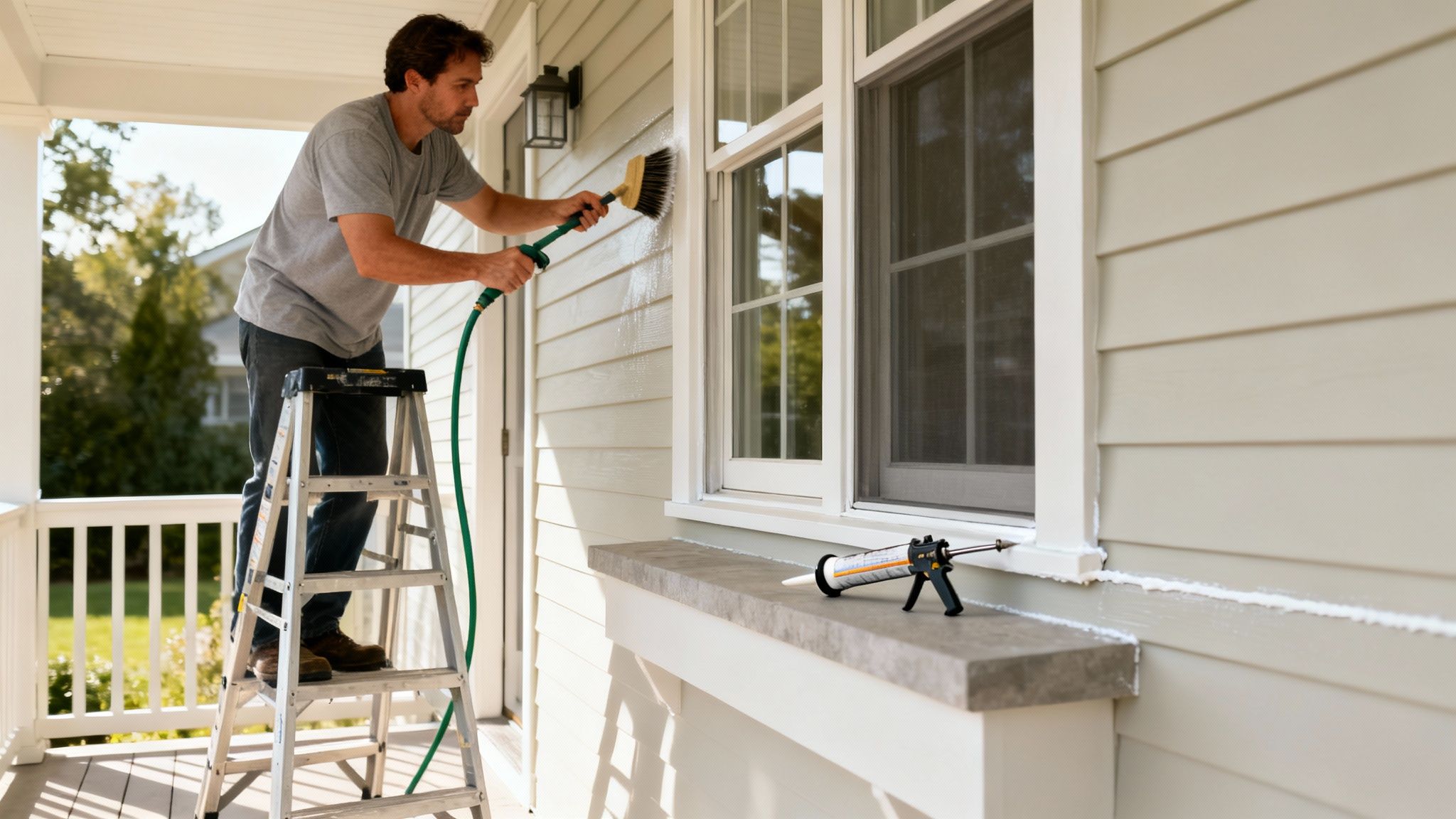
- Checking Caulk Seals: Look closely at the sealant around windows, doors, and corner trim. If it’s cracked, peeling, or has pulled away, it’s no longer watertight and needs to be replaced.
- Inspecting for Damage: Scan the panels for any cracks, chips, or holes. A stray baseball, a rogue tree branch, or debris from a storm can cause damage that lets moisture sneak in.
- Clearing Gutters: Clogged gutters are a huge problem. They force water to overflow and run right down your siding, leading to ugly stains and potential water damage behind the panels. For more on this, check out our guide on how to clean gutters safely.
- Checking for Growth: Look for any signs of mold, mildew, or algae. Pay extra attention to the shaded or damp areas of your home’s exterior, as that's where this stuff loves to grow.
This quick walk-around is your first line of defense in making your siding last.
Clean Your Siding the Right Way
Dirt, pollen, and grime don’t just look bad; they can trap moisture against your siding and give mildew a place to thrive. A gentle annual cleaning is one of the best things you can do to keep your home looking fresh and prevent long-term damage.
Crucial Tip: Step away from the high-pressure washer. It might seem like a quick fix, but that intense spray can easily force water behind your siding panels. That leads to hidden moisture problems, rot, and mold growing inside your walls where you can't see it.
Instead, grab a soft-bristle brush and a bucket of mild soap and water. This simple approach is safe for all siding types and gets the job done without risking any damage.
Even the toughest materials benefit from a little TLC. For example, knowing the right way of painting vinyl siding can completely refresh its look and add years to its life.
And think about wood. Natural wood siding, including cedar, typically lasts 20 to 40 years. But with diligent maintenance like annual sealing and staining, you can easily stretch that to 60 years or more. It’s more work, but the timeless look is worth it for many homeowners.
What About Siding Warranties and ROI?
When you decide to invest in new siding, you're doing more than just giving your house a facelift—you're buying confidence for the future. A huge piece of that confidence comes from understanding the warranties that stand behind the product and the real-world value it adds to your home.
Think of warranties as two different safety nets. First, you have the manufacturer's warranty. This covers the siding material itself. It protects you if the product fails prematurely, like if the color fades way too fast or the boards start cracking for no good reason. Then there’s the workmanship warranty, which comes from your installer. This one is just as critical because it covers the quality of the installation itself, protecting you from problems caused by sloppy work like improper nailing or bad flashing.
Reading Between the Lines
Warranties aren't a blank check, though. Most have specific things they don't cover. Damage from a hail storm, a stray baseball, or just plain neglect typically won't be covered by the manufacturer. That's where your homeowner's insurance policy is supposed to step in. If your siding gets hit hard by something your policy covers, knowing the ins and outs of the home insurance claim process will make a tough situation a lot smoother.
A strong warranty is basically a manufacturer's vote of confidence in their own product. When you see a company like James Hardie offering multi-decade warranties on their fiber cement, it's because they've engineered it to last. That alone tells you a lot about its expected lifespan.
Siding is a Smart Investment, Not Just an Expense
Beyond the peace of mind from a good warranty, new siding offers one of the best returns on investment (ROI) of any home improvement project. It’s not just a cost you have to swallow; it’s a strategic upgrade that pays you back in a few key ways. Year after year, siding replacement shows up on lists of home projects that recoup a major chunk of their cost when you sell.
Here's where that value comes from:
- Serious Curb Appeal: Let's be honest, fresh siding makes a house look incredible. It boosts your home's appearance from the street, which is a huge factor for potential buyers and directly increases its market value.
- Better Energy Efficiency: Modern siding, especially when you pair it with an insulated wrap underneath, tightens up your home's entire thermal envelope. That means less air leaking out, which lets your HVAC system take a breather and leads to smaller utility bills month after month.
Of course, the material you choose plays a huge role in maximizing that return. To see how the numbers really stack up, check out our deep dive into fiber cement siding vs. vinyl cost. It'll help you see your project for what it is: a powerful investment in your home's long-term value.
Your Top Siding Questions Answered
Even after getting the facts on different materials, most homeowners still have a few questions rolling around in their minds. That's completely normal. Let's clear up some of the most common ones we hear so you can move forward with confidence.
Does the Upstate SC Climate Really Affect My Siding Choice?
Absolutely. You can't just pick a siding material out of a catalog and expect it to perform the same way here as it would in Arizona or Maine. Our Upstate South Carolina climate, with its signature heavy humidity and blistering summer sun, puts a unique strain on a home's exterior.
This is exactly why materials that fight off moisture, resist fading from UV rays, and don't warp under intense heat are king in this region. Fiber cement and high-quality vinyl siding are fantastic choices for Greenville, Spartanburg, and the surrounding areas because they handle these conditions beautifully. They don't demand the constant painting and sealing that wood siding needs just to survive our wet, hot seasons.
Can I Just Repair My Siding Instead of Replacing It All?
Sometimes, a targeted repair is the perfect solution. If a rogue baseball cracks a single vinyl panel or you find a small, isolated patch of rot on a wood board, a spot-fix makes a lot of sense. As long as the rest of your siding is still doing its job, this can be a great way to save money.
But—and this is a big but—if the problems are widespread, a full replacement is the only smart move. When you start seeing issues like extensive cracking across multiple walls, bubbling paint, or signs that water is getting behind the siding (like mold or soft spots inside your home), you're dealing with a system-wide failure. Patching it up won't solve the underlying problem.
Think of it this way: patching failing siding is like putting a Band-Aid on a broken bone. It might cover the visible issue, but it does nothing to fix the structural weakness underneath. Widespread damage requires a real solution to protect your home's integrity.
How Exactly Does New Siding Make My Home More Energy Efficient?
Modern siding acts like a protective thermal blanket for your home, especially when you pair it with an insulated underlayment or house wrap. This combination creates a powerful barrier that dramatically cuts down on air infiltration—those tiny leaks and drafts that old, worn-out siding allows.
What does that mean for you? The warm or cool air your HVAC system works so hard to produce actually stays inside your house instead of escaping. Your system runs less, maintains a comfortable temperature more easily, and your monthly energy bills drop. For any homeowner looking to lower their long-term utility costs, it's one of the biggest and most immediate benefits of an upgrade.
Ready to invest in siding that’s built to last in the Upstate? The team at Atomic Exteriors specializes in expert installation of high-performance siding designed for our climate. Get a free, no-obligation estimate today by visiting us at https://atomicexteriors.com.