.png)
Your Ultimate Exterior Home Maintenance Checklist for Upstate SC in 2025
Your home's exterior is its first line of defense against the elements, a critical shield protecting everything and everyone inside. For homeowners in Upstate South Carolina and the surrounding regions, this shield endures a specific set of challenges: intense summer humidity, sudden thunderstorms, and damp, chilly winters. This constant environmental stress can quietly degrade your siding, compromise your roof, and weaken window seals. Overlooking these seemingly minor issues can quickly escalate into major, expensive repairs.
This comprehensive exterior home maintenance checklist is designed to be your proactive guide, moving beyond generic tips to offer a detailed, seasonal action plan. A structured approach to upkeep is the most effective way to prevent long-term damage. A proactive approach to exterior upkeep is essential to mitigate serious issues like water intrusion and why it’s a serious problem, which can lead to significant structural damage if not addressed early.
Inside this guide, you will find a thorough breakdown of essential tasks, organized by frequency: monthly, seasonally, and annually. We will cover every critical component, from the foundation to the rooftop. You will learn not only what to inspect but how to do it safely and effectively. We’ll provide actionable DIY tips for routine tasks and, crucially, highlight the specific warning signs that indicate it’s time to call in professionals for siding, window, or gutter services. Following this checklist will empower you to protect your investment, boost your home’s curb appeal, and ensure it remains a safe, secure, and energy-efficient sanctuary for years to come.
1. Roof Inspection and Maintenance
Your roof is the primary shield protecting your home from the elements, making its regular inspection a cornerstone of any effective exterior home maintenance checklist. Over time, exposure to sun, rain, wind, and in our region, high humidity, can lead to deterioration. Proactive maintenance involves systematically checking for signs of wear and tear to address minor issues before they escalate into costly structural damage or interior leaks.
A well-maintained roof not only preserves your home's integrity but also enhances energy efficiency and curb appeal. Catching a small problem, like a single cracked shingle, can prevent a major leak during the next heavy South Carolina thunderstorm.
Key Inspection Points
From the ground, use binoculars to safely scan for obvious trouble spots. If you are comfortable and can do so safely, a closer inspection from a ladder is even better. Look for:
- Damaged Shingles: Check for shingles that are cracked, curled, buckled, or missing entirely.
- Granule Loss: Noticeable amounts of shingle granules in your gutters indicate that the shingles are aging and losing their protective layer.
- Flashing and Seals: Inspect the metal flashing around chimneys, vents, and skylights. These areas are common sources of leaks, so ensure the seals are intact and free of cracks or gaps.
- Moss and Algae: In our humid climate, dark streaks (algae) or patches of moss can develop. While algae is mostly cosmetic, moss can trap moisture and lift shingles, leading to decay.
Actionable Maintenance Tips
For a highly detailed approach, you might review this ultimate roof maintenance checklist for homeowners to guide your process.
Pro-Tip: Schedule your primary roof inspections for the spring and fall. This allows you to assess any damage from winter storms and prepare your roof for the heat and rain of summer.
After a severe weather event, such as a hailstorm or high winds, perform an additional inspection. Promptly replacing a few damaged shingles is far more affordable than dealing with the aftermath of a significant roof failure. If you spot signs of an active leak, understanding the immediate steps to take is crucial; you can learn more about how to find and stop roof leaks to mitigate damage while you arrange for professional repairs. While DIY inspections are valuable, consider a professional assessment every 3-5 years to catch subtle issues an untrained eye might miss.
2. Gutter Cleaning and Repair
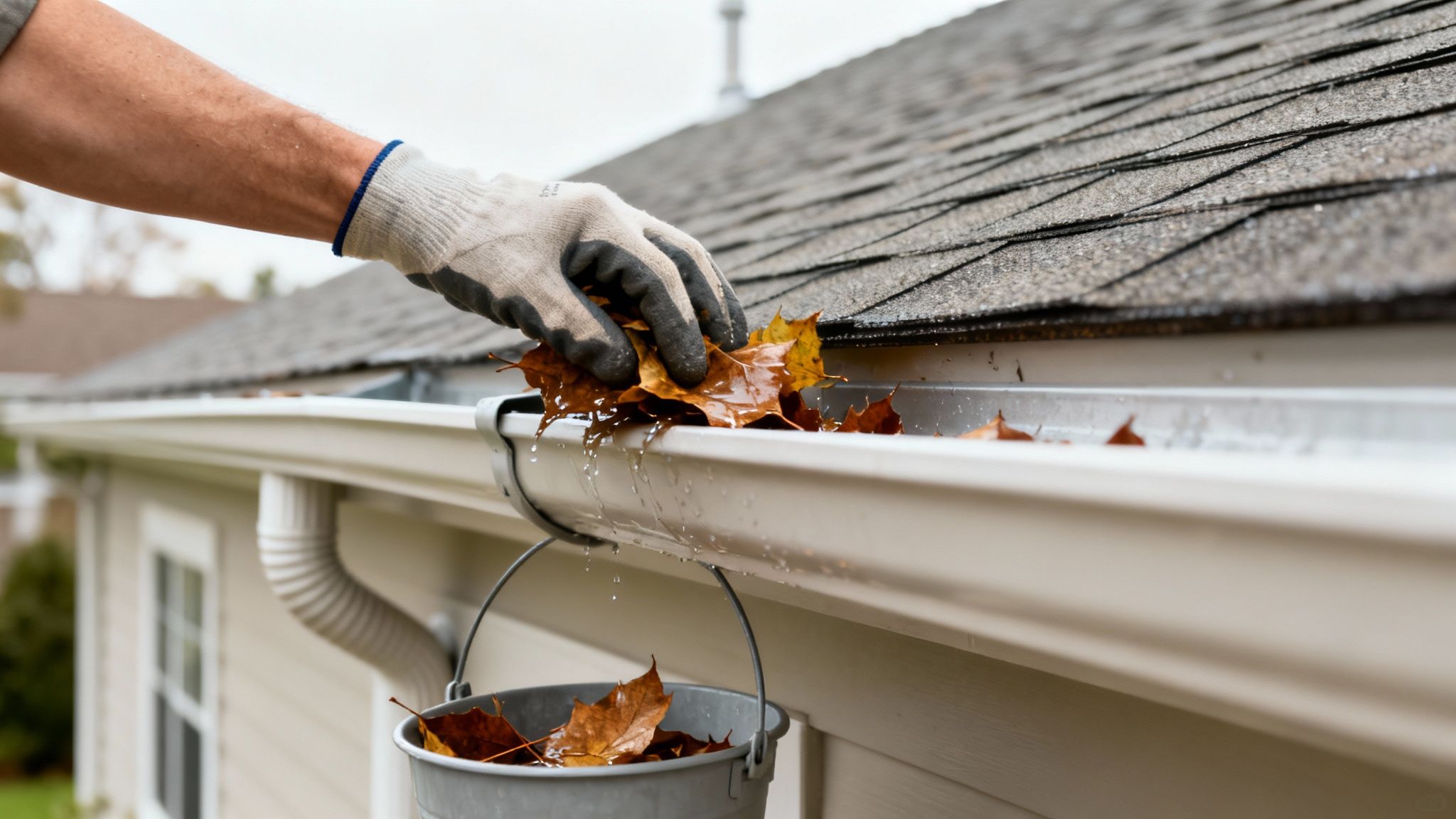
Your gutter system is the silent guardian of your home's foundation, directing thousands of gallons of rainwater safely away from its base. When gutters become clogged with leaves, twigs, and other debris, they can’t perform this crucial function. This oversight is a common entry on any exterior home maintenance checklist because clogged gutters can lead to water overflow that damages your roof, siding, and landscaping, and can even cause severe foundational issues over time.
Regularly cleaning and maintaining your gutters is one of the most effective preventive tasks a homeowner can perform. It protects your home’s structural integrity, prevents water damage to both the exterior and interior, and helps to deter pests that are attracted to the damp, decaying organic matter.
Key Inspection Points
A visual inspection can often reveal the state of your gutters, especially during or after rainfall. Pay close attention to how water flows and look for tell-tale signs of blockages or damage.
- Overflowing Water: If water is cascading over the sides of your gutters during a storm, it's a clear sign of a blockage.
- Sagging Gutters: Gutters pulling away from the house indicate they are weighed down by heavy, waterlogged debris and need immediate attention.
- Visible Debris: From the ground, look for leaves, twigs, or shingle granules spilling over the edges.
- Stains on Siding: Water stains or peeling paint on the siding directly below the gutter line are evidence of persistent overflow.
- Downspout Flow: Check that water is flowing freely from the bottom of your downspouts. A weak trickle when it's raining heavily suggests a clog somewhere in the system.
Actionable Maintenance Tips
For a step-by-step guide, you might find valuable insights in this article about how to clean gutters safely and effectively.
Pro-Tip: The best times for gutter cleaning are late spring, after trees have finished dropping their seeds and pollen, and late fall, after the majority of leaves have fallen. This proactive schedule prevents blockages before the heavy rains of summer or the potential ice dams of winter.
After cleaning out the debris with a gutter scoop, flush the entire system with a garden hose to clear out any remaining grime and confirm the downspouts are clear. Check all seams for leaks and repair them with a quality gutter sealant. Ensure downspout extensions direct water at least 4-6 feet away from your foundation to prevent soil erosion and basement moisture. For homes surrounded by trees, consider installing gutter guards to reduce the frequency of cleanings.
3. Siding Inspection and Maintenance
Your home's siding is its most visible exterior feature, acting as a critical barrier against moisture, pests, and the region's fluctuating temperatures. Regular inspection and maintenance are vital components of any exterior home maintenance checklist, ensuring your siding remains functional and attractive. Whether your home has vinyl, wood, brick, or fiber cement, proactive care prevents water from seeping into your wall structure, which can lead to rot, mold, and costly repairs.
A well-maintained exterior not only boosts curb appeal but also plays a significant role in your home's insulation and energy efficiency. Spotting and sealing a small gap around a window today can prevent a major draft and water damage issue during the next heavy seasonal rain.
Key Inspection Points
Walk around the entire perimeter of your home, paying close attention to areas that receive less sun or are prone to moisture, like the north-facing side. Look for:
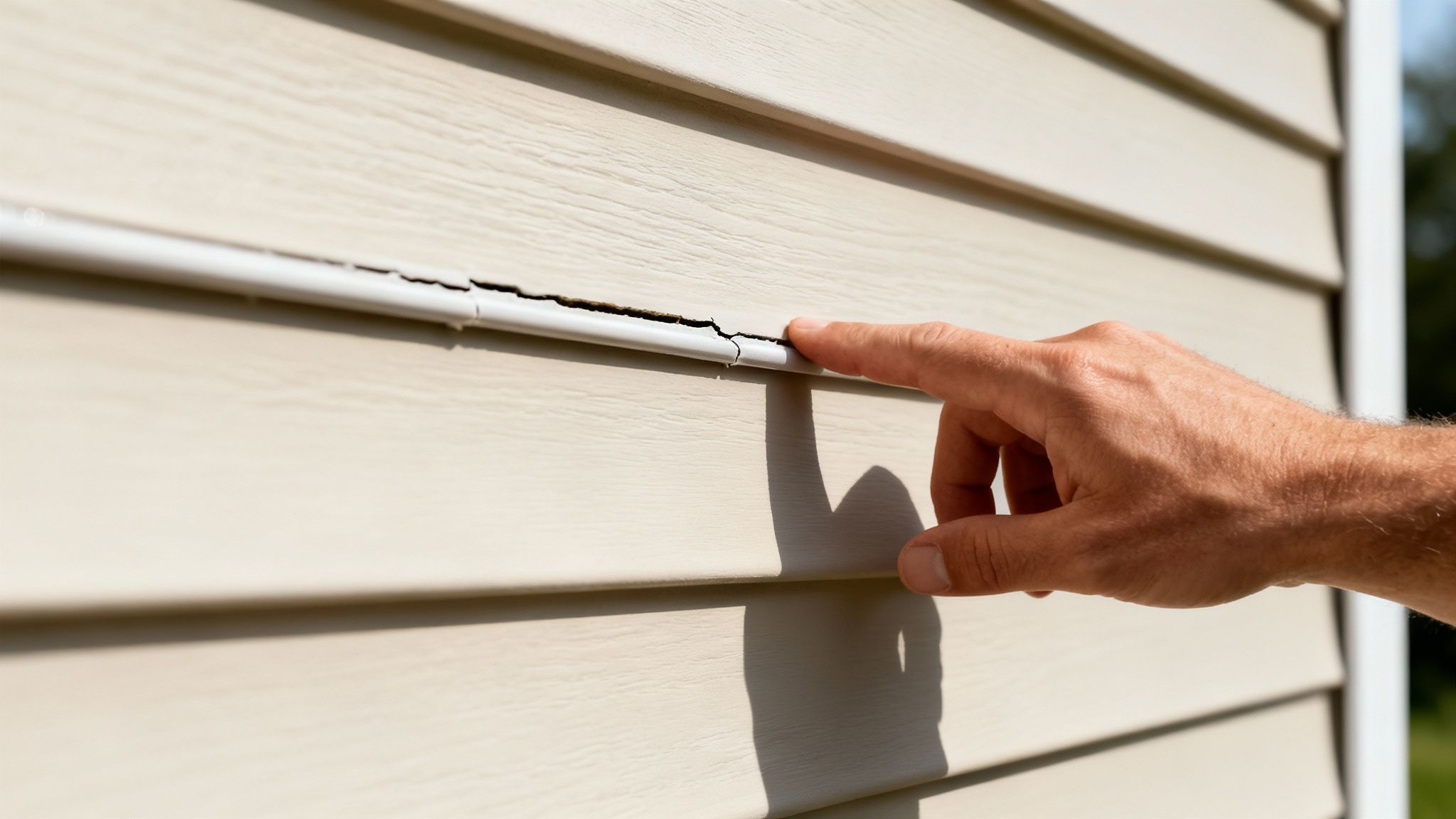
- Cracks, Gaps, or Holes: Inspect panels for any signs of physical damage. Even small openings can allow water and insects to get behind the siding.
- Warping or Bulging: Siding that is no longer flat against the house could indicate trapped moisture or improper installation.
- Caulk Integrity: Check the sealant around windows, doors, and trim. Dried, cracked, or missing caulk is a primary entry point for water.
- Mold, Mildew, or Rot: Look for discoloration, especially on shaded or damp sections. For wood siding, gently probe any suspect areas with a screwdriver to test for softness, which indicates rot.
Actionable Maintenance Tips
The specific maintenance required will depend on your siding material. Materials like fiber cement offer impressive durability and low maintenance, but all types benefit from regular attention. To better understand your options, you can explore the pros and cons of fiber cement siding.
Pro-Tip: Perform a gentle cleaning of your siding annually in the spring. Use a soft-bristle brush and a mild detergent to remove dirt and mildew, and avoid using a high-pressure washer on vinyl or wood siding, as it can force water behind the panels.
For wood siding, plan to repaint or re-stain every 3-7 years to protect it from the elements. Address any signs of rot immediately to prevent it from spreading. For all siding types, re-caulking gaps every 5-7 years is a simple, effective step to maintain a watertight seal. If you notice widespread cracking, extensive warping, or persistent mold growth, it may be time to consult a professional for a full assessment and potential replacement.
4. Driveway and Walkway Maintenance
Your driveway and walkways are more than just functional surfaces; they are the welcome mat to your home and a critical component of its curb appeal. These surfaces endure constant stress from vehicle weight, foot traffic, and relentless weather exposure. Regular attention as part of your exterior home maintenance checklist prevents minor cracks and stains from evolving into major, hazardous, and expensive problems.
Maintaining these paved areas is essential for safety, preventing trip hazards, and protecting your home’s foundation. In our Upstate South Carolina climate, freeze-thaw cycles in winter can widen small cracks, and summer humidity encourages mold and algae growth, making surfaces slippery and unsightly.
Key Inspection Points
Perform a visual inspection seasonally, paying close attention after heavy rain or significant temperature swings. A slow walk-through is often all that is needed to spot emerging issues. Look for:
- Cracks and Potholes: Note any cracks wider than a hairline in concrete or asphalt. Potholes in asphalt should be addressed immediately.
- Uneven Surfaces: Check for sinking or heaving sections, which can be trip hazards and may indicate underlying water or soil issues.
- Stains and Growth: Look for oil stains, moss, algae, or mildew, especially in shaded, damp areas. These not only look bad but can make surfaces dangerously slick.
- Drainage Issues: After it rains, observe if water pools on your driveway or walkways. Proper drainage is crucial to prevent water from seeping underneath and causing foundational damage.
Actionable Maintenance Tips
For a comprehensive guide on concrete care, the Concrete Reinforcing Steel Institute (CRSI) offers valuable resources for homeowners.
Pro-Tip: Seal your asphalt driveway every 2-3 years. This protective barrier blocks UV rays, repels water, and prevents damage from oil and gas spills, significantly extending its lifespan for a relatively low cost.
Promptly fill any cracks you find to prevent water from penetrating and eroding the base material. For concrete, a simple pressure wash can remove most stains and organic growth. If you encounter significant heaving or widespread cracking, this often points to a larger issue with the sub-base, which may require a professional assessment to prevent further damage to your property.
5. Window and Door Seal Maintenance
Your windows and doors are primary points of potential energy loss and water intrusion, making their seal maintenance a critical component of any exterior home maintenance checklist. The caulk and weatherstripping that seal these openings are your home’s first line of defense against drafts, moisture, and pests. Over time, these materials degrade from sun exposure and temperature fluctuations, creating gaps that compromise your home's efficiency and integrity.
Proactive sealing prevents costly issues like water damage to walls and floors, reduces strain on your HVAC system, and enhances indoor comfort. A simple bead of caulk or a fresh strip of weatherstripping can save significant money on energy bills and prevent major repairs down the line, especially with South Carolina's humid summers and chilly winters.
Key Inspection Points
Perform a thorough visual and physical inspection of all exterior windows and doors at least twice a year. Pay close attention to the areas where different materials meet, as these are the most vulnerable spots. Look for:
- Cracked or Peeling Caulk: Examine the caulk lines around window and door frames. If the caulk is brittle, cracked, or pulling away from the surface, it’s no longer providing a proper seal.
- Worn Weatherstripping: Check the condition of the foam or rubber seals around your doors. If they are compressed, torn, or brittle, they need to be replaced. You can test for drafts by holding a lit incense stick near the frame on a windy day.
- Visible Gaps: Look for any visible light or gaps around the frames, especially at the corners. Also, inspect where utility lines, like pipes or cables, enter your home.
- Signs of Moisture: Water stains on interior walls or windowsills are a clear indicator that the exterior seal has failed and water is getting in.
Actionable Maintenance Tips
For a durable and effective seal, proper application is key. You can find excellent advice on choosing the best replacement windows if you discover that failing seals are just one symptom of a larger problem.
Pro-Tip: The best time to inspect and reseal windows and doors is in the fall. This prepares your home for colder winter weather, ensuring you lock in heat and keep drafts out when it matters most.
Before applying new caulk, be sure to completely remove all the old, deteriorated material for the best possible adhesion. Choose a high-quality, paintable silicone or polyurethane caulk for exterior use, as it offers superior flexibility and durability against the elements. A fresh, continuous bead of caulk not only protects your home but also provides a clean, finished look to your exterior.
6. Exterior Paint and Stain Inspection
Your home's exterior paint or stain is its first line of defense against moisture, UV rays, and pests, making its inspection a critical part of any exterior home maintenance checklist. More than just a cosmetic feature, this protective coating is what prevents wood from rotting, siding from deteriorating, and moisture from penetrating your home's structure. Regular checks help you catch degradation early, allowing for targeted touch-ups instead of a full, costly repaint.
A well-maintained finish not only protects your investment but is also one of the most significant factors in your property's curb appeal. Addressing peeling paint on a south-facing wall or re-staining a faded deck can prevent extensive damage and keep your home looking its best.
Key Inspection Points
Walk the perimeter of your home annually, preferably in mild, dry weather, to get an accurate assessment of your paint and stain's condition. Pay close attention to areas that receive the most sun or moisture. Look for:
- Peeling, Cracking, or Bubbling: These are clear signs that the paint is losing its adhesion and moisture may be getting underneath.
- Chalking or Fading: Run your hand over a painted surface. If a chalky residue comes off, the paint is oxidizing and its protective qualities are diminishing. Significant fading indicates UV damage.
- Moisture Damage: Check for dark streaks, mildew, or signs of wood rot, particularly on window sills, door frames, and fascia boards.
- Caulking Gaps: Inspect the caulk around windows, doors, and trim. Cracked or missing caulk creates an entry point for water and needs to be replaced before painting.
Actionable Maintenance Tips
For a fresh and protected exterior, proper preparation and application are key. Maintaining your home's paint is a powerful way to improve curb appeal and preserve value.
Pro-Tip: Document the exact paint color, brand, and sheen you use for your home's exterior and trim. Store this information in a safe place so you can purchase the correct product for quick and perfectly matched touch-ups in the future.
Most high-quality exterior paint jobs last 5 to 7 years, while stain may need to be reapplied every 2 to 3 years, depending on the product and exposure. Always clean surfaces thoroughly, sand any peeling areas, and apply a primer to bare wood before painting. Applying two thin, even coats provides a more durable and longer-lasting finish than one thick, heavy coat. If you find extensive wood rot or peeling across large sections, it may be time to consult a professional for repairs and repainting.
7. Deck and Patio Maintenance
Your deck and patio serve as vital extensions of your living space, and their condition directly impacts your home's safety, value, and curb appeal. As part of a complete exterior home maintenance checklist, regular care is essential to prevent rot, structural failure, and safety hazards. Exposure to Upstate South Carolina's sun and humidity can accelerate the deterioration of wood, composite, and masonry surfaces, turning a relaxing outdoor retreat into a liability.
Proactive maintenance prevents small issues like a loose board or a small crack in the concrete from becoming significant, expensive problems. A well-kept deck not only ensures a safe place for family gatherings but also protects the foundational structure of your home by managing moisture and preventing decay near the house itself.
Key Inspection Points
Perform a thorough inspection at least twice a year, ideally in the spring and fall. Pay close attention to areas that are frequently wet or shaded, as they are more prone to damage. Look for:
- Wood Condition: Check for signs of rot, which often appears as soft, spongy wood that splinters easily. Look for warping, cracking, or splitting boards.
- Structural Integrity: Carefully inspect ledger boards (where the deck attaches to the house), support posts, and joists. Ensure they are sound and securely attached.
- Fasteners and Hardware: Examine screws, nails, and bolts for signs of rust, corrosion, or looseness. Popped nails or loose railings are immediate safety concerns.
- Surface and Drainage: For patios, check for cracks, heaving, or sinking concrete slabs. Ensure water drains away from the patio and your home's foundation.
Actionable Maintenance Tips
Regular upkeep is the most effective way to extend the life of your outdoor spaces. For a detailed guide on upkeep, consider how manufacturers like Trex and TimberTech advise cleaning their composite products to maintain their warranty and appearance.
Pro-Tip: Clean your deck and patio thoroughly at the beginning of spring to remove winter grime and again in the fall to clear away leaves and debris that trap moisture and promote mildew.
For wooden decks, applying a fresh coat of stain or sealant every 2-3 years is crucial to protect against UV damage and moisture. When pressure washing, use a low-pressure setting to avoid damaging wood fibers or etching concrete. If you discover a wobbly railing or a rotting board, address it immediately. Replacing a single board is a simple DIY task, while neglecting it could lead to a more dangerous structural issue over time.
8. Basement and Foundation Inspection
While not always visible from the curb, the health of your foundation, basement, and crawlspace is critical to your home's structural integrity. This part of your exterior home maintenance checklist involves inspecting these lower areas for signs of stress, water intrusion, and decay. In Upstate South Carolina, our clay-rich soil can expand and contract significantly with moisture changes, putting constant pressure on foundation walls.
Early detection of issues like small cracks or dampness can prevent catastrophic failures, widespread mold growth, and costly structural repairs down the line. A solid, dry foundation is the bedrock of a safe and healthy home, protecting your investment from the ground up.
Key Inspection Points
A thorough inspection should be conducted at least twice a year, ideally after the wet seasons of spring and fall. Grab a good flashlight and look for:
- Cracks: Search for cracks in foundation walls, both inside and out. Note their size, direction (horizontal, vertical, or stair-step), and whether they are widening over time.
- Moisture Intrusion: Look for water stains, damp spots, condensation on walls or pipes, or active water seepage, especially after heavy rain.
- Efflorescence: Check for a white, chalky substance on concrete or masonry walls. This is a sign that water is seeping through and evaporating, leaving mineral deposits behind.
- Pest and Mold: Inspect for signs of termites (mud tubes), other pests, and the musty odor or visible signs of mold and mildew, which thrive in damp environments.
Actionable Maintenance Tips
Maintaining a dry and stable foundation often involves managing the water around your home. For more on how to protect your home's base, you can learn about the principles of foundation waterproofing.
Pro-Tip: Ensure the soil grade around your foundation slopes away from the house at a rate of at least six inches over the first ten feet. This simple landscaping adjustment is one of the most effective ways to prevent water from pooling against your foundation.
If you discover minor, non-structural cracks, sealing them with hydraulic cement or an epoxy injection can be a straightforward DIY fix. For persistent moisture, installing a dehumidifier can keep humidity levels below 50% to inhibit mold growth. However, if you see large horizontal cracks, bulging walls, or signs of chronic water problems, it's time to consult a foundation specialist to assess the situation and prevent further structural damage.
9. Exterior Lighting and Electrical Outlet Maintenance
Your home’s exterior electrical components, including lighting fixtures and outlets, are constantly exposed to the elements, making them a critical safety checkpoint in any exterior home maintenance checklist. Moisture, pests, and physical damage can compromise wiring and connections, posing significant fire and shock hazards. Regular inspection and maintenance ensure these features function safely and reliably, enhancing both the security and usability of your outdoor spaces.
Properly maintained outdoor electrical systems are essential for safety, especially in the humid, storm-prone climate of Upstate South Carolina. A small crack in an outlet cover or a corroded fixture seal can allow moisture intrusion, leading to short circuits or a complete failure when you need it most.
Key Inspection Points
Conduct a visual inspection of all outdoor electrical components quarterly and after major storms. Ensure the power is turned off at the circuit breaker before touching any fixtures or outlets. Look for:
- Corrosion and Rust: Check light fixtures, outlet covers, and junction boxes for any signs of rust or corrosion, which indicate moisture is getting in.
- Cracked or Damaged Covers: Inspect weatherproof outlet covers for cracks, brittleness, or a poor seal. These covers are the first line of defense against rain.
- Exposed Wiring: Look for any frayed or exposed wires, especially where fixtures connect to the wall or where animals might have chewed through conduits.
- Functionality Test: Regularly test all outdoor lights and press the "TEST" button on all Ground Fault Circuit Interrupter (GFCI) outlets to ensure they trip correctly. Reset them afterward.
Actionable Maintenance Tips
For a comprehensive guide on outdoor electrical safety, the Electrical Safety Foundation International (ESFI) offers valuable resources that underscore these practices.
Pro-Tip: Test your GFCI outlets monthly. This simple, one-minute check is one of the most important safety actions you can take to prevent electrical shock from outdoor power sources.
Upgrading outdated fixtures to modern, sealed LED units not only improves energy efficiency but also significantly enhances durability and weather resistance. Ensure all outdoor receptacles are GFCI-protected, as required by the National Electrical Code (NEC), for maximum safety. If you find any standard outlets outdoors, prioritizing their replacement is a non-negotiable safety upgrade. A professional electrician can ensure all installations are up to code and safely integrated into your home's electrical system.
10. Landscaping and Vegetation Management
Your home’s landscaping is more than just curb appeal; it's an ecosystem that directly interacts with your house's exterior. Proper vegetation management is a critical, yet often overlooked, part of a complete exterior home maintenance checklist. Overgrown trees, shrubs, and vines can cause significant damage to your siding, roof, and foundation, while also creating havens for pests and trapping destructive moisture against your home.
Thoughtful landscaping maintenance protects your structural integrity, improves airflow to prevent mold and rot, and ensures systems like HVAC units can function efficiently. For example, trimming back an oak tree branch that overhangs your roof not only prevents shingle damage during a storm but also stops pests from having a direct bridge to your attic.
Key Inspection Points
Walk your property's perimeter quarterly to assess how plants are interacting with your home's structure. Pay close attention after periods of rapid growth in the spring and summer. Look for:
- Tree and Shrub Proximity: Identify any tree limbs touching or hanging directly over your roof. Check for shrubs, especially dense ones, that are pressing against your siding or blocking window wells.
- Vines and Climbing Plants: Inspect siding, brick, and mortar for invasive vines like ivy. Their tendrils can work their way into small cracks, causing significant damage over time while trapping moisture.
- Foundation Clearance: Look at the area immediately surrounding your foundation. Mulch, soil, and dense plantings should not be piled up directly against your siding, as this can invite termites and promote wood rot.
- Utility and System Obstructions: Check around your HVAC unit, vents, and utility meters. Overgrowth can restrict airflow, reducing efficiency and creating a fire hazard.
Actionable Maintenance Tips
Managing your landscape is an ongoing task that prevents small issues from growing into expensive repairs.
Pro-Tip: Perform your most significant trimming in late winter or early spring before the major growth season begins. This encourages healthy development away from your house and makes the job easier to manage.
Maintain a "defensible space" around your home's exterior. Tree branches should be trimmed to maintain at least 6-10 feet of clearance from your roof and siding. Keep all shrubs and landscape plants at least 3 feet away from your foundation to allow for adequate airflow and easy inspection access. Regularly remove any dead trees or large branches, as they pose a significant risk during high winds or ice storms common in the Upstate SC region.
10-Point Exterior Home Maintenance Comparison
| Roof Inspection and Maintenance | High 🔄 — ladder work, safety, technical checks | Moderate–High ⚡ — inspector $200–500; repairs $300–3,000+; PPE | High ⭐📊 — prevents leaks; extends roof life 5–10 yrs; avoids structural damage | Aging roofs, post-storm assessment, pre-winter/spring | Early leak detection; insurance compliance; improved ventilation |
| Gutter Cleaning and Repair | Medium 🔄 — routine ladder access, simple repairs | Low–Moderate ⚡ — $100–300/yr; basic tools; pro $100–250/service | High ⭐📊 — prevents foundation and basement damage; ensures drainage | Homes with trees; fall/spring seasonal maintenance | Low-cost prevention; DIY-friendly; protects foundation & siding |
| Siding Inspection and Maintenance | Medium 🔄 — material-specific checks and sealing | Moderate ⚡ — DIY cleaning; potential replacement $15k+ for major work | High ⭐📊 — prevents water intrusion; preserves cladding & insulation | Visible cracks/gaps, rot-prone claddings, pre-painting | Early rot detection; improved energy efficiency; curb appeal |
| Driveway and Walkway Maintenance | Low–Medium 🔄 — surface checks, crack filling, sealcoating | Moderate ⚡ — sealcoat $0.15–0.30/sqft; pro equipment for large jobs | Moderate–High ⭐📊 — extends pavement life 5–10 yrs; reduces trip hazards | Cracked asphalt/concrete; high-traffic surfaces | Cost-effective vs replacement; improves safety and drainage |
| Window and Door Seal Maintenance | Low 🔄 — straightforward caulking and weatherstripping | Low ⚡ — $50–200/yr; caulk, weatherstripping, basic tools | High ⭐📊 — reduces energy loss 5–15%; prevents drafts and moisture | Drafty windows/doors; pre-winter weatherization | Inexpensive high ROI; DIY-able; improves comfort |
| Exterior Paint and Stain Inspection | Medium 🔄 — prep-intensive; weather-dependent | Moderate–High ⚡ — pro paint $3k–10k+; materials and prep time | High ⭐📊 — protects surfaces; prevents rot; extends finish 5–7 yrs | Peeling/blistering paint; exposed wood; curb-appeal projects | Protects vs UV/moisture; enhances appearance and longevity |
| Deck and Patio Maintenance | Medium 🔄 — structural inspection plus surface care | Moderate ⚡ — staining/sealing; possible board/fastener replacement; replacement costly | High ⭐📊 — extends deck life 10–20+ yrs; prevents safety failures | Wooden decks showing rot/looseness; seasonal upkeep | Prevents structural failure; maintains safety and aesthetics |
| Basement and Foundation Inspection | High 🔄 — technical assessment; moisture/structural expertise | High ⚡ — repairs $10k–100k+; waterproofing may be invasive | Critical ⭐📊 — prevents structural collapse; improves indoor air quality | Visible cracks, dampness, settlement, post-heavy rain | Early detection avoids exponential repair costs; preserves structure |
| Exterior Lighting and Electrical Outlet Maintenance | Medium 🔄 — electrical safety, periodic testing | Low–Moderate ⚡ — fixtures, GFCI testing; electrician for repairs | Moderate ⭐📊 — improves safety, extends fixture life 5–10 yrs | Outdoor outlets/fixtures, wet locations, security lighting | Prevents shocks/fires; ensures reliable outdoor lighting |
| Landscaping and Vegetation Management | Low–Medium 🔄 — recurring trimming and clearance | Low–Moderate ⚡ — tools or pro tree services; ongoing labor | High ⭐📊 — reduces structural/pest risk; improves drainage and airflow | Homes with overhanging trees, ivy, vegetation near foundation | Prevents tree/root damage; improves airflow and curb appeal |
From Checklist to Action: Partner with a Pro for Lasting Peace of Mind
Navigating the demands of homeownership can feel like a monumental task, but this comprehensive exterior home maintenance checklist is designed to transform that challenge into a structured, manageable process. We've journeyed through every critical component of your home's protective shell, from the peak of your roof to the base of your foundation. The goal is not just to fix problems as they arise, but to proactively preserve your home's integrity, value, and safety season after season.
Consistent action is the bridge between a simple checklist and true home preservation. By diligently inspecting your siding, cleaning your gutters, sealing drafts around windows, and managing your landscape, you are doing more than just maintenance; you are actively safeguarding your most significant financial investment. You are protecting your family from the elements, enhancing your property's curb appeal, and optimizing its energy efficiency for long-term savings.
Key Takeaways for Proactive Homeownership
Mastering this checklist empowers you with knowledge and control. The most crucial takeaways are not just the tasks themselves, but the mindset behind them:
- Prevention Over Repair: The core principle is that small, consistent efforts prevent catastrophic and costly failures. A sealed window crack today stops a major water intrusion issue tomorrow.
- Seasonal Rhythm is Key: Your home's needs change with the weather. Aligning your tasks with the seasons, especially preparing for the humidity of Upstate SC summers or the potential for winter freezes, ensures your efforts are timely and effective.
- Energy Efficiency is a Direct Benefit: Sealing air leaks, ensuring proper attic ventilation, and maintaining window integrity are not just maintenance items; they are direct actions that lower your monthly utility bills and improve indoor comfort.
Remember the critical connection between your home’s various systems. Clogged gutters can lead to foundation damage, peeling paint can expose siding to moisture, and overgrown landscaping can compromise your roof. Each item on the checklist is a piece of a larger puzzle, and your diligence ensures the entire picture remains strong and beautiful.
Crucial Insight: An exterior home maintenance checklist is more than a to-do list; it is your strategic guide to risk management. It helps you identify small issues before they escalate into structural damage, financial strain, and safety hazards.
Knowing When to Call for Professional Reinforcement
While this guide champions the power of DIY maintenance, it also underscores the wisdom of knowing your limits. A checklist is an excellent diagnostic tool, but it can sometimes uncover symptoms of a much larger problem that a simple repair cannot solve. This is where a partnership with a trusted professional becomes invaluable.
You may discover widespread wood rot beneath your siding, notice persistent condensation between your window panes, or find your gutters are perpetually sagging and pulling away from the fascia, no matter how often you clean them. These are not minor inconveniences; they are clear indicators that a core component of your home's exterior is failing and needs a complete replacement. Ignoring these signs can lead to escalating damage that compromises your home's structure and indoor air quality.
This is the point where your checklist transforms from a guide for action into a signal for help. For homeowners in Greenville, Anderson, and across Upstate South Carolina, these discoveries are an opportunity to upgrade your home’s performance and resilience for good. Investing in high-performance siding, modern energy-efficient windows, or a seamless gutter system isn't just a repair; it's a permanent solution that eliminates recurring problems and provides lasting peace of mind.
When your exterior home maintenance checklist reveals issues beyond simple repairs, turn to the experts at Atomic Exteriors. We provide durable, high-performance siding, window, and gutter solutions designed to protect and beautify your home for decades to come. Contact Atomic Exteriors today for a free, no-pressure estimate and elevate your home's protection with craftsmanship you can trust.