.png)
A Homeowner's Guide to Gutter Repair and Installation
When it comes to home maintenance, gutter repair and installation is one of those jobs that’s easy to put off. But gutters are your home's unsung hero, quietly protecting it from thousands of gallons of rainwater every single year. They're your first line of defense against water damage, and when they fail, the consequences can be serious.
Why Your Gutters Are Your Home's First Line of Defense
It’s easy to see gutters as just a minor accessory, but they’re actually a critical system designed to protect your biggest investment. Their one and only job is to catch all the water that hits your massive roof and guide it safely away from your house. Without them, that water would pour directly down your walls, pool around your foundation, and start causing some real trouble.
Think of it like this: your home's foundation is a sandcastle at the beach. A good gutter system is like a well-dug moat that channels the incoming tide safely away, keeping the sandcastle's base strong and dry. But a clogged or broken gutter is like having a huge hole in that moat—the water rushes right in, eroding the sand and making the whole structure unstable.
That’s exactly what happens to your home when your gutters aren’t working, especially with the kind of rain we get here in Upstate South Carolina. What starts as a small issue can quickly spiral into a very expensive problem.
The Real Risks of Faulty Gutters
Letting gutter problems slide is a recipe for a domino effect of damage that can compromise your home’s structural integrity. The issues usually start small but can grow into major headaches. Here are the biggest risks:
- Foundation Damage: When water constantly pools around your house, the soil expands and contracts, putting immense pressure on your foundation. This leads to cracks in the concrete and, eventually, a leaky basement.
- Siding and Fascia Rot: Overflowing gutters send water cascading down your siding, causing ugly stains, peeling paint, and rot in the wooden fascia boards that your gutters are attached to.
- Basement Flooding: Water that isn't channeled away from your home will always find the path of least resistance. Often, that path leads right into your basement or crawlspace, causing flooding, musty smells, and dangerous mold growth.
- Landscaping Erosion: All that uncontrolled runoff can completely destroy your flower beds and wash away topsoil and mulch, turning your carefully manicured yard into a muddy mess.
A functional gutter system isn't just about keeping your head dry when you walk out the door. It's about preserving the health of your home from the foundation up. It’s a small investment that prevents catastrophic expenses down the road.
Ultimately, understanding how water flows around your property is key. A great gutter system is the first step, but for a complete solution, you can explore our guide on creating a reliable backyard drainage system. It’s also worth looking into expert solutions for yard drainage to see how a comprehensive water management plan can truly protect your investment.
How to Know When to Repair or Replace Your Gutters
Deciding between a quick fix and a full overhaul for your gutter system can feel like a tough call. On one hand, a simple repair is less expensive upfront. On the other, a complete replacement buys you long-term peace of mind.
The key is to act like a detective and look for the specific clues your home is giving you. That small crack, a patch of peeling paint, or a slight sag might seem minor, but they’re often the first warnings of bigger problems brewing.
That persistent drip, drip, drip you hear isn't just an annoyance—it's a sign that water is slowly washing away the soil right next to your foundation. Left unchecked, that seemingly small issue can lead to serious structural damage down the road.
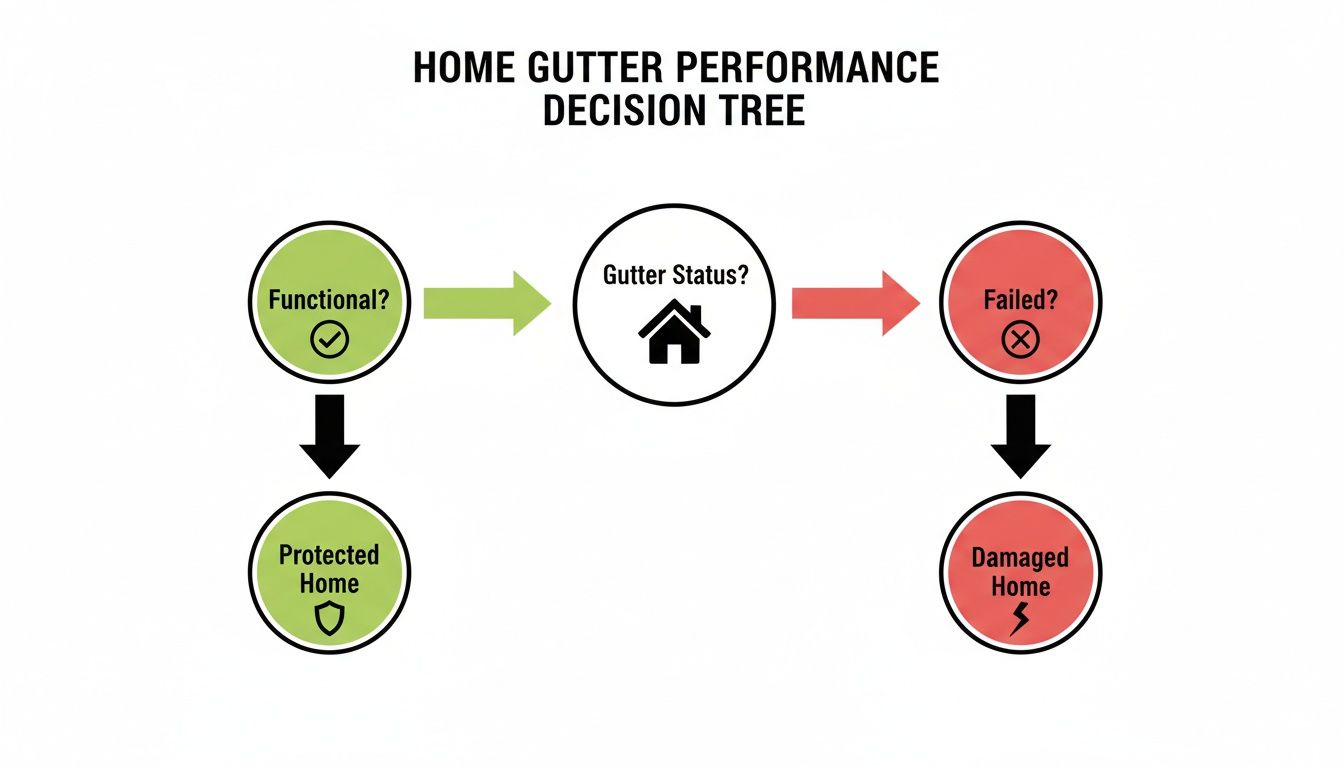
As you can see, the path from a failed gutter to a damaged home is a direct one, which makes catching these issues early so incredibly important.
Clear Signs You Need Gutter Service
To make the right choice, you need to get a clear picture of the problem. Is it one small, isolated issue, or is your whole system failing? Here are the most common symptoms to look for the next time you walk around your property.
- Visible Cracks, Holes, or Rust Spots: Small cracks can sometimes be sealed, but widespread rust or multiple holes are a dead giveaway that the metal is deteriorating. At that point, a replacement is your only real solution.
- Sagging or Pulling Away: If you see gutters pulling away from the fascia boards, it means the fasteners have failed. This is a serious problem, as a gutter filled with heavy rainwater could collapse entirely.
- Peeling Paint and Water Stains: Those ugly streaks of discolored siding or peeling paint on your home's exterior are tell-tale signs of a persistent overflow or leak. That constant moisture also invites wood rot.
- Water Pooling Around Your Foundation: After a storm, check for puddles of water right next to your foundation. This is a huge red flag that your gutters are failing to channel water safely away from your home.
- Constant Clogging: If you feel like you’re constantly on a ladder cleaning out clogs, your gutter system may be undersized or improperly sloped for your roof. A new, correctly-sized system is often the most practical fix.
If you’re already seeing signs of water damage, it’s also a good idea to check for related problems. Sometimes, what looks like a gutter issue is actually connected to your roof. You can find more tips in our guide on how to stop roof leaks.
Repair or Replace Your Gutters: A Quick Guide
Still on the fence? This table breaks down common symptoms to help you make a quick, informed decision.
| A few small cracks or holes | ✅ Yes, if the rest of the system is in good shape. | ❌ No, a targeted patch should be enough. |
| One or two loose fasteners | ✅ Yes, brackets can be re-secured or replaced. | ❌ No, unless the fascia board is rotted. |
| A single leaky joint or seam | ✅ Yes, seams can often be resealed. | ❌ No, unless it's a symptom of wider failure. |
| Widespread rust and corrosion | ❌ No, this indicates the material is failing. | ✅ Yes, the entire system is compromised. |
| Multiple sections sagging | ❌ No, this points to systemic failure. | ✅ Yes, a new installation is needed. |
| Gutters are over 20 years old | ❌ No, repairs are just a temporary fix at this age. | ✅ Yes, it’s time for an upgrade. |
| Constant, recurring clogs | ❌ No, patching won't fix a design flaw. | ✅ Yes, a new, properly sized system is the answer. |
This isn't an exhaustive list, but it's a solid starting point. When you see multiple issues in the "Replace" column, it's a clear sign that patching things up is no longer a cost-effective strategy.
Making the Final Call
Ultimately, your decision comes down to the age of your gutters, their material, and the extent of the damage.
If your gutter system is over 20 years old and showing multiple signs of failure—like widespread rust, numerous leaks, and sagging sections—a full replacement is almost always the smarter long-term investment.
An isolated issue, like a single loose bracket or a small leak on a relatively new system, can typically be repaired. However, if you’re calling for gutter repair and installation services season after season for the same old problems, the cost of those band-aids adds up fast. A full replacement gives you a fresh start with modern, more reliable materials.
The scale of the industry backs this up. The global rain gutter market hit $4.34 billion in 2024, driven by homeowners replacing failing systems. Neglected maintenance is a massive factor here, with an estimated 80% of repairs linked to preventable issues like clogs, which cause billions in property damage every year. Investing in a new, professionally installed system is the best way to keep from becoming part of that statistic.
Choosing the Best Gutter System for Your Home
Picking the right gutter system for your home is one of those decisions that directly impacts its long-term health and curb appeal. The world of gutter repair and installation has more options than you might think, but it really boils down to one key difference that sets modern systems apart from the old-school stuff.
At its core, you have two choices: sectional or seamless gutters. Sectional gutters are what you’ll find in DIY kits at the hardware store—they come in 10-foot pieces that you join together with sealant. Think of it like a chain: every single link, or seam, is a potential weak point just waiting for a leak to start.
Seamless gutters, on the other hand, are the modern gold standard for professional installations. A specialized machine actually forms one continuous piece of gutter right at your home, custom-measured to fit your roofline perfectly. This simple change eliminates all those weak points, creating a stronger, more reliable system that’s far less likely to spring a leak.
The real magic of a seamless gutter is its structural integrity. When you get rid of the seams, you get rid of the number one cause of leaks. This ensures water goes exactly where it's supposed to—away from your home's foundation.
For any homeowner looking for a solution that’s built to last, the choice is pretty clear. You can dive deeper into this crucial distinction in our detailed guide comparing seamless gutters vs regular gutters and see why one is a much smarter investment for your home.
Selecting the Right Gutter Material
Once you’ve settled on seamless gutters, your next decision is the material. Each option offers a different mix of durability, cost, and style. Here in Upstate South Carolina, where we get more than our fair share of heavy rain and stifling humidity, you need a material that can stand up to the elements year after year.
Let’s break down the most popular choices:
- Aluminum: This is the go-to material for residential gutters, and for good reason. It’s lightweight, affordable, and won't rust or corrode, making it a perfect match for our climate. Modern aluminum gutters also come in a huge range of factory-applied colors to match your home’s trim.
- Vinyl: Vinyl is definitely the most budget-friendly option and is popular for DIY projects because it's so easy to cut and snap together. The trade-off? It can become brittle and crack in extreme temperatures and is known to sag or warp over time, making it less than ideal for long-term performance.
- Steel: Galvanized steel is incredibly strong and durable, easily handling heavy snow and ice loads. While it’s tough as nails, it's also heavier and more expensive than aluminum. It can also start to rust if the protective coating gets scratched or wears away over the decades.
For most homes in the Greenville, Anderson, and surrounding areas, aluminum hits that sweet spot. It gives you the rust resistance you need for our humid summers and the strength required for our heavy downpours, all at a cost that makes sense.
Upgrading to a Clog-Resistant System
Here’s the thing: even the best-made gutters are useless if they’re full of leaves, pine needles, and gunk. Clogs are the #1 cause of overflowing gutters, which leads directly to the very water damage you’re trying to prevent in the first place. This is where modern, clog-resistant systems change the game.
Often called gutter guards or leaf guards, these are protective covers installed right over the top of your gutters. They are specially engineered to let rainwater flow freely into the channel while blocking leaves and debris from ever getting in.
Investing in a high-quality, clog-resistant system brings two huge benefits:
No More Cleaning: You can finally say goodbye to that wobbly ladder and the gross, tedious job of scooping muck out of your gutters a few times a year.
Guaranteed Performance: By preventing clogs before they start, you ensure your gutters can do their job during every single storm, protecting your foundation, siding, and landscaping from overflow.
While there’s an extra upfront cost, a good clog-resistant system is a smart investment that pays for itself over and over in reduced maintenance, better safety, and total peace of mind. It turns your gutters from a high-maintenance chore into a reliable system that protects your home without you having to think about it.
What to Expect From a Professional Gutter Installation
Ever wondered what goes on when the pros show up to install new gutters? It’s a whole lot more than just tacking some metal onto your roofline. A true professional installation is a precise, carefully planned process that creates a custom-fit water management system designed to protect your home for decades.
It's a blend of old-school craftsmanship and modern technology, ensuring every single drop of rain is channeled safely away from your house. Let's pull back the curtain and walk through the entire process, so you know exactly what to expect.
Step 1: The Initial Consultation and Precision Measurement
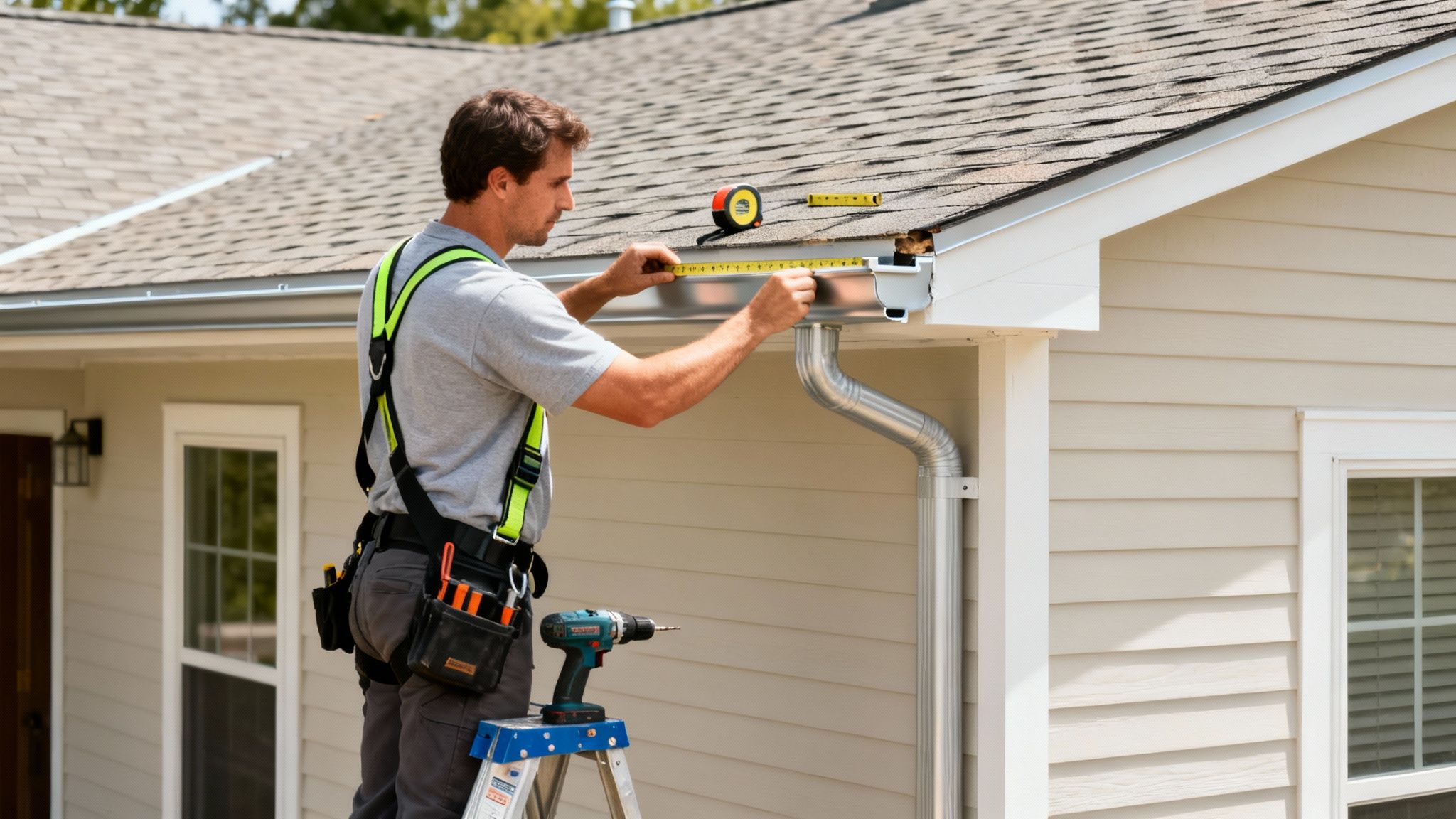
The real work starts long before the first tool is ever picked up. It all begins with a thorough on-site consultation and inspection. A gutter expert will walk your property, get a feel for your roof’s unique layout, and talk you through all the material and color options available.
Most importantly, they take meticulous measurements of every single eave and roofline. These numbers are the blueprint for your new gutter system. Getting this right is non-negotiable—it’s the foundation for a perfect, leak-free installation.
Step 2: Safe Removal and a Critical Fascia Inspection
Once the plan is locked in, the installation crew gets to work by carefully and safely removing your old, worn-out gutter system. This isn't a demolition job; they take great care to avoid damaging your roof, siding, or landscaping in the process.
With the old gutters gone, the team performs one of the most crucial steps: a detailed inspection of the underlying fascia boards and soffits. It's a step that rush jobs often skip, but it's absolutely vital. They're looking for any soft spots, water stains, or signs of wood rot that need to be addressed before the new system goes up.
This inspection is what separates a true professional from a basic installer. Attaching brand new gutters to rotting wood is like putting new tires on a car with a broken axle—it’s pointless and bound to fail.
Step 3: On-Site Fabrication for a Seamless Fit
For seamless gutter systems, this is where the magic really happens. A specialized gutter-forming machine arrives right at your home. A large, flat coil of aluminum in the color you picked is fed into one end of the machine, which then extrudes a perfect, continuous gutter section to the exact length needed.
This on-site fabrication means there are no seams, no weak points, and virtually no chance of leaks developing along the length of the gutter run. It's custom-made for your house, right there in your driveway.
Step 4: Meticulous Installation and Perfect Pitch
Now it's time to hang the new gutters, and this part is a game of inches and degrees.
- Setting the Slope: Gutters aren't installed perfectly level. They're hung with a very slight, intentional slope—usually about a quarter-inch for every 10 feet of gutter. This ensures that water flows smoothly toward the downspouts instead of sitting stagnant and causing problems.
- Secure Fastening: Using heavy-duty, hidden hangers, the team securely fastens the gutters to the fascia boards. The hangers are spaced correctly to support the immense weight of water during a heavy downpour.
- Downspout Placement: Downspouts are strategically placed to channel all that water far away from your home's foundation, protecting it from erosion and water intrusion.
The global gutter market is a $25 billion USD industry for a reason—these details matter immensely. A professionally installed system can prevent up to 90% of foundation erosion, saving homeowners from potentially catastrophic structural repairs. You can see how these services are a powerhouse in home protection and discover more about the market's growth on marketreportanalytics.com.
Finally, the crew does a full cleanup, leaving your property looking even better than when they arrived. The craftsmanship and attention to detail ensure your home is protected for years to come. To see how our range of services protects your home's exterior, you can learn more about our comprehensive exterior remodeling solutions at Atomic Exteriors.
Breaking Down Gutter Repair and Installation Costs
Talking about the investment is always the first step in any home improvement project, and gutters are no exception. The final price you see on a quote isn't just a number pulled out of thin air; it’s a careful calculation based on factors unique to your home. Understanding what goes into that number helps you budget smart and appreciate the real value you’re getting.
The biggest factor, hands down, is linear footage. It’s simple, really—a bigger home with a longer roofline needs more material and takes more time to complete. A straightforward, single-story ranch is naturally going to be less of an investment than a sprawling two-story home with lots of peaks and valleys.
Key Factors That Influence Your Final Quote
Beyond the simple length of your roof, a few other key details play a huge role in shaping the final cost. When a professional estimator visits, they’re looking at all these pieces to build an accurate quote.
- Choice of Material: Like we’ve talked about, aluminum is the go-to for most homes here in the Upstate because it hits that sweet spot of performance and price. If you opt for premium materials like steel or copper, expect the price tag to go up accordingly.
- Height and Accessibility: Working on a single-story home is much simpler (and safer) than a two- or three-story home. If the job requires extra-long ladders or special safety gear, that will be factored into the labor costs.
- Complexity of the Roofline: A plain, rectangular roof is a breeze. But a roof with lots of corners, angles, and valleys demands more custom cuts, precise sealing, and a lot more hands-on labor.
- Removal of Old Gutters: Part of the job is taking down your old, busted gutter system. The quote will include the time and effort needed to remove it and haul it away responsibly.
- Fascia Repair Needs: If the inspection shows that the wooden boards behind your gutters (the fascia) are rotted or damaged, they have to be fixed first. You can't mount new gutters on a weak foundation, and this necessary repair will be an additional cost.
The Cost of Action vs. The Cost of Inaction
It's easy to get fixated on the upfront price of new gutters. But that's only seeing half the picture. The real financial gut-punch comes from ignoring a failing system and letting water damage run wild. A few thousand dollars for a new gutter system today can easily save you from tens of thousands in home repairs down the road.
Think of a professional gutter installation less as an expense and more as an insurance policy against catastrophic water damage. It’s the smart, proactive choice to protect your foundation, your home's structure, and its overall value.
Just consider the kind of eye-watering bills that pop up when gutters fail:
- Foundation Repair: This is the nightmare scenario. Fixing cracks and stabilizing a foundation can easily run from $5,000 to $15,000, sometimes even more.
- Basement Water Damage & Mold Remediation: The cost to dry out a flooded basement and get rid of toxic mold professionally can range from $2,000 to $7,000.
- Siding and Fascia Replacement: Replacing water-stained siding and rotted wood can add another $1,500 to $5,000 to the repair list.
When you stack up those numbers, the value of a high-quality gutter system becomes crystal clear. It's a strategic investment in your home's health. For a more detailed look at the numbers for the most popular systems around here, check out our guide on the cost of seamless gutters. It really puts the investment in perspective and proves that new gutters don’t just cost money—they save it.
Why Hiring a Local Gutter Professional Is a Smart Investment
The idea of a DIY gutter project can be pretty tempting. You picture a quick Saturday afternoon job and saving a few bucks. But when it comes to gutter repair and installation, what looks simple from the ground is actually a complex job where tiny mistakes can snowball into massive, expensive headaches.
Hiring a local professional isn’t just about convenience—it’s a smart investment in your home’s long-term health and, frankly, your own safety.

The most immediate win is safety. Ladder-related falls are one of the leading causes of injuries around the house. Gutter work means spending hours up high, often wrestling with long, clumsy materials. Professionals come equipped with the right training and gear, like harnesses and ladder stabilizers, to get the job done without risking a trip to the ER.
Expertise That Prevents Costly Errors
Beyond just staying safe, a pro brings a level of know-how that a weekend warrior just can't replicate. This isn't just about screwing a piece of metal to your roofline; it's about engineering a complete water management system for your home.
A seasoned contractor understands the little details that make a huge difference:
- The Perfect Slope: Gutters need a very precise, almost invisible slope to drain properly. Too flat, and you get stagnant, mosquito-filled pools. Too steep, and water will shoot right past your downspouts in a heavy rain.
- Rock-Solid Fastening: They know exactly how to anchor the system to your fascia boards so it can handle the crushing weight of torrential rain and wet leaves without pulling away from your house.
- Specialized Tools: Pros show up with on-site seamless gutter machines. They fabricate a single, continuous gutter custom-molded to your home's exact dimensions, which gets rid of the leak-prone seams you find in off-the-shelf DIY kits.
Hiring a licensed professional is your best defense against a shoddy installation. A pro makes sure your system is built to last, protecting your foundation, siding, and landscaping from the very water damage a flawed DIY job can cause.
The Long-Term Value of Peace of Mind
Finally, working with a reputable local company like Atomic Exteriors gives you something you can't get from a big box store: long-term security. A professional job comes with a workmanship warranty and proper insurance. If something goes wrong with the install, that warranty means they come back and fix it on their dime, not yours. And their liability insurance protects you if an accident happens on your property.
It's no surprise the global gutter installation market is booming, with projections showing it will climb from $0.78 billion in 2024 to $2 billion by 2033. A professional installation averts 75% of basement flooding risks, which is a major reason why so many homeowners are choosing to hire experts.
When you're deciding who to hire, this guide to vetting local contractors can be incredibly helpful. A local pro also gets the unique challenges of our area, like the heavy downpours we see in Upstate South Carolina, and will install a system that’s truly built to handle it. They’re not just a one-time service provider; they become a trusted partner in protecting your home for years to come.
Frequently Asked Questions About Gutter Services
It’s natural to have questions when you’re thinking about gutter maintenance or a new installation. We get them all the time. To make things easier, we’ve answered some of the most common ones we hear from homeowners right here in the Upstate. Our goal is to give you clear, straightforward answers so you can feel confident about your next project.
How Often Should I Clean My Gutters?
For most homes here in Upstate South Carolina, cleaning your gutters twice a year is a solid rule of thumb. The best times are late spring, after all the pollen and seeds have fallen, and again in late fall, once the trees are bare. This schedule keeps everything clear just in time for our heaviest rain seasons.
But every yard is different. If your property is surrounded by trees, especially pines that drop needles all year, you’ll probably need to clean them out more often—maybe three or four times a year to keep clogs at bay.
Here’s a pro tip: Investing in a quality gutter guard system can turn a recurring chore into a simple annual check-up. Instead of risking multiple trips up a ladder every year, you can just make sure everything is flowing smoothly.
Are Seamless Gutters Really Worth the Extra Cost?
In our experience, absolutely. Traditional gutters are installed in 10-foot sections, and every single one of those seams is a potential failure point. Over time, as the metal expands and contracts with the weather, the sealant breaks down, and you get drips and leaks.
Seamless gutters solve that problem completely. We custom-fabricate them on-site from a single, continuous piece of metal to match your home’s exact dimensions. This eliminates all those weak spots, giving you a stronger, more reliable system that lasts far longer. Plus, they just look better—that clean, streamlined appearance is a nice boost to your home’s curb appeal. There's a reason they're the professional standard.
Can New Gutters Actually Increase My Home Value?
Yes, they really can. A new, high-quality gutter system sends a strong signal to potential buyers that a home has been well-maintained. It’s one of the first things a home inspector looks at.
When a buyer sees a new seamless system, it removes a major red flag. It gives them peace of mind knowing the property is protected from the kind of water damage that can lead to foundation issues, wood rot, or basement flooding. Combine that protection with enhanced curb appeal, and you’ve got a smart upgrade that can contribute to a better first impression and a higher sale price.
What Are Gutter Guards and Do I Need Them?
Think of gutter guards as a permanent filter for your gutters. They’re protective covers that let rainwater flow through freely while blocking leaves, pine needles, twigs, and other gunk from getting in and creating a clog.
While they aren't technically mandatory, we highly recommend them, especially in a place as beautiful and tree-filled as the Upstate. They practically eliminate the tedious and dangerous job of climbing a ladder to scoop out debris. More importantly, they prevent the very clogs that cause water to overflow and damage your foundation, siding, and landscaping. A good gutter guard system is a smart, one-time investment that pays you back with years of peace of mind.
Ready to protect your home with a gutter system that’s built to last? The team at Atomic Exteriors offers professional, seamless gutter installation with clog-resistant options designed for the Upstate climate. Schedule your free, no-obligation estimate today and get a permanent solution for your home.