.png)
Boost Your Home: how to improve home energy efficiency
Improving your home's energy efficiency doesn't have to be a guessing game. It starts with a simple audit to find air leaks and insulation gaps. From there, you can seal those weak spots and start prioritizing the bigger upgrades. This focused approach is the key to getting the biggest savings and comfort improvements without any wasted effort.
Kickstart Your Savings with a Home Energy Audit
Before you can start making smart upgrades, you need a clear starting point. Think of it like a doctor's check-up for your house; a home energy audit is all about diagnosing where your conditioned air is escaping and which systems are just not pulling their weight.
Without this first step, you risk spending money on fixes that don’t actually solve the problem—a common mistake, especially during Upstate South Carolina's brutal summers. An audit gives you an actionable roadmap, turning a vague goal like "saving energy" into a concrete, prioritized plan.
Professional Audits vs. a DIY Look-Around
You have two main paths here: hire a pro or do it yourself.
A professional energy auditor, often recommended by local utilities like Duke Energy, comes armed with specialized gear like blower doors and infrared cameras. They can pinpoint the exact sources of energy loss with scientific precision. This is your best bet for uncovering complex, hidden issues.
But don't underestimate the power of a detailed DIY inspection. With an infrared thermometer and a sharp eye, you can spot a surprising number of common problems yourself. Getting hands-on like this also gives you a much better feel for how your home performs day-to-day. A great starting point for your own inspection is a complete home energy audit checklist—it provides an excellent framework.
This simple workflow shows how an audit moves you from just looking around to taking smart, prioritized action.
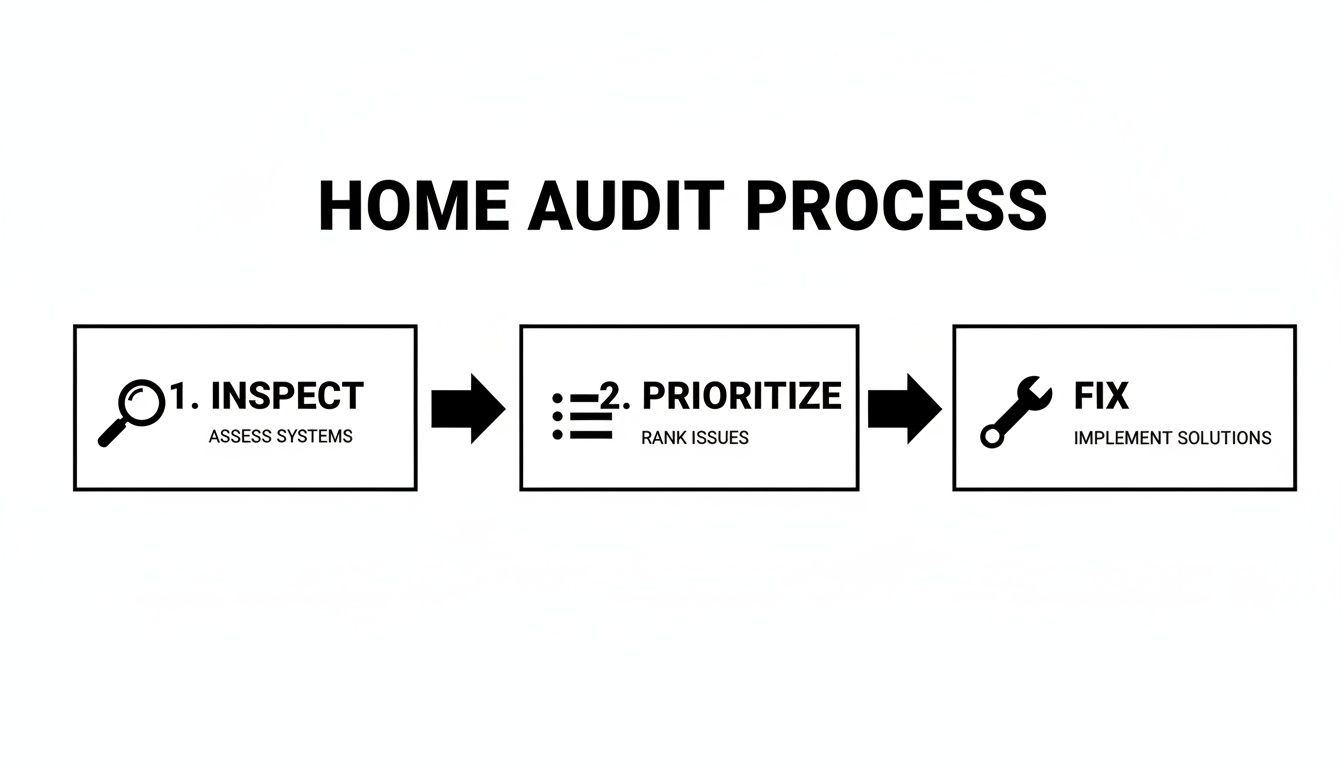
The real magic isn't just finding the problems; it's prioritizing the fixes based on their impact. That’s how you get real, noticeable savings.
Your Upstate SC Home Audit Checklist
Homes in our region face a unique set of challenges, from intense summer heat gain to that thick, soupy humidity. Your audit should zero in on the areas most vulnerable to our climate.
Here's a quick checklist to guide your DIY inspection, focusing on the most common energy-wasters we see in Upstate homes.
| Attic & Crawl Space | Thin, patchy, or compressed insulation. Any visible gaps or holes. | Adding blown-in insulation; using spray foam for gaps. |
| Windows & Doors | Drafts, cracked caulk, or worn weatherstripping. | Apply new caulk and weatherstripping. |
| Electrical Outlets & Switches | Cold drafts coming from outlets on exterior walls. | Install foam gaskets behind the faceplates. |
| Ductwork | Leaks at joints, disconnected sections, or poor insulation. | Seal joints with mastic tape; wrap ducts in insulation. |
| Pipes & Vents | Gaps where pipes, vents, or wires enter the house. | Use caulk or expanding foam to seal the openings. |
This checklist is a fantastic starting point. As you work through it, you'll begin to see exactly where your home is losing the most energy and where your money will be best spent.
What’s Next? Turning Findings into Action
The most effective strategy we see is combining air sealing with proper insulation. These two fixes work together and can slash your heating and cooling costs in a big way. We’ve seen leaky ductwork alone waste up to 30% of a home's conditioned air—a huge expense you might not even know you're paying.
Once your audit is done, you'll have a clear list of what needs attention. Your findings will tell you whether to start with small DIY projects or to plan for major exterior upgrades. From here, you can explore various home exterior renovation ideas to see how things like new windows or siding can become a central part of your home’s new, high-efficiency future.
Budget-Friendly Fixes for Immediate Energy Savings
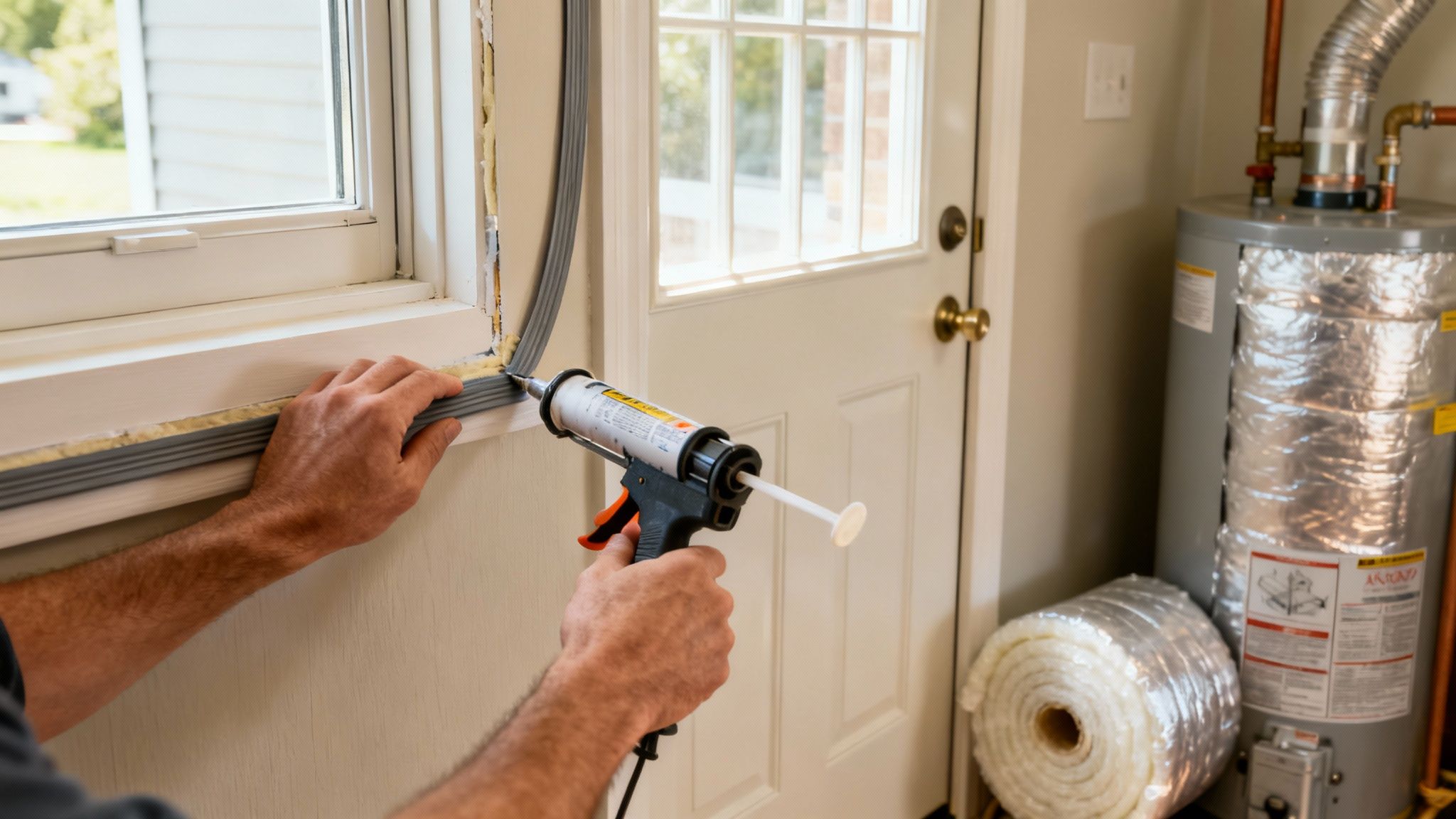
Once your home energy audit has pinpointed the weak spots, it’s time to roll up your sleeves. The good news? You don’t need a massive budget or a professional crew to start seeing a real difference in your utility bills.
Some of the most effective ways to improve your home's energy efficiency are simple, low-cost projects you can knock out in a single weekend. These fixes target all those tiny gaps and cracks that, when added together, are like leaving a window open all year long. Tackling them first gives you an immediate return on your investment in both comfort and savings.
Master the Art of Air Sealing
Air sealing is your first line of defense against energy loss. It’s all about finding and filling those unintentional openings that let your conditioned air sneak out and the outside air creep in. During our hot, humid South Carolina summers, that means keeping your cool, dehumidified air right where it belongs.
A few hours with a caulk gun and some weatherstripping can make a much bigger difference than you might think. Believe it or not, a single 1/8-inch gap around a door frame can let in as much unconditioned air as a small window left wide open.
Here are the main places to focus your air-sealing mission:
- Window Frames: Run a fresh bead of exterior-grade caulk around the outside trim where it meets the siding. Inside, feel for drafts and caulk the seam between the window frame and the wall.
- Door Thresholds and Frames: Install new weatherstripping around your exterior doors. If you can see daylight peeking under your door, it’s time to add or adjust the door sweep for a tight seal.
- Plumbing and Electrical Penetrations: Take a look under your sinks and behind appliances. See those gaps where pipes and wires enter your home? Use expanding foam sealant to plug these common air leak sources.
- Outlets and Switches: On exterior walls, these are notorious for drafts. The fix is incredibly easy: just remove the faceplate and pop in a pre-cut foam gasket. It’s a five-minute job.
You can find everything you need—from quality silicone caulk to various types of weatherstripping—at local hardware stores in Greenville or Spartanburg. Don't hesitate to ask the staff for their recommendations on products that hold up best in our climate.
Quick Insulation Wins for Big Returns
While a full attic insulation overhaul might be a bigger project for down the road, there are smaller insulation tasks that pay off right away. These projects focus on areas where heat transfer is most common and easiest to fix without getting into major renovations.
A great place to start is your water heater. Water heating is often the second-largest energy expense in a home, responsible for nearly 20% of the average utility bill. If you have an older electric water heater, wrapping it in a pre-fit insulation blanket can slash standby heat loss by 25% to 45%.
Another easy win is insulating the exposed hot water pipes, especially in unconditioned areas like a crawl space or garage. Foam pipe sleeves are cheap, easy to cut and install, and they ensure the water arrives at your faucet hotter—which means you'll use less of it waiting for it to warm up.
The Smart Thermostat Advantage
Here in Upstate South Carolina, our weather can swing wildly. One day it's mild and pleasant; the next, the humidity and heat are back with a vengeance. A smart thermostat is a game-changer for managing these fluctuations efficiently.
Unlike a traditional thermostat you have to constantly adjust, a smart thermostat learns your family’s schedule. It automatically turns down the AC when you're gone and gets the house comfortable again just before you get home.
A properly programmed smart thermostat can save homeowners an average of 10% on heating and 15% on cooling costs. For our region, that translates directly into significant savings during our long, hot summers.
Modern smart thermostats also give you detailed energy reports, showing you exactly when your HVAC system is working the hardest. This data helps you make small tweaks to your habits that lead to even bigger savings over time. It’s a small upgrade with a surprisingly large impact on your daily energy use.
As you're sealing up your home's envelope, it's also a great time to make sure your exterior systems are in top shape. Properly functioning gutters, for example, prevent water damage that can ruin your insulation and foundation. Understanding the cost of seamless gutters can help you budget for this essential protective measure as part of your overall efficiency plan. All these small, interconnected fixes work together to create a more comfortable and resilient home.
Upgrading Your Home’s Envelope for Lasting Efficiency
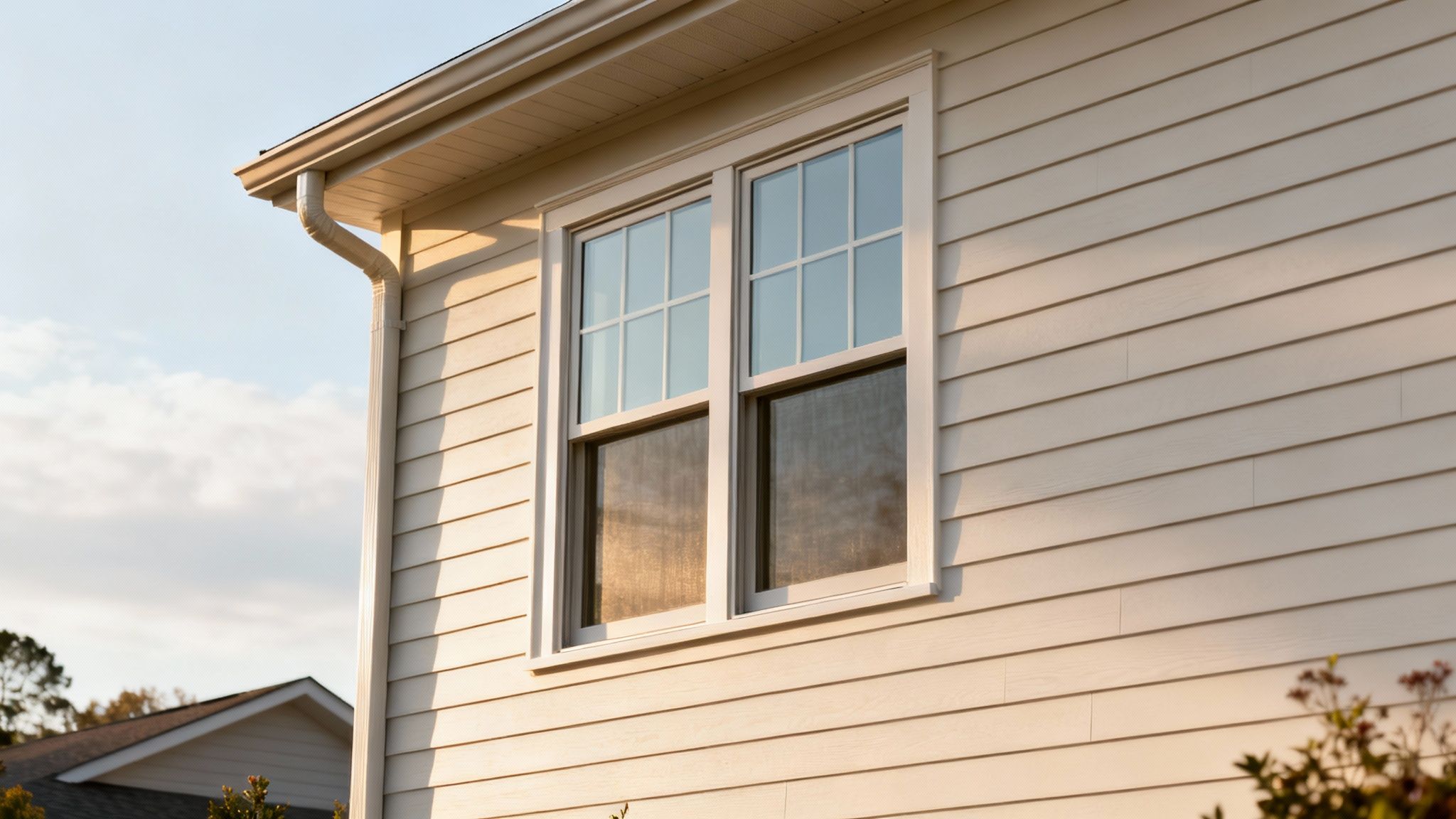
Once you’ve tackled the quick wins like caulking gaps and adding weatherstripping, it's time to think bigger. The next phase in making your home truly energy-efficient involves more permanent upgrades to its exterior—what we in the industry call the "building envelope."
Think of projects like new windows or insulated siding as a long-term investment. They form a protective shield around your house that pays you back for years in comfort, lower energy bills, and increased property value. Here in Upstate South Carolina, that shield is your best defense against our intense summer heat and humidity, meaning your AC unit doesn't have to work nearly as hard.
Decoding Energy Efficient Windows for the Upstate Climate
Windows are notorious energy hogs. In fact, old, drafty, or single-pane windows can be responsible for 25% to 30% of your home's heating and cooling costs. That’s a huge chunk of your utility bill flying right out the glass. Upgrading to modern, energy-efficient windows is one of the most powerful moves you can make.
But not all windows are created equal, especially for our climate. To make a smart choice, you need to understand the ratings on the NFRC (National Fenestration Rating Council) label. For us, two numbers matter most:
- U-Factor: This shows how well a window keeps heat in. A lower number is better. While it’s more critical up north, it still helps during our colder months.
- Solar Heat Gain Coefficient (SHGC): This is the big one for us. SHGC measures how much of the sun's heat gets through the glass. A lower SHGC means less solar heat blasting into your home, which is exactly what you want to keep your AC bills down.
For homes in Upstate South Carolina, you should be looking for windows with a low SHGC—ideally 0.25 or less. This one spec will make a massive difference when that summer sun is beating down.
The window frame material is just as important as the glass, playing a huge role in performance, durability, and how much time you'll spend on upkeep.
Choosing the Right Window Material
Here in the Upstate, we get a little bit of everything—thick humidity, blazing sun, and the occasional freeze. You need a window frame that can handle it all without warping, rotting, or fading.
Let's break down the common choices.
| Vinyl | Great value, virtually no maintenance, and offers solid insulation. | Fewer color choices (though getting better) and can expand and contract in extreme temperatures. |
| Fiberglass | Incredibly strong and durable, won't warp or rot, highly efficient, and you can paint it. | Costs more than vinyl. |
| Wood | A fantastic natural insulator with a timeless, classic look. | Needs regular painting or staining to prevent rot and insect damage. High maintenance. |
For most homeowners, high-quality vinyl windows hit that sweet spot of performance, durability, and cost. If your budget allows, fiberglass is an unbeatable choice for longevity. To dive deeper, check out our guide on the best replacement windows for homes to help weigh your options.
Boosting Your Walls with Insulated Siding
Your walls make up the largest surface area of your home. If they aren't properly insulated, you're fighting a losing battle against the elements. While blowing insulation into existing walls is an option, installing insulated siding gives you a powerful two-for-one punch: a beautiful, updated exterior and a major boost in thermal performance.
Insulated vinyl or fiber cement siding comes with a layer of rigid foam insulation bonded to the back of each panel. This wraps your entire home in a continuous thermal blanket, drastically reducing something called thermal bridging—that's when heat escapes through the wooden studs in your walls, bypassing your existing insulation.
Adding that exterior layer of insulation doesn't just make your home more efficient; it also makes it quieter by dampening outside noise. It’s an upgrade that works 24/7, keeping your home cooler in the summer and warmer during those winter cold snaps.
Don't Overlook Your Gutters
This might seem out of place, but a functional gutter system is a critical, often-overlooked part of your home's energy efficiency. Why? Because clogged or failing gutters lead to water damage, and water is the enemy of insulation.
When gutters overflow, water pours down your walls and pools around your foundation, seeping into your crawl space or basement. This moisture soaks your insulation, promotes mold growth, and can even damage your home's structure. Once insulation gets wet, its R-value plummets, rendering it useless.
A system of properly sized, seamless gutters with good leaf protection is your first line of defense. It directs water safely away from your house, keeping your foundation, walls, and—most importantly—your insulation dry and effective. Think of them as the unsung heroes protecting all your other energy-saving investments.
Choosing Smart Appliances and Lighting to Cut Costs
The big exterior upgrades are powerful, long-term investments, but what happens inside your home matters just as much. The appliances and lightbulbs you use every day are constant energy consumers. Making smart choices here is one of the quickest ways to see a real drop in your monthly power bill.
This isn't about chasing the newest gadgets. It's about understanding how small, strategic decisions—like swapping out a lightbulb or choosing the right dishwasher—add up to big savings and a smaller carbon footprint over time. You can make a huge impact without a major renovation.
The Immediate Impact of Smarter Lighting
Let's start with the easiest win in the entire house: your lightbulbs. If you're still using old-school incandescent bulbs, you're basically paying to heat your home, since they waste about 90% of their energy as heat. Switching to LED (light-emitting diode) bulbs is one of the fastest and most cost-effective upgrades you can make.
The numbers don't lie. Moving to energy-efficient lighting and appliances can cut a household's electricity use by 10-20% almost overnight. For instance, LED bulbs use 75% less energy than incandescents and can last up to 25 times longer, which means you'll spend a lot less time on a ladder changing them. You can dig into the research behind these energy savings on aceee.org to see for yourself.
Think about it this way: for every 60-watt incandescent bulb you replace with a 9-watt LED, you're getting the same light for a fraction of the cost. Across a whole house, that adds up to hundreds of dollars over the lifespan of the bulbs.
Decoding Appliance Labels for Maximum Savings
When it’s time to replace a major appliance like a refrigerator, washing machine, or dishwasher, you have a golden opportunity to lock in energy savings for the next decade. Your best friend in this process is the bright blue Energy Star label.
Products with this sticker are independently verified to meet strict efficiency guidelines set by the U.S. Environmental Protection Agency. An Energy Star-certified appliance usually uses 10% to 50% less energy than a standard model. For something that runs 24/7 like a refrigerator, that's a massive deal.
An old refrigerator from the 1990s can easily use more than twice the energy of a new Energy Star model. Just replacing it could save you over $200 in electricity costs during its lifetime.
When you're shopping, don't just look for the blue sticker. Check the yellow EnergyGuide label, too. It gives you specifics on the appliance’s estimated yearly operating cost and energy use, letting you compare models side-by-side to see the real-world financial impact of your choice.
Simple Habits That Reduce Your Energy Use
Beyond buying efficient products, how you use them makes a huge difference. You can start saving more today without spending a dime by adopting a few simple habits:
- Wash Laundry in Cold Water: Roughly 90% of the energy a washing machine uses goes to heating the water. Modern detergents are designed to work great in cold water, so make it your go-to setting.
- Run Full Loads: This goes for both your dishwasher and your washing machine. Running full loads means you run the appliance less often, saving both energy and water.
- Use Smart Settings: Many newer appliances come with "eco" or "energy saver" modes. These settings optimize performance by using less water, lower heat, or shorter cycles to get the job done efficiently.
- Manage Phantom Load: A lot of electronics keep drawing power even when they're "off." This "phantom load" can account for 5% to 10% of your home's total energy use. Plug devices like TVs and computers into a smart power strip that automatically cuts power when they’re not being used.
When it comes to smart home tech, one of the biggest bangs for your buck is exploring options for smart thermostat installation services. A smart thermostat can automate and optimize your home's HVAC system—which is by far its biggest energy user. These small changes, combined with efficient hardware, create a powerful synergy that keeps more money in your pocket.
Finding Rebates and Financing for Your Upgrades
Investing in your home’s energy efficiency is one of the smartest moves you can make, but let’s be honest—the upfront cost can feel like a major hurdle. The good news is you don’t have to go it alone. By combining federal tax credits, local utility rebates, and smart financing, you can dramatically cut your out-of-pocket expenses and make those big projects a lot more affordable.
For those of us in Upstate South Carolina, knowing how to stack these incentives is the key to getting the best return on your investment. It can seriously shorten the payback period for new windows, better insulation, or a high-efficiency HVAC system, putting real money back in your pocket that much faster.
Tapping into Federal Tax Credits
Your first stop should be the federal incentives. The Residential Clean Energy Credit and the Energy Efficient Home Improvement Credit are powerful tools designed to reward homeowners for making greener choices. These aren't just small deductions; they're tax credits that reduce what you owe the IRS, dollar for dollar.
These credits can cover a nice chunk of the cost for a whole range of qualified upgrades, including:
- Exterior Windows and Doors: Upgrading to new Energy Star certified models.
- Insulation: Beefing up the thermal barrier in your attic, walls, or crawl space.
- HVAC Systems: Installing high-efficiency air conditioners, furnaces, and heat pumps.
The exact credit amounts and rules can shift from year to year, so it's always a good idea to check the official Energy Star website for the latest details before you pull the trigger on a project.
Uncovering Local Rebates in Upstate SC
While federal credits are a great start, the real magic for Upstate homeowners often comes from regional and utility-specific programs. These are the goldmines people often overlook, but they can offer direct cash back or instant discounts on popular energy-saving upgrades. Here in our area, companies like Duke Energy and our local electric cooperatives almost always have incentives available for their customers.
These programs are built to encourage specific upgrades that help both you and the local power grid, especially during those brutal summer heatwaves. You can often find rebates for things like:
- Installing a new smart thermostat.
- Getting a professional HVAC tune-up.
- Sealing your home’s leaky air ducts.
- Participating in a home energy audit program.
Don't assume you already know what's available. Before you start any project, pop over to your utility provider’s website or just give them a call. They launch new programs all the time, and you could be leaving free money on the table.
Finding them is usually pretty simple. Head to your utility's website and look for a section labeled "Energy Savings," "Rebates," or "Efficiency Programs." You'll find a list of current offers and clear instructions on how to qualify.
Smart Financing for Your Exterior Projects
For the bigger-ticket items, like a full window replacement or brand-new insulated siding, financing can bridge the gap and make the project manageable. A home equity line of credit (HELOC) is always a popular route, but it’s also worth checking with local banks and credit unions. Many now offer specialized "green" loans or energy-efficiency mortgages that can come with better interest rates or more favorable terms.
When you're weighing a project like new siding, it really helps to see the full financial picture. To get a better sense of how different materials will fit into your budget, our guide comparing fiber cement siding vs. vinyl cost is a fantastic place to start.
By combining smart financing with all the available rebates, even the largest projects become achievable. It transforms the idea of improving your home's energy efficiency from a distant goal into something you can actually do right now.
Common Questions About Home Energy Efficiency
When you start digging into home energy efficiency, a lot of questions pop up. We get it. We hear them all the time from homeowners across Upstate South Carolina. To help you move forward with confidence, we’ve put together answers to the most common ones we hear.
What Is the Single Best First Step?
The best first move is always the one that stops the most energy loss for the least amount of money. For most homes in our area, that means air sealing.
It’s not as exciting as installing new windows, but it's incredibly effective. Think about all those tiny gaps around your doors, windows, pipes, and electrical outlets. Each one is a leak, letting your expensive conditioned air escape while welcoming in that hot, humid summer air. A few tubes of caulk and some fresh weatherstripping can make a difference you can actually feel—both in comfort and on your energy bills.
How Much Can I Realistically Save?
This is the big one, and the honest answer is: it depends. The savings potential really hinges on the age of your home, its current condition, and which upgrades you tackle. But the potential is definitely there.
According to the U.S. Department of Energy, just combining air sealing with adding insulation to attics and crawl spaces can save homeowners an average of 15% on heating and cooling costs. In our region, that's a huge return.
When you start layering in bigger-ticket items like Energy Star windows or insulated siding, those savings can climb to 30% or more. The trick is to start with the biggest energy-wasters to get the most bang for your buck.
How Does Upstate SC Humidity Impact My Energy Costs?
Humidity is a massive factor here, something homeowners in drier climates don’t have to battle nearly as much. Your air conditioner has two jobs: cooling the air and pulling moisture out of it (dehumidifying). The more humid it is outside, the harder your AC has to work to make your home comfortable.
This is exactly why air sealing is so critical in South Carolina. Every little crack that lets in that sticky, humid air forces your HVAC system to run longer and harder, which shows up on your electricity bill. A well-sealed home keeps that moist air out, letting your AC operate much more efficiently.
Are Solar Panels a Good Investment in South Carolina?
Solar panels are definitely gaining traction in the Palmetto State, and it makes sense. South Carolina gets plenty of sunshine, which makes it a prime spot for generating solar power. Plus, federal tax credits and state incentives can take a big bite out of the initial installation cost.
Here's our take: solar panels should be the last step in your energy efficiency plan, not the first. It makes far more financial sense to first reduce how much energy your home uses by sealing leaks, adding insulation, and upgrading windows. When you lower your overall energy demand, you can install a smaller, less expensive solar panel system to cover your needs. Improving your home's efficiency first maximizes the ROI of your solar investment. Not to mention, these upgrades also significantly boost your home’s market appeal, a topic you can dive into by learning more about how to increase property value through smart improvements.
Ready to turn these answers into action? The team at Atomic Exteriors specializes in high-performance windows, insulated siding, and protective gutter systems designed for the Upstate South Carolina climate. We provide honest, upfront pricing and professional installation to help you achieve lasting energy savings and comfort. Get your free, no-obligation estimate today.