.png)
How to Lower Heating Costs in Your Upstate SC Home
You can start lowering your heating costs today by making a few smart, simple tweaks to your thermostat and daily habits. Believe it or not, just setting your thermostat back 7-10 degrees for eight hours a day can shave up to 10% off your energy bill. These no-cost changes are your first line of defense against those high winter utility bills we all dread.
Your Quick Guide to Immediate Heating Savings
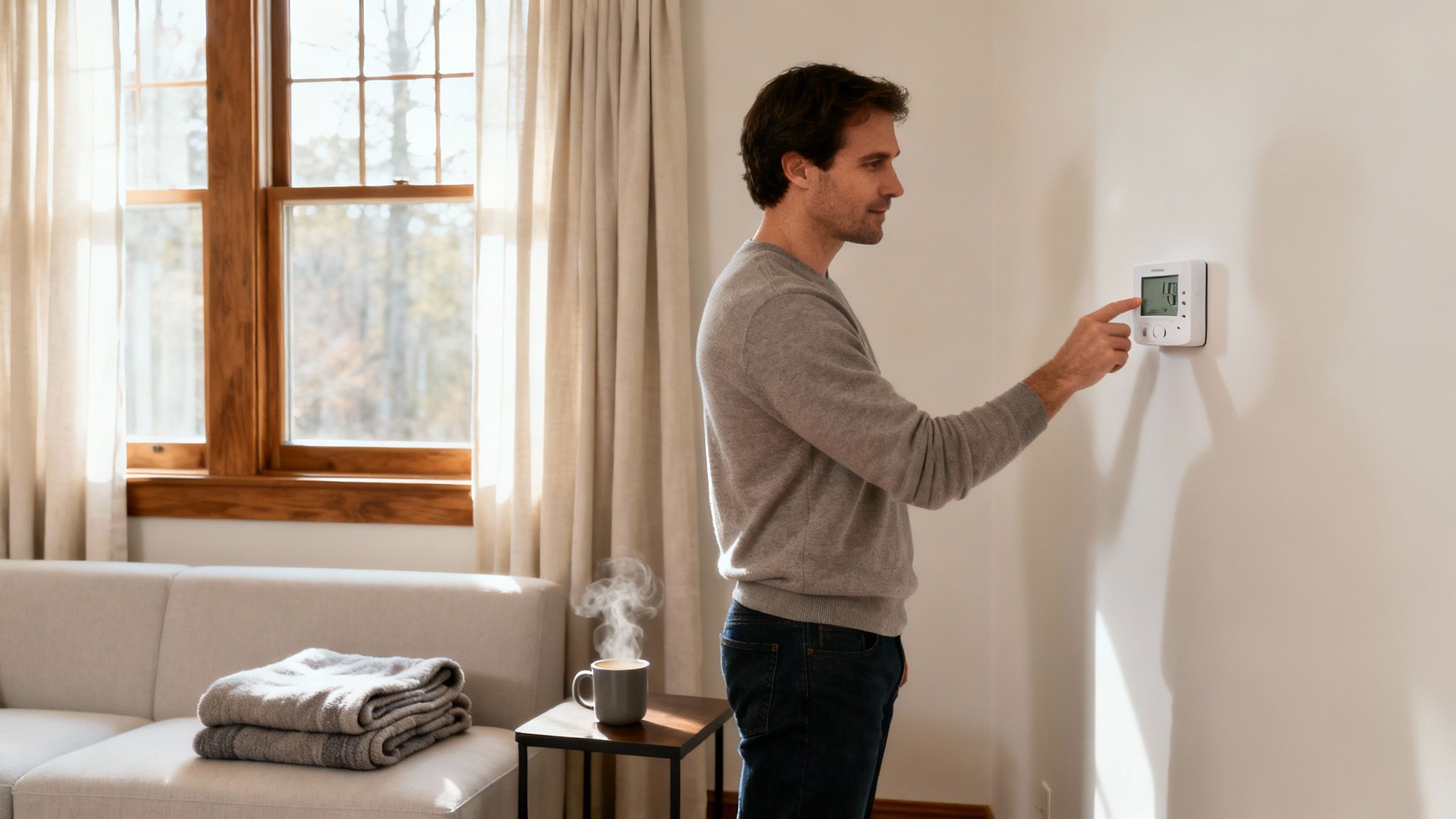
Feeling the chill from high heating bills? You're not alone. This is your immediate action plan for saving money right away—no major projects, no big expenses. These are the most effective, low-effort strategies any homeowner in Upstate South Carolina can implement this weekend. It’s all about getting the biggest bang for your buck before tackling anything more involved.
Master Your Thermostat Settings
The single most powerful tool you have for cutting heating costs is right there on your wall. Your HVAC system is one of the biggest energy consumers in your home, and every single degree makes a difference.
The U.S. Department of Energy keeps it simple: aim for 68°F when you're home and awake.
When you head to bed or leave for work, dialing it back even further is where the real savings kick in. Dropping the temperature to between 60-64°F for at least eight hours a day will make a noticeable dent in your next bill. If that sounds too chilly, don't worry. Just start by lowering it a few degrees and grab an extra blanket at night. You'll be surprised how quickly you adjust.
A smart thermostat completely automates this for you. It learns your family’s schedule and adjusts the temperature on its own, ensuring you never waste money heating an empty house. On average, this one simple upgrade can trim about 8% from your annual heating and cooling costs.
Use Your Home's Natural Heat Sources
Your home has built-in features that can help keep it warm without ever touching the thermostat. Harnessing them is a totally free and surprisingly effective way to lower those heating bills.
- Let the Sun In: On bright, sunny days, throw open the curtains and blinds on your south-facing windows. That natural solar heat will warm up your rooms for free. It’s like a passive furnace.
- Trap the Warmth at Night: As soon as the sun goes down, close those curtains and blinds. They act as a simple but effective layer of insulation, trapping the day's warmth inside and blocking the chill radiating from cold window panes.
To help you get started, here's a quick checklist of the easiest wins for immediate savings.
Immediate Impact Energy-Saving Checklist
| Set thermostat to 68°F when home | $0 | Up to 10% | 2 minutes |
| Lower thermostat when away/asleep | $0 | Included in above | 2 minutes |
| Open curtains for sunlight | $0 | Varies | 1 minute daily |
| Close curtains at night | $0 | Varies | 1 minute daily |
| Reverse ceiling fan direction | $0 | ~2% | 5 minutes |
| Unblock heating vents | $0 | 1-2% | 10 minutes |
These small actions add up fast, putting money back in your pocket with almost no effort.
Simple Habit Changes with Big Payoffs
Beyond the thermostat, a few small tweaks to your daily routine can add up to real savings. Take a quick walk through your house and make sure furniture, rugs, or drapes aren't blocking any heating vents. Anything obstructing airflow forces your system to work harder and longer to heat the room.
And don't forget your ceiling fans! Most people think of them as a summer-only tool, but they're incredibly useful in the winter, too. Just flip the switch on the base of the fan to make the blades spin clockwise on a low speed. This creates a gentle updraft that pushes all that warm air hovering near the ceiling back down into the living space where you can actually feel it.
These small steps, when combined with smart thermostat use, are powerful first moves to reduce utility bills and take back control of your energy spending.
Mastering Your Thermostat and HVAC System
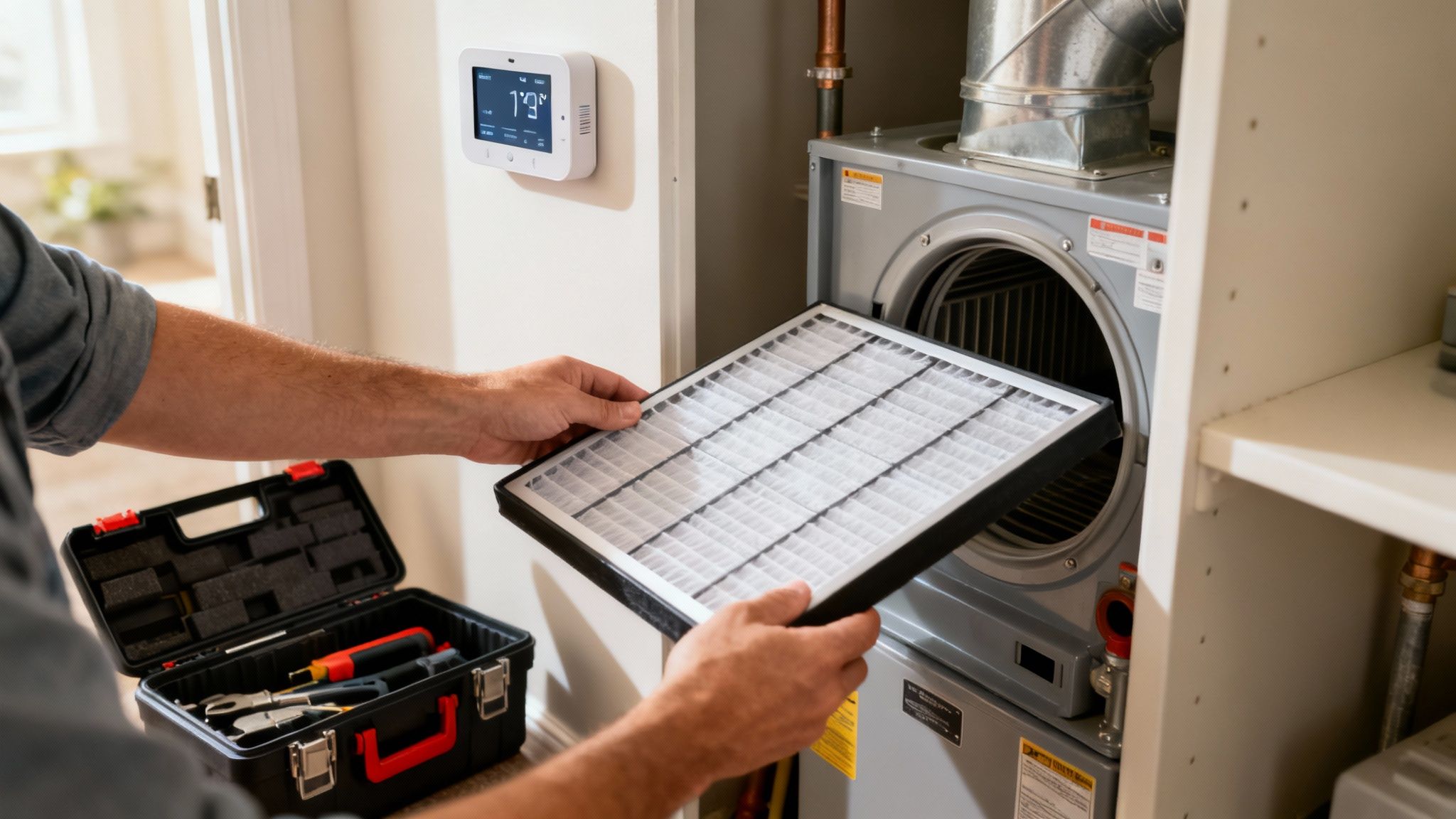
Your thermostat is the command center for your home's comfort, and it has a huge say in your monthly energy bill. If you want to unlock some serious savings, you need to go beyond just nudging the dial up or down. It’s all about creating a smart heating schedule that works for your life, not against your wallet.
The goal is simple: stop paying to heat an empty house. A programmable or smart thermostat automates this process entirely. You can set it to lower the temperature when everyone is out for the day and then have it kick back on to warm the house up just before you get home. It’s a small change that eliminates wasted energy every single day.
Automate Your Savings with Smart Thermostats
Making manual adjustments is a good start, but automation is where the real savings happen. A smart thermostat takes all the guesswork out of lowering your heating costs by learning your family's routine and adjusting the temperature automatically. Many models even give you detailed energy reports, showing you exactly where your money is going.
The real beauty of these devices is their consistency. They never forget to turn down the heat. This simple upgrade is one of the most effective ways to lower your heating costs without ever feeling a chill.
By consistently adjusting your home's temperature based on your schedule, a smart thermostat can reduce your heating and cooling expenses by an average of 8% annually. This technology ensures optimal efficiency day and night.
For us here in Upstate South Carolina, this pays dividends during our hot, humid summers, too. The same principles of smart temperature control apply to your air conditioning, delivering year-round savings. It's a smart long-term investment, especially with modern systems offering up to 30% savings on cooling costs.
The Power of Preventative HVAC Maintenance
Think of your furnace or heat pump like any other hard-working machine—it needs regular care to run at its best. If you neglect it, you’re practically guaranteed to see your energy bills creep up over time. One of the easiest and most impactful tasks you can do yourself is checking the furnace filter.
A clogged filter is a huge energy-waster. It restricts airflow, forcing the entire system to work harder and run longer just to heat your home. That extra strain not only burns through electricity but also puts unnecessary wear and tear on expensive components.
Here’s a quick rundown:
- Find your filter: It's usually in a slot right between the air return duct and the furnace unit.
- Check it monthly: During the peak heating season, pull it out and hold it up to a light. If you can't see the light shining through, it’s time for a new one.
- Replace as needed: Most disposable filters should be swapped out every 1-3 months. I always recommend writing the date on the new filter's frame so you don’t forget.
This five-minute job can cut your system's energy consumption by up to 15%. That's a massive return for such a small effort. Our comprehensive guide on https://atomicexteriors.com/blogs/how-to-improve-home-energy-efficiency covers more simple DIY tips just like this one.
When to Call for a Professional Tune-Up
While changing the filter is a great DIY task, your HVAC system still needs some professional attention. An annual tune-up is a smart investment in efficiency and reliability, and it can prevent a costly emergency repair on the coldest night of the year.
Think of it as an oil change for your car. A technician will clean critical components, lubricate moving parts, check electrical connections, and test all the safety controls. This preventative maintenance ensures your system is operating at peak performance, which translates directly to lower energy bills.
To get a better handle on how today's systems work, this resource on how reverse cycle air conditioning heats and cools is a great read. Understanding the tech helps you make smarter decisions about maintenance. Don’t wait for a breakdown; proactive care keeps your system healthy and your wallet happy.
Finding and Sealing Air Leaks in Your Home
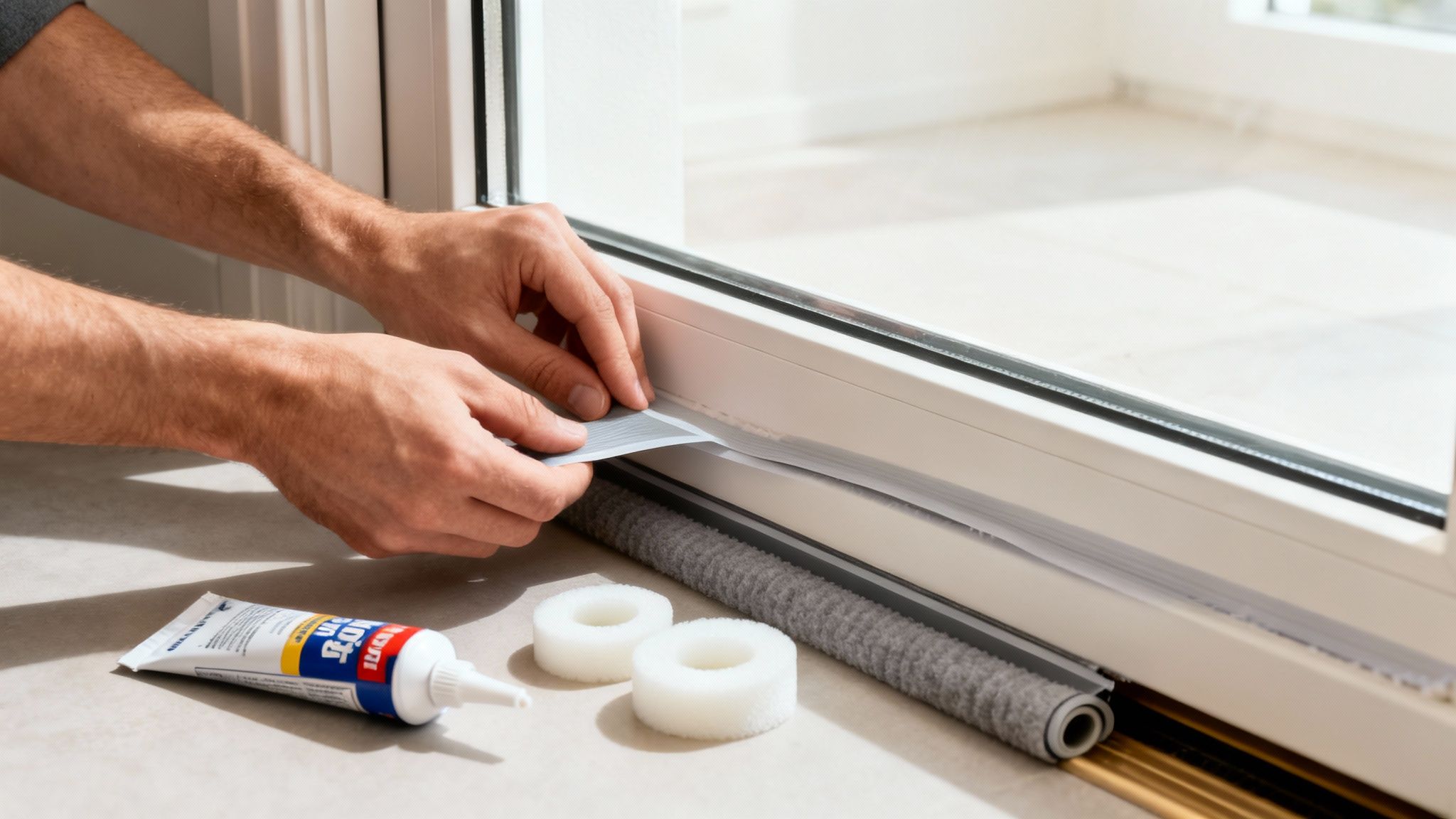
Ever felt a mysterious cold spot in an otherwise cozy room? That’s the invisible thief of home comfort—an air leak. All those tiny gaps and cracks around your windows, doors, and walls add up, acting like a window you’ve left open all winter.
This constant air exchange forces your furnace to work overtime, burning through fuel and money just to keep up. The good news? Finding and plugging these leaks is one of the most effective DIY projects you can tackle to seriously slash your heating costs.
Becoming a Home Draft Detective
First things first: you have to figure out where the cold air is getting in. You don’t need any fancy equipment for this hunt. Your best tools are a bit of patience and a keen eye. The best time to go looking is on a cool, windy day when the temperature difference between inside and out makes those drafts really obvious.
Start by walking slowly through your home, focusing on the usual suspects. Run your hand along the edges of window frames and door jambs—can you feel a faint breeze? Look for a sliver of daylight under an exterior door. These are dead giveaways of an energy-draining leak.
According to the U.S. Environmental Protection Agency, a thorough air-sealing job can cut heating and cooling costs by as much as 15-20%. That’s not just about feeling more comfortable; it's a direct path to real savings on your monthly bills.
Common Hiding Spots for Air Leaks
While every home has its own quirks, air leaks tend to show up in the same predictable places. If you focus your search on these hotspots, you’ll get the biggest bang for your buck (and your time).
Think of it as a systematic audit of your home’s weak points. Start with the most obvious culprits and work your way down the list:
- Windows and Doors: This is ground zero. Check the frames and sashes for any cracks where they meet the wall. That gap under your front door is a major source of heat loss.
- Electrical Outlets and Switch Plates: Any time something penetrates an exterior wall, it’s a potential leak. This includes outlets, light switches, and even the entry points for your cable and phone lines.
- Attic Hatches and Crawl Space Access: These are often uninsulated and poorly sealed, creating a massive chimney effect that pulls warm air right out of your house.
- Plumbing and Ductwork: Take a look under your sinks and where ductwork goes into walls or floors. These gaps are frequently overlooked but can let in a surprising amount of cold air.
Your DIY Air Sealing Toolkit
Once you’ve found the leaks, it’s time to seal them for good. Using the right material for the job is the key to a lasting fix. Thankfully, the supplies you need are cheap and easy to find at any local hardware store.
For a great deep dive, check out our guide on how to winterize windows and doors—it's the perfect place to start since these are often the biggest problem areas.
For Gaps Around Windows and Door Frames: Grab a tube of caulk for any stationary gaps smaller than a quarter-inch. A good acrylic latex caulk is flexible and cleans up easily with water. For bigger gaps, you’ll want to use an expanding foam sealant.
For Moving Parts like Doors and Window Sashes: This is a job for weatherstripping. It comes in a few different types, like self-adhesive foam tape or the more durable V-strip vinyl. It creates a tight seal when the door or window is closed but still lets you open it without a problem.
For Electrical Outlets on Exterior Walls: Simple foam gaskets are a game-changer here. Just unscrew the faceplate, pop the pre-cut foam insulator over the outlet, and screw the plate back on. It’s a two-minute fix that makes a huge difference.
Spending a weekend tackling these small projects will make your home feel warmer almost instantly, giving both your comfort and your wallet a much-needed break this winter.
The Big Guns: Insulation and Windows
While plugging up small air leaks is a great first step, the real heavy hitters in the fight against high heating bills are your insulation and windows.
Think of it this way: air sealing is like patching holes in a bucket, but good insulation is the bucket. Without a solid thermal barrier, the heat your furnace works so hard to produce will just bleed right out, forcing it to run constantly.
Investing in these foundational elements is more than a comfort upgrade—it’s a permanent strategy to slash your energy use. A well-insulated home with modern windows doesn't just keep you warm in the winter; it also blocks out that intense Upstate South Carolina sun in the summer.
Getting a Handle on Your Home's Thermal Envelope
Your home's thermal envelope is just a technical term for the boundary separating your heated and cooled living space from the outside world. Insulation is what makes that boundary work, and its performance is measured in R-value. The higher the R-value, the better it resists heat flow. It's that simple.
Here’s a startling fact: about nine out of ten homes in the U.S. are under-insulated. If your house was built more than a couple of decades ago, there's a very good chance its attic, walls, and crawl space just don't meet today's standards.
You can do a quick check yourself. Pop your head up into the attic. Can you easily see the tops of your ceiling joists? If so, you almost certainly need more insulation. Adding more is one of the single most cost-effective energy upgrades you can make.
The Problem with Old, Inefficient Windows
Let's face it, windows are basically giant, transparent holes in your thermal envelope. Older, single-pane windows offer almost zero resistance to heat transfer. Having them is like leaving a small window cracked open all year round, and they can be responsible for 25-30% of your home's total heating and cooling costs.
Thankfully, modern window technology has turned this massive weakness into a strength. Here’s what makes new, energy-efficient windows so much better:
- Double or Triple Panes: This creates an insulating air gap between panes of glass, which dramatically slows down heat from escaping.
- Argon Gas Fills: This safe, colorless gas is much denser than air, making it a terrible conductor of heat. Filling the space between panes with argon adds another powerful layer of insulation.
- Low-E Coatings: This is a microscopically thin, transparent layer of metal oxide that reflects heat. In the winter, it bounces heat back into your home. In the summer, it reflects the sun's heat away from it.
Upgrading to quality insulation and Energy Star-certified windows is a foundational move. Homes with poor insulation and old windows can easily see heating and cooling costs jump by 20-30% or more. The sooner you tackle these core issues, the sooner you start seeing real, lasting savings.
Choosing the Right Upgrades for Your Home
Upgrading insulation and windows is a significant investment, but the long-term payoff is huge. When you're serious about lowering your heating costs for good, these two upgrades should be at the very top of your list. The trick is choosing the right materials and professional installation for your house and our specific Upstate SC climate.
For instance, spray foam insulation might be the perfect fix for a drafty, damp crawl space, while blown-in fiberglass is often the most practical and affordable way to top up an attic. If you want to dive deeper into the tech behind modern windows, you can explore the benefits of energy-efficient windows in our detailed guide.
And don't forget about skylights. They're a fantastic source of natural light, but a poorly sealed or single-pane skylight can be a massive energy drain. It's always a good idea to look into improving skylight insulation as part of a whole-home energy plan. When you address every part of your home's exterior shell, you create a truly efficient and comfortable space that saves you money month after month.
If you’re ready to stop tinkering and make a serious dent in your energy bills, the answer is on the outside of your house. Major exterior upgrades aren't just about curb appeal; they're about wrapping your home in a high-performance shell that delivers real, long-term savings.
Think of it as a permanent solution to high energy bills. Upgrades like insulated siding and properly installed seamless gutters create a solid thermal barrier, drastically cutting down on heat loss in the winter and stopping heat gain during our brutal South Carolina summers.
Insulated Siding: The Ultimate Thermal Blanket
Let's be honest, standard siding looks fine, but it does next to nothing to stop heat from escaping right through the studs in your walls. This is a huge energy drain called thermal bridging.
Insulated siding solves this problem directly. It has a layer of rigid foam insulation bonded to the back of each panel, creating a continuous blanket of protection around your entire home. It covers those wall studs and gives your home’s overall R-value a massive boost. The difference is immediate: a more stable indoor temperature, a quieter house, and, of course, lower heating and cooling bills.
For anyone living in the Greenville or Anderson areas, this upgrade is a game-changer for year-round comfort. Just look at where most homes lose their heat.
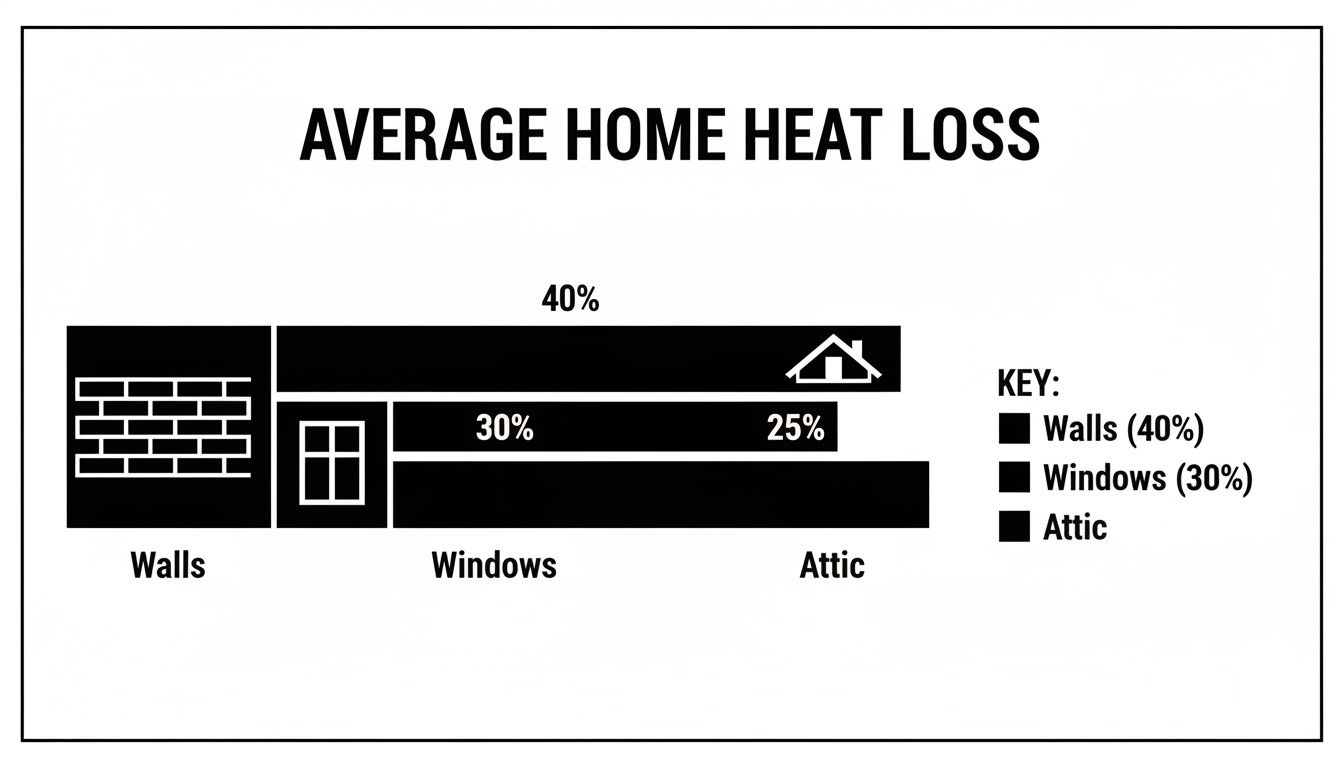
As you can see, the walls are the biggest culprits. That’s why insulated siding is such a powerful strategy for getting your energy costs under control.
Why Gutters Are Part of the Efficiency Equation
It might sound odd to bring up gutters when talking about heating costs, but they play a critical role. Water is the #1 enemy of your home's insulation.
When gutters get clogged and start overflowing, that water soaks your eaves, siding, and even your foundation. Moisture gets into your wall cavities and attic, where it compresses your insulation and completely destroys its R-value. Wet insulation is worthless insulation. A well-designed seamless gutter system channels water far away from your home, protecting your insulation and preventing the kind of water damage that can undo all your other efficiency efforts.
Investing in a complete exterior system—siding, windows, and gutters—isn't just about individual components. It's about creating a unified defense that keeps your home protected, comfortable, and energy-efficient for decades to come.
Exterior Upgrades Cost vs. Long-Term Savings Analysis
Thinking about the price tag for a big exterior project can be intimidating, but it’s crucial to see it as an investment, not just an expense. The upfront cost is offset by powerful returns, both immediate and long-term.
Here's a quick breakdown of what to expect for some of the most impactful upgrades in the Upstate SC area.
| Insulated Siding | $12,000 – $25,000+ | Up to 20% | Dramatically reduces thermal bridging, boosts R-value, enhances curb appeal, and provides sound dampening. |
| Energy-Efficient Windows | $8,000 – $20,000+ | 15% – 25% | Low-E coatings block UV rays, double/triple panes prevent heat transfer, and improves home comfort and value. |
| Seamless Gutters & Guards | $1,500 – $4,000+ | Indirect (Protects Insulation) | Prevents water damage to foundation and walls, protects insulation's R-value, and reduces costly maintenance. |
While the initial numbers are significant, the combination of lower utility bills, reduced maintenance, and a higher resale value creates a compelling financial case for these improvements over the life of your home.
Here’s a quick look at how the benefits really stack up:
- Annual Energy Savings: Insulated siding alone can cut your heating and cooling costs by 20% or more. That’s real money back in your pocket, year after year.
- Reduced Maintenance: Forget scraping and painting. Modern siding and gutter systems are built to last with minimal upkeep, saving you time and money.
- Increased Home Value: Great curb appeal and proven energy efficiency are huge selling points. These upgrades make your home far more attractive to buyers and can help you recoup a large chunk of the cost when you sell.
This isn't just a local trend. As energy costs rise, homebuyers are actively seeking out properties that are already efficient. An investment in your home's exterior not only lowers your bills today but also positions your property as a premium, forward-thinking asset in the real estate market.
If you're looking for some inspiration on how these upgrades can transform a home, our guide to home exterior renovation ideas is a great place to start. It’s all about making your home work smarter—not harder—to keep you comfortable.
Common Questions About Lowering Heating Costs
When it comes to cutting your heating bill, it’s easy to get lost in a sea of advice. Where do you even start? Which projects actually pay off, and when is it time to put down the tools and call a pro?
We hear these questions all the time from homeowners across Upstate SC. So, we've put together some straightforward answers to help you make smart decisions, whether you’re looking for a quick win or planning a major upgrade.
Where Is the Best Place to Start Saving Money?
The absolute best place to start is with the low-hanging fruit—the simple tweaks that cost next to nothing but deliver real, immediate savings. Before you even think about new windows or insulation, get to know your thermostat.
Just dialing it back 7-10 degrees for the eight hours you're at work or asleep can shave up to 10% off your heating bill for the year. That's a huge return for zero effort.
Next, go on a quick hunt for obvious air leaks. A tube of caulk for gaps around window frames and a roll of weatherstripping for a drafty door are cheap fixes that make a surprisingly big difference in how comfortable your home feels.
Key Takeaway: Don't overlook the small stuff. The one-two punch of smart thermostat habits and basic air sealing is the most effective first step for any homeowner. It builds a solid foundation for savings with almost no investment.
After that, make it a habit to check your furnace filter every month. When it’s clogged with dust and dirt, your HVAC system has to work overtime, which just burns through energy and your money.
Which Upgrades Have the Best Return on Investment?
Once you’re ready to invest in a bigger project, you want to put your money where it counts. For most homes around here, especially older ones, the hands-down ROI champion is attic insulation.
Heat rises, so a poorly insulated attic is like leaving a massive window open all winter. It’s a surprisingly affordable upgrade that can slash your heating and cooling costs by up to 20%.
Beyond the attic, these two upgrades deliver fantastic long-term value:
- Air Sealing: This is the next level beyond basic weatherstripping. A pro can run a blower door test to pinpoint all the hidden leaks in your home’s structure—around pipes, recessed lighting, and wiring. The EPA estimates comprehensive air sealing can save 15-20% on energy bills.
- Energy-Efficient Windows: They’re a bigger upfront cost, no doubt. But if you have old, single-pane windows, upgrading is a game-changer. Modern Energy Star-rated windows can cut your home’s energy loss by 25-30% and start paying for themselves from day one.
And here in Upstate South Carolina, these upgrades pull double duty. They'll keep you much cooler during our hot, sticky summers, giving you year-round savings that make the investment even smarter.
When Should I Call a Professional?
Knowing your DIY limits is just as important as knowing how to caulk a window. Some jobs are perfect for a Saturday afternoon, while others really need a pro to be done safely and correctly.
Always call a licensed professional for these jobs:
Annual HVAC Maintenance: A technician has the training and tools to do a real tune-up—cleaning critical parts, checking pressures, and making sure the system is running at peak efficiency. This is not a DIY job.
Major Insulation Work: Tossing a few batts of insulation in an attic is one thing. But blowing insulation into walls or using spray foam requires special equipment and a deep understanding of building codes to avoid moisture issues.
Window and Siding Installation: A high-performance window is only as good as its installation. If it isn't installed perfectly level and sealed tight, it will leak air and water, completely wiping out any energy-saving benefits.
Electrical or Gas Line Work: Never, ever touch anything involving your furnace's gas or electrical connections. The risk of fire, gas leaks, or serious injury is just too high.
Hiring a professional ensures the job is done right the first time, which maximizes your energy savings and, more importantly, keeps your home and family safe.
Ready to take the next step and transform your home's exterior into a high-performance, energy-saving shield? The team at Atomic Exteriors specializes in insulated siding, energy-efficient windows, and seamless gutters designed for the Upstate SC climate. Contact us today for a free, no-pressure estimate and see how we can help you lower your heating costs for good. https://atomicexteriors.com