.png)
Why You Have Melting Ice in Gutters and How to Stop It
It’s a classic winter scene: sparkling icicles hanging from the gutters. While they might look pretty, they're often the first red flag of a serious and destructive problem called an ice dam.
The real issue isn't the ice itself, but what's causing it. It’s a chain reaction that starts when heat escaping from your attic melts the snow on your roof. That meltwater runs down to the colder edge of the roof and—bam—it refreezes right in your gutters.
The Real Reason You See Melting Ice in Your Gutters
If you've noticed those beautiful but menacing icicles forming along your roofline, you're witnessing the final, visible stage of a damaging cycle. To really get why this is happening, you first have to understand what an ice dam on your roof is. It’s a literal dam—a ridge of ice—that builds up at the edge of your roof, blocking melting snow from draining away.
When that water gets trapped, it has nowhere to go but up and under your shingles. From there, it can leak into your home, causing serious damage to walls, ceilings, and insulation. This isn't just a freak occurrence, either. Industry data shows that nearly one-third of U.S. homes—around 31.4 million—are in areas with more than 30 freezing days a year, putting them at high risk for ice dams.
This diagram breaks down the simple but destructive process.
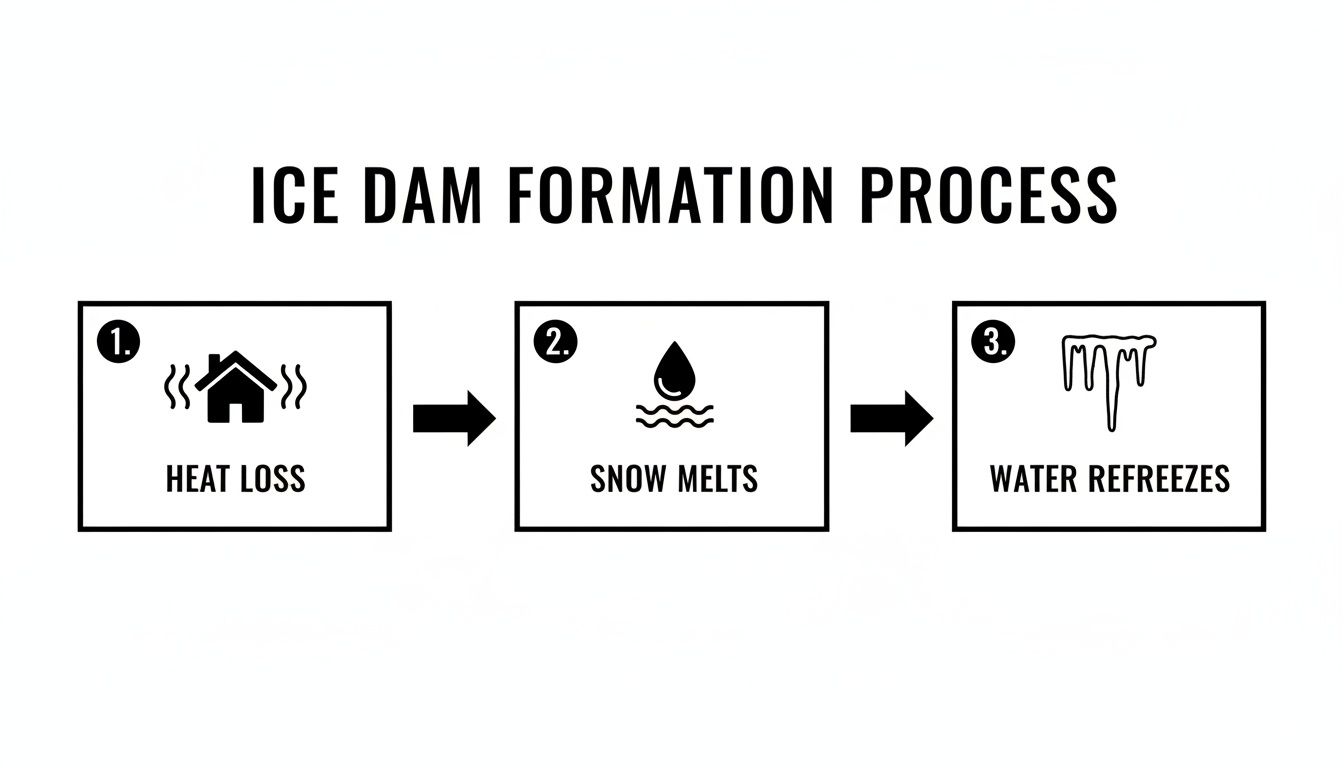
As you can see, it all starts with heat loss from the attic. That heat melts the snow, which then refreezes at the colder eaves, creating a blockage that just keeps growing.
Why Your Home Is Creating This Problem
The entire cycle starts inside your house, usually in the attic. A few key culprits work together to create the perfect storm for ice dams. Getting a handle on these is the only way to find a permanent fix.
- Excessive Attic Heat Loss: This is the main driver. When your attic is poorly insulated or has unsealed air leaks, warm air from your living space rises and collects under the roof deck, melting snow from the bottom up.
- Inadequate Attic Ventilation: A well-ventilated attic is a cold attic. It pulls in cold outside air and circulates it, keeping the roof deck temperature close to the outdoor temp. Without that airflow, escaped heat gets trapped, creating a warm zone right where you don't want one.
- Clogged and Overflowing Gutters: Gutters packed with leaves and debris are a welcome mat for ice dams. When meltwater hits a clog, it pools up and freezes solid, forming the initial blockage that the rest of the ice dam builds upon.
This summary table can help you quickly pinpoint what might be going on with your home.
Quick Guide to Ice Dam Causes
| Heat Loss | Warms the roof from underneath, melting snow that refreezes at the colder eaves. | High energy bills; drafts near attic access; uneven snowmelt on the roof. |
| Poor Ventilation | Traps warm air in the attic, keeping the roof deck too warm. | Blocked soffit or ridge vents; frost buildup on attic rafters; hot, stuffy attic. |
| Clogged Gutters | Prevents meltwater from draining, causing it to pool and freeze into a solid block. | Visible leaves/debris in gutters; water overflowing the sides; icicles forming directly from the gutter. |
Understanding these factors is the first step toward diagnosing the problem and protecting your home.
The key takeaway is that melting ice in your gutters is a symptom, not the disease. The real problem is a warm roof, and the solution lies in controlling the heat that escapes from your home.
Ultimately, addressing these core issues is about more than just preventing icicles; it’s about protecting your home's structure and improving its efficiency. You can learn more about tackling heat loss in our guide on how to improve home energy efficiency: https://atomicexteriors.com/blogs/how-to-improve-home-energy-efficiency.
Pinpointing the Source of Your Gutter Ice Problem
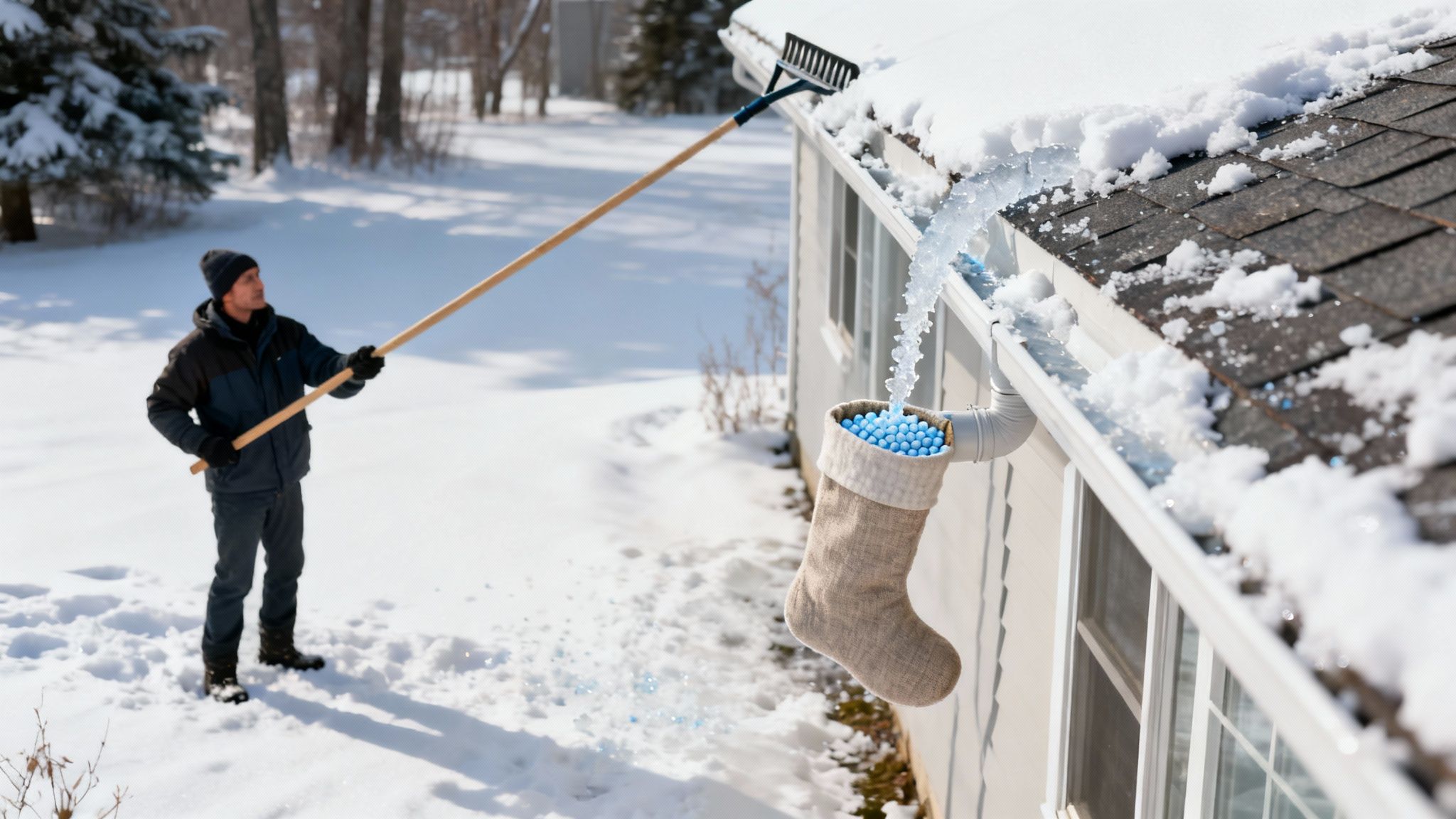
Before you can fix the ice building up in your gutters, you have to play detective. The good news? You can usually figure out the root cause with a safe inspection from the ground—no ladder needed in icy conditions. Your house gives off visual clues that tell a story about what’s really going on up there.
Start by just looking at the icicles. Are they massive, heavy columns of ice hanging right off the gutter, making the whole thing sag? This is a classic sign of a simple but serious clog. Water from melting snow gets into the gutter but hits a dam of leaves or other gunk, forcing it to overflow and freeze.
But what if you see a thick, solid ridge of ice along the edge of the roof behind the gutter, with smaller icicles hanging from that ridge? That’s a textbook ice dam, and it points to heat escaping from your attic. This isn’t just a clog; it’s a sign of a bigger issue.
Looking for Telltale Signs
To get a clearer picture, take a slow walk around your home and look for patterns. These clues are what help us pros tell the difference between a simple gutter problem and a more complex insulation or ventilation problem.
Pay close attention to these specific signs:
- Ice Location: Is the ice concentrated in just one spot, maybe right under a big oak tree? That makes a debris clog the likely culprit. Or is the ice spread evenly across the entire front or back of the house? That usually points toward widespread heat loss.
- Icicle Formation: Take a good look at where the icicles actually start. If they begin behind or above the gutter line, it means water is freezing before it even gets a chance to drain. This is a dead giveaway that a warm roof deck is melting snow from the bottom up.
- Water Stains: Check the siding and the fascia board right below your gutters. See any dark streaks or discolored patches? That’s evidence of water overflowing for a while, a common symptom of both clogs and severe ice dams.
Think of this as a quick home health check-up. The goal isn't just to spot the ice, but to understand the story it's telling you about how your home is performing in the winter.
Systemic vs. Localized Problems
Here's an easy way to think about it: a single clogged downspout is a localized problem. You'll see ice and overflow piled up in that specific corner of your house. The fix is usually as simple as clearing that one blockage. If you need some pointers on that, check out our guide on how to clean gutters safely.
A systemic problem, on the other hand, like poor attic insulation, affects the entire roof. You’ll see a consistent sheet of ice or a heavy ridge forming along huge stretches of the roofline, even where the gutters are totally clean. This pattern is your biggest clue that the solution involves more than just scooping gunk out of the gutters.
Knowing the difference is critical. It determines your next steps and makes sure you’re fixing the actual cause, not just chipping away at the symptoms.
Safe Ways to Deal with an Active Ice Dam Right Now
The moment you see water dripping down an interior wall, the game changes. This isn't about long-term prevention anymore; it's about immediate damage control. An active ice dam is a true home emergency, but panicking and acting rashly can make a bad situation much, much worse.
Your goal right now is simple: create a path for the trapped water to escape without wrecking your roof or risking your safety.
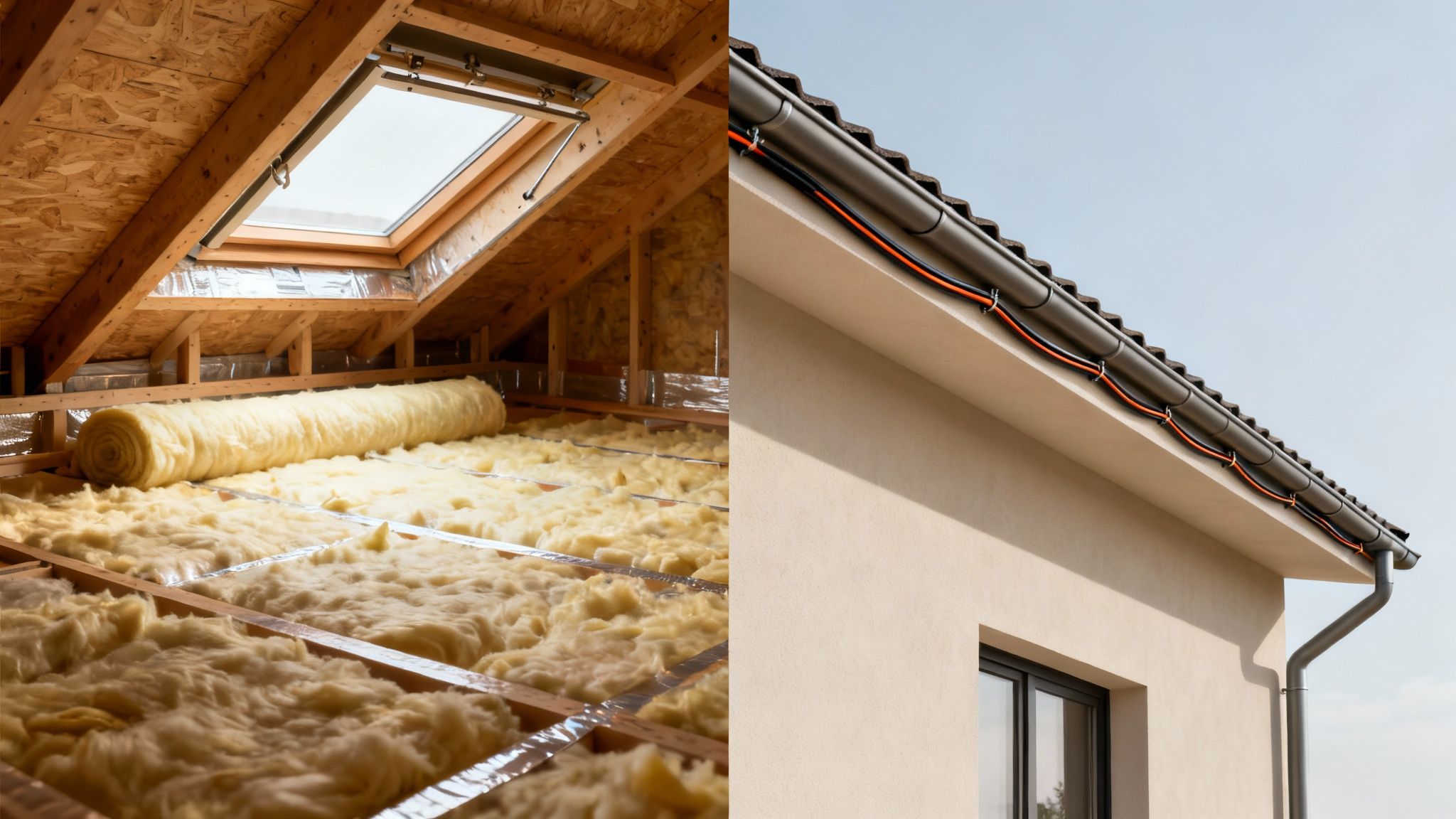
First things first, you need to cut off the fuel source for the melting ice in your gutters—the snow piled up on your roof. By clearing the snow from the first three to six feet of your roof's edge, you stop the melt-and-refreeze cycle that created the dam in the first place.
A long-handled roof rake is the only tool you should be using for this job. Stand firmly on the ground, never on a ladder, and gently pull the snow down. A sudden shift in snow can easily knock you off a ladder.
Create a Drainage Channel Safely
With the snow gone, the next move is to carve a channel through the ice dam itself. This gives all that pooled-up water a way out, relieving the pressure and hopefully stopping the leak inside. The safest and most effective way to do this involves a common household item and some specific de-icer.
Crucial Safety Note: Whatever you do, never use rock salt (sodium chloride) on your roof. Rock salt is incredibly corrosive and will eat away at your shingles, gutters, flashing, and even the nails holding everything together.
Here’s the right way to melt a channel:
Grab an old pair of pantyhose or a long tube sock and fill it with calcium chloride pellets. This little trick keeps the pellets concentrated right where you need them.
Carefully lay the filled stocking vertically across the ice dam so it's perpendicular to the gutter. Make sure the bottom end hangs over the gutter's edge.
The calcium chloride will slowly melt a channel through the ice, letting the trapped water drain down and out of the gutter system.
What You Must Never Do
When you’re staring at a water stain on your ceiling, it's tempting to grab a hammer, shovel, or even a blowtorch. Please don't. These "quick fixes" almost always lead to bigger, more expensive problems. If you're already worried about water getting in, our guide on how to stop roof leaks explains just how critical it is to protect your shingles.
Steer clear of these common mistakes:
- Chipping or Hacking at the Ice: Taking a hammer or hatchet to the ice will destroy your shingles, tear the protective underlayment, and dent your gutters. You’ll turn a leak into a full-blown roof replacement.
- Using a Pressure Washer or Hot Water: Pouring hot water on an ice dam seems logical, but it’s a temporary fix at best. You’re just adding more water to the problem, which will refreeze and make the ice dam even bigger.
- Applying Open Flames: A blowtorch is a massive fire hazard. It can instantly destroy your roofing materials and put your entire home at risk.
Permanent Solutions to Prevent Gutter Ice for Good
Temporary fixes are great for getting you through a winter crisis, but they do absolutely nothing to solve the underlying problem. To truly protect your home from the cycle of melting and refreezing, you need to shift your focus from reacting to ice dams to preventing them from ever forming.
This isn't just about avoiding a nuisance. Winter weather packs a serious punch. In just the first six months of 2022, winter storms caused an estimated $64.1 million in property damage across the U.S. A huge chunk of that comes from ice dams, roof stress, and water intrusion—all things that permanent solutions are designed to stop.
The best strategies tackle the root causes: escaping heat, poor water management, and the clogs that start the whole mess.
Boosting Attic Insulation and Air Sealing
Believe it or not, the single most effective way to stop ice dams has nothing to do with your gutters—it’s all about what’s happening in your attic. The goal is simple: keep your roof deck uniformly cold. As cold as the outside air. A cold roof doesn’t melt snow, and if there's no meltwater, an ice dam can't form. Period.
Achieving this comes down to a one-two punch:
- Air Sealing: Before you even think about adding more insulation, you have to plug the leaks. Warm air from your living space is constantly trying to sneak into the attic through gaps around light fixtures, plumbing vents, chimneys, and the attic hatch. Sealing these "attic bypasses" with expanding foam or caulk is a critical first step.
- Upgrading Insulation: With the air leaks sealed, you can now add insulation. A thick, continuous blanket of insulation acts as a thermal barrier, keeping your expensive heated air inside your home and away from the underside of your roof.
Strategic Gutter Heating Cables
Sometimes, even a perfectly insulated and sealed attic isn't quite enough, especially on homes with complex rooflines or persistent problem spots. This is where gutter heating cables come in. They provide a reliable, targeted solution to keep meltwater flowing when it absolutely has to.
It's important to understand these cables aren't designed to melt all the snow off your roof. Instead, a self-regulating heating cable is installed in a zigzag pattern along the eaves and run through the gutters and downspouts. When turned on, it creates just enough warmth to maintain a clear drainage channel, letting water escape before it has a chance to freeze solid.
Gutter heating cables are an excellent tool for managing the symptom—refreezing water—but they are most effective when combined with attic improvements that address the cause of the melting ice.
Upgrading Your Gutter System
Old, sagging, or perpetually clogged gutters are practically an engraved invitation for ice dams. All it takes is a handful of leaves or pine needles to create a small blockage, and suddenly you have a mini-pool of water at your roof's edge, just waiting for temperatures to drop.
Upgrading to a modern, high-performance gutter system eliminates this common trigger.
Here are the options that make the biggest difference:
- Seamless Gutters: Fabricated from a single piece of aluminum on-site, these gutters have no joints or seams. That means no weak spots for leaks to develop and fewer edges to snag debris.
- Covered or Guarded Gutters: Installing a high-quality gutter guard is the ultimate "set it and forget it" solution. By physically blocking debris from entering the gutter channel, you guarantee that water can always flow freely, even during the trickiest freeze-thaw cycles.
For homes where falling debris is the main culprit, a new, clog-resistant system is often a complete game-changer. You can learn more in our guide to gutter repair and installation options.
If you really want to get into the weeds on the physics of ice dams and why they form, this is a great resource on how to prevent ice dams that can help you protect your property.
Comparing Long-Term Ice Dam Prevention Methods
Deciding on the right permanent solution depends on your home’s specific issues, your budget, and how much maintenance you’re willing to do. Each of these professional-grade solutions offers a different balance of cost, effectiveness, and upkeep.
| Attic Insulation & Air Sealing | Addresses the root cause (heat loss) and lowers energy bills. | Moderate to High | None, once installed correctly. |
| Gutter Heating Cables | Provides a guaranteed drainage path in problem areas. | Moderate | Minimal; check connections annually and pay for electricity use. |
| New Seamless/Guarded Gutters | Prevents clogs, which are the initial trigger for many ice dams. | Moderate to High | Very low; occasional inspection is all that's needed. |
Ultimately, the most resilient homes often use a combination of these strategies. A well-insulated attic paired with a clog-free gutter system creates a powerful defense that keeps your home safe and dry all winter long.
Knowing When to Call a Gutter Professional
While I'm all for the satisfaction of a good DIY project, some home maintenance jobs cross the line from rewarding to just plain risky. When it comes to ice-clogged gutters, sometimes the smartest move you can make is knowing when to hang up your toolbelt and call a professional. This isn’t about admitting defeat; it’s a strategic decision to protect your home.
The most urgent red flag? Any sign of water inside your house. If you spot water stains blooming on your ceiling or see drips running down an interior wall, the problem has already moved from a gutter issue to an emergency. This means the ice dam has forced water under your shingles and through your roof deck. You need an expert, and you need one now, before it leads to serious structural damage and mold.
Assessing the Risk from the Ground
Even if the water is still outside, some situations are just too big to handle on your own. Take a walk around your house and look at the ice from a safe distance on the ground. Is it a massive, menacing sheet of ice? Is it so heavy that your gutters are visibly sagging or pulling away from the fascia board?
That’s a major hazard. Ice weighs about 5.2 pounds per square foot for every inch of thickness, and that weight can easily rip gutters right off your home. When that happens, you’re not just looking at a gutter repair; you’re looking at damage to your roofline, siding, and even your foundation.
Another thing to be honest about is your own safety and equipment. Getting rid of a big ice dam safely requires more than a wobbly ladder and a hammer. Pros use specialized gear like commercial-grade steamers, which is really the only way to melt the ice completely without wrecking your shingles. If you don’t have proper safety harnesses, experience working on icy roofs, or the right tools, the risk of a fall is just too high.
Hiring a professional isn't an expense; it's an investment in prevention. You're trading a manageable, upfront cost for the peace of mind that comes with avoiding a potential five-figure repair bill for water damage, roof replacement, or mold remediation.
When the Problem Is Deeper Than Ice
Finally, if you have a hunch the ice has already done some damage you can't quite see, it’s time to call for backup. Look for clues like loose or buckled shingles near the ice dam, warped fascia boards, or a surprising amount of shingle granules in the snow below.
These are all signs that the problem is more than just surface-level ice. A professional contractor can do more than just get rid of the ice dam. They’ll also perform a thorough inspection to figure out why it formed in the first place—whether it’s poor insulation, bad attic ventilation, or something else—and give you a plan to fix it for good.
A Few Final Questions About Ice in Gutters
As we wrap up, it's totally normal to have a few questions lingering. When you’re dealing with something as potentially damaging as ice in your gutters, getting clear answers can make all the difference. Here’s what we hear most often from homeowners.
Are All Icicles on My Gutters a Bad Sign?
Not always. If you see small, fairly uniform icicles after a sunny day with freezing temperatures, it's usually no big deal. That’s just the natural melt-and-refreeze cycle at work.
The real red flag is when you spot thick, menacing icicles hanging from the gutter's edge, often with a visible bulge of ice behind them on the roof. That’s the classic calling card of an ice dam, and it means meltwater is pooling up instead of draining away properly.
Can Heated Gutter Cables Solve the Problem by Themselves?
Heated cables are great at one thing: creating channels for water to escape so it doesn’t back up and freeze. But they don't fix the underlying reason why so much snow is melting on your roof in the first place. Think of them as treating the symptom, not curing the disease.
The best long-term strategy is to tackle the root cause—usually poor attic insulation and ventilation that lets heat escape and warm your roof. Once that's handled, heated cables become a fantastic part of a complete system, ensuring any remaining meltwater stays on the move. They work best as part of a team, not as a solo player.
While historically more common in northern parts of the United States, experts now recognize that ice dams can form anywhere experiencing drastic temperature shifts. This expanding geographic risk makes ice dam awareness critical for homeowners across diverse regions, including here in Upstate South Carolina. You can learn more about this trend and its impact on homes nationwide. (https://newsroom.acg.aaa.com/aaa-warns-of-ice-dams-which-cause-roof-damage--as-temperatures-fluctuate/)
Will New Seamless Gutters Completely Stop Ice Dams?
Switching to a seamless, covered gutter system is a huge leap forward. Why? Because it knocks out one of the main culprits behind ice dams: debris clogs. For many homeowners, especially those with lots of surrounding trees, getting rid of clogs is all it takes to solve the problem for good. When leaves and pine needles can't block the channel, water just flows right through.
But if your home has serious heat loss through the attic, you might still get some ice buildup even with perfectly clear gutters. A truly bulletproof solution combines a high-quality gutter system with improved attic insulation and ventilation. That two-pronged attack creates an unbeatable defense. You can explore some of the best options in our guide to the best gutter guards for pine needles and other common debris.
If you're tired of worrying about ice dams and want a permanent solution, the team at Atomic Exteriors can help. We specialize in high-performance seamless gutter systems designed to handle our region's weather, protecting your home for good. Contact us today for a free, no-obligation estimate and find out how we can safeguard your home. https://atomicexteriors.com