.png)

What Is a Gutter Apron and Why It's a Non-Negotiable for Your Home
A gutter apron is a deceptively simple piece of L-shaped metal flashing, but it’s one of the most critical components of your entire roofing system. Its job is to bridge the tiny but treacherous gap between the edge of your roof and your gutter.
Think of it as a ramp for rainwater. It ensures every last drop rolls off your shingles and lands squarely inside the gutter, instead of sneaking behind it to cause trouble. This small part plays a huge role in protecting your home from costly water damage.
The Unsung Hero of Your Roofing System
Here’s a scenario every homeowner dreads: water runs off the roof, but instead of flowing into the gutter, it slips behind it. That water soaks directly into the wooden fascia board, day after day, storm after storm. Before you know it, you’ve got peeling paint, soft spots, and eventually, full-blown wood rot that can cost a fortune to fix.
This is the exact problem a gutter apron was designed to prevent. It acts as a shield, covering that vulnerable gap and protecting the underlying wood structure from moisture.
While the basic idea isn’t new—versions of it were used as far back as the Norman Empire—the modern gutter apron is a product of 20th-century innovation. Thanks to advances in metal fabrication and materials science, today’s components are far more effective and affordable than their historical counterparts. You can learn more about the evolution of water management systems to see just how far we’ve come.
By tucking under the first row of shingles and hanging over the back edge of the gutter, the apron creates a seamless, waterproof path for runoff. This simple, brilliant design is what stands between a healthy roofline and thousands of dollars in damage to your fascia, soffit, and even your home’s foundation.
Of course, its effectiveness hinges entirely on proper installation. This is a job for skilled roofing professionals, as their expertise is what makes the system work as a long-term investment in your home's health.
A complete water management system has many parts working together. To see how it all connects, you can explore the details of our high-performance gutter solutions.
For now, let's break down the key features of the gutter apron itself.
Gutter Apron At a Glance
Here’s a quick summary of what makes a gutter apron so important for your home.
| Primary Function | To direct water from the roof shingles directly into the gutter channel. |
| Key Benefit | Prevents water from running behind the gutter, protecting fascia and soffits from rot. |
| Common Materials | Aluminum, galvanized steel, and copper are popular for their durability and rust resistance. |
As you can see, this small component delivers a massive amount of protection, making it an essential part of any well-designed gutter and roofing system.
Solving The Gutter Apron vs. Drip Edge Puzzle
One of the most common questions homeowners ask is about the difference between a gutter apron and a drip edge. They’re both pieces of metal flashing at the edge of your roof, and honestly, they look pretty similar at a glance. But they do very different jobs, and knowing which is which is crucial for stopping water damage before it starts.
Think of it like this: a drip edge is all about protecting the bones of your roof—the wooden decking underneath. Its main job is to kick water away from the fascia board so it doesn't get a chance to creep back under the shingles and cause rot.
A gutter apron, on the other hand, is a specialist. Its L-shaped design reaches down into the gutter, acting like a dedicated chute. It makes absolutely sure that every drop of water rolling off your shingles lands exactly where it's supposed to: inside the gutter system. Without one, water can easily sneak behind the gutter and destroy your fascia.
This little diagram shows you exactly how a gutter apron bridges that critical gap.
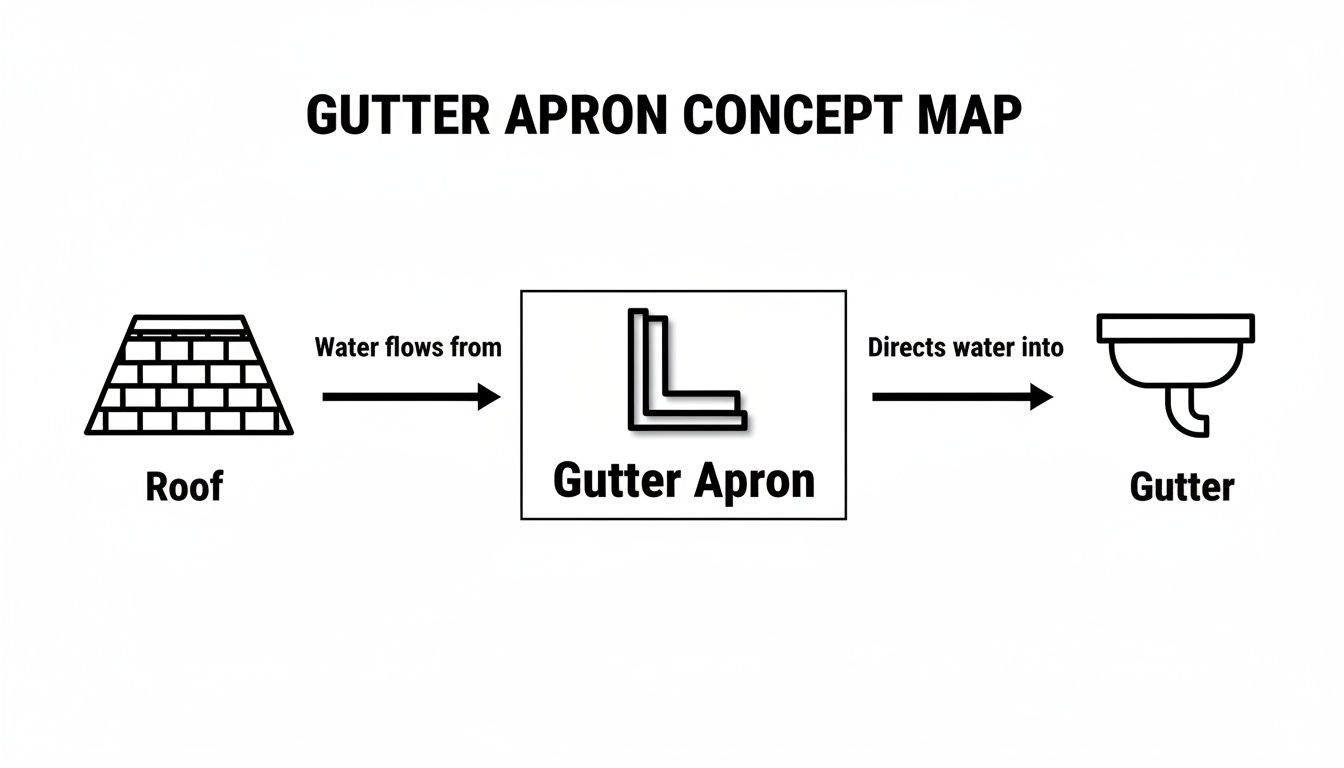
As you can see, the apron is the missing link that creates a seamless path for water. It closes off that sneaky gap where so many leaks and rot problems begin.
Key Functional Differences
So, how do you tell them apart? It all comes down to their shape and where they’re installed. The drip edge goes on first, sitting right on the roof decking. But the gutter apron is installed over the underlayment and under the shingles. This specific placement lets it hang down into the gutter, which is the key to its function.
Here’s a common misconception we see all the time: homeowners assume that if they have a drip edge, they don’t need a gutter apron. The truth is, the best-protected homes often use both. It creates a powerful, two-layer defense system against water getting where it shouldn’t.
Understanding these roles helps you diagnose problems with your own home. If you're seeing water stains or soft spots on the fascia board right behind your gutters, a missing or failed gutter apron is a likely culprit. For a deeper dive, you can learn more about how to stop roof leaks with our in-depth guide.
To really nail down the differences, let's put them side-by-side.
Comparison Gutter Apron vs Drip Edge
This table breaks down the core distinctions between these two critical pieces of flashing.
| Primary Goal | Direct water runoff into the gutter. | Protect the roof decking and kick water away from the fascia. |
| Installation | Under shingles, extends down into the gutter. | Under the underlayment, sits at the very edge of the roof sheathing. |
| Shape | A simple L-shape with a longer vertical leg. | Often has a T-shape or a hemmed "drip" edge to break water tension. |
At the end of the day, while a drip edge provides general protection for your roof's edge, a gutter apron offers targeted insurance that your gutter system will actually catch the water it's supposed to.
Choosing the Right Materials for Lasting Protection
Not all gutter aprons are built the same, and the material you pick is probably the biggest factor in how well it holds up over time. It’s a balancing act between durability, cost, and how it looks on your home. Your choice here directly impacts how this little piece of metal stands up to years of Upstate South Carolina rain, sun, and falling leaves.
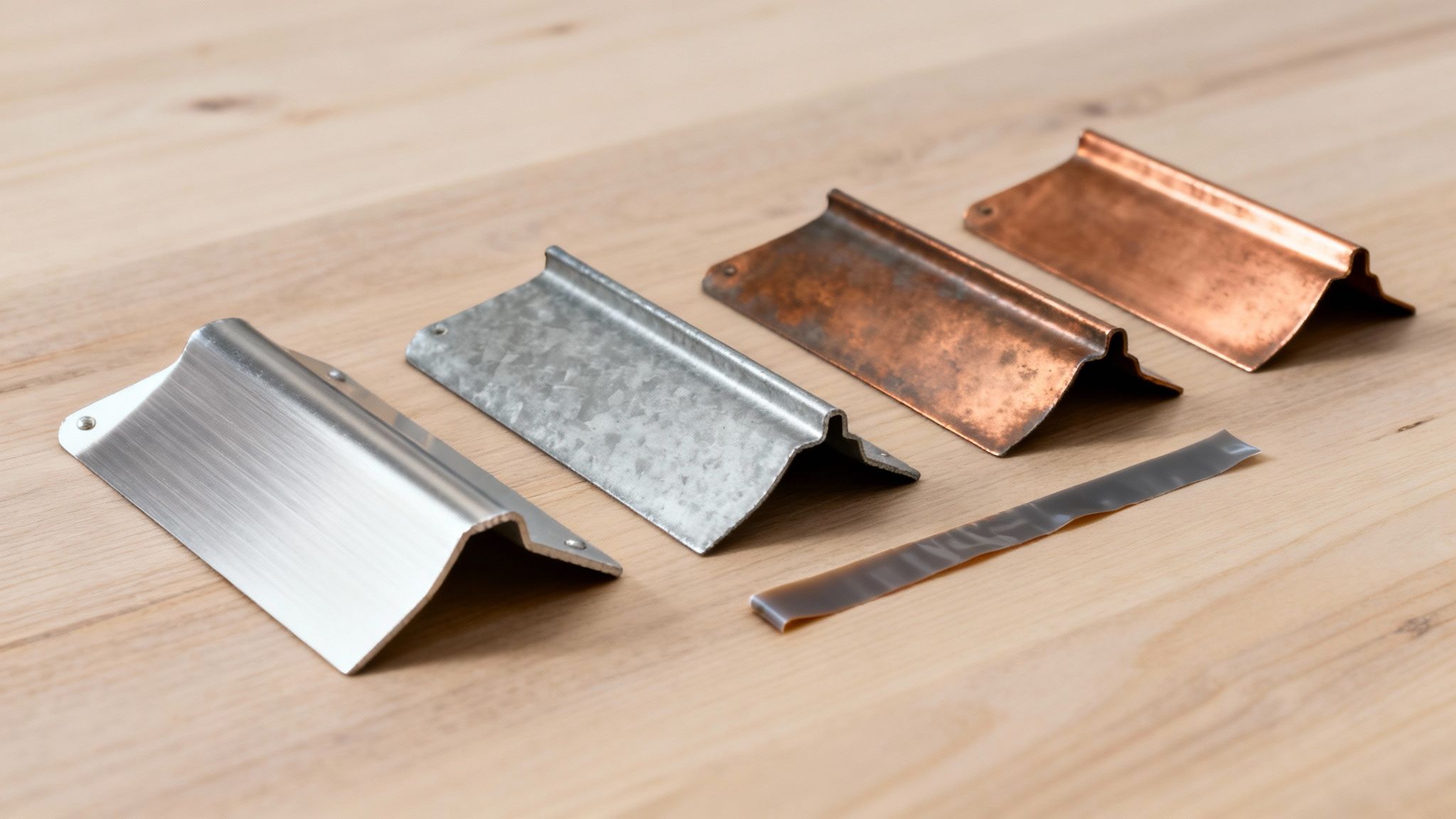
Each material brings something different to the table, making it a better or worse fit depending on our local climate, your budget, and your home’s style. Getting this right from the start means your gutter apron will be doing its job reliably for decades.
Common Gutter Apron Materials
Let's walk through the most common options you'll see, from the go-to workhorse to the premium, "buy it for life" investment.
- Aluminum: This is the crowd favorite, and for good reason. Aluminum is lightweight, totally rust-proof, and easy on the wallet, making it a fantastic all-around choice. It also comes in a ton of different colors to match your trim and gutters for a clean, cohesive look.
- Galvanized Steel: If you need something a bit tougher, galvanized steel is a great step up. It’s way stronger than aluminum, so it won’t get banged up by ladders or falling branches. A zinc coating keeps rust at bay, so you get all that strength without sacrificing lifespan.
- Copper: This is the top-of-the-line option, offering incredible longevity and a look that’s truly one-of-a-kind. Copper will never rust and develops that gorgeous blue-green patina as it ages. The upfront cost is higher, no doubt, but a copper apron can easily last over 100 years with almost no upkeep.
- Vinyl (PVC): While it's cheap and simple to work with, we generally steer people away from vinyl for gutter aprons. It just doesn't handle weather swings well—it can get brittle and crack in the cold or warp in our summer heat, leading to a quick failure.
Your gutter apron material should almost always match your gutter system. A unified system not only works better but also adds to your home’s curb appeal and overall value.
The material you choose will also shape your project's budget. It helps to understand the cost of seamless gutters to get the full picture, since the apron is a key part of that whole system. For most homes around here, aluminum and steel deliver the best bang for your buck, hands down.
Warning Signs Your Home Is at Risk
When a gutter apron fails or was never installed in the first place, the damage starts small and works its way in silently. Your house won't shout about the problem—instead, it leaves a trail of subtle clues, warning you that water is sneaking in where it absolutely shouldn't be.
If you know what to look for, you can catch the issue before it spirals into serious, expensive structural repairs.
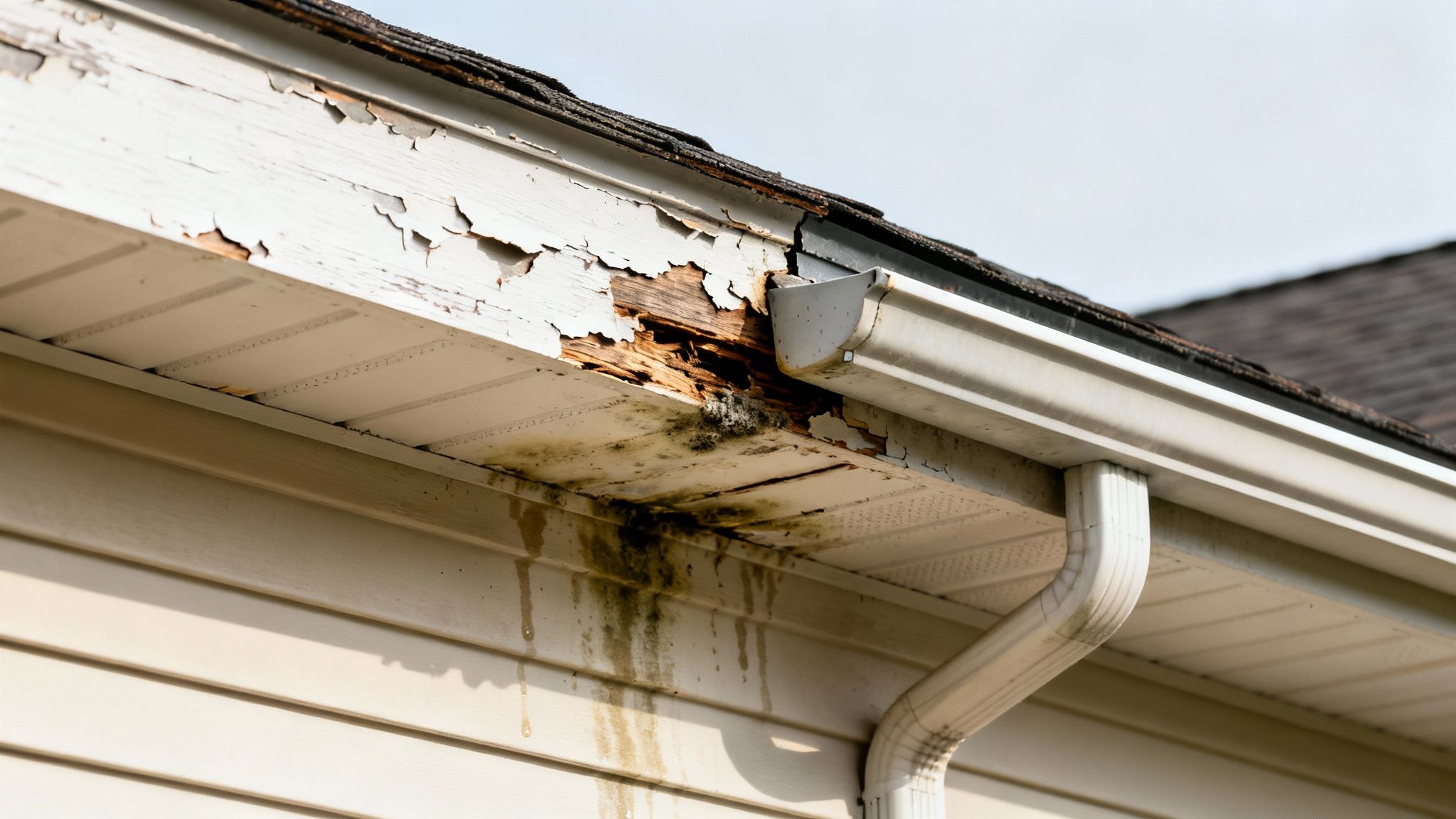
Think of these symptoms as your home’s cry for help. Ignoring them gives moisture a free pass to seep deeper into the wood, creating the perfect environment for rot, mold, and even pest infestations to move in.
Telltale Signs of Water Intrusion
Grab a pair of binoculars or just take a slow walk around your home’s perimeter after the next rain. You'll want to pay close attention to the area right under your roofline and keep an eye out for these specific red flags.
- Water Stains on Fascia Boards: Look for dark, vertical streaks or discolored patches on the board sitting directly behind your gutters. This is the number one sign that water is rolling behind the gutter instead of flowing into it.
- Peeling or Bubbling Paint: When fascia and soffit boards get soaked, the paint can't hold on anymore. You’ll see it start to chip, flake, or bubble up right beneath the gutter’s edge.
- Visible Wood Rot or Soft Spots: Carefully (and safely!) poke the fascia or soffit with a screwdriver. If the wood feels spongy, soft, or just crumbles, you’re dealing with active rot caused by long-term water exposure.
- Drips Behind the Gutter: During a light rain, watch how the water is behaving. If you can see it dripping from the gap between the back of the gutter and the fascia, your gutter apron is either missing, damaged, or wasn't installed correctly.
Catching these issues early is the key to turning a minor fix into a major one. A well-maintained exterior is your best defense, and a quick inspection now and then can save you a ton of money and stress.
Diagnosing these problems is a huge part of protecting your investment. For a more structured approach, you can follow our comprehensive exterior home maintenance checklist to make sure nothing gets missed. By connecting these visible symptoms to their root cause, you can take action before a tiny drip leads to thousands in repairs.
Why Gutter Aprons Are a Non-Negotiable for Upstate Homes
Generic, one-size-fits-all roofing advice often fails to account for one key thing: where you live. Here in Upstate South Carolina, our homes aren't just getting a bit of rain. They’re battling intense subtropical downpours and the kind of heavy, persistent humidity that mold and mildew absolutely love. This is exactly why a gutter apron isn't just a nice "add-on"—it's a critical piece of your home’s defense system.
Picture one of our classic summer storms. A massive sheet of water comes cascading off your roof. Without a gutter apron, a surprising amount of that water will find its way behind the gutter, soaking the fascia board and seeping into the soffit. Day after day, storm after storm, this constant moisture leads directly to wood rot, compromising the entire structure of your roofline.
Built for South Carolina's Weather
The relentless dampness we deal with in the Upstate dramatically speeds up that decay process. A standard drip edge often just can't keep up with the sheer volume and force of the rain we get. A gutter apron, on the other hand, creates a dedicated, waterproof channel that makes sure every single drop ends up in the gutter where it belongs.
Think of it like this: you wouldn't wear flip-flops in a blizzard, right? Your home shouldn't face our heavy rains without the right gear, either. The gutter apron is that essential piece of equipment.
The need for smart water management is a big deal everywhere, not just here. Across the country, the market for gutters and their components has swelled into an $8 billion industry, which shows just how vital these systems are for protecting homes.
For local contractors, clearly explaining the value of these parts is a huge part of how to generate roofing leads and earn a homeowner's trust for the long haul. Ultimately, investing in a proper gutter apron is one of the smartest, most proactive decisions a homeowner in our area can make to protect their property.
A Few Common Questions About Gutter Aprons
Alright, let's wrap up by tackling some of the most common questions homeowners have about this key piece of the puzzle. Getting straight answers helps you make the best call for your home.
Can a Gutter Apron Be Installed on an Existing Roof?
Absolutely. A skilled pro can retrofit a gutter apron onto most existing roofs without much fuss. The process involves carefully lifting the edge of the first row of shingles, sliding the apron underneath, and securing it properly. It's a common and highly effective upgrade for homes that were built without one.
Is a Gutter Apron Required by Building Codes?
Building codes can be a bit of a patchwork, varying from one town to the next. While a drip edge is often a code requirement here in the Upstate, a gutter apron is usually considered a "best practice" for top-tier water management. Think of it as going beyond the bare minimum. In a place like ours that gets its fair share of downpours, it’s a strongly recommended layer of defense.
The most protected homes often use both a drip edge and a gutter apron. This dual-flashing system creates a nearly foolproof barrier against water getting where it shouldn't, giving you maximum defense against rot at your roofline.
Does a Gutter Apron Replace the Drip Edge?
Nope, they're actually teammates that serve different, but complementary, jobs. The drip edge is there to protect the underlying roof decking right at the edge. The gutter apron’s specific mission is to bridge that gap and steer water directly into the gutter.
When you're looking at different systems, like seamless gutters vs regular gutters, the performance of either one is massively improved by having proper flashing like a gutter apron in place.
Ready to give your home the ultimate protection against water damage? The expert team at Atomic Exteriors provides professional seamless gutter and gutter apron installation designed specifically for our local Upstate weather. Get your free, no-obligation estimate today by visiting us at https://atomicexteriors.com.