.png)
What Is Fiber Cement Siding Made Of and Why It Matters
Ever wonder what makes fiber cement siding so tough? It's not some exotic, high-tech material. The recipe is surprisingly simple, yet the result is a product that acts like custom-made armor for your house.
At its core, fiber cement is a powerful blend of Portland cement (for raw strength), ground sand (for structure), cellulose fibers (for a bit of flex), and water to bind it all together. It's a testament to how common, raw materials can be engineered into something truly extraordinary.
What’s Inside? A Closer Look at the Ingredients
To appreciate why fiber cement siding stands up to just about anything—from moisture and fire to pests and storm damage—you have to understand the role each component plays. It’s a masterful mix where every ingredient has a critical job.
Let's quickly break down the core components and their functions.
The Core Ingredients of Fiber Cement Siding
| Portland Cement | The main strengthening agent; provides rigidity and impact resistance. |
| Ground Sand (Silica) | Acts as a filler, giving the siding bulk and structural stability. |
| Cellulose Fibers | Sourced from wood pulp, these fibers prevent the siding from becoming brittle, allowing it to flex without cracking. |
| Water | The catalyst that dissolves the fibers and activates the cement, turning the mix into a workable slurry. |
This simple formula—roughly 90% Portland cement and sand mixed with 10% cellulose fibers—creates a modern, safe, and incredibly reliable siding. The genius is in the synergy; the cement provides the toughness, while the fibers ensure it doesn't just shatter on impact.
This unique composition is the secret behind the many benefits of fiber cement siding. For an even deeper dive into the manufacturing and properties of this material, you can explore this detailed guide on Fiber Cement Boards.
How Raw Ingredients Become Durable Siding Planks
It’s one thing to know what’s in fiber cement siding, but how do those simple ingredients transform into one of the toughest materials on the market? The process is a fascinating blend of chemistry and engineering.
It all starts by mixing Portland cement, sand, cellulose fibers, and water into a thick, uniform slurry. Think of it like making a high-tech concrete batter—every ingredient has to be perfectly blended to guarantee consistency and strength in the final board.
Once the slurry is just right, it isn’t just poured into a mold. Instead, it’s laid down in layers and pressed into thin, continuous sheets. This intense pressure squeezes out excess water and compacts the materials, which is what forms the initial shape and texture of the siding planks.
This diagram breaks down the surprisingly simple recipe that serves as the foundation for fiber cement.
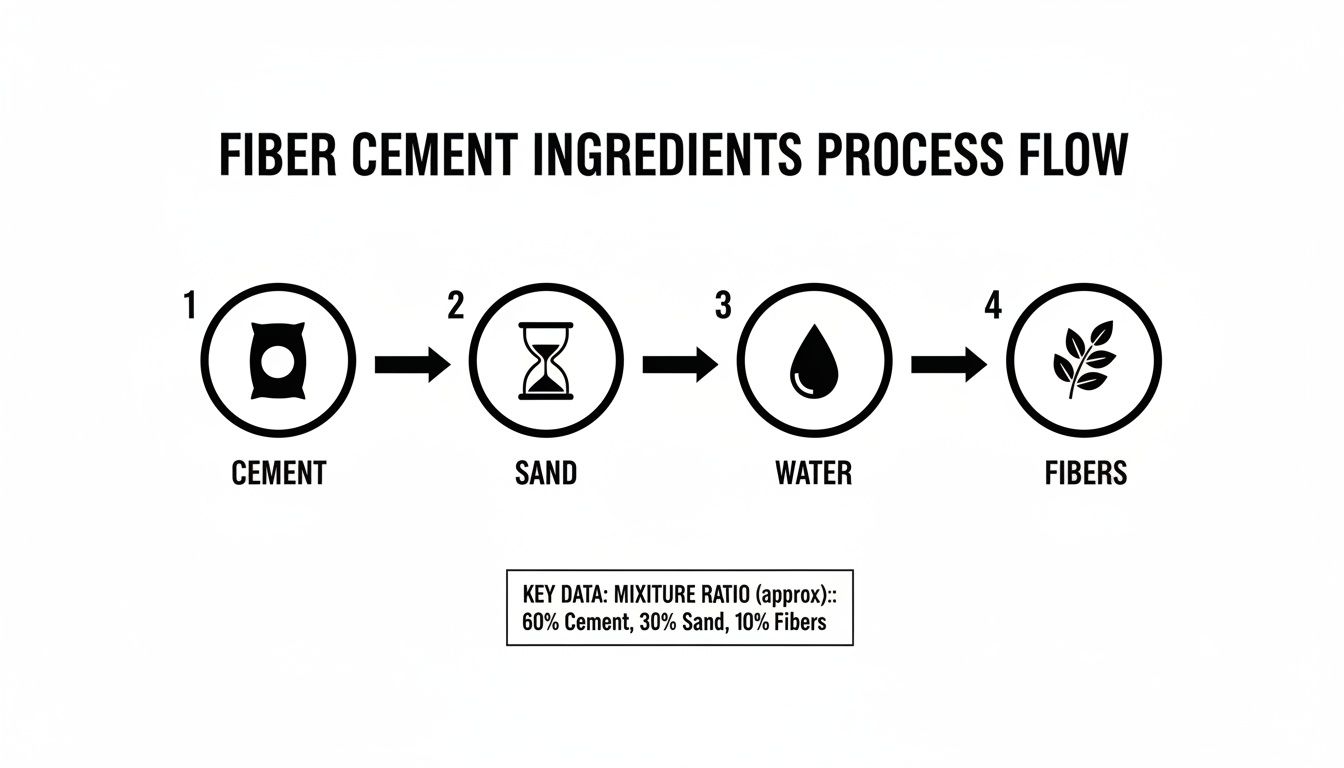
You can see how just four basic materials come together to create such an advanced composite. But the real magic happens in the final step.
Locking in Strength with Autoclaving
At this stage, the newly formed sheets are still soft and workable. To get their legendary toughness, they have to go through a critical curing process called autoclaving. The planks are loaded into a massive, high-pressure steam chamber—basically a giant, industrial-sized pressure cooker.
The intense heat and pressure inside the autoclave kick off a chemical reaction that permanently fuses the cement, sand, and fibers together at a molecular level.
This is the secret sauce. Autoclaving is what gives fiber cement its incredible dimensional stability, preventing it from warping, swelling, or shrinking when it gets hit with wild temperature swings and moisture.
This modern, asbestos-free manufacturing process creates a siding with incredibly low water absorption and almost no movement, even in the harshest weather. The end result is a siding plank that’s dense, stable, and ready to protect a home for decades. To see how this process impacts performance, check out our guide on the pros and cons of fiber cement siding.
This refined process, perfected since the 1980s, is how manufacturers create a siding with movement as low as 1.5 mm/m—even under extreme temperature and humidity shifts. That’s a level of stability that other materials just can't match.
The Science Behind Its Strength and Longevity
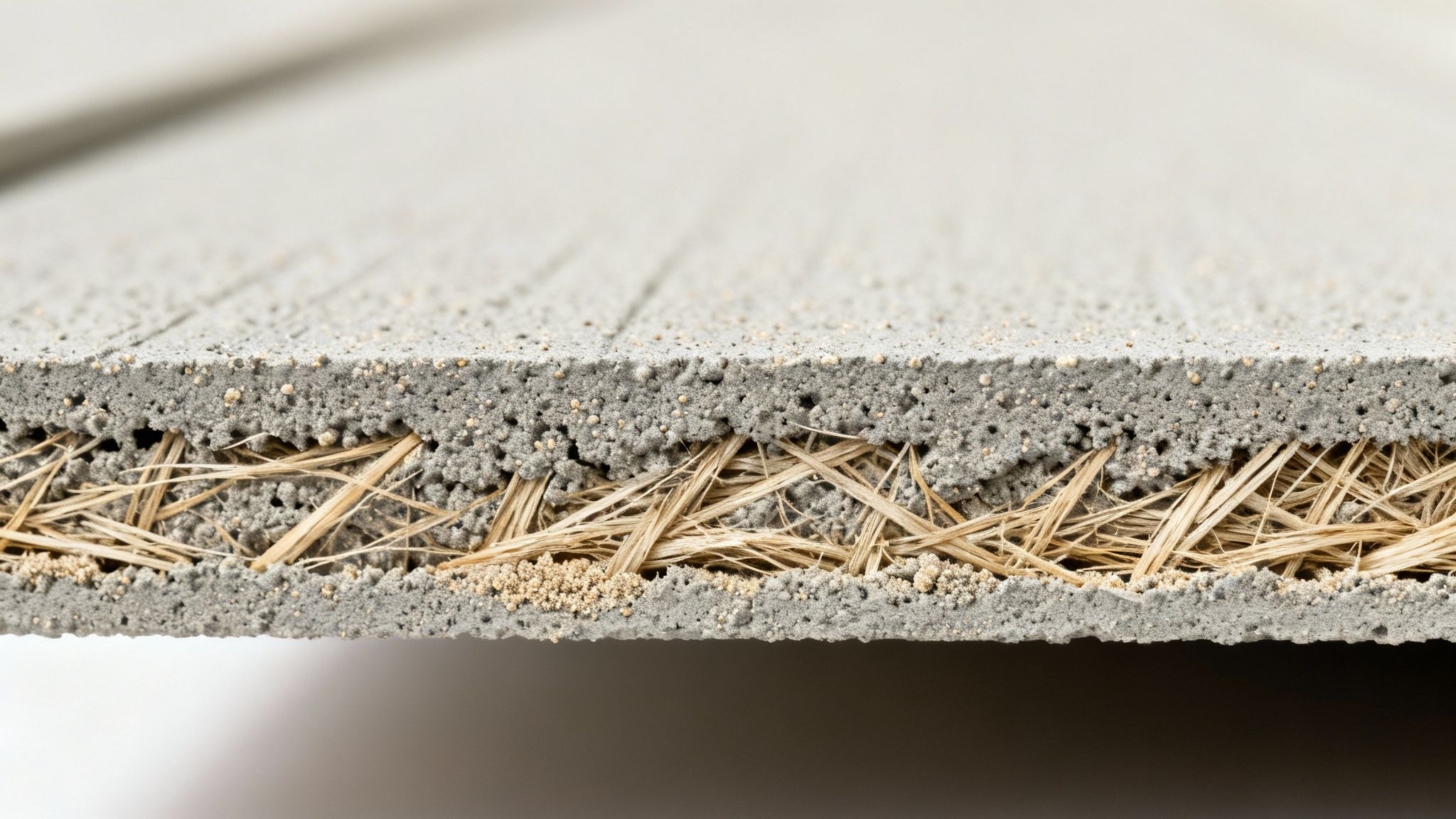
The simple recipe of cement, sand, and fibers isn't just about making a siding plank; it's about engineering a fortress for your home. The way these ingredients are bonded together is the secret to fiber cement's legendary durability and impressive lifespan.
At its core, the blend creates a material that’s naturally resilient to the most common threats homeowners face. The cement and sand matrix is completely inedible to termites and other wood-boring insects, making it pest-proof without needing a drop of chemical treatment.
This composition also refuses to absorb moisture the way wood does. That means it’s practically immune to rot, decay, and warping, even in the thick, humid summers we get here in Upstate South Carolina.
Unmatched Resistance to the Elements
Beyond fending off pests and moisture, fiber cement delivers incredible performance against more extreme conditions. Its dense, stone-like nature makes it inherently non-combustible, giving homeowners an added layer of safety.
The composition of fiber cement siding results in a top-tier fire-resistant Class A2-s1,d0 rating, exceptional freeze resistance, and a potential longevity of up to 100 years with proper care. This far surpasses the typical 20-40 year lifespan of vinyl. Read more about these siding advantages on ceramics.org.
This resilience translates directly into real-world value. While a material like vinyl might seem more affordable upfront, it just doesn’t have the sheer toughness of fiber cement. Heavy rains, hail, and high winds that could easily dent or crack other materials often have little to no effect on this robust siding.
For homeowners looking for a solution that demands minimal maintenance and offers peace of mind for decades, the investment in fiber cement really pays off. To see how different materials stack up over time, you can explore our detailed comparison of how long different types of siding last.
Manufacturers are so confident in its performance that warranties often extend for 50 years or more—a powerful testament to its engineered longevity.
Choosing Your Style With Different Finishes
Beyond the tough-as-nails composition, the real fun with fiber cement siding is its incredible versatility. This stuff isn't a one-trick pony. It can be made to look exactly like classic wood lap siding, rustic shingles, or even sleek, modern panels. You get complete creative control.
That flexibility carries over to the finish, too. You have two main paths you can take: siding that arrives pre-painted from the factory or siding that comes primed and ready for a custom paint job on-site. Each has its own pros and cons, depending on what you're prioritizing—cost, convenience, or long-term upkeep.
Factory Finished vs. Primed Siding
Factory-finished siding is exactly what it sounds like. It gets painted in a perfectly controlled environment, which means the coat is uniform, durable, and literally baked on for maximum toughness and fade resistance. This process is so reliable that it often comes with a separate, robust warranty on the finish itself, typically lasting 15 years or more.
On the other hand, primed siding is a blank canvas. This option gives you limitless color possibilities, which is perfect if you’re trying to match a unique architectural style or coordinate with existing brick or stone. While you get more creative freedom, painting on-site means you're at the mercy of the weather and the skill of the painter.
Not sure which look is right for you? Check out our gallery of home exterior renovation ideas to see what’s possible.
Key Takeaway: Factory-finished siding gives you incredible durability and a warrantied color right out of the box. Primed siding offers total customization for homeowners with a very specific vision.
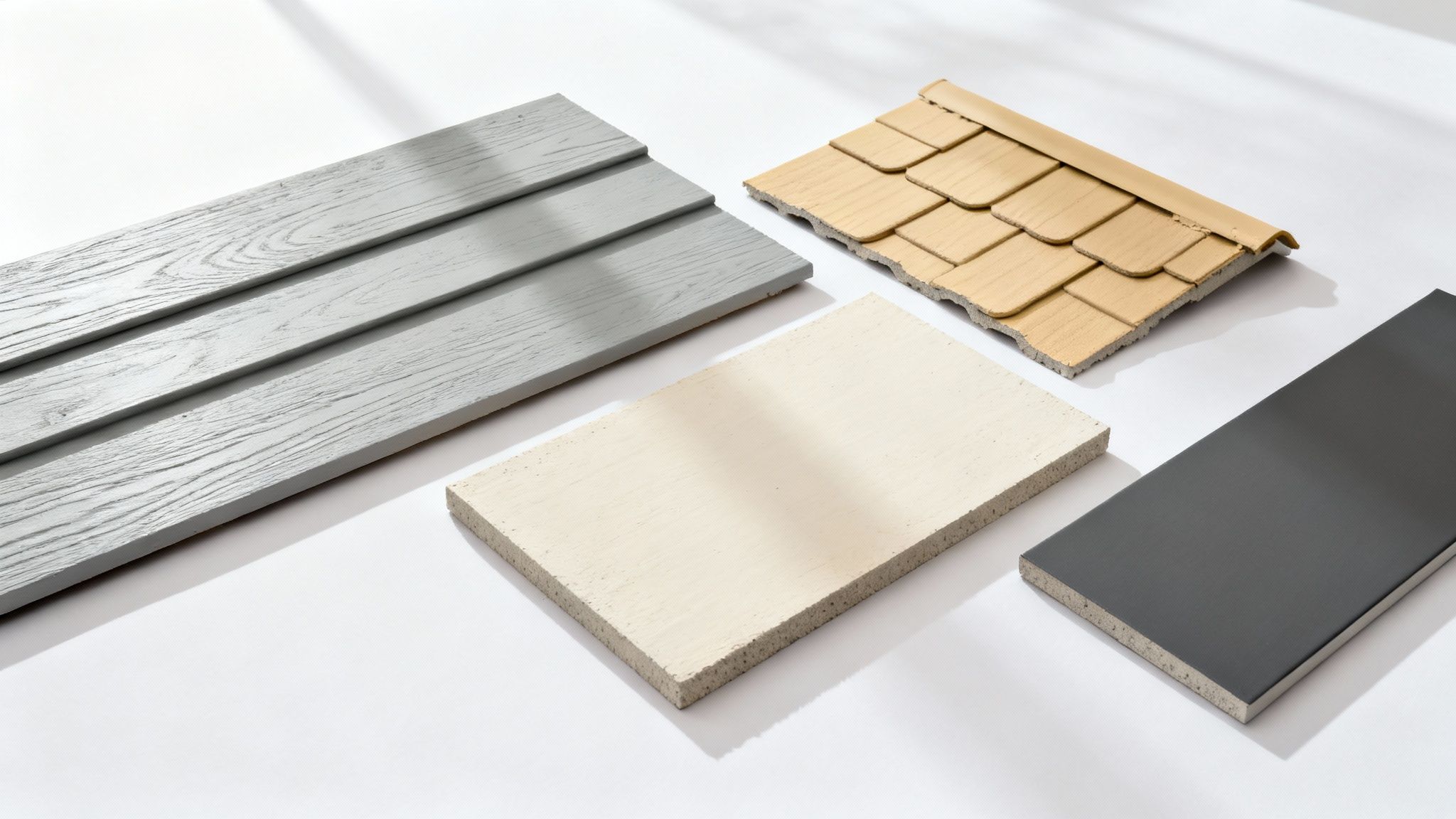
Here's a quick breakdown to help you decide which finish makes the most sense for your project.
Factory-Finished vs. Field-Painted Fiber Cement Siding
| Upfront Cost | Higher | Lower (for the siding material itself) |
| Color Durability | Excellent; baked-on finish resists fading | Good; depends heavily on paint quality and application |
| Warranty | Often includes a separate finish warranty (15+ years) | Covers the siding material only, not the paint job |
| Customization | Limited to the manufacturer's color palette | Unlimited; match any custom color you can imagine |
| Installation Time | Faster; arrives ready to install | Slower; requires painting after installation |
| Best For | Homeowners wanting maximum durability and low maintenance | Homeowners needing a specific, custom color |
Ultimately, the choice comes down to balancing convenience and durability with creative freedom. Both paths lead to a beautiful, long-lasting exterior.
Why This Siding Is a Smart Choice for Local Climates
The real value in knowing what fiber cement siding is made of isn’t just about the science—it’s about seeing how that recipe holds up in the real world. For homeowners here in Upstate South Carolina, choosing the right exterior is less about fleeting trends and more about long-term survival. This is where fiber cement proves it’s the right tool for the job.
Its dense blend of cement and sand makes it incredibly resistant to the thick, soupy humidity that can make wood rot and warp. That sweltering summer sun won't make it buckle or fade like vinyl often does. When one of our heavy downpours or a seasonal storm rolls through, its moisture resistance keeps water from soaking in and causing headaches down the road.
Built for Demanding Environments
And let's not forget about the pests. The material’s inorganic composition offers absolutely zero appeal to termites and other wood-boring insects common in the Southeast. That alone eliminates a constant threat that anyone with a wood-sided home has to manage.
When you choose a material engineered to handle specific regional challenges—from our moisture and heat to the bugs—you’re making a practical, long-term investment that protects your property and adds real value for years to come.
Beyond just the climate, local factors are becoming more important. For instance, in certain areas, we're seeing more homeowners adapting designs for local fire zones to beef up home safety. At the end of the day, fiber cement simply delivers peace of mind.
Answering Your Questions About Fiber Cement Siding
Even with the science down, you probably have a few practical questions. Let's tackle some of the most common ones we hear from homeowners to help you feel confident about your decision.
Is Fiber Cement Siding Waterproof?
This is a great question. While fiber cement is incredibly water-resistant, it isn't technically waterproof on its own.
Think of it this way: the siding is like a high-quality raincoat. Its dense mix of cement and sand means it won't rot, swell, or fall apart when it gets soaked, unlike wood. But to keep your house completely dry, you still need the full system—a weather-resistant barrier installed underneath. This duo works together to shed water and protect your home's structure.
How Does Its Weight Compare to Vinyl Siding?
There’s no contest here—fiber cement is much heavier than vinyl, and that heft is a good thing. It's a big part of what makes it so durable and resistant to impacts from hail or stray baseballs.
However, that weight means installation is a job for the pros. It requires specialized tools and a team that knows how to handle the material correctly, ensuring it’s properly secured to your home to perform flawlessly for decades.
How Much Maintenance Does Fiber Cement Need?
If you’re looking for a low-maintenance siding, you’ve found it. For the most part, all it needs is a simple wash-down with a garden hose and a soft brush every 6 to 12 months to clear off any dust or pollen.
When it comes to the finish, factory-painted colors are baked on and incredibly durable, often lasting 15 years or more before you'd even think about needing a fresh coat of paint.
The Bottom Line: Fiber cement siding is a fantastic long-term solution that demands very little from you. Its bulletproof composition means you won't be dealing with rot, warping, or pests, saving you a ton of time and money down the road.
Wondering how that investment breaks down? Our detailed guide walks you through the full siding installation cost.
Ready to see how fiber cement can transform and protect your Upstate South Carolina home? Contact Atomic Exteriors today for a free, no-obligation estimate and let our expert team bring your vision to life.