.png)
A Homeowner's Guide to Aluminum Storm Windows
Think of aluminum storm windows as a tailor-made, weatherproof shield for your home's existing windows. Instead of ripping out your old windows for a costly full replacement, you're adding a tough, secondary layer of defense. It’s a smart move that boosts your home's comfort and resilience, protecting it against seasonal storms and ever-rising energy bills.
Why Smart Homeowners Are Choosing Aluminum Storm Windows
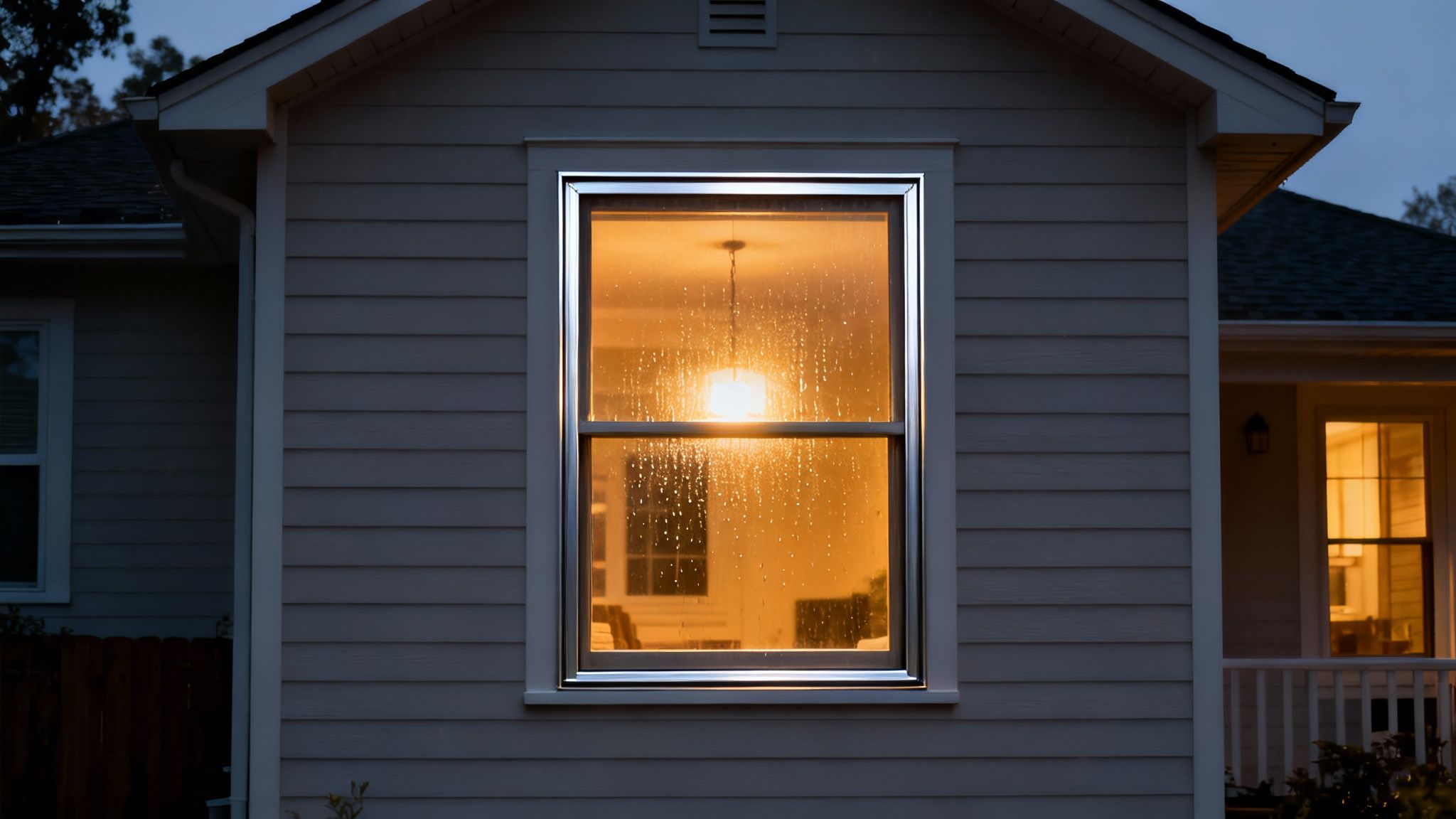
For anyone living in Upstate South Carolina, preparing for our unpredictable weather is just part of life. We get it all—from oppressive summer heatwaves to sudden winter chills. It's easy to assume the only fix for drafty, inefficient windows is a complete, and often painfully expensive, replacement project.
But there's a smarter, more strategic upgrade that delivers huge benefits without the high cost and disruption: installing high-quality aluminum storm windows.
This practical investment offers a powerful return by tackling the core challenges we face as local homeowners. By creating an insulating pocket of air between the storm window and your main window, they act as a thermal buffer. It's a simple concept, but it works wonders to reduce how much heat escapes in the winter and how much seeps in during the summer.
Aluminum Storm Windows At a Glance
Here’s a quick breakdown of what makes aluminum storm windows such a compelling choice for homes in our area. This table sums up the key features and what they mean for you.
| Durable Aluminum Frame | Resists rust, warping, and rot in our humid climate. | Can be less insulating than vinyl or fiberglass frames. |
| Insulating Air Gap | Reduces heat transfer, lowering heating and cooling bills. | Effectiveness depends on a tight seal during installation. |
| Weather Protection | Shields primary windows from wind, rain, and debris. | Not a substitute for impact-resistant windows in storm zones. |
| Cost-Effective | Significantly cheaper than full window replacements. | An addition, not a replacement for a failing primary window. |
| Preserves Character | Modernizes efficiency without altering historic windows. | Aesthetics may not suit all modern home styles. |
As you can see, they provide a balanced solution that adds immediate value and long-term protection.
A Strategic Upgrade for Comfort and Protection
The impact on your home's environment is immediate. Rooms suddenly feel more consistently comfortable, and you'll notice your HVAC system isn't kicking on nearly as often to keep up.
This translates directly into lower monthly utility bills, allowing the windows to pay for themselves over time. You can learn more about the benefits of energy-efficient windows and see how they create a more comfortable and affordable home.
Beyond just energy savings, these windows provide a formidable shield for your primary windows. They take the brunt of whatever the weather throws at them, protecting your original glass and frames from:
- Wind-driven rain that can cause rot and water damage
- High winds common during our seasonal storms
- Impact from small debris like twigs and acorns
- Harsh UV rays that can fade your floors, furniture, and curtains
The Right Choice for Long-Term Value
This added layer of protection doesn't just extend the life of your existing windows; it helps preserve your home's structural integrity and curb appeal. For homeowners with older or historically significant properties, aluminum storm windows are a game-changer, offering a way to gain modern performance without sacrificing irreplaceable original character.
If you're thinking about upgrading or replacing what you currently have, exploring options for replacement storm windows is a great next step to understand all the available technologies and styles on the market today.
How Aluminum Storm Windows Actually Work
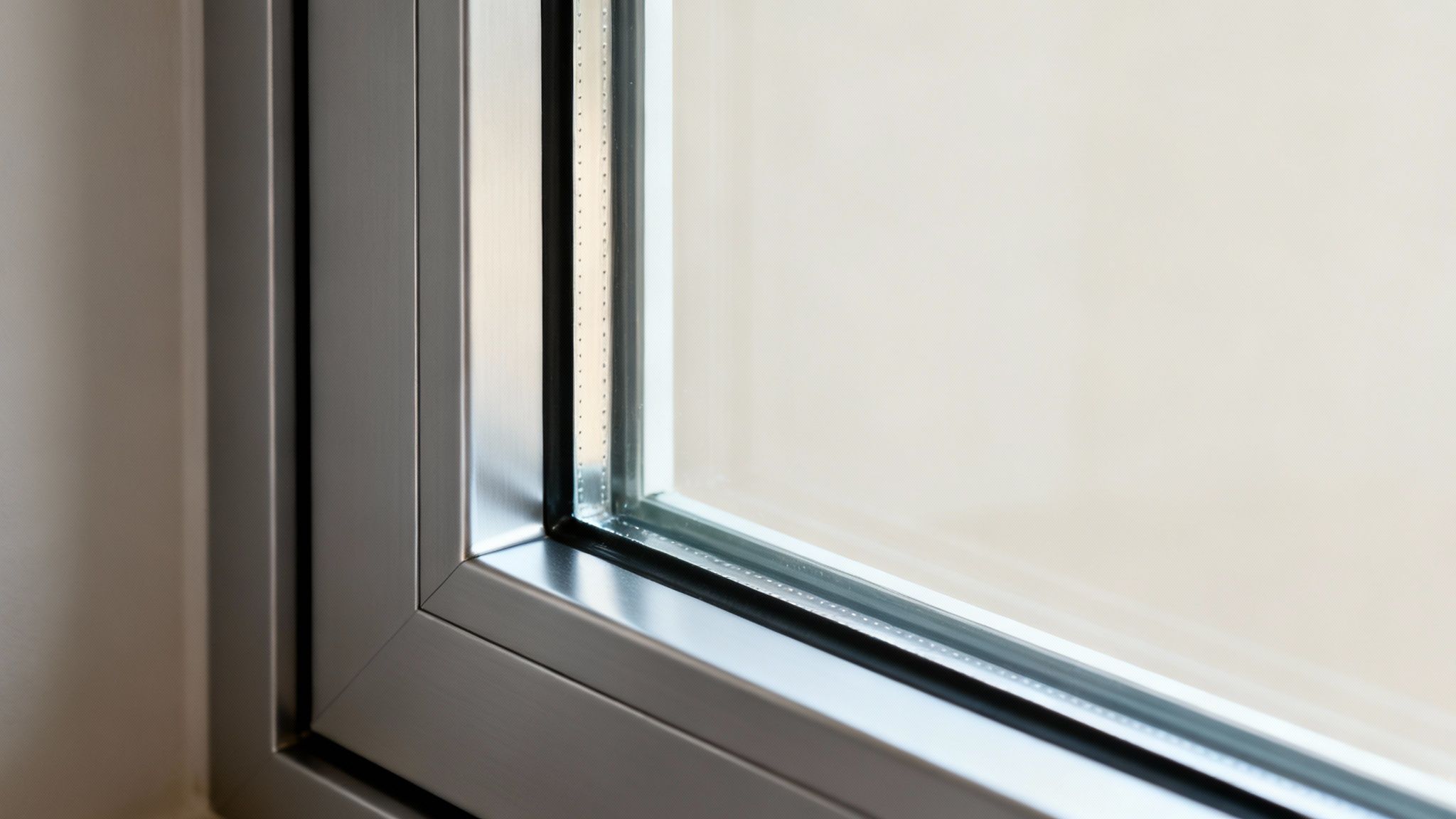
At its heart, an aluminum storm window is a brilliantly simple and effective idea. Think of it as a bodyguard for your primary windows. It’s an entirely separate window unit—frame, glass, and all—that we install on the outside of your existing windows.
The real magic happens once it's installed. This secondary window creates a sealed pocket of air between it and your original window. That air gap is the secret sauce. It acts as an insulating buffer, kind of like the space between the walls of a thermos that keeps your coffee piping hot. This buffer dramatically slows down heat transfer, which means your home stays warmer in the winter and a whole lot cooler in the summer.
The Power of the Air Gap
So, why is a pocket of air so effective? It turns out that trapped, still air is a terrible conductor of heat. It just doesn't let warmth or cold pass through it easily.
When the Upstate South Carolina sun is beating down, the storm window’s outer glass gets hot, but the air gap stops most of that heat dead in its tracks. It never gets a chance to reach your primary window and turn your living room into a sauna.
In the winter, the whole process just flips. That same air gap prevents the expensive warm air inside your home from seeping out through your primary window glass. This one simple feature is what delivers real energy savings and makes your home feel more comfortable all year long.
Key Takeaway: The insulating air gap is the most important part of how a storm window works. A professional, airtight installation is non-negotiable if you want to create this thermal barrier and get the most bang for your buck on energy bills.
Adding storm windows can make a massive difference, especially for older homes with original single-pane windows. You're essentially upgrading a single-pane window to perform like a double-pane one, but without the cost and mess of a full replacement. To see how modern windows achieve this, check out our guide on understanding what ENERGY STAR windows are.
Why Aluminum is the Ideal Material
You can find storm windows made from other materials, but aluminum has been the gold standard for decades, and for good reason—especially in our humid climate.
- Exceptional Strength-to-Weight Ratio: Aluminum is incredibly strong but also surprisingly light. This lets manufacturers build slim, elegant frames that maximize your view instead of blocking it with bulky material. Plus, it doesn’t put a ton of stress on your home's structure.
- Superior Durability: Here’s the big one. Unlike wood, aluminum will never rot, warp, or become a meal for termites. It holds its own against decades of rain, sun, and temperature swings without breaking down.
- Corrosion Resistance: Aluminum naturally forms a protective oxide layer that stops rust before it can start. In the humid South, this is a must-have feature that keeps your storm windows looking and performing great for years.
The choice of aluminum isn't random; its properties make it the perfect candidate for creating tough, low-maintenance, and effective aluminum storm windows. This reliability is why it’s a dominant force in the construction world. In fact, the global aluminum doors and windows market was valued at $69.8 billion and is expected to nearly double in the next decade. You can discover more about this growing market and its future trends.
The Real-World Value: Energy Savings and Rock-Solid Durability
Beyond just being an extra layer, the true power of aluminum storm windows comes down to two things that directly impact your wallet and your peace of mind: serious energy efficiency and unmatched durability.
These two benefits work hand-in-hand to deliver incredible long-term value. It’s what turns a simple home upgrade into a smart, lasting investment.
This isn't just a niche product, either. The global market for aluminum storm windows is expected to hit around $700 million by 2033. That steady growth shows that more and more homeowners are catching on to the very real benefits of saving energy and protecting their homes for the long haul.
A Powerful Insulator Against Our Seasonal Swings
Think of the air gap between your main window and the storm window as a personal thermos for your home. It’s a simple but powerful concept.
During a blistering Upstate South Carolina summer, that pocket of trapped air acts as a buffer. It dramatically slows down the transfer of intense heat from the outside into your cool, air-conditioned living space. Your AC unit doesn't have to battle the sun all day, which means you’ll see a real difference in your cooling bills.
The same principle works in reverse when winter rolls around. The insulating air gap keeps the cozy, warm air from your furnace right where you want it—inside. This cuts down on heat loss and lowers your heating costs.
What This Means for Your Bills: By slowing down this constant back-and-forth of hot and cold air, aluminum storm windows can put a real dent in your annual energy spending. It’s not just about saving money; it’s about making your home a more consistently comfortable place to live, no matter what the weather is doing outside.
You can even boost these savings by combining storm windows with other smart upgrades. For instance, pairing them with high-quality insulated and thermal curtains adds another layer of thermal defense. Plus, these kinds of improvements might even qualify you for financial perks, so it’s always smart to check the latest ENERGY STAR windows tax credit to maximize your investment.
Built to Last for Decades
While the energy savings are a huge plus, the sheer toughness of aluminum is what truly makes it a fantastic investment. Wood rots and warps. Vinyl can get brittle and crack over time. Aluminum, on the other hand, is just plain rugged. It’s a material built for the long haul.
Here in our region, that durability gets put to the test year after year. Here’s how aluminum frames stand up to the challenge:
- Heavy Rain and Humidity: Aluminum is naturally resistant to rust and corrosion, which is a non-negotiable feature in our humid climate. It won’t swell up, rot, or fall apart when it gets wet.
- High Winds: The inherent strength of aluminum means the frames stay rigid and secure, even when those intense seasonal storms bring powerful gusts of wind.
- Harsh UV Exposure: The relentless sun can cause other materials to fade, crack, and degrade. But aluminum frames, especially those with modern powder-coated finishes, hold their color and structural integrity for decades.
This means you’re not just buying a product for today; you're investing in your home's future. A properly installed aluminum storm window is a low-maintenance, high-performance asset that will protect and insulate your home for years, asking for little more than an occasional cleaning to keep it at its best.
Comparing Aluminum Storm Windows to Other Solutions
Making the right choice for your home means looking at all the angles. When you're thinking about a window upgrade, it's not just about picking a product off the shelf. It’s about finding the perfect fit for your specific needs, your budget, and the unique character of your home. This is especially true when you're weighing aluminum storm windows against other common options like vinyl storms or a full-on window replacement.
Each route has its own set of pros and cons. The real key is to line them up against what matters most to you—whether that’s preserving historical charm, getting maximum durability, or completely transforming your home's look and feel. Let's dig in and see how they really compare.
Aluminum vs. Vinyl Storm Windows
At a glance, aluminum and vinyl storm windows seem to do the same job. But the materials themselves create a world of difference in how they perform and look on your house.
Vinyl frames, for instance, tend to be thicker and a bit bulkier. The material just isn't as rigid as aluminum, so it needs more mass to provide strength. This can end up obstructing your view and might not look quite right on an older or more traditionally styled home.
Aluminum, on the other hand, is incredibly strong for its weight. This allows for frames that are much slimmer and more elegant. You get more glass, more natural light, and a clean, unobtrusive look that complements your existing windows instead of overpowering them.
But it's not just about looks. Durability is a huge differentiator here.
- Aluminum: This stuff is built to last. It offers superior strength and rigidity, so it won’t warp, crack, or get brittle after years in the sun. It’s a solution that can easily handle decades of Upstate weather.
- Vinyl: While it’s great at resisting moisture, vinyl can expand and contract quite a bit with temperature swings. Over time, those cycles of hot and cold can make it brittle and more likely to crack, especially with lower-quality products.
While vinyl frames might offer a slight edge in natural insulation, modern aluminum storm windows have closed that gap. With features like thermal breaks and high-performance glass coatings, they deliver fantastic energy efficiency without ever compromising on strength.
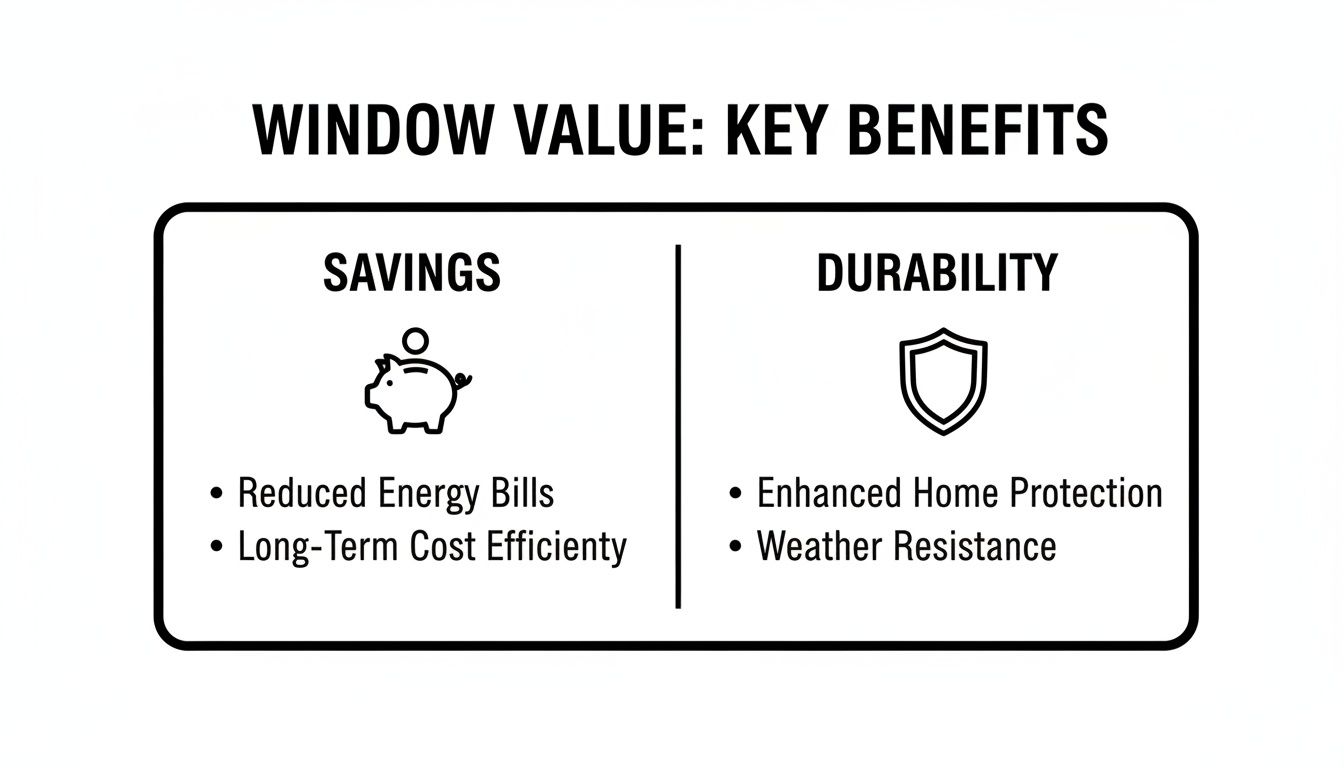
As this shows, adding a protective layer like storm windows is a direct investment in your home, delivering real savings on energy bills while beefing up protection for your primary windows.
Storm Windows vs. Full Window Replacement
This is the big one. Homeowners are constantly weighing the pros and cons of adding storm windows versus tearing everything out for a full window replacement. This isn't really a materials debate; it's a question of scale and purpose. A full replacement is a major renovation. Adding storm windows is a strategic enhancement.
A full window replacement is like getting a brand-new engine for your car, while adding storm windows is like giving it a high-performance tune-up. One is a complete overhaul; the other is a smart, targeted improvement that boosts performance and efficiency.
A full replacement is absolutely the right call if your main windows are shot—we're talking rotted wood, broken seals, or damage that’s beyond repair. But what if your existing windows are still in decent shape, just leaky and inefficient? That’s where aluminum storm windows shine. They can provide energy savings comparable to new double-pane windows, but for a fraction of the cost and without the mess and disruption of a major construction project.
This is a game-changer for historic homes, where the original windows are a massive part of the property's character and value. Ripping them out means losing that charm forever. Storm windows let you preserve that irreplaceable craftsmanship while bringing your home's energy performance up to modern standards. If you're trying to decide, our guide on the best replacement windows for homes can help you figure out when a full replacement is the smartest move.
Window Upgrade Comparison for Your Home
To make things even clearer, let's break down the three main options side-by-side. This table gives you a quick snapshot of how they stack up across the factors that matter most to homeowners.
| Upfront Cost | Low - A fraction of the cost of full replacement. | Low to Medium - Similar to aluminum, but can vary. | High - The most expensive option, involving demolition and new construction. |
| Durability | Excellent - Metal frames last for decades without warping, cracking, or degrading. | Good - Can become brittle over time with extreme temperature shifts. | Varies - Depends heavily on the material (vinyl, fiberglass, wood). |
| Aesthetics | Excellent - Slim, elegant frames maximize view and blend with existing architecture. | Fair - Bulkier frames can obstruct the view and look less refined. | Excellent - Complete freedom to choose new styles, colors, and materials. |
| Energy Savings | High - Creates an insulating air gap, significantly reducing heat loss and gain. | High - Also provides good insulation, though frame efficiency can be slightly better. | Very High - Modern double or triple-pane windows offer the best thermal performance. |
| Best For | Preserving historic windows, budget-conscious efficiency upgrades, and enhancing durability. | Basic, low-cost protection where aesthetics are less of a priority. | Homes with failing, rotted, or single-pane windows that are beyond repair. |
Ultimately, the right choice isn't universal—it's personal. If your goal is to boost efficiency and protection without sacrificing your home's original character (or your budget), aluminum storm windows are an incredibly powerful and practical solution.
What to Expect from Installation and Maintenance
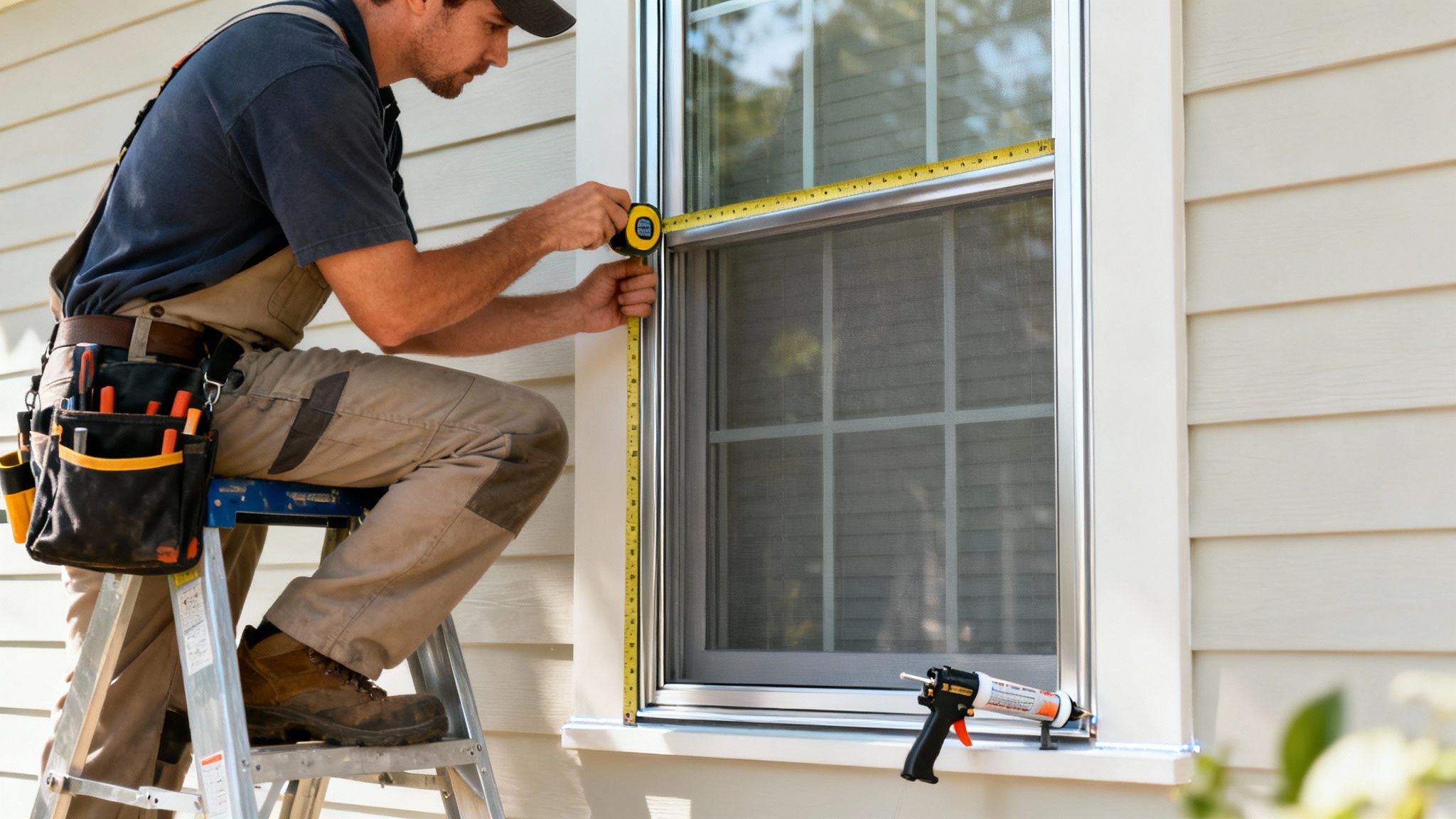
Even the highest-quality aluminum storm windows are only as good as their installation. Without a perfect, airtight seal, they simply can't deliver the energy savings and protection you're paying for.
Think of it less like hanging a picture and more like a precise craft. A professional installation is all about creating a weatherproof barrier that integrates seamlessly with your existing windows. Understanding how the pros do it helps you know what to look for and ensures you get the full value out of your investment.
The Professional Installation Process
A truly expert installation is a blend of careful measurement and skilled handiwork. A professional crew won’t just show up and start drilling; they follow a methodical process designed to maximize performance from day one.
Here’s a step-by-step look at what you can expect:
Precise Measurements: It all starts with a tape measure. Before a single window is ordered, a technician takes exact measurements of every opening. This is non-negotiable—even a quarter-inch gap can compromise the seal and let drafts sneak in.
Surface Preparation: Next, the installer preps the exterior trim where the new storm window will sit. They clean and smooth the surface to ensure the frame mounts flush, preventing tiny gaps that could let in air or water.
Secure Fitting and Caulking: The aluminum storm window is then carefully set in place and secured. Using a high-quality, exterior-grade caulk, they apply a clean bead around the entire perimeter. This is your first line of defense against the elements.
Final Sealing and Testing: Once everything is in, the installer makes sure all moving parts—like the screen and glass panels—operate smoothly. They'll also double-check that the small weep holes at the bottom of the frame are clear, which is crucial for letting condensation drain out instead of getting trapped.
A professional installation is what creates the insulating air pocket that makes storm windows so effective. A shoddy seal pretty much negates the thermal benefits, turning your investment into little more than a decorative screen.
Keeping Your Storm Windows in Top Shape
Here's the great news: one of the best things about modern aluminum storm windows is how little upkeep they need. Forget about the constant scraping, painting, and sealing that wood windows demand.
These durable, corrosion-resistant frames are built to handle decades of Upstate South Carolina weather with just a tiny bit of attention. For homeowners, that means more time enjoying a comfortable home and way less time perched on a ladder.
Long-term care is refreshingly simple. A few quick annual checks will keep your windows performing at their peak for years to come.
Here's a simple maintenance checklist to follow:
- Routine Cleaning: A couple of times a year, wipe down the glass with a standard glass cleaner or a simple mix of mild soap and water. Use a soft cloth to clean off the aluminum frames to get rid of any pollen or dirt buildup.
- Inspect the Seals: Once a year, run your hand along the frame's edge to feel for drafts. Give the caulk seal a quick look for any cracks or peeling. If you spot a problem, a quick touch-up with new exterior caulk is an easy fix.
- Check Weep Holes: Find the small holes at the bottom of the exterior frame. Use a paperclip or a small piece of wire to gently clear out any debris. This ensures moisture always has a way to escape.
This minimal effort is all it takes to keep your windows looking great and working perfectly. It's a small way to protect your investment, much like learning how to winterize windows and doors prepares your whole house for the changing seasons. With just a little care, your aluminum storm windows will give you decades of reliable protection and energy savings.
How to Choose the Right Installation Contractor
Picking out the perfect aluminum storm windows is a great first step, but it’s only half the job. The real magic happens during installation. A flawless window installed the wrong way is just an expensive piece of glass and metal—it won’t save you money on energy bills or protect your home. Your installer is the one who makes sure that window actually performs.
This is especially true here in Upstate South Carolina. You need a local pro who gets it—someone who understands our humid summers, our sudden thunderstorms, and the local building codes. It's not about just screwing a frame to the wall; it’s about creating a perfect, weatherproof seal that will last for decades.
The Essential Contractor Checklist
When you start getting quotes, don't let price be your only guide. A suspiciously low bid is often a giant red flag for cut corners. Instead, use this checklist to find a true professional who will stand behind their work.
A trustworthy installer should be able to say "yes" to all of these, no hesitation:
- Proper Licensing and Insurance: This is non-negotiable. They must have a valid South Carolina residential builder or specialty contractor license. Always ask to see proof of general liability insurance and worker's comp—it protects you from any accidents on your property.
- A Strong Local Portfolio: A great contractor is proud of their work. Ask to see photos or even addresses of recent projects in your area. This proves they have a track record of happy customers right here in the Upstate.
- Transparent, Itemized Estimates: You need a detailed written estimate that breaks down every cost: materials, labor, permits, everything. Vague, lump-sum quotes often hide unpleasant surprises.
- Solid Warranties: Look for a company that guarantees their craftsmanship. At Atomic Exteriors, we back our installations with a 15-year workmanship warranty. That's on top of the manufacturer's product warranty, so you're covered from every angle.
Choosing an installer is like picking a pilot for a flight. You don't want the cheapest option; you want the one with the most experience, the best safety record, and a clear plan to get you to your destination safely.
Spotting the Difference Between an Expert and a Risk
Beyond that checklist, pay attention to the little things. An expert installer communicates clearly and patiently answers all your questions. They’ll take meticulous measurements and explain exactly how they'll handle any quirks with your home's exterior—no pressure, just professional advice.
On the flip side, be cautious of anyone pushing "today only" deals, demanding a huge cash deposit upfront, or getting defensive when you ask for references. Those are classic signs of a risky operator who might not be around to answer the phone if something goes wrong later.
At the end of the day, investing in a quality installation from a trusted local company is the only way to ensure your new aluminum storm windows deliver the performance and protection you paid for.
Got Questions About Aluminum Storm Windows? We’ve Got Answers.
Even after digging into the details, you might still have a few things you're wondering about. That's completely normal. Here are some of the most common questions homeowners in the Upstate ask us about aluminum storm windows, answered in plain English.
"Will a Storm Window Damage My Original Windows?"
This is a big one, and a valid concern. The short answer is no—if they’re installed by a pro. A proper installation ensures the storm window frame is perfectly sealed to keep water out while still allowing for proper drainage. A good installer also makes sure the new frame doesn’t put any stress on your primary window.
In reality, a well-made aluminum storm window does the exact opposite of causing damage. Think of it as a bodyguard for your original windows. It takes all the punishment from wind, driving rain, and harsh UV rays, which can dramatically extend the life of your primary windows, especially if they’re older wood windows.
"Are Aluminum Storm Windows Going to Make My House Dark?"
Not a chance. This is a myth that probably started with the clunky, heavy storm windows from decades ago. Today’s aluminum storm windows are known for their slim, low-profile design.
Because aluminum is so strong, the frames can be made much thinner than vinyl or wood. This means more glass and less frame, letting all that beautiful natural light pour into your home. You get all the protection and energy efficiency without having to sacrifice a bright, inviting space.
One of the best things about aluminum is its incredible strength-to-weight ratio. This lets us design sleek, minimalist frames that maximize your viewable glass area. Your rooms stay open and airy while gaining a crucial layer of insulation.
"How Long Do Aluminum Storm Windows Actually Last?"
This is where aluminum really shines. With professional installation and just a little bit of basic upkeep (like keeping the tracks and weep holes clear of debris), a quality aluminum storm window will easily last for 20 to 40 years. Sometimes even longer.
Unlike wood, they’ll never rot or warp from our South Carolina humidity. And unlike vinyl, they won’t get brittle and crack after years of sun exposure. Their incredible lifespan makes them one of the smartest long-term investments you can make for your home.
"Are They a Pain to Clean and Operate?"
Modern designs are incredibly user-friendly, so you can forget about wrestling with stuck panels. Most models have glass and screen panels that are easy to remove for cleaning. You can typically just pop them out from inside your house, give them a quick wipe-down, and slide them right back in—no ladder required.
The tracks are engineered for smooth gliding, so opening them for a fresh breeze is just as easy as opening your regular window. They’re built for everyday convenience and require very little effort to keep them looking and working great.
Ready to see how aluminum storm windows can protect your home and lower your energy bills? The expert team at Atomic Exteriors is here to help you find the perfect solution for your Upstate South Carolina home. We provide professional installation backed by a 15-year workmanship warranty for total peace of mind. Schedule your free, no-obligation estimate today!