.png)
A Homeowners Guide to Casement Style Windows
If you've ever wanted a window that opens wide to let in a summer breeze, offering a completely clear view without any bars or sashes in the way, you've been thinking of a casement window. At their core, casement windows are hinged on one side and swing outward, much like a tiny door for your wall. A simple crank handle on the inside is all it takes to operate them.
This elegant design delivers both unobstructed views and maximum ventilation, which is why you’ll find them on everything from historic homes to brand-new modern builds.
The Enduring Appeal of Casement Style Windows
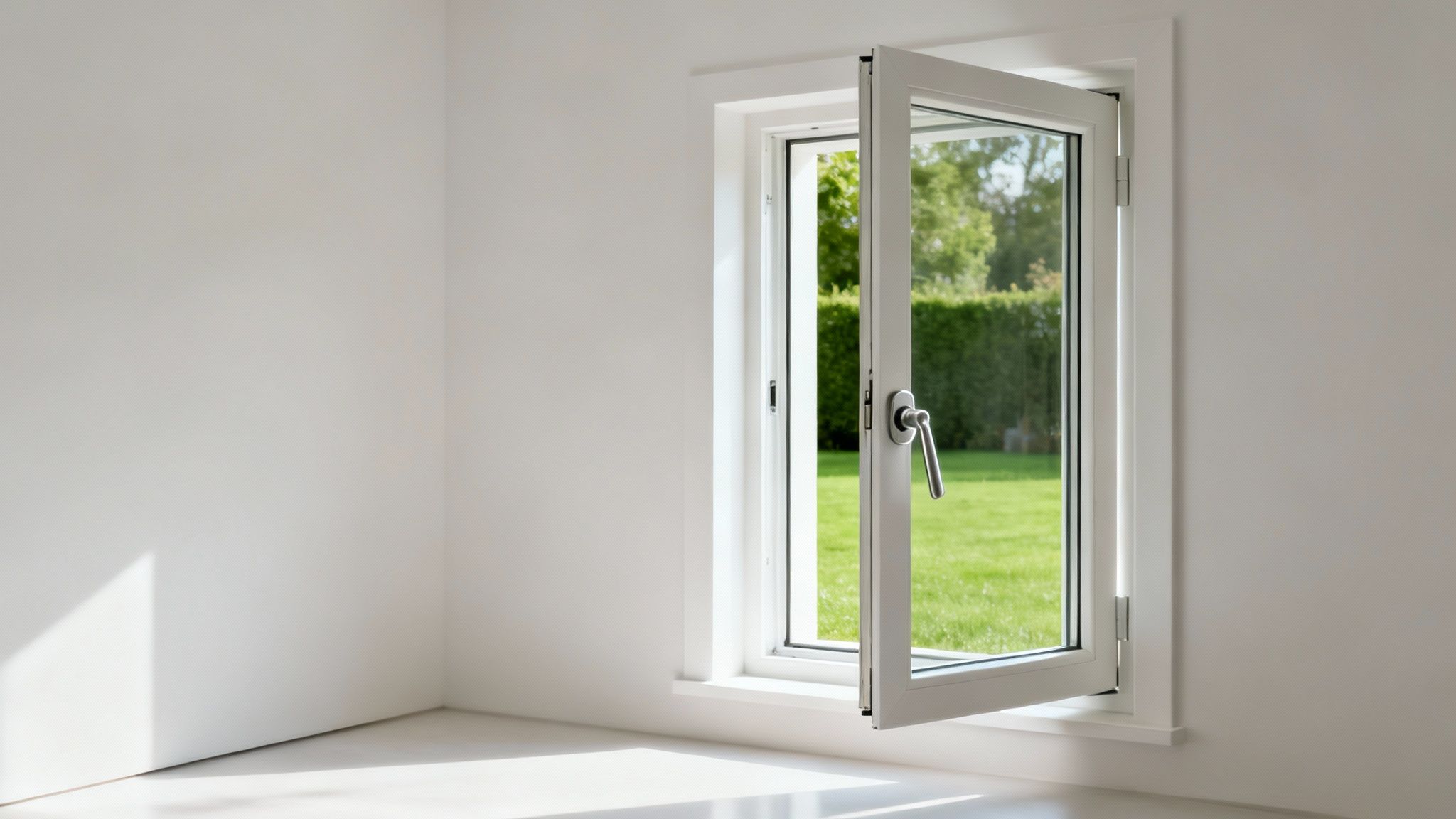
Unlike standard windows that slide up and down or side to side, a casement is attached to its frame with hinges on one side. This classic mechanism lets the entire window sash pivot outward, often swinging open to a full 90 degrees.
You get precise control over airflow with just a few turns of a crank. While the concept has been around for centuries, today's casement windows are engineered with seriously impressive materials and technology that meet modern performance standards.
Modern Design Meets Timeless Functionality
The real magic of a casement window happens when it's closed. Because the sash presses firmly against the frame, it creates an exceptionally tight seal—much tighter than what you get from a sliding window. This helps prevent drafts and air leaks, which is a huge win for your home's energy efficiency.
Their popularity isn’t just about looks; it's a global trend driven by rock-solid performance. The casement windows market was valued at USD 14.25 billion and is expected to climb to USD 19.03 billion by 2030, a clear sign that homeowners want windows that offer both beauty and tangible benefits.
The core advantage of casement style windows lies in their ability to combine a completely unobstructed view with superior ventilation, acting like a sail to catch and direct breezes into your home.
Now that we've covered the basics, we can dig into what makes these windows such a compelling choice for so many homes. To see how they stack up against other popular styles, check out our guide on the best replacement windows for homes. It’s a great way to see if the unique features of a casement are the right fit for you.
The Big Wins: Why Casement Windows Might Be Your Best Choice
When you get down to it, the way a casement window is designed leads directly to some real-world advantages for your home. It all comes down to one simple fact: unlike windows that slide up and down or side to side, casements swing outward. This single design choice creates a domino effect of benefits that homeowners in Upstate South Carolina really appreciate.
One of the first things people notice is the incredible airflow. Think of an open casement window like a sail on a boat. The sash swings out and acts like a funnel, catching cross-breezes and directing them right into your home. You just can't get that kind of targeted, whole-room ventilation from most other window types.
Unbeatable Energy Efficiency and Wide-Open Views
Here’s where casements really shine. When you crank a casement window shut, the sash presses directly and firmly against the weatherstripping inside the frame. This creates an airtight seal that’s far superior to the sliding tracks found on double-hung or slider windows, which can often be a source of drafts.
That powerful seal makes casement style windows one of the most energy-efficient operable windows you can buy. It’s all about keeping your conditioned air in and your utility bills down.
And then there's the view. Because there’s no center rail or meeting stile cutting across the middle of the glass, you get a clean, uninterrupted picture of the outdoors. It’s like having a living portrait on your wall, maximizing natural light and making any room feel more connected to the outside. If you want to dive deeper, you can explore all the benefits of energy-efficient windows and see how they can completely change your home's comfort level.
Next-Level Security and Storm Resistance
Security is another huge plus. Casement windows are locked from the inside with multi-point locking systems that are built right into the frame. This makes them incredibly difficult for anyone to pry open from the outside. The crank handle itself is another layer of security—you simply can't operate it unless you're inside the house.
This tough, sealed design also means fantastic storm resistance. In the US, the windows market has reached USD 13.4 billion, and casement windows are gaining popularity specifically for how well they stand up to harsh weather. Their design can slash water infiltration by up to 45% during a high-wind storm—a critical feature for homeowners in places like Greenville and Anderson. You can learn more about these market trends and window performance data.
Finally, casements offer peace of mind. Their ability to swing wide open provides a large, clear exit in case of an emergency. A properly sized casement window can easily meet local building code requirements for an escape route in a bedroom, checking off a crucial safety box for any family.
How Casement Windows Stack Up Against Other Styles
When it's time for new windows, you'll quickly find there are a lot of options out there. Knowing how casement windows compare to more traditional styles like double-hung and sliders is key to making the right choice for each room in your home.
The big difference is how they open. While other windows slide up, down, or sideways within a frame, a casement window swings outward on side hinges, kind of like a door. This simple mechanical difference has a huge impact on everything from airflow to energy bills.
Key Performance Factors
Let's break down where casements really shine. If you've ever felt a stuffy room on a hot day, you'll appreciate their biggest advantage: ventilation.
Because the entire window sash opens outward, it acts like a sail, catching breezes from the side and funneling them directly into your home. You get an unobstructed, wall-to-wall opening for maximum airflow.
Here's what sets them apart:
- Unbeatable Ventilation: Casements open a full 100% of their frame area, unlike sliders or double-hungs which are always at least half-obstructed.
- Airtight Energy Efficiency: When you crank a casement window shut, the sash presses firmly and evenly against the frame, creating a super-tight seal that minimizes drafts.
- Effortless Operation: A simple, smooth-turning crank handle is all it takes. This makes them perfect for spots that are a little harder to reach, like over a kitchen sink or behind a sofa.
In fact, casement windows often create a seal so tight that they can reduce air infiltration by up to 25% compared to a typical double-hung window.
This graphic gives you a quick visual rundown of what makes casements such a popular and practical choice.
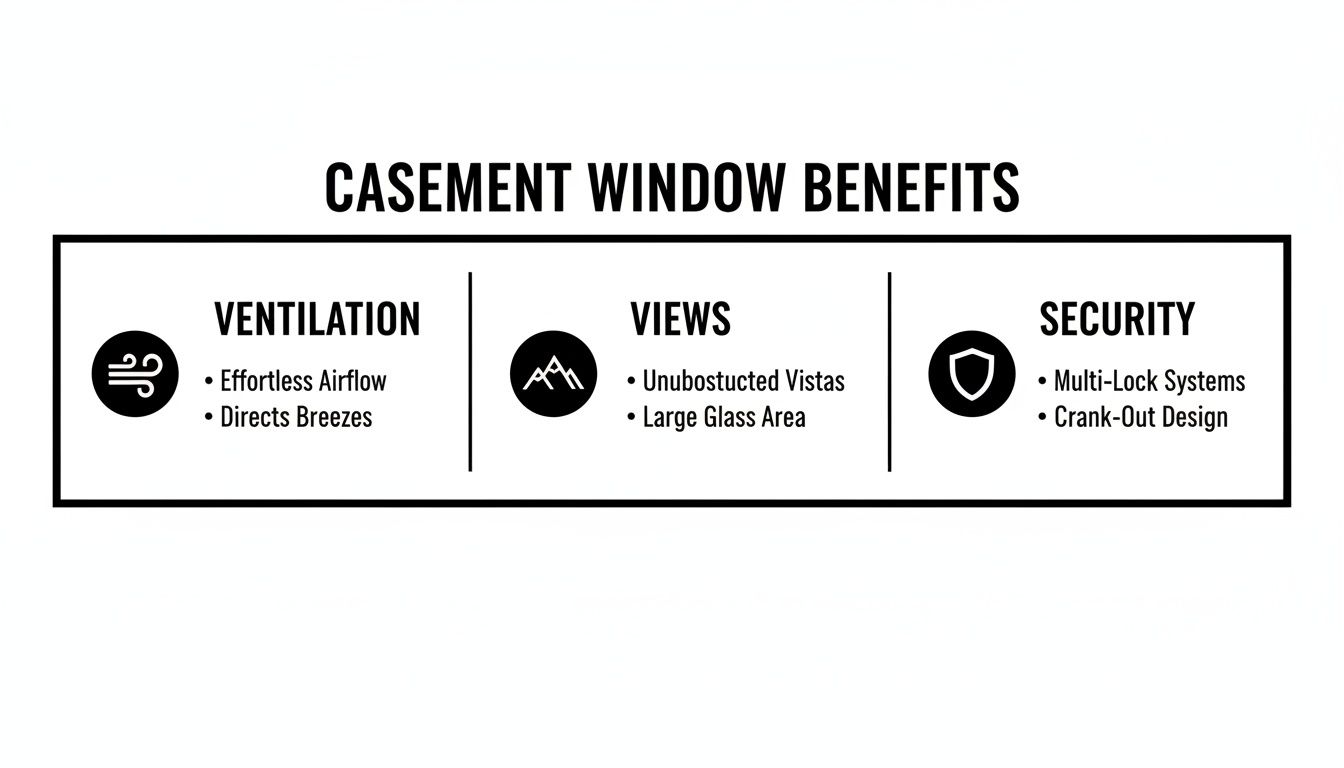
It really boils down to how ventilation, uninterrupted views, and enhanced security work together to make casements a fantastic all-around performer.
Window Style Comparison at a Glance
Sometimes, seeing things side-by-side is the easiest way to understand the trade-offs. This table cuts right to the chase, comparing casement, double-hung, and slider windows on the features that matter most to homeowners.
| Ventilation | Opens fully to catch and direct breezes. | Top or bottom sash opens, but half the window is always covered. | Opens to one side, leaving half the window covered. |
| Energy Efficiency | Extremely airtight seal when locked. | Decent seal, but potential for drafts at the meeting rail. | Good seal, but tracks can collect debris and weaken it over time. |
| Ease of Use | Low-effort crank handle. Great for hard-to-reach spots. | Requires lifting and lowering the sash, which can be heavy. | Slides horizontally, which is easy but can stick in the track. |
| View & Aesthetics | Completely unobstructed glass for a clean, modern look. | A horizontal rail runs through the middle, dividing the view. | A vertical rail runs down the middle, splitting the view. |
As you can see, if you're prioritizing airflow and energy efficiency, it's hard to beat a casement window.
Weighing The Pros and Cons
Every window style has its place. Double-hung windows, the classic American style, are great for second-story rooms because you can open the top sash for ventilation without creating a safety hazard for kids or pets. But that versatility comes at the cost of that truly airtight seal casements provide.
Slider windows are simple and budget-friendly, making them popular for basements or rooms where you just need a basic, easy-to-open window. The trade-off is that they only open halfway, limiting airflow, and their seals are generally less robust.
Then you have awning windows, which are like casements turned on their side—hinged at the top and opening from the bottom. They’re fantastic for bathrooms or basements because you can leave them open for ventilation even during a light rain. They just don't offer that wide-open feel of a full casement.
Here's where casements are often the perfect fit:
- Kitchens and Sunrooms: Need to air out cooking smells or cool a room down quickly? Casements provide 100% airflow.
- Living Areas: A large casement or a series of them can create a "wall of glass" effect with totally uninterrupted sightlines to your yard.
- Bedrooms: The tight seal is a game-changer for maintaining a comfortable temperature and blocking outside noise for a quieter night's sleep.
- Bathrooms: As long as there's clearance outside, their easy operation makes them a great choice for humid spaces.
Of course, here in Upstate South Carolina, factors like our humid summers and local building codes play a huge role. An expert can help you find the right balance between style, performance, and what makes sense for our specific climate.
By weighing these practical differences, you can confidently choose the window that will deliver the airflow, efficiency, and look you want for every room in your house.
And if outside noise is a major concern, that tight seal on casements makes a big difference. For a deeper dive into soundproofing, check out our guide on the best windows for noise reduction.
Choosing the Right Materials and Glass
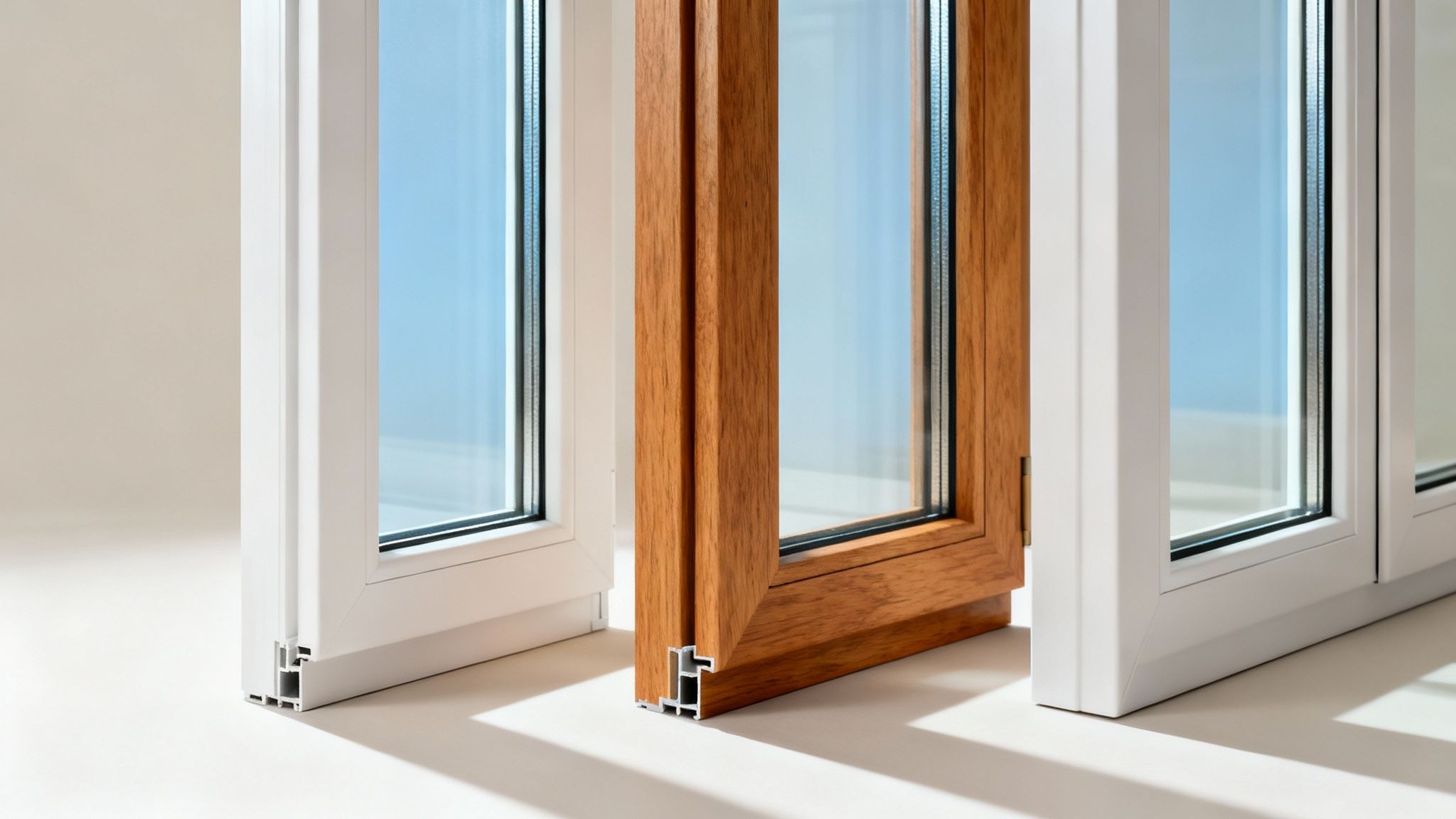
So, you're sold on the function of a casement window. Now for the fun part: picking what it’s actually made of. The frame and glass you choose are the engine of your window's performance, directly steering its lifespan, energy savings, and how much you have to worry about upkeep.
It’s the difference between just filling a hole in the wall and installing a feature that actively makes your home better.
Think of the window frame as its skeleton—it gives the window its strength, structure, and a huge chunk of its insulating power. Traditional wood frames have a classic appeal, but they demand constant maintenance to fight off rot and warping, especially in the humid climate we get here in Upstate South Carolina.
Thankfully, modern materials deliver incredible performance without all that work.
High-Performance Window Frame Materials
For most homeowners, the choice boils down to a few standout options that perfectly balance cost, durability, and insulation. Each has its own strengths, making it a great fit for different homes and priorities.
- Vinyl Frames: There’s a reason vinyl is the most popular choice. Today's vinyl is engineered to be incredibly tough, shrug off moisture, and never need a drop of paint. Its multi-chambered design also creates insulating air pockets that are fantastic at keeping your home comfortable no matter the season.
- Fiberglass & Composite Frames: Often seen as a premium upgrade, these materials give you the strength of wood with the easy-living benefits of vinyl. They barely expand or contract with temperature swings, which means your seals stay tight and secure for decades.
As you consider the frame, don't forget the screen. Exploring different window screen material types is key to making sure they can stand up to our buggy seasons. The performance of these materials is why the global window market is projected to hit USD 281.71 billion by 2031—and with the ability to achieve up to 95% air tightness, it's easy to see why casements are a big part of that growth.
Demystifying Modern Window Glass
The glass itself—what we call the "glazing"—is where technology has really changed the game. A single pane of glass offers next to no insulation, but modern glass packages are engineered to manage heat, light, and even sound.
The single most important upgrade you can make is moving from single-pane to double- or triple-pane glass. This creates an insulating buffer of air or gas between the panes that dramatically slows down heat transfer.
To take efficiency even further, look for these two features:
- Low-E Coatings: A Low-Emissivity (Low-E) coating is an invisible, paper-thin metallic layer applied to the glass. In the summer, it reflects the sun's heat out. In the winter, it reflects your furnace's heat back in. Simple, but incredibly effective.
- Argon Gas Fill: That space between the glass panes is often filled with argon, a safe, non-toxic gas. Argon is denser than air, making it a much better insulator against both hot and cold temperatures.
Getting the right glass package is a big deal. You can dive deeper into the differences in our guide on triple-pane windows vs. double-pane to figure out what makes sense for your home. When these technologies work together, the result is real, noticeable savings on your energy bills.
Thinking About the Numbers: Cost vs. Value
Let’s be honest—new windows are a significant purchase. But it’s a mistake to view them as just an expense. Think of it as a direct investment in your home's comfort, efficiency, and ultimately, its resale value. The final number on the quote is shaped by a few key decisions you'll make along the way.
The total cost really comes down to a sum of its parts. It makes sense that larger or custom-sized windows will cost more than standard ones. The same goes for frame materials—premium options like fiberglass naturally have a higher price point than high-quality vinyl. Your glass package is another big factor; upgrading to triple-pane glass or specialized Low-E coatings adds to the upfront cost but pays you back with serious energy savings down the road.
Calculating Your Return on Investment
It's tempting to focus only on the initial price tag, but the real story is in the return on investment (ROI). High-performance casement style windows create an incredibly tight seal when closed, which is a game-changer for your energy bills. This seal stops your expensive heated or cooled air from leaking out, meaning your HVAC system doesn't have to constantly fight to keep up, especially during those hot, humid Upstate South Carolina summers.
Those savings on your monthly utility bill start adding up immediately and continue for years, effectively paying back a good chunk of your initial investment.
A quality window replacement project can recoup over 68% of its cost when you sell your home. That makes it one of the smartest, most valuable home improvements you can make, driven by both lower energy bills and a massive boost in curb appeal.
Lasting Value in the Upstate Market
In a competitive real estate market like Greenville or Spartanburg, homes with modern, energy-efficient features stand out. When potential buyers see new casement style windows, they don’t just see glass and vinyl—they see a well-maintained, comfortable, and cost-effective home. That perception often translates to a higher asking price and a quicker sale.
If you’re trying to get a clearer picture of what your specific project might cost, our window replacement cost estimator is a great place to start.
And don't forget the finishing touches! Beyond the windows themselves, remember to consider the impact of window treatments on home value, as they complete the look and add another layer of efficiency. At the end of the day, investing in the right windows is about making your daily life more comfortable while building real, lasting equity in your property.
Why Professional Installation Matters in Upstate SC
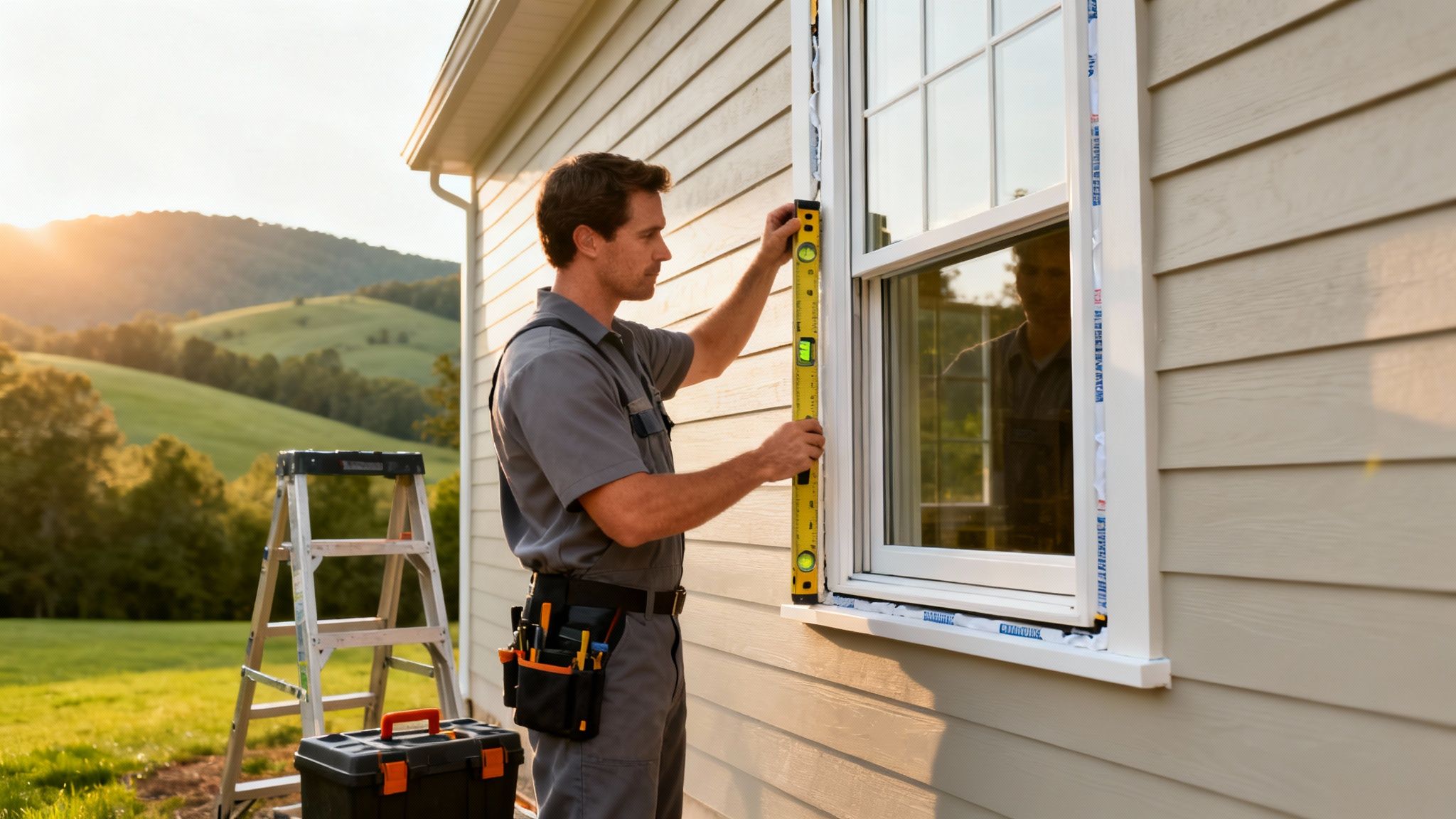
Choosing the perfect casement window is only half the battle. The real-world performance, energy savings, and durability of that window depend entirely on who installs it and how it's done. Here in Upstate South Carolina, where we deal with intense summer humidity, driving rain, and strong seasonal storms, a flawless installation isn't just a nice-to-have—it's non-negotiable.
Even the most advanced, triple-pane casement window will leak and fail if it isn't set, leveled, and sealed perfectly. A shoddy installation can lead to drafts, water damage, and a crank that’s hard to turn, completely erasing the benefits you just paid for.
Think of it this way: the window itself is a high-tech fortress, but a poor installation leaves the drawbridge down, inviting moisture and air to march right in.
Ensuring a Weatherproof Seal
A true professional does far more than just wedge a window into a hole in the wall. The process is meticulous. It involves preparing the rough opening, applying waterproof flashing to channel moisture away from the wall cavity, and using premium sealants to forge a completely airtight and watertight barrier.
This painstaking work is what defends your home against the specific challenges of our local climate.
A professional installation ensures that every component—from the shims to the sealant—works together to create a seamless defense against the elements. This protects your home's structure and guarantees your window's peak performance for years to come.
Working with a licensed and insured local contractor like Atomic Exteriors guarantees your casement style windows are installed to meet—and often exceed—local building codes and the manufacturer's own strict specifications. Our team knows the unique demands of homes in Greenville, Anderson, and the surrounding communities. We pair premium Wincore windows with an expert installation and a rock-solid warranty, giving you complete peace of mind and ensuring your investment is protected for decades to come.
Of course. Here is the rewritten section, designed to sound like an experienced human expert while matching the style of the provided examples.
Common Questions and Practical Answers About Casement Windows
Even after seeing all the benefits, you probably still have a few practical questions floating around. That’s perfectly normal. Let's walk through some of the most common things homeowners ask to make sure you have all the answers you need.
"Aren't They a Pain to Clean?"
This is probably the number one question I hear, and the answer is surprisingly simple: not anymore. Older casement windows could be tricky, but modern designs have completely solved this problem.
They’re built with special "easy-clean" hinges. When you open the window, you can swing the sash over just enough to create a gap, allowing you to comfortably reach both the inside and outside of the glass. No more leaning out of windows or hiring professionals just to get the job done—you can do it all from right inside your home.
"What About Screens? Where Do They Go?"
Here’s another clever part of the casement design. Since the window itself swings outward, the screen is installed on the inside of your home.
This might sound like a small detail, but it’s a huge advantage. Your screens are protected from the rain, dirt, and pollen that plague exterior screens. They stay cleaner, they don't get weather-beaten, and they last so much longer. It's one of those thoughtful features that makes daily life just a little bit easier.
"Are They a Good Choice for a Bedroom?"
Absolutely. In fact, casement windows are one of the best options for bedrooms for a few key reasons:
- Safety First: Their wide, unobstructed opening often meets or exceeds local building codes for emergency egress. This gives you a large, clear exit in case of an emergency, which is a critical feature for any sleeping area.
- Peace and Quiet: You know that tight, airtight seal we talked about? It’s a fantastic sound barrier. It helps block out neighborhood noise, barking dogs, and traffic, letting you get a much better night's sleep.
- Total Comfort: That same seal works wonders for energy efficiency. It eliminates the cold drafts that can make a room uncomfortable in the winter and keeps the cool air inside during our hot South Carolina summers.
Homeowners are often surprised by just how well-suited casement windows are for private spaces. Their blend of safety, quiet, and comfort makes them a perfect fit for bedrooms and home offices where you want to create a calm, relaxing environment.
"What If the Crank Breaks?"
It's a fair question. The crank operator is a mechanical part, and like any moving part, it can wear down after decades of opening and closing.
The good news is that this is a straightforward fix. The crank mechanism is designed to be fully replaceable. A skilled window technician can easily swap out the old hardware for a new one without having to touch the rest of the window.
This is exactly why choosing an installer who backs their work with a solid warranty is so important. It guarantees you have professional support for the entire lifespan of your windows, ensuring a small issue like a worn-out crank never becomes a major headache.
Ready to see how new windows can transform your home's comfort and curb appeal? The experts at Atomic Exteriors provide professional evaluations, top-tier Energy Star window options, and flawless installation backed by an industry-leading warranty. Get your free, no-obligation estimate today!