.png)
Triple Pane Windows vs Double Pane A Guide for SC Homeowners
When it's time to upgrade your home's windows here in Upstate South Carolina, one of the biggest questions you'll face is whether to go with double-pane or triple-pane glass. It sounds simple, right? Double-pane windows have two layers of glass, and triple-pane windows add a third. But that extra layer changes everything, from insulation and noise reduction to your budget.
For most homeowners, the decision really boils down to balancing that upfront cost against the long-term performance and comfort you'll get.
Framing Your Window Replacement Decision
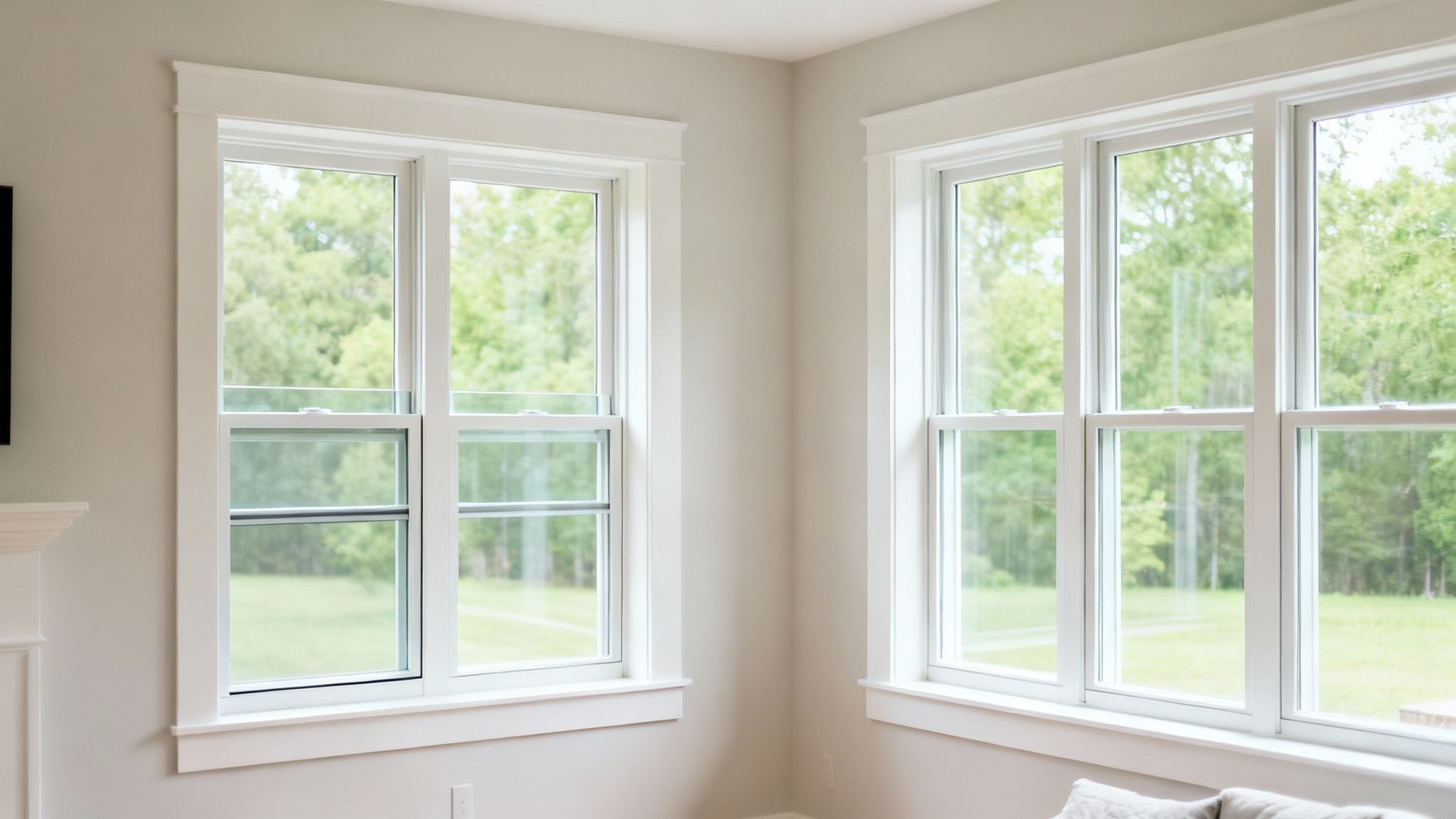
Choosing the best replacement windows for your home is about more than just counting panes of glass. This is a decision that directly impacts your daily comfort, monthly energy bills, and even your home's resale value down the road.
While a quality double-pane window is already a massive leap forward from old, drafty single-pane units, triple-pane technology takes that performance to a whole other level.
To make the right call, we need to look at what really matters:
- Energy Efficiency: How well does the window stop your conditioned air from escaping?
- Sound Insulation: Can it finally quiet down that road noise or the neighbor's barking dog?
- Condensation Resistance: Will you be wiping up moisture from the interior glass all winter?
- Long-Term Value: Does the initial investment pay for itself in energy savings and comfort?
Once you weigh these factors, you can see which option makes the most sense for your home and our unique Upstate SC climate.
| Glass Layers | Two panes of glass | Three panes of glass |
| Insulating Gas | One gas-filled chamber | Two separate gas-filled chambers |
| Typical Use Case | The industry standard, great for most climates | A premium choice for extreme climates or high-noise areas |
| Upfront Cost | Lower initial investment | Higher initial investment |
Before we pit double-pane against triple-pane, let's break down what actually makes a modern window "high-performance." It's not just about how many panes of glass you have; it's about the entire engineered system working together to keep your home comfortable and your energy bills down.
Think of it like a team. Each component has a specific job:
- Low-E Coatings: This is the unsung hero. It's an ultra-thin, totally transparent layer of metallic oxide applied to the glass. Its job is simple but powerful: reflect infrared light. That means it bounces summer heat out and keeps your expensive furnace heat in during the winter.
- Inert Gas Fills: The space between the glass panes isn't just air. We fill it with a dense, harmless gas like Argon. Because Argon is a terrible conductor of heat, it creates a powerful insulating buffer that dramatically slows down temperature transfer.
- Warm-Edge Spacers: These are the unsung heroes that seal the deal—literally. They insulate the very edges of the glass unit, which is a common spot for heat to escape and condensation to form.
These three elements are the core of a window's energy rating. To see how they all come together to meet federal efficiency standards, you can check out our deep dive on ENERGY STAR windows in our detailed guide.
Decoding Performance Metrics: U-Factor and R-Value
When you start comparing triple-pane and double-pane windows, you’ll quickly run into terms like U-Factor and R-Value. They might sound a bit technical, but they’re actually simple tools for measuring how well a window insulates your home.
Getting a handle on these numbers is the key to understanding how that extra pane of glass really translates into energy savings and year-round comfort.
Think of U-Factor as a measurement of heat loss. It tells you how easily heat can escape through the window. It’s a simple scale: the lower the U-Factor, the better the window is at keeping your heated air inside. A low number means you’re not paying to heat the great outdoors on a chilly Greenville winter night.
On the flip side, R-Value measures a window’s resistance to heat flow. It’s the direct opposite of U-Factor, showing how well the window blocks heat transfer. For R-Value, a higher number means better insulation. A window with a high R-Value acts like a powerful thermal barrier, keeping the summer heat out and the winter warmth in.
The Clear Advantage of an Extra Pane
The real difference between triple-pane and double-pane windows comes down to these performance numbers. A high-quality, modern double-pane window might have a U-Factor somewhere between 0.25 and 0.30, which is a huge leap forward from old single-pane windows.
But a triple-pane window, with its third layer of glass and second chamber of insulating gas, takes that performance to another level. These top-tier units can hit U-Factors as low as 0.15 to 0.20. That might not seem like a huge jump on paper, but it represents a massive improvement in thermal efficiency—one you’ll feel in your home and see on your energy bills.
This chart breaks down how each part of the window—the panes, the gas, and the coatings—works together to boost performance.
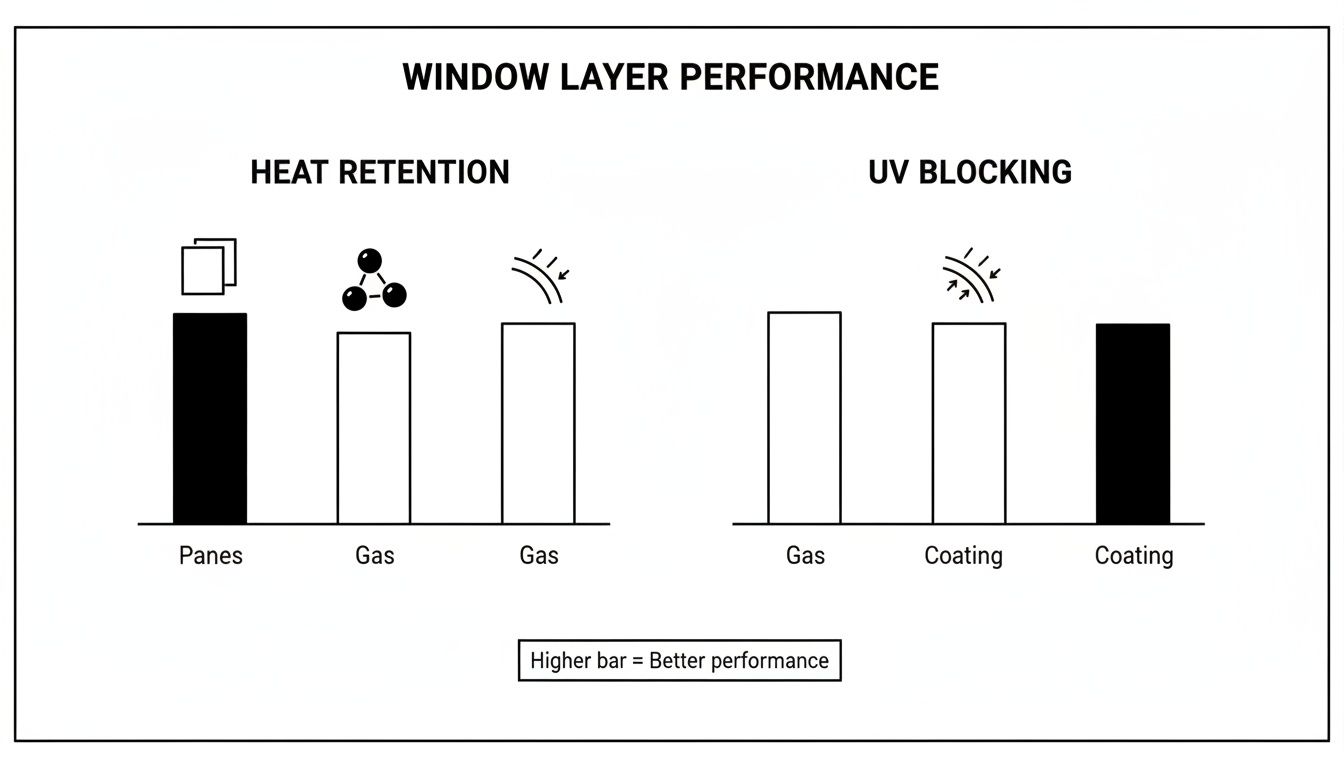
As you can see, adding more layers and advanced materials creates a much tougher barrier against energy loss, which directly impacts your home’s efficiency.
To make things even clearer, here's a quick side-by-side look at what these numbers mean in the real world.
Double vs Triple Pane Performance At a Glance
| U-Factor | 0.25 - 0.30 | 0.15 - 0.20 | Lower number means less heat escapes your home in winter. |
| R-Value | 3.0 - 3.8 | 7.0 - 8.0 | Higher number means better resistance to heat transfer. |
This table shows just how significant the performance gap is. That extra pane of glass effectively doubles the window's insulating power.
Translating R-Value to Real-World Savings
The boost in R-Value is where you see the most dramatic impact. A typical double-pane window offers an R-Value between 3 and 3.8. But a triple-pane window can push that all the way up to 7-8, creating a much stronger shield against heat transfer.
This enhanced insulation means your HVAC system doesn’t have to work nearly as hard to keep your home comfortable. In fact, triple-pane windows can improve your home's energy efficiency by up to 50% compared to standard double-pane models.
This is a huge deal, especially during those cold Upstate South Carolina nights when your heating is running constantly. Your heating and cooling system is one of the biggest energy hogs in your house. By giving it a break with better-insulating windows, you can extend its lifespan and cut down on maintenance costs over time.
You can learn more about the broader benefits of energy-efficient windows in our comprehensive guide.
Ultimately, the superior performance of triple-pane windows delivers more than just impressive numbers on a sticker; it provides tangible, day-to-day improvements.
- Consistent Indoor Comfort: You’ll notice fewer drafts and cold spots near windows, creating a much more stable and pleasant environment all year long.
- Reduced HVAC Cycling: Your system won't have to kick on and off as often, which saves energy and reduces wear and tear on your equipment.
- Lower Energy Consumption: The direct result of better insulation is using less energy to heat and cool your home—a win for your wallet and the environment.
Sound, Condensation, and Your Daily Comfort
Energy bills are a big deal, but what really changes your day-to-day life is how your home feels. This is where the debate between triple-pane and double-pane windows gets personal. We're talking about the little things that make a huge difference: a quieter bedroom and a clear view, free from annoying condensation.
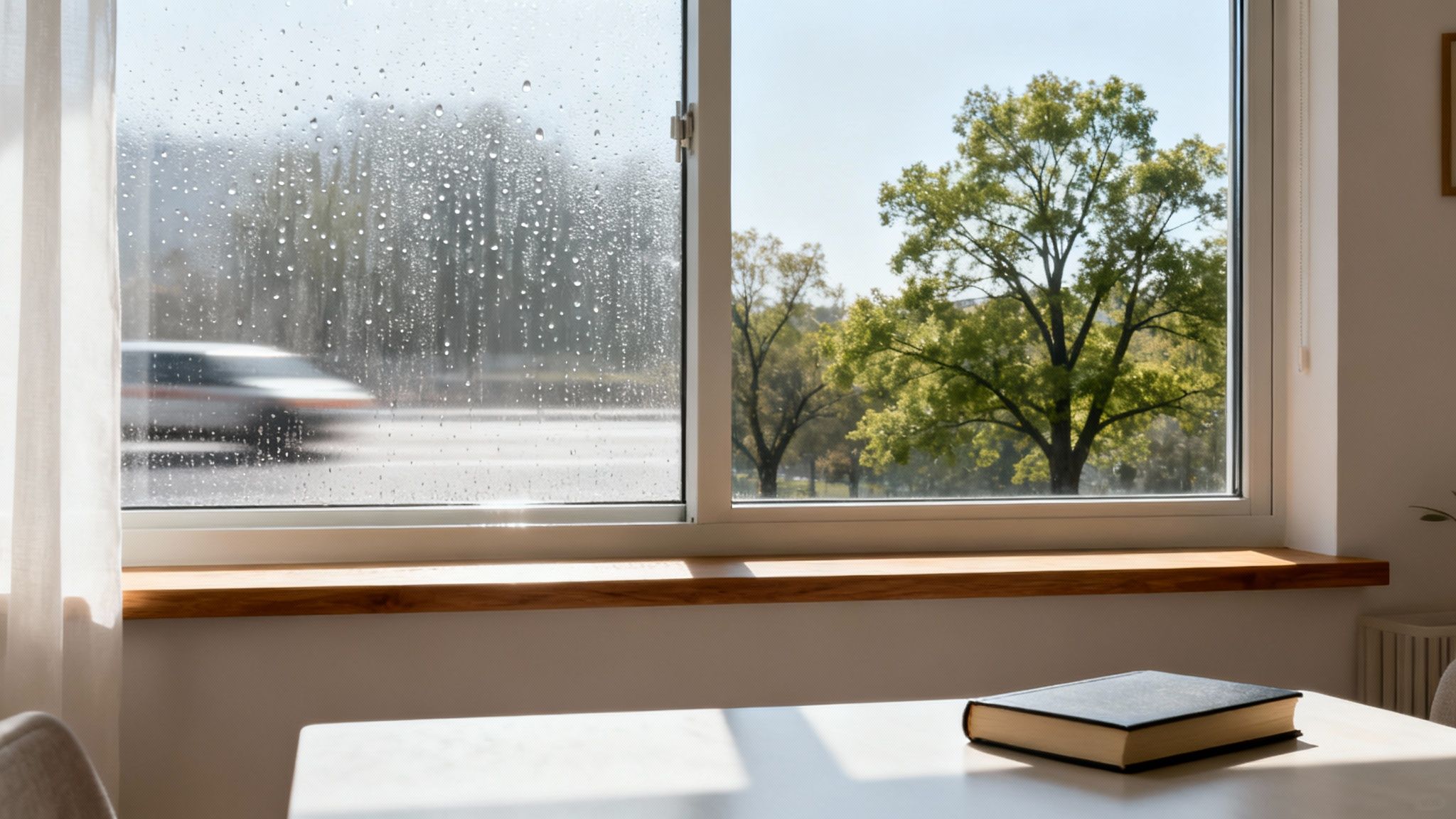
Your home should be a peaceful escape from the world outside. But noise from traffic, lawnmowers, or neighborhood chatter can easily shatter that calm. The physical structure of a window is your first and last defense.
Quieting the Outside World
Any modern double-pane window is a massive step up from an old, single-pane unit. That pocket of air or gas trapped between the two panes does a decent job of disrupting sound waves, softening their impact before they reach your ears.
But triple-pane windows take this to a whole new level.
By adding a third pane of glass, you create a second insulating chamber. This forces sound waves to travel through a much more complex path. Every time a vibration hits a new layer of glass or gas, it loses energy. The result is a dramatically quieter home.
Here's why it works so well:
- More Mass: That third pane adds sheer physical mass. Denser barriers are simply harder for sound to vibrate through.
- Extra Airspace: The second gas-filled chamber acts as another buffer, dampening sound even further before it can reach the innermost pane.
- Varying Thickness (in some models): High-end triple-pane units sometimes use glass of different thicknesses. This smart trick disrupts a much wider range of sound frequencies, effectively canceling out everything from low rumbles to high-pitched whines.
It's not just about energy—it’s about acoustic comfort. Thinking about how insulation's sound barrier properties work in walls can help you appreciate what windows do for sound. We've even put together a full guide on the best windows for noise reduction if you really want to dig in.
Real-World Impact: Imagine your home is near a busy road in Greenville or in a bustling Simpsonville neighborhood. A triple-pane window can take that constant drone of traffic and turn it into a barely noticeable hum. That’s the kind of peace and quiet that changes how you live.
Winning the War on Condensation
Window condensation is more than just an ugly fog blocking your view. It's a flashing red light indicating a big temperature difference between your indoor glass and the humid air inside your home. Here in Upstate South Carolina, that’s a year-round battle that can lead to water-damaged sills and even mold.
Condensation happens when warm, moist interior air hits a cold surface—like the inside of your window. Double-pane windows help a lot by keeping the inner pane warmer than it would be otherwise.
Triple-pane windows, however, practically solve the problem.
The two insulating chambers create a powerful thermal break. This design keeps the innermost pane of glass remarkably close to room temperature, even on the coldest winter morning. Since the glass surface isn't cold, there’s nothing for the moisture in the air to condense on. It's that simple.
Let’s break down how each window handles moisture:
| Double-Pane | Warmer than outside, but can still feel cool. | Moderate, especially on cold or humid days. | You might need to wipe them down to prevent pooling. |
| Triple-Pane | Stays very close to your home's room temperature. | Extremely low. Condensation is almost unheard of. | Protects your window frames and sills from moisture. |
By keeping condensation at bay, triple-pane windows safeguard the wood and paint around your window frames. It's a long-term benefit that prevents ugly water stains, wood rot, and mold, ensuring your investment looks and performs its best for decades.
Analyzing the Financials: Cost vs. Long-Term ROI
Let's be honest—the conversation around triple-pane vs. double-pane windows almost always comes down to money. The performance benefits are great, but it's the upfront cost and the long-term return on investment (ROI) that really drive the decision for most homeowners. To figure out if the premium for triple-pane is a smart move for your home, we need to look at the numbers.
First, the initial investment. You can generally expect triple-pane windows to cost between 10% and 25% more than a high-quality double-pane window. That extra cost covers the third pane of glass, the second gas-filled chamber, and usually a more robust frame needed to handle the extra weight.

For a typical home in Upstate South Carolina, that difference can add up to several thousand dollars. It’s a serious figure, and it’s completely understandable to pause and weigh the options. But looking only at the sticker price is just seeing one side of the story.
Calculating Your Long-Term Payback
The real financial value of triple-pane windows shows up over their entire lifespan. That higher upfront cost is an investment in top-tier energy efficiency, which means lower monthly utility bills. The key is to figure out the "payback period"—how long it takes for your energy savings to completely cover that initial price difference.
This is where the serious insulation of triple-pane glass becomes a powerful financial tool. By drastically cutting down on heat transfer, these windows let your HVAC system take a breather, especially during our muggy summers and surprisingly cold winters. That reduced workload doesn't just lower your bills; it can also help your expensive heating and cooling equipment last longer.
To put it in perspective, some recent field studies have shown pretty dramatic results. Switching from double-pane to triple-pane windows can cut a home's peak HVAC power demand by 17% in winter and a whopping 33% in summer. In some homes, the peak power demand dropped by as much as 1,200 watts during cooling season—a massive benefit for our energy grid here in the growing Southeast.
A Note on Our Climate: Some people will tell you triple-pane is "overkill" for a moderate climate, but the mixed-humid conditions we get in Upstate SC are a unique challenge. The intense summer sun and high humidity put a heavy load on air conditioners, while our cold winter nights can make the furnace run constantly. Triple-pane windows are built to handle both extremes.
A Hypothetical Payback Scenario
To make this real, let's run the numbers for a home in the Greenville area.
- Initial Cost Difference: Let's say the upgrade to triple-pane windows for the whole house costs an extra $4,000.
- Monthly Energy Savings: With the improved insulation and reduced HVAC load, the homeowner saves an average of $45 per month on their power bill.
- Annual Savings: That adds up to $540 per year ($45 x 12 months).
In this scenario, the payback period is just over seven years ($4,000 / $540 per year ≈ 7.4 years). Considering that high-quality Wincore windows are built to last for decades, you’d be enjoying over 20 years of pure savings after the windows have paid for themselves.
Of course, every home is different. The quality of your home's insulation, the age of your HVAC system, and your family's daily habits will all affect the exact payback timeline. For a more personalized look, using a window replacement cost estimator can give you a much clearer picture of your specific project costs.
Boosting Your Home's Resale Value
Beyond the energy savings, triple-pane windows offer another major financial upside: increased home value. In today's real estate market, energy efficiency is a huge selling point. Buyers are getting smarter about the long-term costs of owning a home and are often willing to pay more for a house with high-performance upgrades already in place.
When you list your home with features like "new triple-pane windows," it tells buyers the property is well-maintained, quiet, comfortable, and cheaper to run. This can help your home sell faster and for a better price, letting you get back a good chunk of your initial investment when you sell. It’s an upgrade that pays you back while you live there and again when it's time to move.
Choosing the Right Windows for Your Upstate SC Home
Let's pull all this together. Deciding between triple-pane and double-pane windows really boils down to your specific home, your goals, and your budget. For homeowners here in Upstate South Carolina, there’s no single "right" answer. The best choice comes from a clear-eyed look at your property’s unique challenges and what matters most to you—comfort, savings, or long-term value.
Our mixed-humid climate puts us in a unique spot. The sweltering summer heat demands excellent control over solar heat gain, but our surprisingly chilly winter nights mean we also need strong insulation to keep heating costs from creeping up. This dual challenge means both high-quality double-pane and premium triple-pane windows have a role to play.
When Double-Pane Windows Make Perfect Sense
For a huge number of homes across Greenville, Spartanburg, and Anderson, a modern, high-performance double-pane window is the ideal solution. Honestly, these windows are a massive upgrade over older, inefficient units and strike an excellent balance between performance and upfront cost.
A Wincore double-pane window, especially one equipped with advanced Low-E coatings and argon gas fill, is more than capable of handling our climate. This setup is a fantastic fit for:
- Homes Without Extreme Exposures: If your home is well-shaded by trees or doesn't have huge walls of glass baking in the afternoon sun, a top-tier double-pane unit offers more than enough thermal performance.
- Budget-Conscious Remodels: When you need to replace every window in your home, the cost savings of choosing double-pane can be the difference-maker. It allows you to complete the entire project at once, maximizing your home's overall efficiency without breaking the bank.
- Quieter Neighborhoods: If ambient noise isn't a primary concern, the sound reduction you get from a quality double-pane window is typically more than enough for a peaceful indoor environment.
In these situations, you get a durable, energy-efficient window that delivers real savings and comfort without the higher initial investment of triple-pane. It’s a smart, practical choice that provides immediate benefits and a solid return.
Pinpointing the Smartest Triple-Pane Upgrades
While high-quality double-pane windows are an excellent standard, certain situations make the upgrade to triple-pane not just a luxury, but the most logical long-term investment. This is where you move from a great solution to the absolute best one for a specific problem.
For homeowners focused on maximum efficiency, unparalleled comfort, and creating a truly peaceful sanctuary, the superior insulation and sound-blocking power of triple-pane windows are undeniable. The benefits directly address the most pressing environmental challenges a home can face.
Consider upgrading to triple-pane windows for these specific spots:
- Homes on Busy Roads: If you live anywhere near a major road like I-85 or a bustling local street, the noise-dampening power of triple-pane windows is a game-changer. It can effectively turn the roar of outside traffic into a faint whisper.
- Properties with Northern Exposure: Rooms with large windows facing north get very little direct sunlight in the winter, making them a major source of heat loss. The powerful insulation of a triple-pane window is crucial for keeping these spaces warm and comfortable without constantly running your furnace.
- Homeowners Prioritizing Energy Independence: If your goal is to minimize your carbon footprint and get the lowest possible energy bills, triple-pane windows are a key piece of the puzzle. Their superior efficiency dramatically cuts down your reliance on your HVAC system all year long.
When making a final decision for your Upstate SC home, it's wise to consider every angle of window performance, including protection against severe weather. Taking a moment to explore various hurricane window protection options can give you a complete picture of what modern windows can truly offer.
Of course. Here is the rewritten section, adopting the expert, human-written tone from your examples.
Common Questions: Triple vs. Double Pane Windows
When you're weighing the pros and cons of triple pane windows vs double pane, a few practical questions always come up. Getting straight answers to these is the final step before you can feel truly confident in your choice. Let's tackle them one by one.
Are Triple Pane Windows Too Heavy for My Home?
This is a great question and a totally valid concern. Yes, adding a third pane of glass makes the window unit heavier. There’s no getting around that.
But here’s the good news: modern replacement windows are engineered from the ground up to be installed in standard homes without needing major structural changes. Part of our process at Atomic Exteriors involves a professional assessment. Our installation experts will take a look at your home’s framing during your consultation to make sure it can handle the windows you want. We won’t sell you something your home can’t safely support, period. It’s all about ensuring a secure fit that guarantees long-term performance.
Is Triple Pane Worth It in a Moderate Climate?
For many homeowners here in Upstate SC, a high-quality double pane window is the perfect sweet spot. Our top-tier double pane units, packed with advanced Low-E coatings and argon gas, deliver fantastic performance and value. They are a massive upgrade over old windows and provide more than enough energy efficiency for our region.
So, when does triple pane make sense? It's for the homeowner who wants the absolute best. If your goal is maximum long-term energy savings, whisper-quiet interiors, or the most comfortable indoor environment possible, then yes, it's often worth the extra investment. That enhanced insulation pays off year-round, blocking out the sweltering summer heat and keeping your home cozy on those surprisingly cold winter nights. It really boils down to your personal priorities for comfort and efficiency.
The Installation Factor: It doesn’t matter if you choose the most advanced triple pane window on the market. If it’s not installed and sealed correctly, it won't perform any better than a cheap, leaky window. The installation is everything.
How Important Is Professional Window Installation?
Let me be blunt: it’s non-negotiable. It's the single most critical factor in your window's success. All those impressive energy ratings—the U-Factor, the R-Value—are based on a perfect, lab-quality installation. To get that performance in the real world, you need an expert installer.
A botched installation completely wastes your investment and leads to a whole host of problems:
- Air and Water Leaks: Even small gaps around the frame destroy your home's thermal barrier and invite moisture in.
- Insulating Gas Loss: A bad seal lets the argon or krypton gas escape, and just like that, the window's insulating power is gone.
- Operational Headaches: Windows that aren't set perfectly square won't open, close, or lock the way they should.
When our expert installers put in your windows, we ensure a flawless, weather-tight seal. That’s how you get high-performance windows that deliver on their promise for decades to come.
Ready to see which window solution is the perfect fit for your home and budget? The experts at Atomic Exteriors provide detailed consultations and flawless installations across Upstate South Carolina. Explore our high-performance window options and schedule your free, no-obligation estimate today.