.png)
A Homeowner's Guide to Home Window Replacement in Upstate SC
That draft you feel sneaking in around the edges of your window isn't just a minor annoyance—it's your home trying to tell you something. A full home window replacement is a serious upgrade, but it’s about more than just new glass. It’s about ripping out the old, failing units and installing modern, energy-efficient windows that boost your home's comfort, value, and even its security. It’s a real solution, not a temporary patch.
Knowing When It Is Time for a Window Upgrade
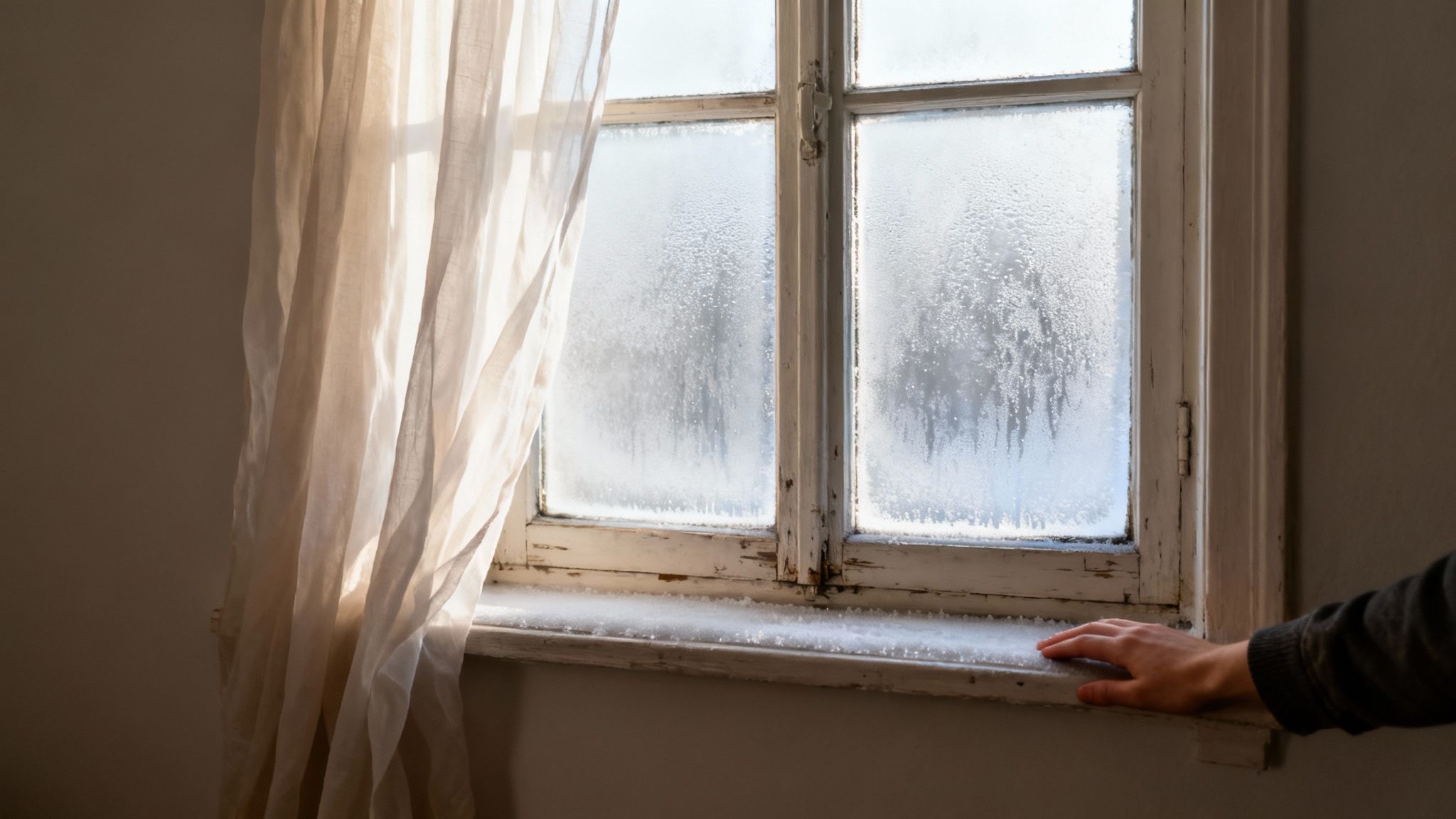
Old windows rarely fail overnight. It’s usually a slow decline, which makes it easy to get used to the warning signs and just… live with them. Think of them like a flip phone in a smartphone world. Sure, they still technically work, but they’re missing out on all the performance, security, and efficiency that modern standards offer. Learning to spot the subtle (and not-so-subtle) cues is the first step toward a smart investment.
The most obvious problems are things you can see, like cracked glass or rotting wood frames. But a lot of the real red flags are less direct. For instance, have your heating and cooling bills started creeping up for no good reason? That’s a big one. It often means your HVAC system is working overtime to make up for all the conditioned air leaking right out through poorly sealed, single-pane windows.
Operational and Comfort Issues
Beyond the energy bills, think about the day-to-day headaches. Do your windows stick every time you try to open them? Do they refuse to stay up, or does it take a feat of strength just to lock them? That's not just an inconvenience. A window that won’t open when you need it to can be a serious safety hazard in an emergency.
Another huge giveaway is condensation building up between the glass panes. If you see that foggy, milky look, it means the window's seal has failed and the insulating gas (usually Argon) has leaked out. Once that seal is broken, the window has lost its energy-efficient properties for good. The only real fix is a replacement.
Don't confuse seal failure with everyday condensation. A little moisture on the inside surface of your window on a cold morning might just point to high humidity in your home. But fog or moisture trapped between the panes is a definite sign that the window unit itself is failing.
Recognizing the Telltale Signs
Deciding to replace your windows usually isn't about a single problem. It's more often a combination of issues that, together, make your home less comfortable and efficient. Here in Upstate SC, where we bounce between muggy summers and surprisingly chilly winters, the shortcomings of old windows are impossible to ignore.
To help you figure out where your windows stand, we've put together a quick checklist. Use it to walk around your house and see if any of these common symptoms sound familiar.
Window Replacement Checklist Is It Time for an Upgrade?
| Noticeable Drafts | Air is leaking through failed seals or warped frames, driving up energy costs. | Check weatherstripping first. If that doesn't help, the window likely needs replacement. |
| Condensation Between Panes | The airtight seal has broken, and the insulating gas has escaped. | This can't be repaired. The entire insulated glass unit needs to be replaced. |
| Difficulty Opening/Closing | The window frame has warped, or the balance system has failed. | This is a functional and safety issue. Schedule a professional inspection immediately. |
| Rotting or Warped Frames | Wood is decaying due to moisture exposure, or vinyl is bending from heat/age. | Structural damage compromises security and energy efficiency. Replacement is necessary. |
| Increased Outside Noise | The window is not providing adequate sound insulation due to old single-pane glass or poor seals. | Modern double- or triple-pane windows with better sealing will solve this. |
| High Energy Bills | Your windows are a major source of heat loss in winter and heat gain in summer. | Look into ENERGY STAR® rated windows with Low-E coatings for a significant upgrade. |
Seeing one or two of these signs might mean it's time to start planning. If you're checking off multiple boxes, a replacement is probably overdue.
For a more detailed look, you can learn more about the crucial signs you need new windows in our in-depth guide. Knowing what to look for empowers you to make a confident decision and truly understand the value a professional window replacement brings to your home.
Choosing the Best Window Materials and Styles for Your Home
Picking the right windows is a balancing act. You have to weigh aesthetics, performance, and what fits your budget. This isn't just about filling a hole in the wall; it's about choosing a material that can stand up to our humid Upstate SC summers and a style that feels right for your home’s character. This one decision really sets the tone for your entire home window replacement project.
Think of the window frame like a car's chassis. It provides all the foundational support, dictates how durable the window will be, and determines how much maintenance you’ll be doing down the road. You wouldn’t take a sports car off-roading, and you shouldn’t pick a window material that can’t handle our local climate.
Decoding Window Frame Materials
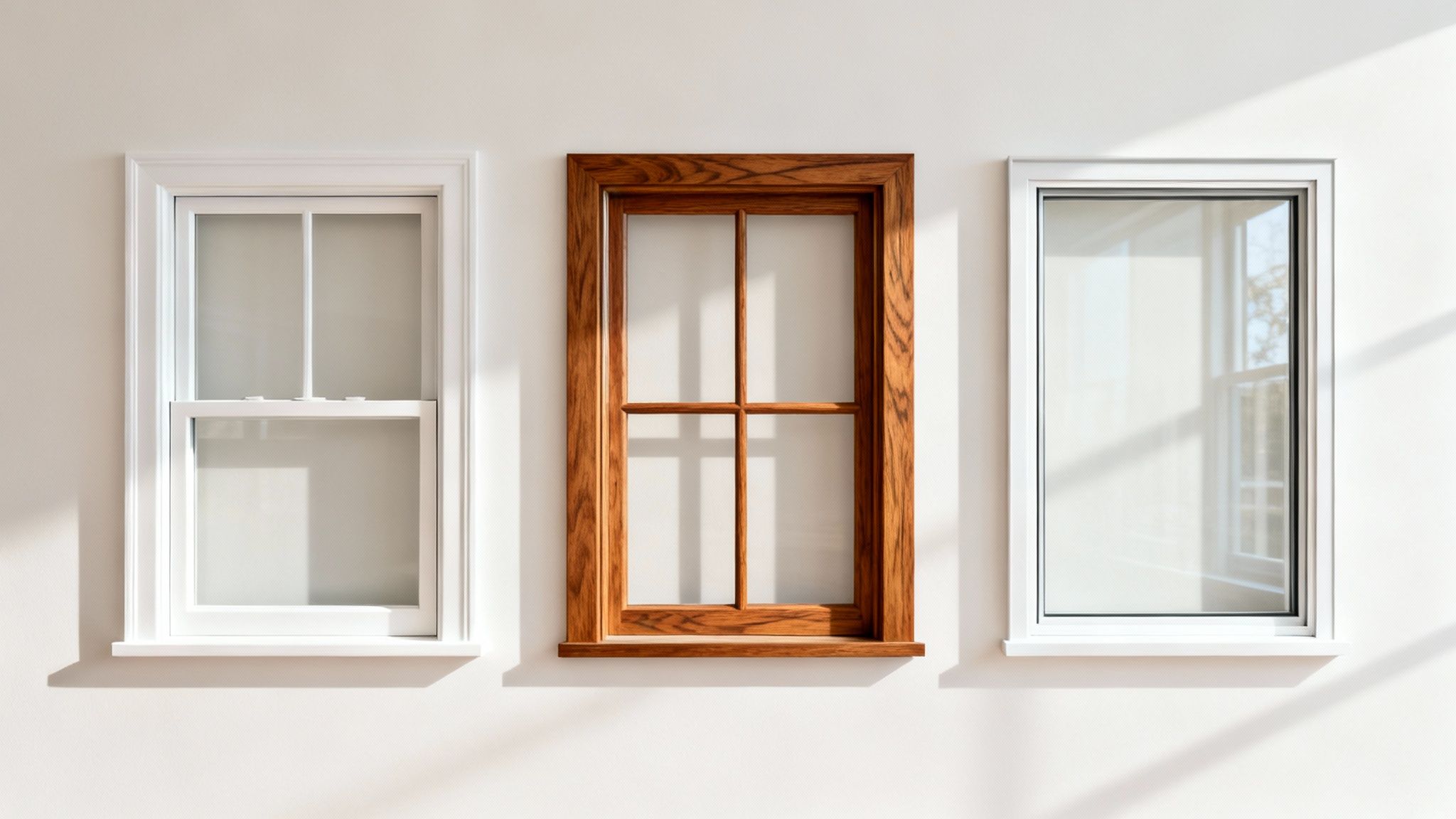
The material you choose has the biggest impact on your window's longevity, efficiency, and overall look. While you'll see a few options on the market, three materials really dominate the residential space, each with its own set of strengths and weaknesses.
- Vinyl: This is the most popular choice for a reason. Modern vinyl is engineered to be incredibly durable, energy-efficient, and almost zero-maintenance. It won’t rot, peel, or ever need a coat of paint, which makes it a perfect fit for homeowners who want a “set it and forget it” solution. Premium brands like Wincore—which we’re proud to install at Atomic Exteriors—use advanced vinyl compounds that resist warping and fading, even in the direct Southern sun.
- Wood: Nothing beats the classic, warm look of real wood. It’s a fantastic natural insulator and can be stained or painted to match any interior design imaginable. But that beauty comes at a price, both in initial cost and the upkeep required. Wood frames are prone to rot and insects in humid climates like ours and demand regular sealing and painting to stay protected.
- Fiberglass: You can think of fiberglass as a sort of hybrid option. It’s exceptionally strong, stable, and won't swell or shrink with big temperature swings. It can be painted and offers a sleek profile, but it typically comes with a higher price tag than vinyl without offering a huge leap in performance for most homes.
For the vast majority of Upstate SC homeowners, premium vinyl windows offer the best all-around value. They deliver top-tier energy performance and durability specifically suited for our climate, all without the constant maintenance that wood requires or the premium cost of fiberglass.
Finding the Perfect Window Style
Once you’ve landed on a material, the fun part begins: choosing a style that matches your home’s architecture and your lifestyle. Window style affects everything from airflow and natural light to how easy they are to clean. It's the functional heart of your window choice.
Here’s a quick rundown of the most common styles you'll run into:
- Double-Hung Windows: The timeless American classic. Both the top and bottom sashes slide up and down, giving you excellent control over ventilation. Modern versions often have tilt-in sashes that make cleaning the exterior glass from inside a total breeze.
- Casement Windows: These windows are hinged on one side and crank open outward, almost like a little door. This design creates an incredibly tight seal when it’s closed, making them one of the most energy-efficient options you can get. They also provide a great, unobstructed view and catch passing breezes perfectly.
- Picture Windows: These are large, fixed panes of glass that don’t open. Their one and only job is to frame a beautiful view and let in the maximum amount of natural light. They are often paired with operable windows to get the best of both worlds—views and ventilation.
- Sliding Windows: Simple and effective, sliders operate on a track, moving horizontally from side to side. They’re a great, space-saving choice for areas where an outward-swinging casement window would get in the way, like over a deck or walkway.
Beyond just looking good, the right window style can also dramatically improve how quiet your home is. If you're hoping for a little more peace and quiet, check out our guide on the best windows for noise reduction to see how different styles and glass packages can help.
Breaking Down Energy Efficiency: What Really Matters
Energy efficiency is one of those terms that gets thrown around a lot, but what does it actually mean for your home and your wallet? Think of it this way: a truly energy-efficient window is like a high-performance jacket for your house.
You wouldn't wear a flimsy raincoat in a January cold snap, right? The wind and cold would cut right through it. Instead, you'd grab a proper winter coat with layers—a waterproof shell to block the rain, an insulated core to hold in heat, and a breathable liner for comfort. Each layer does a specific job, and together, they keep you warm and dry.
Modern, energy-efficient windows work on the exact same principle. They use multiple layers of advanced technology to create a powerful barrier between your comfortable living space and the weather outside. This system is designed to keep your home cool during our brutal Upstate South Carolina summers and cozy when the winter chill sets in. It’s this teamwork between features that translates into real, noticeable savings on your energy bills.
The Key Players in Window Performance
To really understand what you're buying, you need to know the lingo. Once you grasp these key concepts, you'll be able to read an ENERGY STAR label like a pro and pick the perfect windows for our four-season climate.
- U-Factor: This is simply a measure of how well a window stops heat from escaping your home. It’s a bit like the R-value you see for insulation. The key thing to remember is that a lower U-Factor is better. It means the window is a superior insulator, which is critical for keeping your heating bills down in the winter.
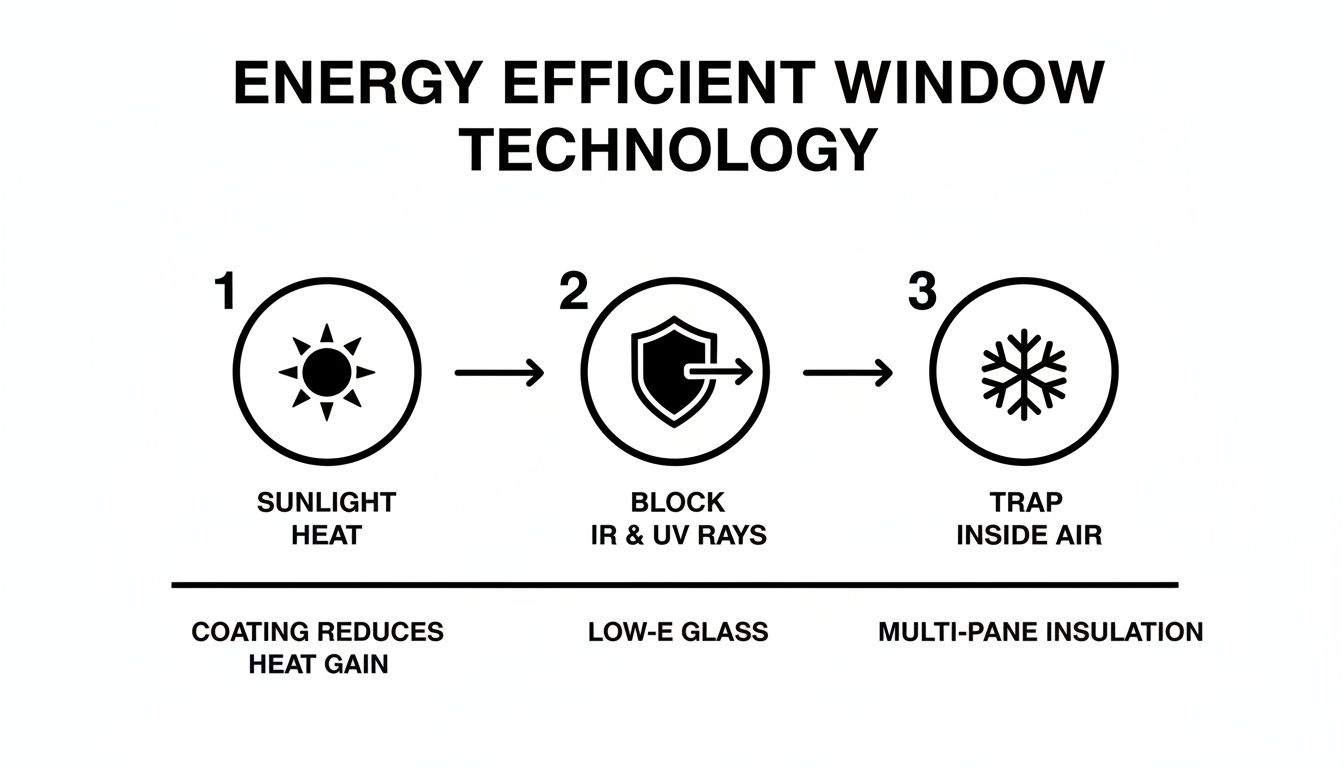
- Low-E Coating: "Low-E" stands for low-emissivity, which is a fancy way of saying it’s great at reflecting heat. It’s a completely invisible, paper-thin metallic coating on the glass. In the summer, it reflects the sun's scorching infrared heat away from your house. In the winter, it does the opposite, reflecting your furnace's heat back into the room so it doesn't leak outside.
- Argon Gas Fill: In a double- or triple-pane window, the space between the sheets of glass isn’t just empty air. It’s filled with a safe, clear, and incredibly dense gas like Argon. Because Argon is much heavier than air, it acts as a roadblock for heat, dramatically slowing down the transfer of hot or cold energy.
These features are designed to work as a team. The Argon gas slows heat down, and the Low-E coating reflects it back where it came from. It's a powerful one-two punch against energy waste.
To make it even easier, here’s a quick-glance table breaking down the most important terms.
Energy Efficiency Features Explained
| U-Factor | A rating of how well a window insulates. | A low U-Factor is crucial for retaining heat during chilly winters and preventing your AC from overworking in the summer. |
| Solar Heat Gain Coefficient (SHGC) | A measure of how much solar heat a window lets in. | A low SHGC is a must-have for blocking intense summer sun, keeping your home cooler and reducing cooling costs. |
| Low-E Coating | An invisible metallic layer on the glass that reflects heat. | It reflects summer heat out and winter heat in, working year-round to stabilize your home's temperature. |
| Gas Fills (Argon/Krypton) | Dense, non-toxic gases injected between glass panes. | These gases are better insulators than air, creating a strong thermal buffer against both hot and cold weather. |
Understanding these features helps you see how a window is built to perform specifically for a climate like ours, with its hot, humid summers and surprisingly cold winters.
Putting It All Together for Maximum Savings
This technology is more than just a neat feature; it’s a game-changer. The global market for energy-efficient windows is on track to nearly double, jumping from $17.61 billion in 2025 to a projected $34.63 billion by 2034. Why? Because homeowners and builders see the clear return on investment, with studies showing that high-performance windows can contribute to whole-building energy savings of up to 15.9%.
For an Upstate SC homeowner, this is simple: upgrading to premium Wincore windows from Atomic Exteriors isn't just another home expense. It's a direct investment in lowering your monthly Duke Energy bill. That blistering summer sun and those frosty winter nights don’t stand a chance against a window engineered to protect your home.
For those looking for the absolute best performance, triple-pane glass is the top-tier option. It adds a third pane of glass and a second layer of Argon gas, creating the ultimate thermal shield. And while you're planning a window project, it's always smart to look into other cost-effective ways to insulate your windows to get the most out of your home's efficiency.
To learn even more about how this investment pays off, you can read about the benefits of energy-efficient windows in our detailed article.
What to Expect During Your Home Window Replacement
The thought of tearing out all your home's windows at once can sound like a huge, messy ordeal. But honestly, when you work with a professional crew, the whole process is surprisingly smooth and straightforward. It’s all about having a clear plan.
Knowing what happens from start to finish takes the anxiety out of the equation and lets you get excited about the final result.
It all kicks off with an in-home consultation, which is way more than just a sales pitch. This is where an expert comes to your house to really understand what you’re trying to achieve. They'll check out your current windows, listen to your concerns (like drafts or high energy bills), and take precise measurements of every single opening. This first step is critical for ensuring your new windows are a perfect, custom fit.
From Custom Orders to Installation Day
Once you’ve settled on the styles and features you want, the order is sent to the manufacturer. Because every window is custom-built for your home’s specific openings, this part usually takes a few weeks. A good installer, like us at Atomic Exteriors, will give you a solid timeline and keep you in the loop so you’re never left guessing when your windows will arrive or when the crew will show up.
When installation day rolls around, the team arrives ready to work efficiently and protect your home. Here’s a quick rundown of how it usually goes:
- Prep Work: First things first, they’ll lay down drop cloths and protective coverings inside and out. The goal is to keep your floors, furniture, and landscaping clean and untouched.
- Old Window Removal: Next, the crew carefully removes each old window. They’re trained to do this without damaging the surrounding drywall, siding, or trim.
- New Window Installation: This is where the magic happens. Each new, custom-made window is set into its opening, meticulously checked to be perfectly level and plumb, and then securely fastened in place.
- Sealing and Insulating: To lock in that energy efficiency, the team applies high-performance sealants and insulation around the entire frame. This creates an airtight and watertight barrier, which is key to stopping drafts and lowering your utility bills.
The Final Touches and Quality Check
With the windows in, the focus shifts to the finishing details. This means installing any new interior or exterior trim needed for a clean, seamless look that blends right in with your home’s aesthetic. After that, it’s all about cleanup. The crew will pack up all the old windows and construction debris, leaving your space just as tidy as they found it.
The final step is also the most important: the walkthrough. The project lead will show you everything, demonstrating how to operate and clean your new windows. This is your chance to inspect every detail and make sure you are 100% satisfied with the job.
It’s no surprise that so many homeowners are making this upgrade. The window replacement market is on track to hit $12.5 billion by 2025, driven by people looking to boost their home's efficiency and value.
For those considering other big projects, understanding the basics of managing a home expansion or conversion project can provide helpful context for how contractors schedule work and communicate. At the end of the day, a clear, transparent process is what makes any home improvement project a success.
How to Budget for Your Project and Maximize ROI
Let's get right to it—the number one question on every homeowner's mind: what’s this going to cost? A home window replacement is a significant decision, and figuring out the budget is the first real step. The trick is to stop thinking of it as just another bill and start seeing it for what it truly is: a powerful investment in your home.
The final price tag really comes down to a few key things. The size and style you pick play a huge part; a big, beautiful picture window is naturally going to cost more than a standard double-hung. The material matters, too—premium vinyl versus classic wood, for instance—as does how complex the actual installation will be.
Thinking Beyond the Initial Cost
It’s so important to see new windows not as a one-time purchase, but as an upgrade that literally pays you back. Old, drafty windows are like a constant leak in your energy budget. You’re paying good money to heat and cool air that’s slipping right through the cracks. High-performance windows plug those leaks for good.
This investment delivers returns in two fantastic ways: immediate monthly savings and long-term property value.
- Lower Energy Bills: Modern, energy-efficient windows take a huge amount of strain off your HVAC system. That translates directly into lower utility bills every single month, putting money back in your pocket from day one.
- Increased Property Value: New windows are a massive selling point. They give your home a serious facelift and tell potential buyers that it’s well-maintained and efficient, often letting you recoup a huge chunk of your investment when you sell.
A professional window replacement isn’t just about looks. It’s a strategic move that makes your home perform better and boosts its financial standing. You're investing in comfort, efficiency, and future value.
The demand for these kinds of upgrades is undeniable. The broader windows and doors market is on track to grow from $216.04 billion in 2025 to $270.39 billion by 2030, mostly because people are renovating older homes. For homeowners right here in Upstate SC, this is a clear opportunity. A premium installation can deliver a return on investment of over 70% through energy savings and that all-important curb appeal.
Planning Your Budget with Confidence
So, how do you actually put a number on it? The best place to start is with a detailed, no-pressure estimate from a trusted local contractor like Atomic Exteriors. A transparent quote should break everything down—materials, labor, and any special features—so there are absolutely no surprises later on.
To get a ballpark figure right now, you can use our handy window replacement cost estimator to play around with different options and see how they affect the price.
A lot of homeowners also look into financing to make the project more manageable. Spreading the cost out can make it possible to get the high-quality, super-efficient windows you really want without having to cut corners. The most important thing is to have a clear, upfront chat about your goals and financial plan with your contractor from the very beginning.
Why a Local Upstate SC Expert Is Your Best Choice
Picking out the right windows is just one part of the puzzle. The other, and honestly, the more important part, is who you trust to install them. The long-term performance of your new windows really comes down to the team doing the work, and that’s where a local expert makes a world of difference.
Think about it this way: you wouldn't ask a mechanic from Florida for advice on getting your car ready for a mountain winter. The same idea applies right here. A big national chain might have a standard playbook they use everywhere, but a true local contractor gets the unique challenges we face in Upstate South Carolina—from our sticky summer humidity that can wreck cheap materials to the specific building codes in places like Greenville or Simpsonville.
Local Knowledge Is Your Best Protection
An expert who’s actually from here knows exactly what your home needs to handle our weather. They understand the small but crucial details of local building codes, making sure your project sails through inspection without any frustrating delays or surprise costs. That kind of deep, on-the-ground knowledge is something you just don’t get from a company operating from a call center hundreds of miles away.
Plus, local contractors have a reputation to protect right here in our community. They’re our neighbors. They shop at the same stores, and their business survives on the good word of the people they serve. That built-in accountability is a huge motivator to deliver top-notch work and honest service, every single time.
The Atomic Exteriors Promise
This commitment to local expertise is at the very core of what we do at Atomic Exteriors. We don’t just work in Upstate SC; we’re part of it. We’ve staked our reputation on a simple, straightforward promise to our neighbors.
Here’s what that promise looks like for you:
- Premium Wincore® Products: We install windows specifically engineered to handle our climate, giving you superior energy efficiency and the kind of durability that won’t back down from the Southern sun.
- An Industry-Leading Warranty: We stand by our installation with a 15-year workmanship warranty. This is our personal guarantee that the job is done right, the first time.
- Transparent Pricing: You’ll get a clear, detailed, and honest estimate. No hidden fees, no last-minute upcharges. We build trust by being upfront from day one.
- Proven Local Trust: You don’t have to take our word for it. We’ve earned hundreds of five-star reviews from homeowners just like you, right here in Simpsonville, Greer, and all across the Upstate.
Choosing a local expert isn’t just a nice-to-have; it’s your single best guarantee of a job done right. It’s the difference between a one-off transaction and a lasting partnership focused on protecting and improving your home.
Your home is your biggest investment. When it’s time for an upgrade as important as new windows, put your trust in the local team with a proven track record of protecting that investment.
Ready to see the difference local expertise can make for your home? Contact Atomic Exteriors today for your free, no-obligation estimate and let us show you why your neighbors trust us to get the job done right.
Frequently Asked Questions About Window Replacement
Getting new windows is a big decision, and it’s natural to have questions. From timing and cost to what you can expect during the project, having the right information helps you feel confident. We’ve put together answers to some of the most common questions we hear from homeowners across Upstate SC.
A big one we get is, "Do I have to replace all my windows at once?" The short answer is no. While tackling the whole house in one go is often more efficient and ensures a perfectly matched look, it’s not always practical. Many homeowners phase their project—doing the front of the house first, or maybe one floor at a time—to spread out the cost.
Timing and Project Duration
"What’s the best time of year to replace windows?" is another popular question. While spring and fall seem ideal because of the mild weather, a professional crew can handle window replacement any time of year, even in winter. Our installers work on one window opening at a time, which keeps your home's exposure to the outside air to an absolute minimum.
You might also be surprised at how quickly the job gets done. Most full-home window replacement projects are finished far faster than people think. An experienced team can typically replace all the windows in an average-sized home in just one to two days. We work efficiently to minimize the disruption to your routine.
One of the most important things to remember is that window quality and installation quality are equally critical. You can have the best window in the world, but if it isn't installed properly, it won't perform correctly or last as long as it should.
Maintenance and Lifespan
"How long will my new windows last?" That depends on the material, the climate, and proper care. High-quality vinyl windows, like the Wincore® products we use, are engineered to stand up to the South Carolina climate and can easily last for 20 years or more with very little upkeep.
Speaking of upkeep, modern vinyl windows are a homeowner's dream. A simple cleaning with soap and water is usually all it takes to keep the frames looking brand new. If you want to get the most out of them during our colder months, you can learn all about how to winterize windows and doors for maximum performance. A little proactive care goes a long way in protecting your investment for decades.
Ready to get clear, honest answers for your specific project? The team at Atomic Exteriors is here to help. Get your free, no-obligation estimate today!