.png)
Replace Windows Cost: A Homeowner's Guide to Window Replacements
So, you’re thinking about new windows. The big question on everyone's mind is always the same: "What's this actually going to cost me?"
On a national level, replacing a single window typically runs anywhere from $300 to $2,100 once installation is factored in. Most homeowners find themselves landing somewhere around the $850 mark per window.
When you zoom in on a full project here in Upstate South Carolina, that translates to a total investment of anywhere from $3,200 to over $20,000, all depending on the choices you make.
Your Quick Guide to Window Replacement Costs
Figuring out the cost to replace your windows is the first real step toward transforming your home’s comfort, boosting its energy efficiency, and sharpening its curb appeal.
Think of it like planning a vacation—the final price tag really depends on whether you're booking a budget-friendly weekend getaway or an all-inclusive luxury resort. The materials, styles, and extra features you choose will shape the final quote in the exact same way.
This guide is built to be your go-to resource, breaking down every financial piece of the puzzle. We'll kick things off with a clear snapshot of the costs, both nationally and right here in the Upstate, to help you build a realistic budget from the start.
As your local experts, we at Atomic Exteriors believe in giving homeowners honest, transparent information from day one. No surprises, just clarity.
National Averages vs. Upstate South Carolina Prices
While looking at national averages gives you a decent ballpark figure, it’s the local factors—like labor rates and material availability—that truly dial in the price. Homeowners are often surprised by just how wide the cost spectrum is.
National data shows the average spend is about $850 per window, with most projects falling between $300 and $2,100 including the installation.
For a typical home in Upstate South Carolina with about 8 to 10 windows, you’re likely looking at a total cost of $3,200 to $7,000. It's a significant investment, but one that pays dividends in comfort and energy savings. You can see how these numbers stack up by checking out national home improvement data.
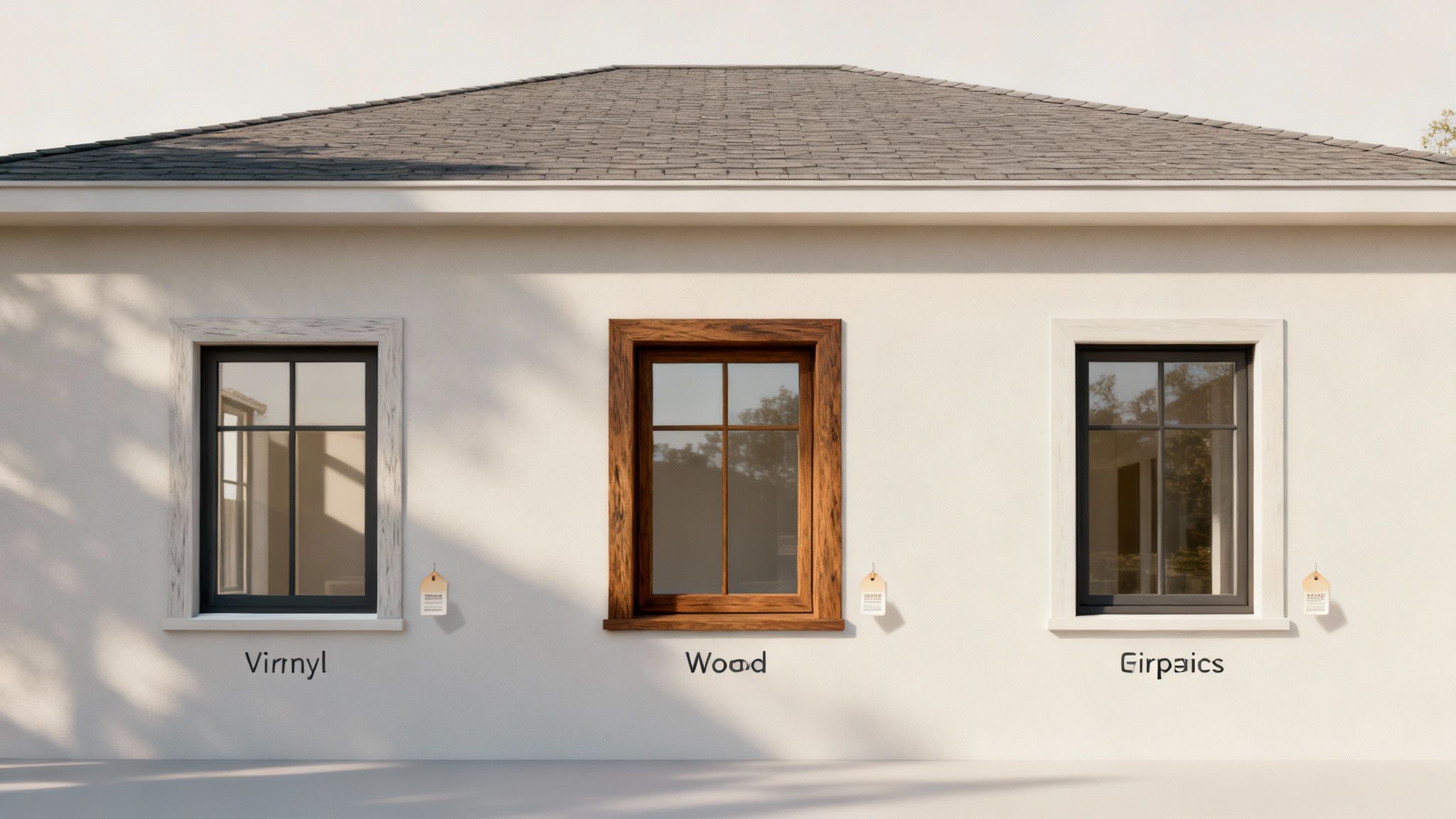
To put these numbers into better context, we've put together a quick comparison table. It breaks down the typical costs by the most common frame materials, giving you a much clearer picture of what to expect for your specific needs.
At a Glance: Window Replacement Cost Estimates
Here’s a quick summary to help you see how the numbers line up, comparing national per-window estimates to typical whole-house projects right here in the Upstate.
| Vinyl Windows | $250 - $900 | $3,500 - $12,000 |
| Wood Windows | $700 - $2,200 | $8,000 - $25,000+ |
| Fiberglass Windows | $600 - $1,800 | $7,000 - $20,000 |
These figures are a great jumping-off point for your research.
Of course, the only way to get a number that’s 100% accurate for your home is with a custom quote. For a more precise figure, you can get a personalized estimate with our window replacement cost estimator.
In the next sections, we'll dive deeper into what makes these numbers go up or down.
Decoding Your Window Replacement Quote
Getting a quote for new windows can feel a little like popping the hood of a car for the first time—a lot of parts, a few unfamiliar terms, and one final number that ties it all together. But just like a mechanic’s estimate, every line item tells a story. Understanding that story is the key to making a confident, smart investment in your home.
Think of your quote as a detailed recipe. It’s not just one lump sum; it’s a breakdown of the materials, labor, and other critical steps that lead to the final replace windows cost. A transparent, well-structured quote from a contractor like Atomic Exteriors is a great sign. It shows professionalism and proves they want you to know exactly where every dollar is going.
The Core Components of Your Estimate
At its heart, every window replacement quote is built on two main pillars: the physical window units themselves (materials) and the skilled professionals who install them (labor). These two elements will always make up the biggest slice of your total investment.
- Window Unit Cost: This is the price tag on the actual window—the glass, frame, and hardware. This number can swing wildly depending on the material (vinyl vs. fiberglass or wood), the style (double-hung, casement, picture), and any energy-efficient upgrades like Low-E coatings or argon gas fills. A basic vinyl window might run a few hundred dollars, while a large, custom wood bay window could be several thousand.
- Labor and Installation Cost: This covers the time, skill, and expertise of the installation crew. Professional installation isn’t just about cramming a window into an opening. It's a precise craft that involves carefully removing the old unit, prepping the opening, then setting, leveling, insulating, and creating a weatherproof seal on the new one. Labor typically accounts for 40% to 60% of the total project cost.
These two are the foundation of your quote, but they aren't the whole story. Several other smaller—but crucial—line items often show up on a detailed estimate.
Uncovering the Hidden and Overlooked Costs
Beyond the window and the installation, a truly comprehensive quote will account for all the necessary "behind-the-scenes" work that makes a project run smoothly and legally. Ignoring these can lead to surprise bills later on.
A great quote leaves no room for ambiguity. It should clearly outline every step, from the moment the old window comes out to the final cleanup, ensuring you have a complete financial picture before work ever begins.
Here are a few other costs you should expect to see itemized on a professional estimate:
Removal and Disposal Fees: Your old windows don’t just vanish into thin air. Contractors charge a fee to remove them without damaging your home’s structure and then legally dispose of the materials. This fee can run from $50 to $150 per window, depending on size and local regulations.
Permits and Inspections: Many towns and cities in Upstate South Carolina, including Greenville and Simpsonville, require building permits for window replacement. This is a good thing—it ensures the work meets local safety and energy codes. Permit fees are a necessary part of any legitimate project and are usually handled by the contractor.
Special Equipment or Access: If your project involves tricky second-story windows, skylights, or other hard-to-reach spots, the quote might include costs for scaffolding, lifts, or other special gear needed to get the job done safely.
Optional Upgrades: This is where you get to customize. Your quote might list separate costs for things like triple-pane glass for superior insulation, decorative grids to match your home’s style, or premium hardware finishes.
Finally, a trustworthy quote will also spell out the warranty details—your long-term protection. Make sure you understand both the manufacturer's warranty on the window itself and the contractor's guarantee on the installation. Learning more about what is a workmanship warranty can help you recognize the value of a strong installation guarantee, which is a critical part of your overall investment.
Key Factors That Influence Your Final Cost
Ever wonder why your neighbor’s window project cost thousands more—or less—than yours? The final price tag for new windows isn’t a one-size-fits-all number. It’s a dynamic figure that shifts with every single choice you make along the way.
Think of it like buying a new car. The base model has one price, but as you start adding premium features like a sunroof, leather seats, or an upgraded engine, that final sticker price starts to climb. Your window project works the exact same way.
The initial quote is just the starting point. From there, your decisions on materials, styles, and even the nitty-gritty of the installation will tailor the cost to your specific home and budget. Understanding these variables gives you the power to see where costs are fixed and where you have the flexibility to make choices that align with your financial goals.
This flowchart gives you a high-level look at how a final quote is built, breaking the total cost down into three main buckets.
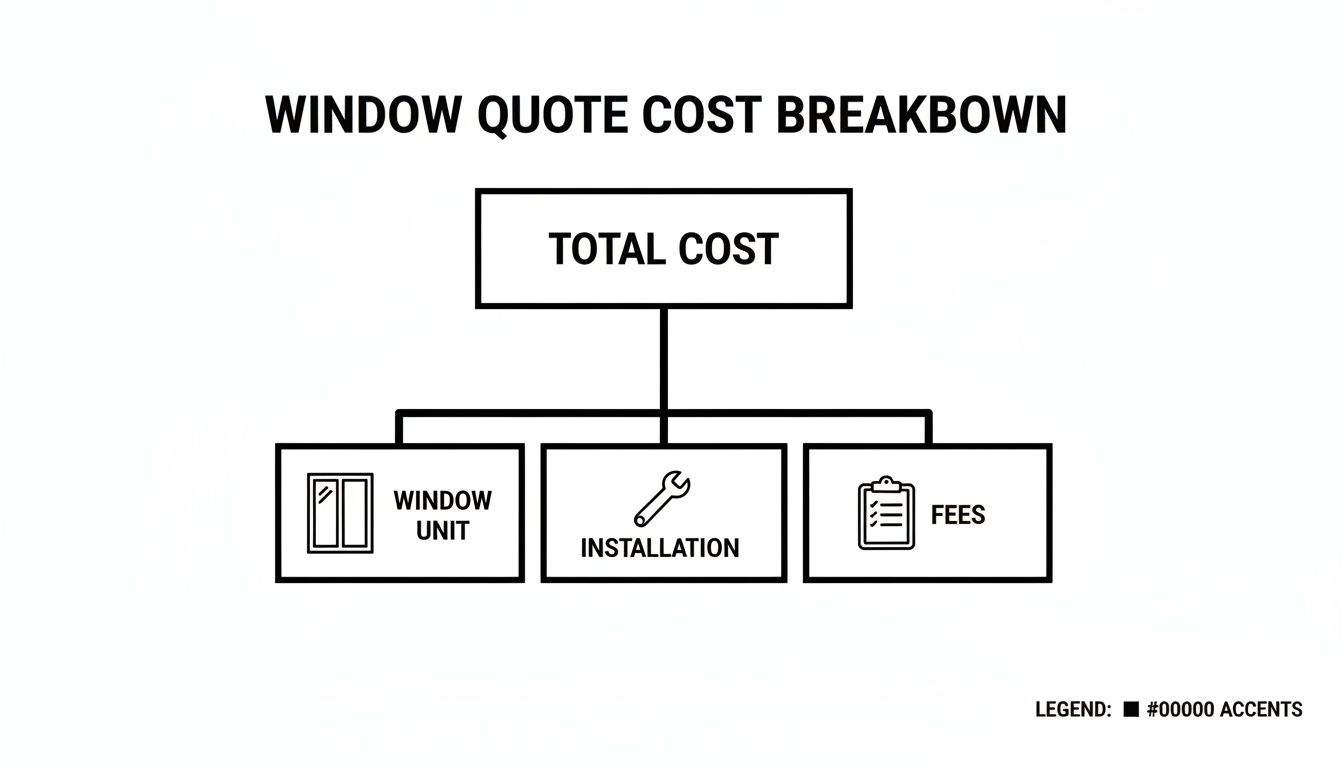
As you can see, the final number is a blend of the window unit itself, the skilled labor needed to install it perfectly, and any associated fees for a complete and professional job.
Window Type and Frame Material Choices
The biggest cost driver, hands down, is the window itself. The style you choose and the material it’s made from really set the foundation for your budget. For example, a standard double-hung window is almost always more affordable than a complex bow or bay window, which demands more material and structural work.
Even something as simple as moving parts can make a difference. A large, fixed picture window might cost less than a smaller, operable casement window simply because there are no mechanical parts to manufacture. If you’re exploring options, things like highly durable aluminum storm windows can also influence your project's expense by adding an extra layer of protection and insulation.
The frame material is the other half of this equation. Each option offers a unique balance of cost, looks, and performance.
When choosing a frame material, it's helpful to see how the most common options stack up against each other. Each one brings something different to the table in terms of initial cost, long-term maintenance, and how well it insulates your home.
How Window Frame Materials Compare in Cost and Performance
| Vinyl | $450 – $900 | Budget-friendly, excellent energy efficiency, and virtually maintenance-free. | Limited color options; can be less durable than other materials. |
| Wood | $800 – $2,000+ | Classic, beautiful aesthetic; great insulator; can be painted or stained. | Higher cost; requires regular maintenance (painting/sealing). |
| Fiberglass | $700 – $1,500 | Extremely strong and durable; resists warping/swelling; highly energy-efficient. | Higher upfront cost than vinyl; fewer style choices than wood. |
| Composite | $750 – $1,800 | Mix of wood fibers and plastic; low-maintenance like vinyl with the look of wood. | Can be as expensive as wood; newer technology with less history. |
| Aluminum | $500 – $1,200 | Strong, lightweight, and durable; slim frames allow for more glass and better views. | Poor insulator; prone to condensation in humid climates. |
Ultimately, the best material for you depends on your priorities—whether that's sticking to a strict budget, achieving a specific architectural look, or investing in maximum durability for the long haul.
How Window Size and Glass Options Alter Price
This one’s pretty straightforward: bigger windows cost more than smaller ones. They simply require more glass, more frame material, and more labor to install. But what many homeowners don't realize is that custom sizes can also bump up the price. If your home has non-standard window openings, the manufacturer has to build custom units from scratch, which costs more than pulling standard sizes off the shelf.
Beyond the dimensions, the glass package itself is a huge variable. Today, standard double-pane windows are the baseline for energy efficiency. However, you can always upgrade for better performance.
Upgrading your glass package is one of the most effective ways to boost your home's energy efficiency. While it adds to the upfront cost, the long-term savings on heating and cooling often provide a significant return on your investment.
Choosing advanced features like argon or krypton gas fills between the panes adds an invisible layer of insulation, helping keep your home comfortable all year round. You can also opt for triple-pane glass, which offers superior noise reduction and thermal performance. To really get into the weeds, you can learn more in our guide comparing triple-pane windows vs double-pane.
Installation Complexity and Home-Specific Factors
The final piece of the cost puzzle comes down to your home's unique quirks and how complex the installation will be. A straightforward "insert" replacement, where the new window fits neatly into the existing frame, is less expensive than a "full-frame" replacement that involves tearing everything out down to the studs.
Accessibility also plays a massive role. A first-floor window is much easier and cheaper to replace than a third-story window that needs scaffolding or a skylight requiring specialized safety gear. The style of your home matters, too. Historic homes often demand more delicate work to preserve original trim, which adds to the labor time and cost.
Finally, local labor rates here in the Upstate South Carolina region will influence the installation portion of your quote. In areas with a higher cost of living or more demand for skilled installers, you can expect to pay a bit more. All these factors come together to create a final replace windows cost that is truly unique to your home and your project goals.
Real World Cost Scenarios for Upstate SC Homes
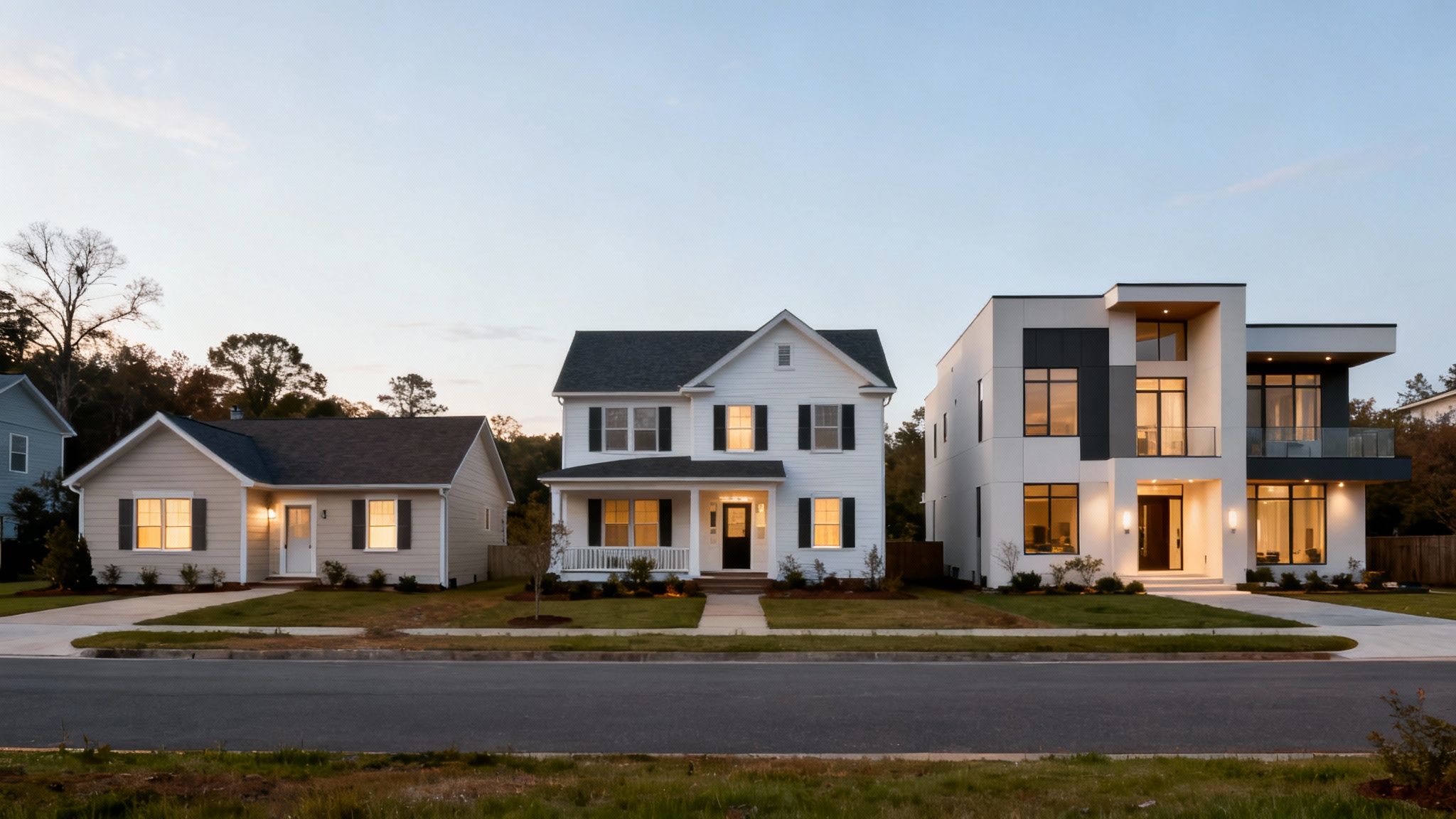
Averages and estimates are a good starting point, but let’s be honest—it’s the real-world examples that make the numbers click. To give you a genuine feel for the replace windows cost, we’ll walk through a few scenarios based on common home styles you see every day here in Upstate South Carolina.
Each of these examples shows how different priorities, from sticking to a budget to aiming for peak performance, really shape the final price tag. These aren't just random figures; they show how your choices in materials, installation methods, and the number of windows all come together on a real project.
Scenario 1: The Budget-Conscious Ranch Home in Anderson
Picture a classic 1,500 sq. ft. ranch, a familiar sight all over Anderson. The owner needs to replace 10 old, single-pane aluminum windows that have become drafty and just aren't cutting it anymore. The goals are simple: boost energy efficiency and keep the project affordable.
For a job like this, the smartest move is a standard insert replacement using quality double-pane vinyl windows with Low-E coating and argon gas. An insert installation is quicker and more cost-effective because it fits the new window into the existing frame, which keeps labor costs in check.
Here’s a rough breakdown of the costs:
- 10 Standard Vinyl Double-Hung Windows: $5,000 (at $500 per window)
- Professional Installation Labor: $2,000 (at $200 per window)
- Removal and Disposal Fees: $750 (at $75 per window)
- Permits and Miscellaneous: $250
Total Estimated Project Cost: $8,000
This approach gives the homeowner a massive upgrade in comfort and energy savings without breaking the bank, making it a go-to choice for many in the Upstate.
Scenario 2: The Mid-Range Colonial in Greer
Now, let's head over to Greer and look at a two-story, 2,200 sq. ft. colonial. Its 15 original wood windows are starting to rot along the sills. The homeowner wants a durable, low-maintenance fix that still looks right on their traditional-style home. They have a bit more room in the budget and care about both performance and curb appeal.
A high-performance composite or a premium vinyl window is the perfect fit here. The project will involve a full-frame replacement for five of the windows where the rot is worst. It’s more labor-intensive, but it’s the only way to guarantee a solid, long-lasting installation.
Going with a full-frame replacement for damaged areas is a wise long-term play. It costs more upfront, but it solves underlying problems like rot and poor insulation, saving you from much bigger headaches down the road.
The cost breakdown for this mid-range project looks something like this:
- 15 Premium Vinyl/Composite Windows: $12,750 (at $850 per window)
- Installation Labor (10 Insert, 5 Full-Frame): $5,000
- Removal and Disposal Fees: $1,500 (at $100 per window)
- Permits and Miscellaneous: $350
Total Estimated Project Cost: $19,600
This plan strikes a great balance between cost, durability, and style, giving that colonial a fresh look with seriously improved performance.
Scenario 3: The Premium Custom Home Near Greenville
Finally, let's consider a modern 3,500 sq. ft. custom home near Greenville. It has 20 windows in all shapes and sizes, including large picture windows and a few unique architectural designs. For this homeowner, maximizing energy efficiency and modern style is the top priority; budget is secondary.
For a high-end project like this, top-tier fiberglass windows with a triple-pane glass package are the way to go. Fiberglass provides incredible strength for those large spans of glass and offers unmatched durability. The installation will be a complete full-frame replacement on all windows to lock in the highest level of thermal performance. If you want to explore all the options out there, our guide on home window replacement has more great info.
Let’s crunch the numbers for this premium investment:
- 20 Premium Fiberglass Windows (Triple-Pane): $28,000 (at $1,400 per window)
- Full-Frame Installation Labor: $10,000 (at $500 per window)
- Removal and Disposal Fees: $2,500 (at $125 per window)
- Permits and Miscellaneous: $500
Total Estimated Project Cost: $41,000
This is the top-of-the-line approach, reflecting the best in materials and installation. The result is a home that’s exceptionally quiet, comfortable, and as energy-efficient as it gets.
Maximizing Your Return on Investment
It’s easy to look at new windows as just another line item on a home improvement budget. But that’s like calling a kitchen remodel just “buying new cabinets.” It misses the point entirely. A window replacement project is a powerful investment in your home's future—one that pays you back in comfort, efficiency, and real dollars.
The replace windows cost you see upfront is just the beginning of the story.
The most immediate and satisfying return you’ll see is on your monthly utility bills. Old, drafty windows are energy vampires. Think of them as tiny, invisible holes bleeding out your expensive conditioned air during a sweltering South Carolina summer. Your AC unit has to work overtime just to keep up, and you’re the one footing the bill.
New, energy-efficient windows slam the door on that energy loss. They create a solid thermal barrier, keeping the cool air inside during the summer and the warm air in during the winter. This takes a massive load off your HVAC system, and you’ll notice the difference right away.
According to ENERGY STAR, homeowners can save an average of $101–$583 a year on heating and cooling costs just by replacing old single-pane windows. Those savings pile up fast, chipping away at the initial cost of the project year after year.
Boosting Your Home's Resale Value
Beyond the monthly savings, new windows give you a serious edge when it’s time to sell. Curb appeal is a huge deal in real estate, and nothing says “well-maintained home” quite like a set of fresh, modern windows. They make a fantastic first impression.
But it goes deeper than just looks. In a competitive market like ours here in Upstate South Carolina, savvy buyers are hunting for homes that are efficient and move-in ready. New windows are a big, visible signal that your home is buttoned up and won't come with shockingly high energy bills. It's a major selling point that can directly increase your home's market value. In fact, most remodeling impact reports show homeowners can expect to recoup over 70% of their window replacement investment at resale.
Tapping into Financial Incentives and Rebates
Here's the best part: you don't have to foot the entire bill yourself. There are a bunch of programs out there designed to make energy-efficient upgrades more affordable, which lowers your out-of-pocket cost and turbocharges your ROI. Investing in energy-efficient windows is a key strategy for long-term savings, and you can learn more about other ways to reduce overall energy consumption in your home.
Getting smart about these financial perks is a critical part of the process:
- Federal Energy Tax Credits: The government wants you to make your home more efficient, and they’ll give you a tax credit to prove it. Installing qualifying high-efficiency windows can shave hundreds—or even thousands—of dollars off your tax bill. We break it all down in our guide to the ENERGY STAR windows tax credit.
- Local Utility Rebates: Power companies like Duke Energy often offer rebates to customers who install energy-saving products. It’s always worth checking their website or asking us about current programs available here in the Upstate. It's free money for an upgrade you were already planning.
- Manufacturer Incentives: The window brands themselves frequently run seasonal promotions or special rebates on their premium product lines. A good contractor stays on top of these deals and can help you time your project to snag the best possible price.
- Smart Financing Options: Many homeowners find it easier to spread the cost of a project out over time. At Atomic Exteriors, we offer flexible financing plans that let you get your project done now and pay for it with manageable monthly installments. It makes the whole process fit comfortably within your budget without having to wait.
Your Checklist for a Seamless Replacement Project
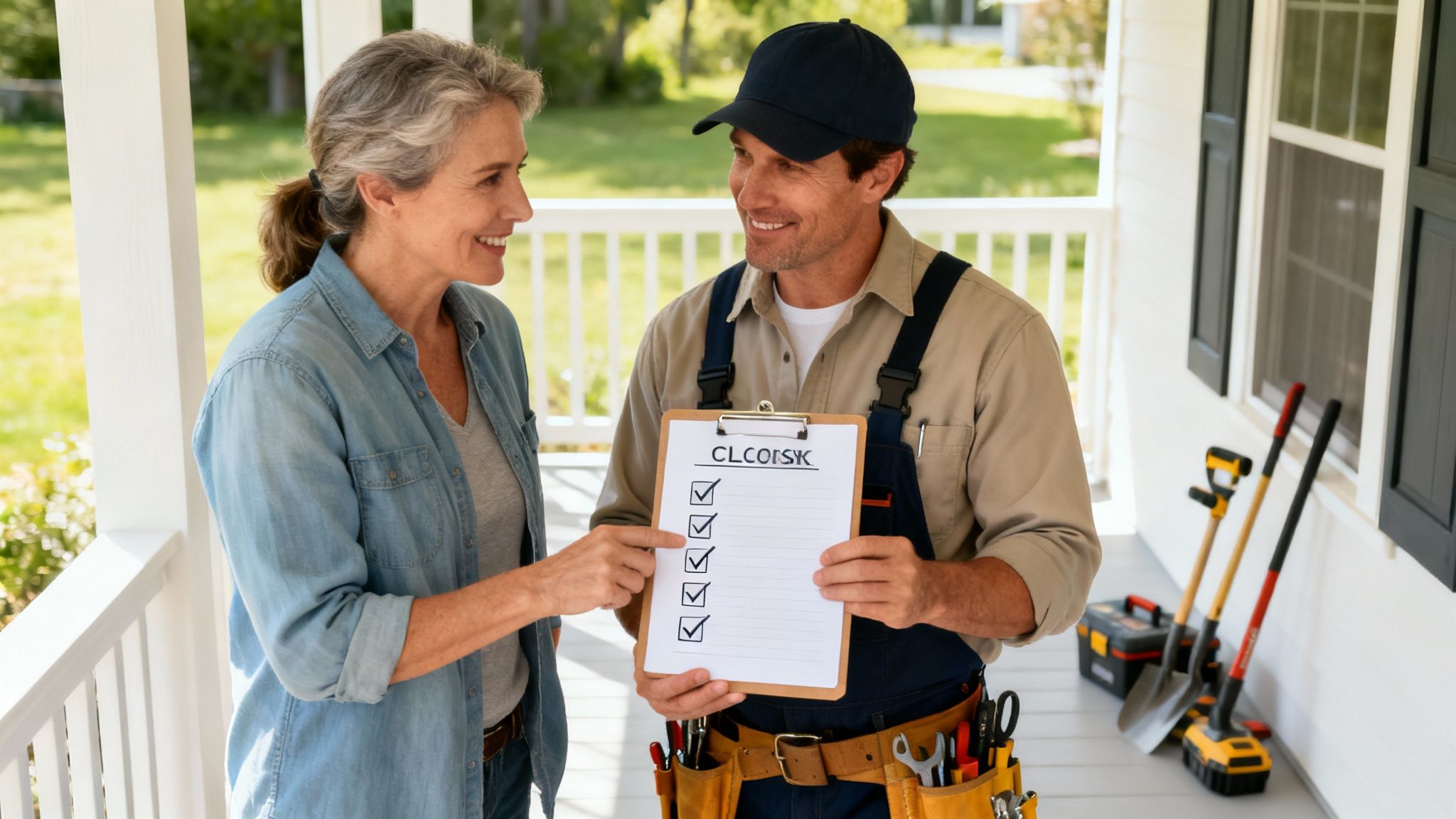
Understanding the numbers behind the replace windows cost is a huge step, but turning that knowledge into a successful project takes a solid plan. Think of this section as your roadmap—a practical checklist to guide you from getting quotes to enjoying your beautiful new windows.
A thoughtful approach now ensures you partner with the right professionals and feel confident every step of the way. When you have a clear game plan, a big home improvement project feels a lot less intimidating.
Getting Accurate and Actionable Quotes
The foundation of a smooth project is a clear, comprehensive quote. To make sure you’re comparing apples to apples, the best practice is to get at least three detailed estimates from reputable local contractors.
When you meet with them, give each one the exact same project details. This means the number of windows, your preferred style, and any specific features you're interested in. A vague request gets you a vague quote, so be specific.
Here’s what a great quote absolutely must include:
- Itemized Costs: A line-by-line breakdown of materials, labor, removal, and any permit fees. No surprises.
- Specific Product Details: The window brand, model, and energy performance ratings (like the U-factor).
- A Clear Project Timeline: An estimated start and completion date.
- Payment Schedule: Clear terms on deposits and the final payment.
Vetting Your Installation Contractor
The best windows in the world will fail if they’re installed poorly. Your contractor’s experience and credentials are just as important as the quality of the window itself. Don’t be afraid to dig into their background and ask some direct questions.
A professional contractor will welcome your questions about their business practices. Transparency is a hallmark of a company that stands behind its work and values its customers.
Before you sign anything, make sure you verify these non-negotiables:
Licensing and Insurance: Ask for proof that they are fully licensed to operate in South Carolina and carry both liability insurance and workers' compensation. This protects you from any accidents on your property.
Local Experience: Ask about their experience with homes in your specific area, like Greenville or Anderson. Local knowledge means they understand regional building codes and climate considerations.
Client References: Request a list of recent customers you can speak with. Hearing directly from past clients gives you invaluable insight into their process and professionalism.
Understanding Warranties and Timelines
Finally, get crystal clear on the long-term protection and the project schedule. A reliable contractor provides two distinct warranties: one from the manufacturer covering the window, and one from them covering the installation quality.
At Atomic Exteriors, for example, we back our professional installations with a 15-year workmanship guarantee. This commitment ensures your investment is protected for years to come, giving you total peace of mind. Knowing your contractor will be there to support you long after the job is done is a critical piece of the puzzle.
Got Questions? We've Got Answers
When you're considering a big home improvement project, a few final questions always pop up. It's completely normal. Getting clear on the logistics, value, and potential savings helps you feel confident that the replace windows cost you're quoted is the right fit for your home and your budget. Here are the straight-up answers to the questions we hear most often from homeowners right here in Upstate South Carolina.
Is It Cheaper To Replace All Windows at Once?
You bet it is. Almost every time, tackling all your windows in one project saves you money and hassle.
Think of it like this: contractors get better deals when they buy materials in bulk, and they can pass those savings on to you. Plus, the labor is more efficient. The crew, their tools, and all the equipment are already at your house, so they can get into a rhythm instead of making multiple trips. It also means less disruption for you and a clean, consistent look and energy performance across your entire home.
How Long Does Window Replacement Take?
For a typical house here in the Upstate, our crew can usually swap out 8 to 10 windows in just one or two days. It's a surprisingly quick process.
Of course, a few things can adjust that timeline:
- The Type of Installation: An insert replacement (fitting a new window into the existing frame) is faster than a full-frame job, which is a bit more involved.
- What We Find Underneath: If we uncover any rotted or damaged wood around the opening, we’ll need to fix it right, and that adds a bit of time.
- Custom Shapes and Sizes: Arched windows or oversized picture windows naturally require a more detailed, time-consuming installation.
No matter what, a good company will always give you a realistic project timeline before any work begins. No surprises.
Does Replacing Windows Increase Home Value?
Absolutely. New windows are one of the smartest investments you can make in your home, delivering a fantastic return.
Industry reports consistently show that homeowners can expect to get back over 70% of their window replacement cost when it's time to sell. In a hot market like Greenville, new energy-efficient windows are a huge selling point. They boost curb appeal and promise the next owner lower utility bills—a win-win.
Ready to get a clear, no-surprise quote for your window replacement project? The team at Atomic Exteriors is here to provide an honest assessment and a detailed estimate tailored to your home's unique needs. Contact us today for your free consultation!