.png)
Window Seal Replacement A Guide to Fixing Drafts and Saving Energy
That fog you’re seeing between the panes of your window? It’s more than just an irritating smudge you can’t wipe away. It’s a clear signal that your home's defenses have been breached, and it’s a problem that often requires a window seal replacement to fix.
Think of your window seal like the gasket on a refrigerator door. When that seal is tight, it keeps the cold air in and the warm air out. When it fails, everything inside has to work harder. It's the same with your windows—a broken seal means conditioned air is escaping, and the outside elements are getting in.
Let's walk through what this really means, from spotting the first signs of failure to choosing the right fix for your home.
The Hidden Cost of a Failed Window Seal
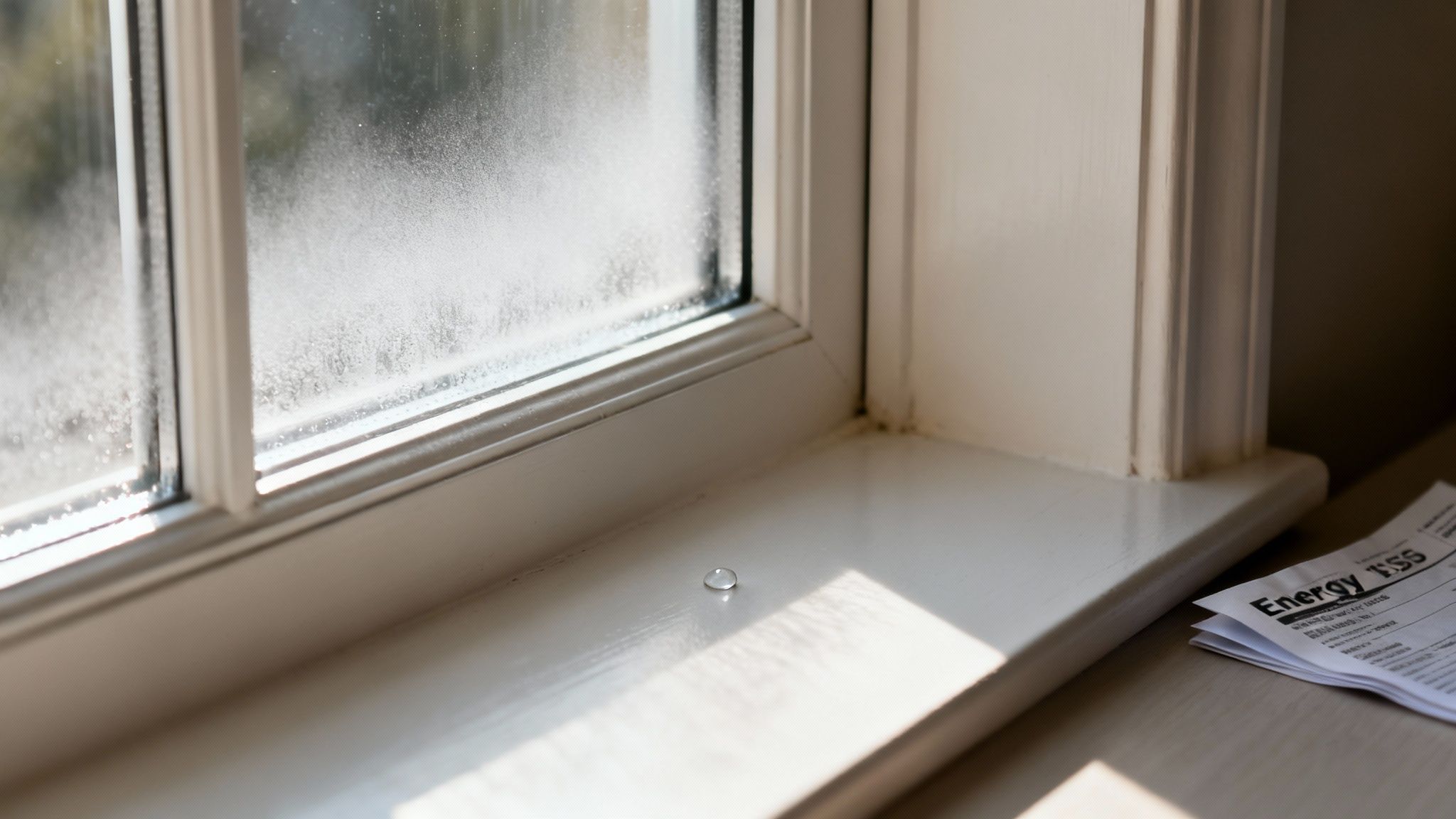
When a window seal gives way, it does a lot more than just mess up your view. That invisible breach lets the insulating argon or krypton gas between the panes leak out, and your window instantly loses much of its ability to regulate temperature. This tiny failure kicks off a chain reaction of costly consequences.
The first place you'll feel it is in your wallet. With a compromised seal, your HVAC system is forced to run longer and harder to keep your home comfortable. The result is a sudden, and often sharp, spike in your energy bills.
A failed window seal is like leaving a small window cracked open all year round. It might not seem like a big deal at first, but the cumulative effect on your energy bills and home comfort is massive.
More Than Just Foggy Glass
Beyond the annoying fog and higher energy bills, ignoring a failed seal can snowball into much bigger, more expensive problems. Once that seal is broken, moisture has a clear path to get inside, and that’s where the real trouble starts.
These hidden costs often include:
- Water Damage: Moisture trapped between the panes can seep into the window frame and the surrounding wall. Before you know it, you're dealing with rotting wood and structural decay.
- Mold and Mildew Growth: That damp, stagnant space between the glass is the perfect breeding ground for mold. This doesn't just look bad; it can seriously impact your home's indoor air quality.
- Reduced Home Value: Foggy, drafty, and inefficient windows are a huge red flag for potential homebuyers. They can significantly detract from your home's curb appeal and overall market value.
On average, energy inefficiency from bad window seals costs U.S. households an extra $400-$600 per year in heating and cooling. Fixing these issues is critical for getting your home's budget back under control. Understanding the full benefits of energy-efficient windows really drives home how important it is to tackle a failed seal right away.
Of course, window seals are just one piece of the puzzle. For a wider look at keeping your utility bills down, check out these 10 essential home energy efficiency tips.
How to Diagnose a Failed Window Seal
So, you think you might have a broken window seal. That’s the first step, but confirming your suspicion is what really matters. Good news—you don’t need any fancy equipment to play detective here. Your own eyes and hands are the best tools for the job, and the evidence is usually hiding in plain sight.
The most obvious red flag is that stubborn condensation trapped between the panes of glass. If you see fog, moisture droplets, or a milky haze that you can’t wipe away from the inside or the outside, you’ve found your culprit. That’s the clearest sign the insulating gas has escaped and humid air has crept in. The seal is officially broken.
It’s important to know this isn’t the same as normal condensation. A little fog on the inside of your window on a chilly morning just means it’s a bit humid in your house. And condensation on the outside? That’s actually a sign of a high-performance window doing its job well. The location is everything—if it’s between the panes, you have a problem.
Performing Simple At-Home Tests
Beyond just looking for fog, a couple of simple, hands-on tests can confirm a failed seal and pinpoint drafts that are quietly running up your energy bills. These checks only take a few minutes but give you clear answers.
First up is the basic touch test. On a colder day, press your hand against the center of the glass, then move it to the edge of the window frame. If you feel a significant temperature drop or a distinct cold spot, it’s a strong hint that the window's insulating barrier has been compromised.
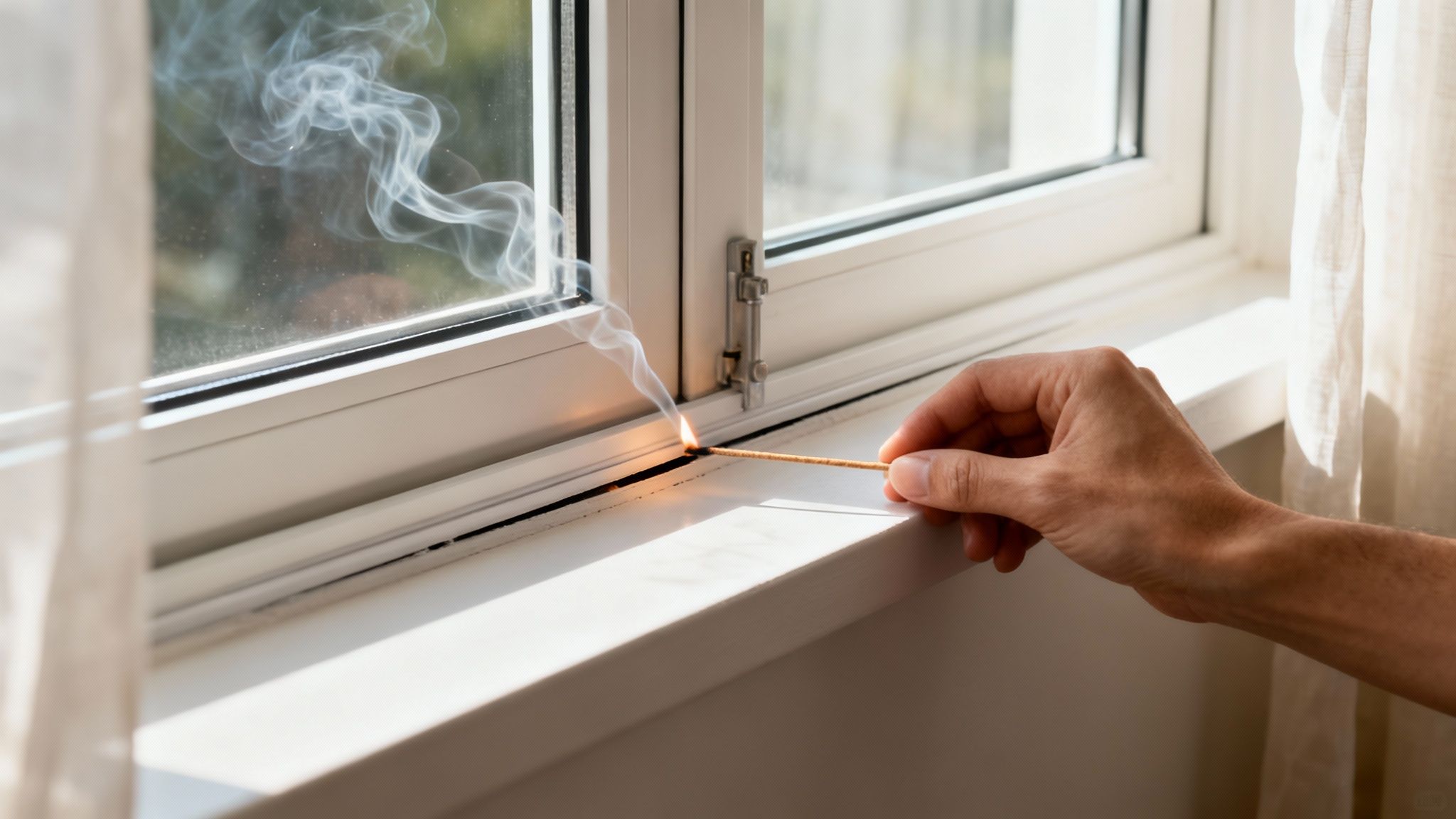
For a more visual confirmation, you can’t beat the smoke test.
Safely light an incense stick or a candle.
Carefully hold it near the seams where the glass meets the sash and around the window frame.
Watch the smoke. If it starts to waver, flicker, or get pulled into the room, you’ve just found an air leak.
A single drafty window can be responsible for up to 30% of a home's heating and cooling loss. Finding these leaks is the first move toward a more comfortable home and lower utility bills, making a window seal replacement a really smart investment.
Failed Window Seal Diagnostic Checklist
Still not 100% sure? This quick table breaks down the common symptoms. Use it to check your windows and see how many signs you can spot. The more boxes you tick, the more likely it is you’re dealing with a seal failure.
| Condensation Between Panes | A foggy, milky, or hazy look you can't wipe away from either side of the glass. | The airtight seal is broken, allowing moisture-filled air to get inside. |
| Noticeable Drafts | A cold stream of air felt near the window, especially on windy or cold days. | The seal is no longer blocking outside air from entering your home. |
| Distorted Glass | The reflection in the window appears wavy or bowed, like a funhouse mirror. | Pressure changes from the broken seal have caused the glass panes to bend slightly. |
| Increased Outside Noise | You can hear traffic, neighbors, or birds more clearly than you used to. | The insulating gas, which also helps dampen sound, has escaped. |
| Unexplained Energy Bills | Your heating or cooling costs have spiked without any other obvious reason. | Your HVAC system is working overtime to compensate for the energy loss. |
By running through these simple checks, you can confidently figure out if your windows are still doing their job or if it’s time for a fix. Understanding the problem is key before you start looking at repair options, and you can get a better idea of the potential costs of repairing double-pane windows in our detailed guide.
Why Window Seals Fail in the Upstate Climate
Window seals don't just fail on their own; they’re a direct casualty of the environment they're forced to endure. Here in Upstate South Carolina, our homes are caught in a unique tug-of-war between intense summer heat and relentless humidity, which puts an incredible amount of stress on every part of a window.
Think of a window seal like the flexible sole of a running shoe. With every step, every bend, and constant exposure to the elements, it eventually starts to crack, stiffen, and pull away. The seals in your windows go through a very similar, and often accelerated, aging process right here in the Upstate.
The sun beats down on your glass day after day, causing the glass and frame materials to expand. Then, as the sun sets and temperatures drop, they contract. This constant daily cycle of expanding and contracting forces the seal to stretch and shrink, over and over, slowly but surely weakening its grip.
The Role of Heat and Humidity
In the Upstate, it’s not just the heat—it’s the humidity that delivers a nasty one-two punch. Moisture is the number one enemy of an airtight window seal. When humidity levels are high, there’s always moisture in the air, actively looking for any microscopic crack or weak point in the sealant.
This constant assault leads to a few common ways your seals give up the ghost:
- Material Degradation: Years of exposure to UV rays break down the chemical makeup of the sealants. This makes them brittle and robs them of the flexibility they need to do their job.
- Solar Pumping: That daily heating and cooling cycle creates a pressure change inside the insulated glass. This pressure flexes the panes, effectively "pumping" the seal and stressing it from the inside out until it finally breaks.
- Moisture Intrusion: The moment a tiny breach forms, humid air gets sucked inside. That’s when you see the telltale fog and condensation that signals a total seal failure.
A window on the west-facing side of a Greenville home can easily hit surface temperatures over 150°F in July. That kind of extreme heat dramatically speeds up the aging of the seal, making a high-quality window seal replacement a question of when, not if.
It’s no surprise that the demand for durable, energy-efficient home components is growing, especially in climates like ours. The global market for window seals was valued at a whopping $28.5 billion in 2023, and it's only getting bigger as more homeowners realize they need robust solutions to prevent this kind of costly damage. You can dig into more details on the window seal market and its growth over at Verified Market Research.
The best defense against our demanding climate is simply keeping your home’s exterior in top shape. For more ideas on how to protect your biggest investment, take a look at our guide for creating a solid exterior home maintenance checklist.
Your Options: Repair vs. Full Window Replacement
Once you've spotted that telltale fog between the panes, you’ve hit a fork in the road. The good news is you have options, and the right one really boils down to the health of your window frames and your long-term goals. Making the right call now can save you a world of headaches and extra costs later on.
This isn't just about fixing a foggy window. It’s a chance to upgrade your home’s energy efficiency, comfort, and even its value. Each path offers a different balance of upfront cost versus long-term benefit.
Comparing Window Seal Solutions
To make the decision clearer, let's break down the main approaches: repairing the seal, reglazing the glass unit, or a full window replacement. Each has its place, but one is usually a much better long-term investment than the others.
| Seal Repair | Lowest upfront cost. | Often a temporary fix; doesn't address gas loss or underlying issues. Can be ineffective. | A very short-term, budget-conscious patch, but not a recommended long-term solution. |
| Reglazing (IGU Replacement) | More affordable than full replacement. Restores window's original efficiency. Less disruptive installation. | Only works if the window frame is in perfect condition. Doesn't upgrade frame technology. | Newer homes where a single window has failed prematurely, but the frame is still structurally sound and modern. |
| Full Replacement | Solves seal and frame issues permanently. Upgrades to modern energy efficiency (e.g., Low-E glass). Boosts home value and curb appeal. Comes with a new warranty. | Highest upfront cost. | Older windows, multiple seal failures, or when you want to maximize energy savings and long-term performance. |
While a quick repair seems tempting, it rarely provides lasting results. For most homeowners, the real choice comes down to reglazing versus a full replacement.
Just Replacing the Glass Unit
If your window frames are still in fantastic shape—no rot, warping, or damage—you can go for a more surgical solution. This means replacing only the Insulated Glass Unit (IGU), which is the sealed "sandwich" of glass panes. Think of it like getting a new lens for a perfectly good pair of glasses frames.
This approach is a popular middle-ground solution for a few key reasons:
- Cost-Effective: It's quite a bit cheaper than a full window replacement because you're only paying for the new glass and the labor to pop it in.
- Less Invasive: The process is quicker and causes less of a mess since the main window frame stays right where it is.
- Restores Efficiency: A new IGU immediately brings back the window’s original insulating power, stopping that energy drain.
But here’s the catch: this option only makes sense if the frame is truly sound. Putting a new IGU into a failing frame is like dropping a new engine into a car with a rusted-out chassis—it won't solve the core problems.
When a Full Window Replacement is the Smarter Choice
If the window frame itself is showing its age, just replacing the glass is throwing good money after bad. A full window replacement tackles both the busted seal and any frame issues, giving you a complete, long-lasting solution. This is almost always the best route when your windows are older or showing serious signs of wear and tear.
A full replacement isn't just a repair; it's a genuine home upgrade. Modern windows with advanced features like Low-E coatings can reduce energy loss by up to 30%, which translates into real savings on your utility bills.
This decision tree shows how heat, humidity, and simple age all conspire against your window seals, often making a full replacement the most logical step.
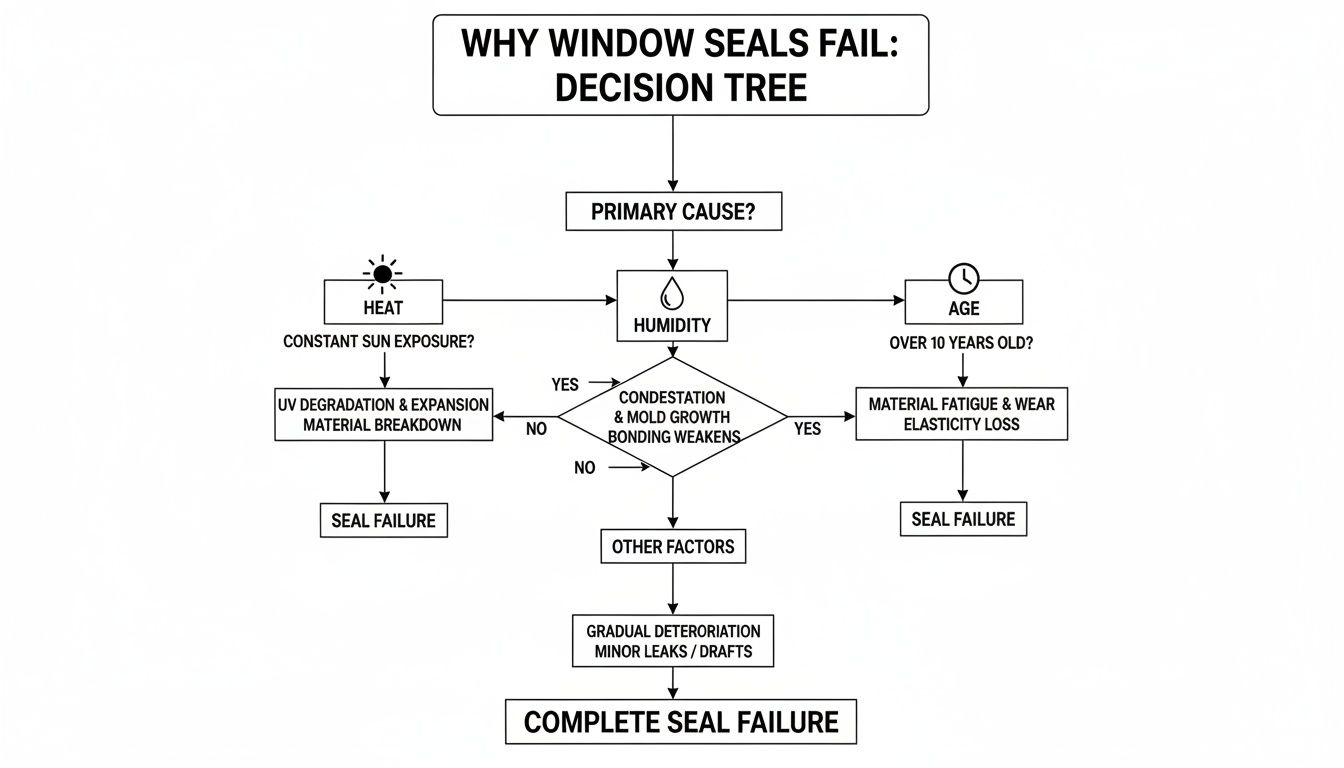
As you can see, the constant stress from these environmental factors eventually weakens the entire window system, not just the glass.
While the upfront cost is higher, a full replacement is hands-down the most sensible long-term investment. You don't just solve the seal failure; you get a brand-new, high-performance window backed by a strong warranty. To see what that involves, check out our complete guide to home window replacement. Choosing this path ensures your home is protected by the latest technology for decades to come.
Choosing a Professional for Window Replacement
Let’s be honest—even the most expensive, top-of-the-line window is worthless if it’s installed incorrectly. The success of your window replacement project comes down to one thing: the quality of the installation. Choosing the right pro isn’t just about getting the job done; it’s about making sure your investment is protected for years to come.
A true professional doesn’t just show up and give you a quote. Their process should start with a thorough, on-site diagnosis. They need to inspect not only the window with the busted seal but also the surrounding frame and wall. Are there hidden signs of water damage? Is the frame still square? This detailed assessment is the only way to know the right solution for your home.
After that inspection, you should get a clear, no-pressure estimate that lays out all your options and the costs involved. A good installer educates you and gives you the information you need to make the best decision for your budget, without any high-pressure sales tactics.
What to Look for in a Window Installer
When you start looking at local companies, your focus should be on craftsmanship and peace of mind. A reputable installer will always recommend high-performance materials, like Energy Star certified windows that are custom-sized for a perfect, airtight fit. This is what eliminates the drafts and gaps you often get with standard, off-the-shelf windows from a big box store.
Beyond the product itself, the installation team is what really makes or breaks the project. Make sure any company you consider is:
- Licensed and Insured: This is an absolute must. It protects you and your home from any potential accidents or issues during the installation.
- Committed to Cleanliness: A professional crew respects your space. They’ll work to minimize disruption and will leave the job site looking spotless at the end of each day.
- Compliant with Local Codes: They should have a deep understanding of all Upstate South Carolina building codes, ensuring your project is done right the first time, every time.
The Value of a Strong Warranty
Finally, you want a company that stands behind its work with a rock-solid warranty. A strong workmanship warranty is a huge sign of confidence in their installation quality. This guarantee protects you from any problems that might pop up due to the installation itself, which is completely separate from the manufacturer’s warranty on the window. To get the full picture, you can learn more about what a workmanship warranty covers and why it’s so critical.
The need for quality window replacements is only growing. Globally, a massive 420 million square meters of existing windows are expected to need replacement by 2025. Here in the Upstate, where our humidity can cause seal failure in as many as 30% of older homes, a professional installation is your best defense against recurring problems and future headaches. For a deeper dive into these trends, you can explore the global window seal market report on InfinityMarketResearch.com.
Common Questions About Window Seal Failure
When you're dealing with foggy windows, a lot of questions pop up. It's totally normal. Homeowners often wonder about the cost, how long a fix will last, and whether they can just tackle it themselves. Let's clear the air and walk through the questions we hear the most, so you can move forward with confidence.
Before we jump in, getting a grip on the basics is a huge help. If you want to understand the component at the heart of this issue, you can learn more about what exactly a window seal is and why it's so critical to your window’s performance. With that out of the way, let's get to it.
Can I Replace a Window Seal Myself?
You can find a DIY kit for just about anything these days, but replacing the seal on an insulated glass unit (IGU) is one job that’s definitely best left to the pros. This isn't just a simple caulking project; it’s a delicate process. It takes special tools to handle large panes of glass without breaking them and to install the new unit with a perfectly airtight seal.
One tiny mistake during a DIY attempt can lead to big problems. If the seal isn't set just right, it can fail almost immediately. That means you're right back to dealing with moisture damage, you won't see any energy savings, and you’ll almost certainly void your window's warranty.
For a durable, long-lasting solution that guarantees energy efficiency, professional installation backed by a solid workmanship warranty is the safest and most effective choice. It ensures the job is done right the first time.
How Much Does Window Seal Replacement Cost?
The cost to fix a failed window seal can vary quite a bit because it all depends on which solution you choose. The final price tag is shaped by the size of the window, the type of glass, and the material your window frames are made of.
Here’s a general breakdown of what you might expect:
- IGU Replacement (Reglazing): If your window frames are still in great shape, just swapping out the insulated glass unit is the most common fix. This usually runs a few hundred dollars per window.
- Full Window Replacement: If the frame itself is old, rotted, or damaged, a complete replacement is the only way to go. This can range from several hundred to over a thousand dollars per window, depending on the style and features you pick.
Any reputable company will give you a detailed, itemized estimate upfront. That way, you know the exact cost before any work begins—no surprises.
How Long Should a Window Seal Last?
A high-quality seal in a professionally installed window should hold up for anywhere from 10 to 20 years. But that lifespan can be cut short by environmental factors, especially in a demanding climate like ours here in the Upstate.
Constant exposure to intense sun, thick humidity, and wild temperature swings puts a ton of stress on the sealant materials. It's very common to see seals on the sunny side of a house fail years before the ones on the shaded sides. This is exactly why investing in premium replacement windows with robust, climate-appropriate seals and strong warranties gives you better long-term value and peace of mind.
Will New Windows Actually Lower My Energy Bill?
Absolutely. This is one of the biggest and best benefits of tackling a window seal problem, especially if you opt for a full window upgrade. Leaky, inefficient windows are one of the biggest energy vampires in any home.
The U.S. Department of Energy says that heat gain and loss through windows are responsible for 25-30% of a home's total heating and cooling energy use. When you upgrade from old single-pane windows or failed double-pane units to modern, Energy Star-certified windows, the impact is immediate. The mix of inert gas fills, Low-E coatings, and advanced seals creates a powerful thermal barrier. This dramatically cuts down the workload on your HVAC system, keeping your home more comfortable all year round and saving you money every month.
Ready to solve your foggy window problems for good? The team at Atomic Exteriors provides expert window replacement services with high-performance, Energy Star-certified windows that are built to last in the Upstate climate. Contact us today for a free, no-pressure estimate!